 Popular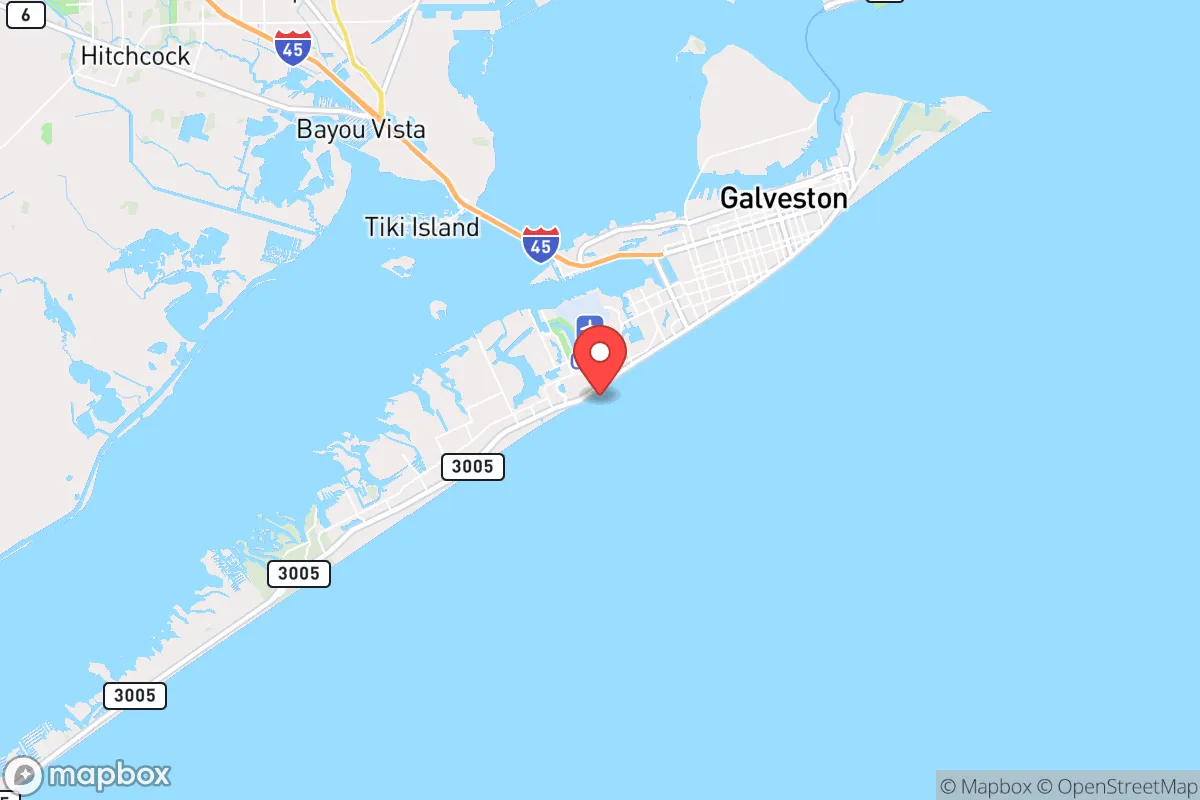
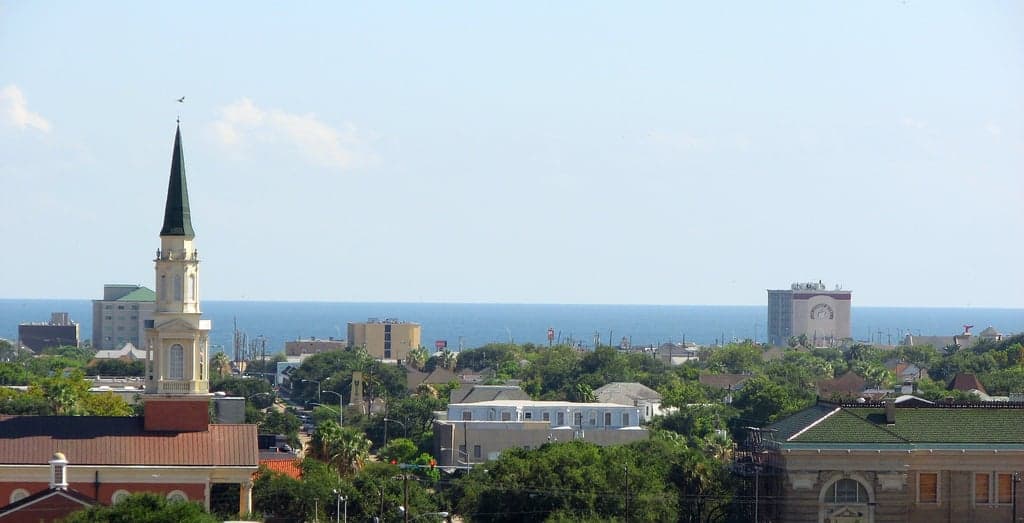
Photo: Wikipedia
Political ClimatePolitical Climate in Galveston, TX
District shown is the primary district for this city’s centroid. Cities may span multiple districts.
Local Political AnalysisPolitical Analysis of Galveston, TX
Galveston has long been a reliably conservative stronghold, with a Cook PVI of R+17 that makes it significantly more Republican than the state of Texas as a whole, which sits at R+4. This isn’t just a number on a map—it reflects a deep-rooted culture of self-reliance, limited government, and personal responsibility that has defined the island for generations. While the rest of Texas has seen some political drift in recent years, Galveston has held firm, and that stability is something longtime residents take pride in.
How it compares
When you stack Galveston up against the broader state, the difference is stark. Texas as a whole is already a red state, but Galveston’s R+17 rating means it leans about 13 points more conservative than the state average. That’s a big gap. For context, nearby cities like Houston (Harris County) have shifted leftward in recent cycles, with some precincts now voting reliably Democratic. Even places like League City and Texas City, while still conservative, have seen more competitive races than Galveston. The island’s political DNA is more akin to rural counties like Liberty or Chambers than to the urban sprawl of the mainland. You don’t see the same push for progressive policies here—no talk of defunding police or radical zoning changes. The local government tends to focus on practical issues like hurricane preparedness, infrastructure, and keeping taxes low, which aligns with the conservative values most residents hold.
What this means for residents
For someone living here, the political climate translates into a daily life that feels less burdened by government overreach. You’re not constantly fighting new regulations on your property, your business, or your personal choices. The city council and county commissioners generally take a hands-off approach, trusting residents to make their own decisions. That’s a big deal when you compare it to places like Austin or Dallas, where local governments have been known to impose strict mandates on everything from energy use to short-term rentals. In Galveston, the attitude is more “live and let live,” as long as you’re not hurting anyone. Property taxes are still a concern—they’re high across Texas—but there’s no appetite for the kind of progressive tax hikes or social programs that would balloon the budget. The school board, too, tends to focus on academics and local control rather than pushing ideological agendas.
That said, there are some cultural distinctions worth noting. Galveston is a tourist town, so you get a mix of visitors from all over, which keeps things from feeling insular. But the permanent residents—the ones who vote and pay taxes—are overwhelmingly conservative. You’ll see plenty of American flags, church parking lots full on Sundays, and a general skepticism of anything that smacks of top-down control. The local media and civic groups reflect this, with a strong emphasis on personal freedom and economic opportunity. If you’re worried about the direction of the country, Galveston feels like a bit of a holdout—a place where common sense still rules. The long-term outlook is stable, too. As long as the island doesn’t get swallowed by the kind of rapid, outside-driven growth that has changed other Texas cities, it should remain a conservative haven for years to come.

State Political ClimatePolitical Climate in Texas
State Political AnalysisPolitical Environment in the State
Texas remains a solidly Republican state at the statewide level, with a Cook PVI of R+4, but that number masks a dramatic and ongoing realignment. Over the past 10-20 years, the dominant coalition has shifted from a traditional, Bush-era suburban Republican base toward a more populist, rural, and culturally conservative one, while the fast-growing urban cores of Austin, Dallas, Houston, and San Antonio have swung hard to the left. The result is a state that feels like two different countries politically, and the tension between these forces is the defining story of Texas today.
Urban vs. rural divide
The political map of Texas is brutally simple: the big cities and their inner-ring suburbs are blue, and virtually everything else is deep red. Austin is the most liberal major city in the South, consistently electing a city council that has pushed defunding the police, homeless camping bans (and then repealing them), and green energy mandates. Harris County (Houston) and Dallas County have become Democratic strongholds, with Harris County flipping from red to blue in the 2010s and now reliably delivering 55-60% for Democrats. Bexar County (San Antonio) and Travis County (Austin) are even more lopsided. The real story, however, is the suburbs. Places like Collin County (north of Dallas) and Fort Bend County (southwest of Houston) were once Republican bastions but have shifted dramatically. Collin County voted for Trump by 15 points in 2020, down from a 30-point margin for Romney in 2012, as educated, affluent suburbanites moved left on cultural issues. Meanwhile, rural West Texas (Lubbock, Midland, Odessa) and East Texas (Tyler, Longview) remain as Republican as ever, often voting 80-90% for GOP candidates. The Rio Grande Valley, once a Democratic stronghold, has been trending Republican, with counties like Zapata flipping to Trump in 2020, driven by conservative social values and a growing distrust of the national Democratic party.
Policy environment
Texas’s policy environment is defined by a low-tax, low-regulation posture that has attracted millions of new residents. There is no state income tax, and property taxes are high (among the highest in the nation) to compensate, but the overall tax burden is still below the national average. The regulatory climate is business-friendly, with no state-level occupational licensing for many trades and a tort reform system that caps non-economic damages in medical malpractice cases. On education, the state has a robust school choice movement, with the 2023 legislative session passing a universal Education Savings Account (ESA) program (though it was ultimately blocked by a coalition of rural Republicans and Democrats). Texas is a constitutional carry state since 2021, meaning no permit is needed to carry a handgun. Healthcare policy is a flashpoint: Texas has not expanded Medicaid under the ACA, leaving roughly 1.5 million uninsured adults in the "coverage gap." The state has also passed some of the nation's strictest abortion laws, including the 2021 "Heartbeat Act" (SB 8) and a near-total ban after the Dobbs decision. Election laws were tightened in 2021 with SB 1, which restricted drive-through voting, added ID requirements for mail ballots, and banned 24-hour voting locations—changes that were framed as election integrity measures but criticized by Democrats as voter suppression.
Trajectory & freedom
The trajectory of freedom in Texas is a mixed bag, and it depends heavily on which freedom you're talking about. On the positive side for conservatives, the 2021 constitutional carry law (HB 1927) expanded Second Amendment rights significantly, and the state has repeatedly passed laws protecting religious liberty, including the 2017 "Pastor Protection Act" and the 2021 "Save Chick-fil-A" law that prohibits the government from punishing businesses for their religious beliefs. Parental rights were strengthened in 2023 with the passage of the "Parental Bill of Rights" (HB 900), which requires schools to get parental consent before providing any medical or mental health services and restricts sexually explicit content in school libraries. However, there are concerning trends. The state's response to COVID-19 saw Governor Abbott issue a statewide mask mandate and business closure orders, which many conservatives saw as a massive overreach of executive power. More recently, the 2023 legislative session saw a push to ban TikTok on government devices and a law (SB 12) that restricts drag performances in public, which critics argue is a free speech issue. On medical freedom, Texas has not passed any broad medical autonomy legislation, and the state's vaccine mandate for schoolchildren remains in place. Property rights are generally strong, but the state's use of eminent domain for private development projects (like the high-speed rail between Dallas and Houston) remains a point of contention.
Civil unrest & political movements
Texas has seen significant civil unrest and political activism in recent years. The 2020 George Floyd protests in Austin, Dallas, and Houston were large and sometimes violent, with Austin seeing over $10 million in property damage and the city council later voting to cut the police budget by $150 million (a decision that was partially reversed after a public backlash). On the right, the "Texas Nationalist Movement" has gained some traction, advocating for secession, though it remains a fringe idea with no serious political support. Immigration politics are a constant flashpoint. Governor Abbott's Operation Lone Star has deployed state troopers and National Guard to the border, bused migrants to sanctuary cities like New York and Chicago, and installed razor wire along the Rio Grande—a policy that has drawn lawsuits from the Biden administration and created a visible, ongoing confrontation between state and federal authority. Election integrity remains a hot-button issue, with many conservatives still believing the 2020 election was marred by irregularities in Texas (despite no evidence of widespread fraud). The 2021 voter ID law (SB 1) was a direct response to this, and it remains a deeply polarizing issue. A new resident would notice the political polarization in everyday life: bumper stickers, yard signs, and even church affiliations often signal political allegiance.
Projection
Over the next 5-10 years, Texas is likely to become even more politically bifurcated. The in-migration of hundreds of thousands of people from California, New York, and Illinois—many of whom are moderate or liberal—will continue to turn the suburbs of Dallas, Houston, and Austin blue. By 2030, it's plausible that Texas could be a true swing state at the presidential level, with the urban and suburban vote nearly matching the rural vote. However, the state's Republican-controlled legislature is likely to continue passing conservative policies on abortion, guns, and education, creating a growing disconnect between state law and the preferences of the growing urban population. This could lead to more "preemption" battles, where the state strips power from liberal cities (as it did with the 2023 law banning local tree ordinances and the 2017 law banning sanctuary cities). The biggest wildcard is the Hispanic vote: if the trend of Hispanic voters moving toward the GOP continues, Texas could remain red for another generation. If not, it will flip. For a new resident, expect a state where your local government may be at war with the state government, and where the culture war is a permanent feature of daily life.
Bottom line for a new resident: If you're a conservative moving to Texas, you'll find a state government that largely shares your values on guns, taxes, and parental rights. But you'll also find that the cities and suburbs are increasingly liberal, and that the political battles are constant and exhausting. If you value a low-tax, high-freedom environment and are willing to live in a red county or a rural area, Texas is still one of the best bets in the country. If you're moving to Austin or Dallas proper, be prepared for a blue city that is increasingly at odds with the state's conservative direction. The freedom you get in Texas is real, but it's not uniform—it depends heavily on where you choose to put down roots.
* Values derived from national, state, county, city and local statistics and may differ in a specific area. Last updated: 2026-05-12T00:16:58.000Z
Narrative content on this page is AI-generated and may contain mistakes. Verify any details that matter before acting on them.
ReloMaps may earn a commission from affiliate links at no extra cost to you.

