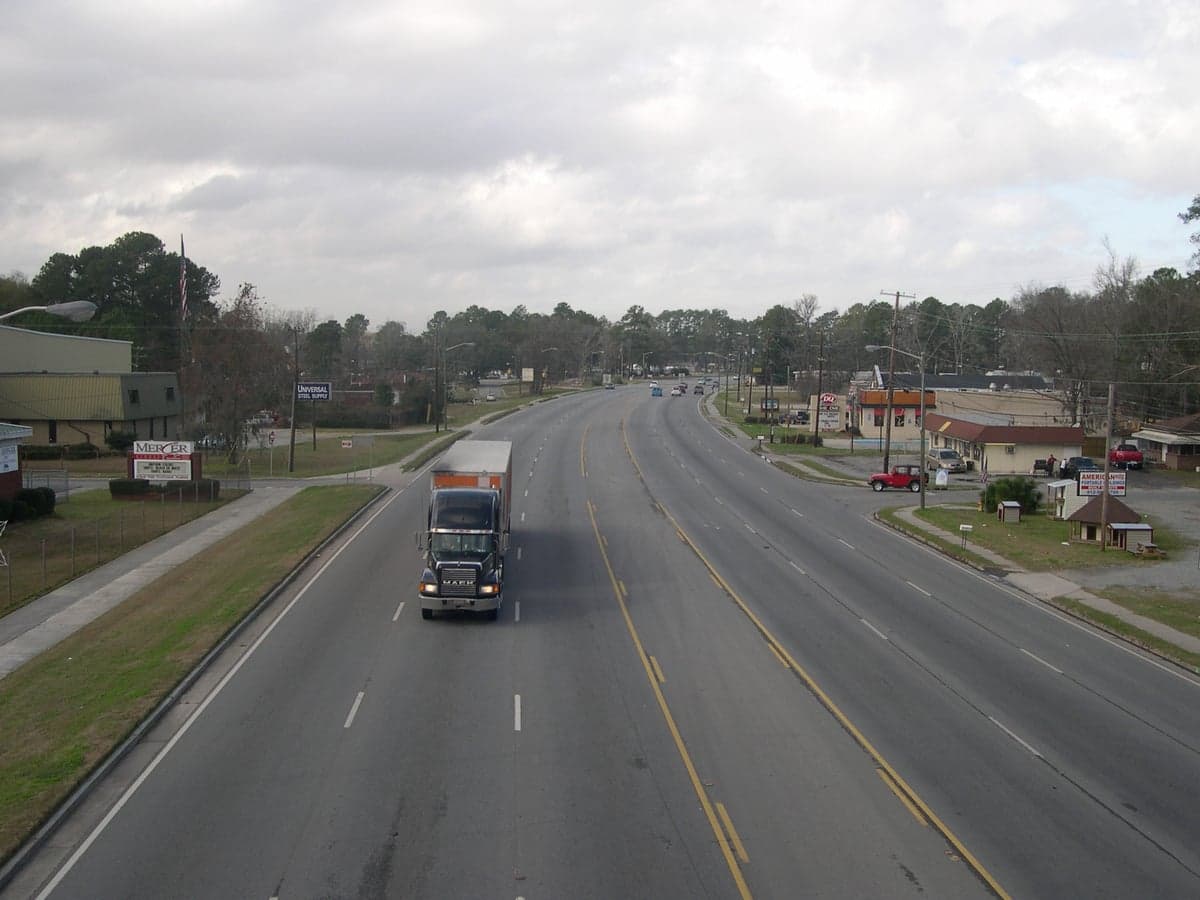
Photo: Wikipedia
Strategic Assessment of Garden City, GA
Meaningful friction. Expect exposure to either population pressure, blast zones, or natural disaster risk. Consider buying a retreat property.
What does the Strategic Assessment tell us?
Our Strategic Assessment grades tactical survivability of an area. Major population centers, military targets, fallout zones, natural disasters, and border exposure all drive risk — lower exposure means a more defensible position in a crisis.
This is heavily inspired by Joel Skousen's Strategic Relocation book. Highly recommended you checkout the book ($)What does this tell us?
Our Strategic Assessment grades tactical survivability of an area. Major population centers, military targets, fallout zones, natural disasters, and border exposure all drive risk — lower exposure means a more defensible position in a crisis.
This is heavily inspired by Joel Skousen's Strategic Relocation book. Highly recommended you checkout the book ($)Strategic Pillars

Key Distances
Regional Safe Places
Below is our recommended "safe zones" in Georgia and the surrounding area based on our strategic heuristics. For most people, it's unrealistic to live in a “safe zone” full-time due to work, family or other personal reasons. They tend to be more rural. However, many of these areas are perfect for second homes and retreat properties that double as a vacation home or even a short-term rental.
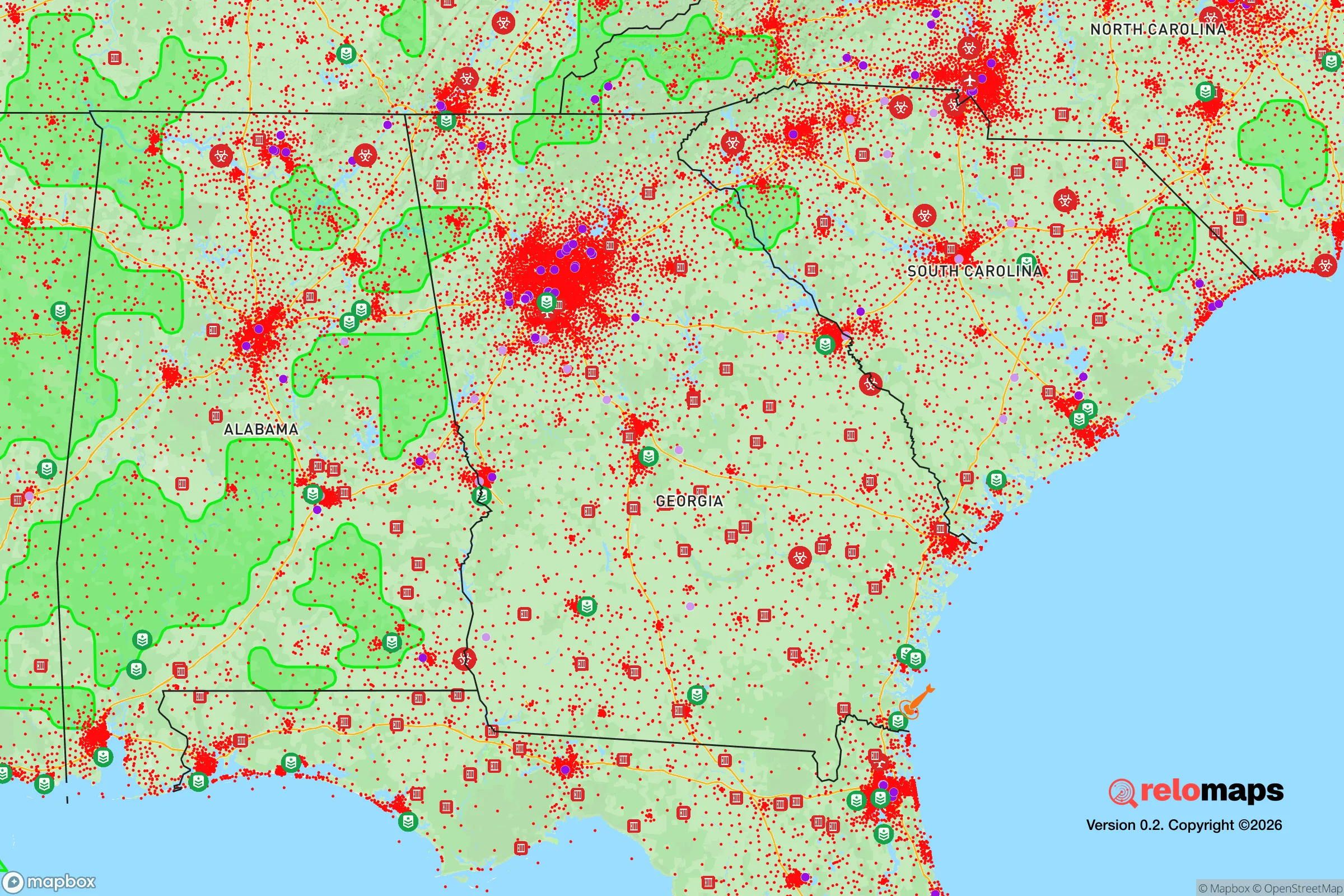
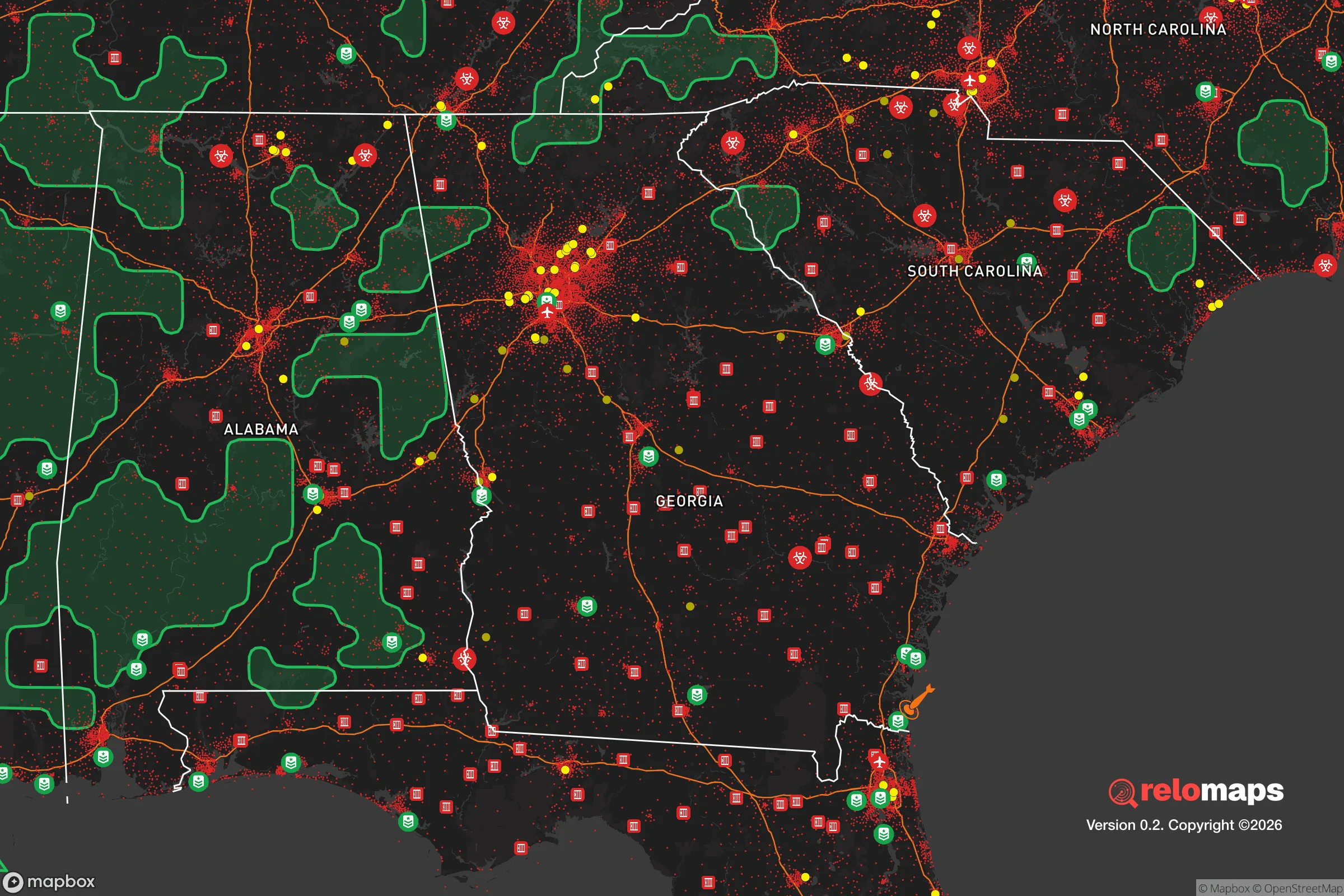


Important Note: For informational purposes only. This does not mean nothing bad ever happens in the green zones. Please use common sense. This is based on public data and modeled with AI. We tried to take a conservative approach but mistakes happen. We update this regularly as new information becomes available.
Solar Generator Recommendations
Backup power matters more here than in safer locations. We've picked three solar generators across budgets and capacity tiers — start with the budget unit if you only need a few essentials, or step up if you want to run a fridge and HVAC for days at a time.

Jackery Portable Power Station Explorer 300
Budget OptionPower on the Go: Weighing only 11 lbs, it's convenient to set up and store with book-sized foldable solar panels

BLUETTI Portable Power Station AC180
Designed for both indoor and outdoor scenarios, AC180 is highly capable as it has a robost capacity and continuous output power.

EF ECOFLOW DELTA Pro Ultra Power Station
Upgraded PickEcoFlow DELTA Pro Ultra is a whole-home energy system designed to grow with your family. Integrated with the Smart Home Panel 2, it scales to meet your evolving energy needs — keeping your home powered, intelligent, and secure through every stage of life.
We earn a commission, at no additional cost to you.
Strategic Assessment Analysis
Garden City, Georgia, presents a mixed strategic picture for the relocation-minded reader focused on resilience and self-sufficiency. Its primary advantage is its position just west of Savannah, placing it within commuting distance of a major port and economic hub while offering a slightly lower population density and a more suburban feel than the city core. However, this proximity to critical infrastructure—namely the Port of Savannah and a major chemical corridor—introduces significant man-made risks that must be weighed against the area's natural advantages. For the conservative-leaning individual or family prioritizing disaster readiness, Garden City offers a workable base camp, but only if you understand and actively mitigate its exposure to fallout-relevant targets.
Geographic position and natural advantages for a preparedness-minded household
Garden City sits on the coastal plain of Georgia, roughly 10 miles inland from the Atlantic Ocean, which provides a modest buffer against direct storm surge while still placing it within the reach of hurricane impacts. The area's flat topography and sandy soils offer decent drainage, reducing the risk of prolonged flooding compared to neighborhoods closer to the Savannah River or the coast. The climate is humid subtropical, with hot summers and mild winters, meaning freeze-related infrastructure failures are rare, and year-round gardening is feasible with proper planning. The region's abundant rainfall—averaging roughly 50 inches annually—supports local agriculture and makes rainwater catchment a viable strategy for supplementing household water supplies. For a relocator, the key natural advantage is the sheer availability of fresh water: the Floridan Aquifer underlies the area, providing a deep, reliable groundwater source that is less vulnerable to surface contamination than many other regions. This geological feature alone makes Garden City more resilient than areas dependent on surface reservoirs or inter-basin water transfers.
Risks, exposures, and proximity to fallout-relevant landmarks
The most significant risk for a Garden City resident is not natural disaster but man-made hazard. The city lies within the shadow of the Port of Savannah, the largest single-terminal container facility in North America and a critical node in the U.S. supply chain. In any major conflict or terrorist scenario, this port is a high-value target. Additionally, the Savannah River runs just east of Garden City, hosting the Savannah River Site—a former nuclear weapons production facility now engaged in environmental cleanup and tritium processing—roughly 30 miles upriver. While not a reactor, the site stores significant quantities of nuclear materials, making it a potential fallout source in a catastrophic event. The city is also adjacent to a dense concentration of chemical plants, refineries, and rail lines that transport hazardous materials. A derailment or industrial accident could release toxic clouds or cause fires that threaten residential areas. On the natural disaster front, hurricanes remain the primary concern. Garden City is vulnerable to wind damage and inland flooding from storm systems that push up from the coast, though it is less exposed than Tybee Island or downtown Savannah. The area's flat terrain offers no natural defensibility against storm surge or floodwaters, so a relocator must carefully evaluate FEMA flood zone maps before purchasing property. Tornadoes are a secondary risk, with the region experiencing a handful of weak to moderate events each year, but they are not the primary threat.
Practical resilience for a relocator: food, water, energy, and defensibility
For the self-sufficiency-minded individual, Garden City offers a mixed bag. The local food system is robust: the surrounding agricultural region produces poultry, peanuts, corn, and soybeans, and the Savannah area has a growing network of farmers' markets and CSAs. A determined household could supplement a significant portion of its diet through backyard gardening, given the long growing season (roughly 8 months) and ample rainfall. However, the soil is sandy and acidic, requiring amendment for serious vegetable production. Water resilience is strong, as noted, but a relocator should budget for a well and a hand pump or a solar-powered backup system to ensure access during grid outages. The city's water utility draws from the Floridan Aquifer, but municipal supply is vulnerable to power loss and chemical contamination from upstream industrial sites. Energy resilience is a weak point. The local grid is exposed to hurricane-related outages that can last days or weeks, and the region's reliance on overhead power lines makes it susceptible to wind and tree damage. Solar panels with battery storage are a wise investment here, as the area receives ample sunlight year-round. Defensibility is limited by the suburban layout: Garden City is a typical low-density development with open lots, cul-de-sacs, and easy road access from multiple directions. There are no natural chokepoints or elevated terrain to provide a tactical advantage. A relocator should prioritize a property with good visibility, a secure perimeter, and a location away from major roads and rail lines. The city's proximity to Savannah also means that in a crisis, population movement from the city could overwhelm local resources, so a household should plan for at least two weeks of self-contained supplies.
The overall strategic picture for Garden City is one of calculated trade-offs. It offers genuine advantages in water availability, agricultural potential, and a mild climate that supports year-round self-sufficiency efforts. Its location near a major port and industrial corridor, however, introduces risks that are not present in more remote inland areas. For the relocator who is willing to invest in hardening their property—solar backup, well water, food storage, and a solid evacuation plan—Garden City can serve as a functional base with access to urban amenities and supply chains. But for those seeking true isolation and minimal exposure to man-made threats, the Savannah suburbs are not the answer. This is a location for the pragmatist who wants to balance preparedness with economic opportunity, not for the survivalist seeking a bug-out location. If you choose Garden City, do so with eyes open to the risks, and build your resilience plan accordingly.

* Values derived from national, state, county, city and local statistics and may differ in a specific area. Last updated: 2026-08-08T13:25:41.000Z
Narrative content on this page is AI-generated and may contain mistakes. Verify any details that matter before acting on them.
ReloMaps may earn a commission from affiliate links at no extra cost to you.

