Photo: Wikipedia
Personal Sovereignty in Garden City, NY
Moderate friction. Expect trade-offs in some aspect of personal liberty and independence.
What does Personal Sovereignty tell us?
Personal Sovereignty measures your capacity for self-reliance and independence with minimal government friction. Higher scores mean fewer barriers between you and the way you want to live... but it assumes you have the space you need and good neighbors.
What does this tell us?
Personal Sovereignty measures your capacity for self-reliance and independence with minimal government friction. Higher scores mean fewer barriers between you and the way you want to live... but it assumes you have the space you need and good neighbors.
State Policy
Energy independence: Importer (12% of energy produced in-state)
Personal Liberty
Homesteading

Personal Liberty Analysis
Garden City, New York, presents a complex and often contradictory environment for personal sovereignty, one that demands a clear-eyed, strategic assessment from anyone prioritizing autonomy. Nestled within Nassau County on Long Island, this affluent village operates under the dense regulatory umbrella of New York State, a jurisdiction that consistently ranks among the most restrictive in the nation for individual freedoms. For the survivalist or prepper, the core tension is immediate: the village offers high-quality local services and a stable, low-crime community, but it does so within a state framework that actively limits self-reliance, self-defense, and economic independence. The bottom line is that Garden City is a place where personal sovereignty is heavily mediated by government authority, making it a location for those who can navigate, rather than escape, regulatory oversight.
Tax burden and regulatory posture: the cost of living under state control
New York State’s tax and regulatory climate is a primary constraint on personal sovereignty, and Garden City is fully exposed to it. The state’s income tax is progressive, with a top marginal rate of 10.9% on income over $25 million, but even middle-income earners face rates around 5.5% to 6.0%. Combined with local taxes, the effective burden is substantial. Property taxes in Garden City are notoriously high, often exceeding $15,000 to $25,000 annually on a typical single-family home, driven by some of the nation’s highest school and municipal tax levies. This creates a significant financial leash: a large portion of your income is pre-committed to government services before you can allocate it to your own preparedness, land, or supplies. The regulatory posture extends beyond taxes. New York’s building codes, environmental regulations, and business licensing requirements are among the most stringent in the country. For a prepper, this means that any attempt to modify property for self-sufficiency—installing a large solar array, constructing a root cellar, or even keeping certain livestock—will likely require permits and inspections that can be denied or delayed. The state’s energy policies, including a de facto ban on new natural gas hookups in some areas, also limit off-grid energy options. In short, the cost of living here is not just financial; it is a constant negotiation with government permission slips.
Self-defense and gun law specifics: navigating the NY SAFE Act environment
For anyone prioritizing the right to self-defense, Garden City sits in one of the most hostile legal environments in the United States. New York’s gun laws, particularly the SAFE Act and the 2022 Concealed Carry Improvement Act (CCIA), impose a regime of strict licensing, registration, and carry restrictions. To possess a handgun in your own home, you must obtain a pistol permit from the Nassau County Police Department, a process that can take 6-12 months and requires character references, fingerprinting, and a background check. Carrying a concealed firearm outside the home is now effectively a privilege, not a right, following the Supreme Court’s Bruen decision. New York responded by designating vast areas as “sensitive locations” where guns are banned, including public parks, places of worship, and any private property where the owner hasn’t explicitly posted a sign allowing carry. This means that even with a permit, your ability to defend yourself in public is severely curtailed. Magazine capacity is limited to 10 rounds, and “assault weapons” (defined broadly) are banned. For the prepper, this legal landscape means that self-defense planning must rely heavily on non-firearm options—physical security, community watch, and legal compliance—rather than a robust arsenal. The state’s red flag laws also allow for the temporary seizure of firearms based on a complaint, a tool that can be abused by neighbors or family members. The practical reality is that Garden City is a low-crime area, but the legal framework for self-defense is designed to make you dependent on police response, not your own capabilities.
Self-reliance and homesteading viability: lot sizes, zoning, and off-grid feasibility
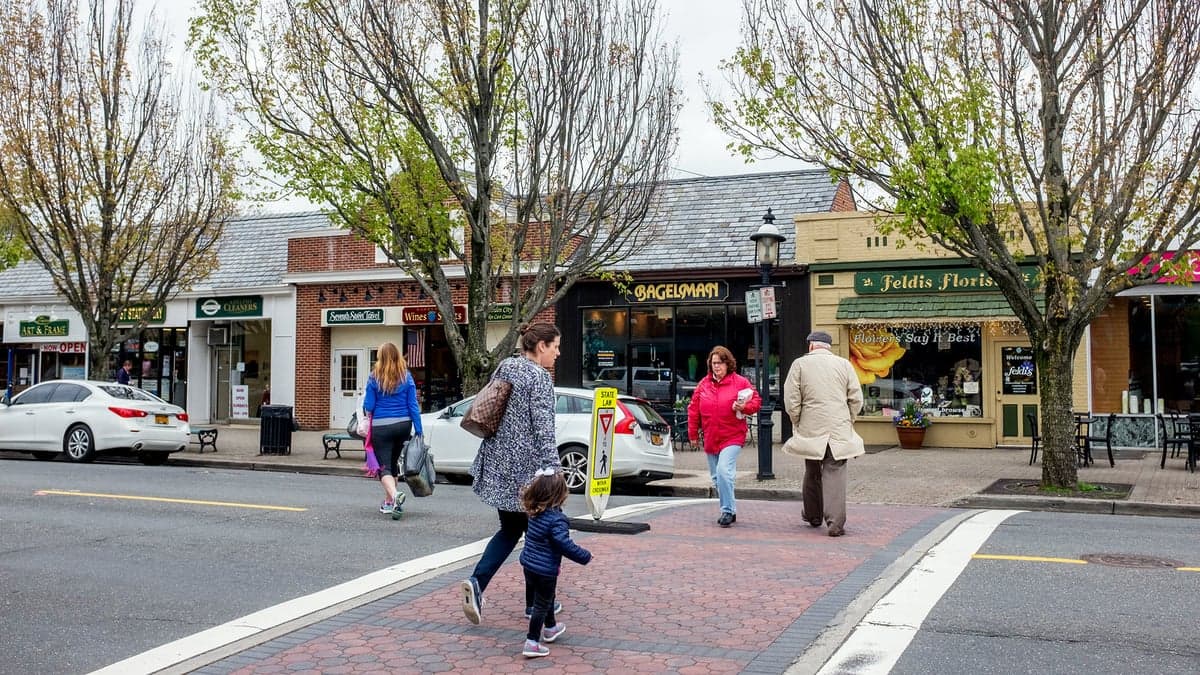
Garden City’s suburban character is fundamentally at odds with any serious homesteading or off-grid living. Typical residential lot sizes range from 6,000 to 10,000 square feet—enough for a lawn and garden, but not for significant food production or livestock. Zoning codes are strictly enforced by the village, prohibiting chickens, goats, or other farm animals in most residential districts. The village’s historic character is protected by a design review board, meaning even aesthetic changes to your home require approval. Off-grid feasibility is near zero. New York State law requires all residences to be connected to the electrical grid, and while solar panels are permitted, they must be grid-tied and cannot be used for true energy independence without a complex and expensive battery system that may still face code restrictions. Water is supplied by the village, and private wells are generally not an option in this densely developed area. Rainwater collection is not explicitly prohibited but is subject to state water rights laws that can complicate large-scale harvesting. For the prepper seeking to build a self-reliant compound, Garden City is a non-starter. The best you can do is a small vegetable garden, a few fruit trees, and a backup generator—all within the bounds of village approval. The real value here is in community resilience and local networks, not in land-based independence.
Personal liberties: parental rights, medical autonomy, speech, and property
New York State’s approach to personal liberties is expansive in some areas and restrictive in others, creating a patchwork that requires careful navigation. Parental rights have been a flashpoint. The state’s education law mandates that public schools teach a comprehensive sex education curriculum, and parents do not have an opt-out for specific lessons—only for the entire health course. School districts also have broad authority over student records and medical decisions, including the ability to provide certain health services without parental consent. For parents who want maximum control over their children’s education and medical care, this is a significant concern. Medical autonomy is similarly constrained. New York has some of the strictest vaccine mandates in the country, including for school attendance, and the state’s health department has broad emergency powers that were used aggressively during the COVID-19 pandemic. The state also has a “right to die” law, but it is tightly regulated. For the prepper, the lesson is that medical decisions are not fully your own during public health emergencies. Speech is protected under the First Amendment, but New York has laws against “hate speech” and harassment that can be broadly interpreted. Property rights are heavily circumscribed by zoning, historic preservation, and environmental regulations. You cannot simply do what you want with your land. The state’s power of eminent domain is also robust. Overall, Garden City offers a high degree of personal safety and community stability, but at the cost of significant government oversight over the most intimate aspects of life.
In the final analysis, Garden City offers a trade-off that many conservative-leaning individuals may find unacceptable. It provides a safe, well-managed, and affluent community with excellent schools and low crime, but it does so within a state framework that systematically limits personal sovereignty. The tax burden is heavy, self-defense rights are curtailed, homesteading is impractical, and personal liberties are subject to state mandates. Compared to areas in the South or Mountain West, where property taxes are lower, gun laws are more permissive, and zoning is less restrictive, Garden City represents a managed, high-cost environment for autonomy. For the survivalist or prepper, it is a location best suited for those who prioritize community stability and are willing to work within the system, rather than those seeking to build a life outside of it. If your primary goal is to maximize personal sovereignty, you will find better options elsewhere. If you must be in the New York metro area for work or family, Garden City is one of the better villages within the state, but it is still a cage—albeit a well-appointed one.

* Values derived from national, state, county, city and local statistics and may differ in a specific area. Last updated: 2026-04-19T07:16:15.000Z
Narrative content on this page is AI-generated and may contain mistakes. Verify any details that matter before acting on them.
ReloMaps may earn a commission from affiliate links at no extra cost to you.

