Photo: Wikipedia
Political ClimatePolitical Climate in Garden City, NY
District shown is the primary district for this city’s centroid. Cities may span multiple districts.
Local Political AnalysisPolitical Analysis of Garden City, NY
Garden City, New York, has a Cook PVI of D+2, meaning it leans slightly more Democratic than the nation as a whole, but that number doesn't tell the whole story. For a long time, this village was a rock-solid conservative stronghold in Nassau County—a place where fiscal responsibility, local control, and traditional values were the default. Over the last decade or so, you've seen a slow but steady shift, with more progressive voices gaining traction, especially in village and county elections. It's not a radical flip, but the trajectory is concerning if you value limited government and personal freedoms.
How it compares
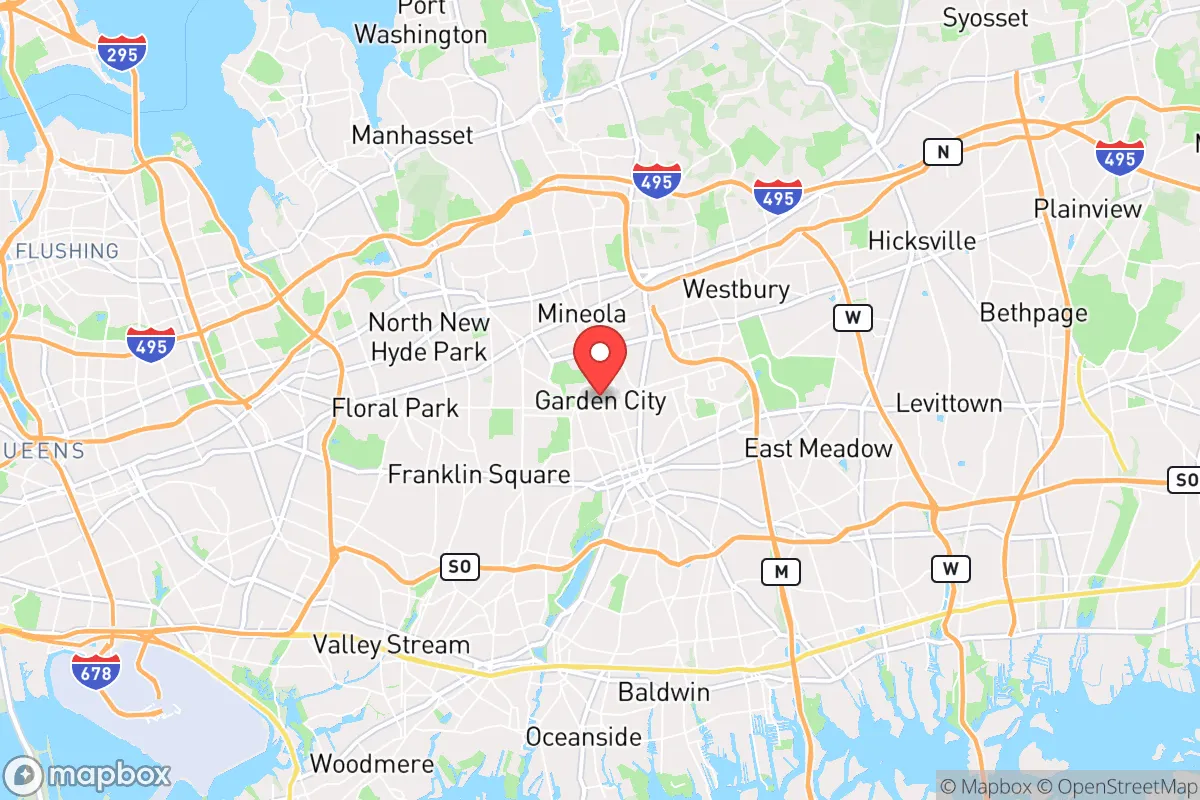
To really understand Garden City's politics, you have to look at its neighbors. Head east into Mineola or Hempstead, and you're in much more reliably Democratic territory—places where higher taxes and bigger government programs are generally accepted. Drive south to Valley Stream or Lynbrook, and you'll find a similar, more progressive tilt. But go north or west, into places like Manhasset or Great Neck, and you'll see a different story—those areas have held onto a more independent, often conservative-leaning character, especially on issues like school funding and property rights. Garden City sits right in the middle, acting as a kind of political buffer zone. The contrast is sharpest during local school board and village trustee races, where candidates who promise to keep taxes low and resist state mandates still have a fighting chance, but they're increasingly outspent and out-organized by progressive-backed slates.
What this means for residents
For someone who values personal freedom and minimal government overreach, the biggest red flag is the slow creep of progressive policies into daily life. You're seeing more zoning restrictions that limit what you can do with your own property, higher fees for things like building permits and business licenses, and a growing push for "equity" initiatives in the schools that often come with mandatory training or curriculum changes. The village has also gotten more aggressive with code enforcement—things like ticketing for lawn length or parking that used to be handled with a warning are now a fine. The real concern is that these small intrusions add up, and once they're in place, they're nearly impossible to roll back. The tax burden, already high by national standards, keeps inching up as the village takes on more social programs and administrative layers. If you're a homeowner or small business owner, you feel it directly.
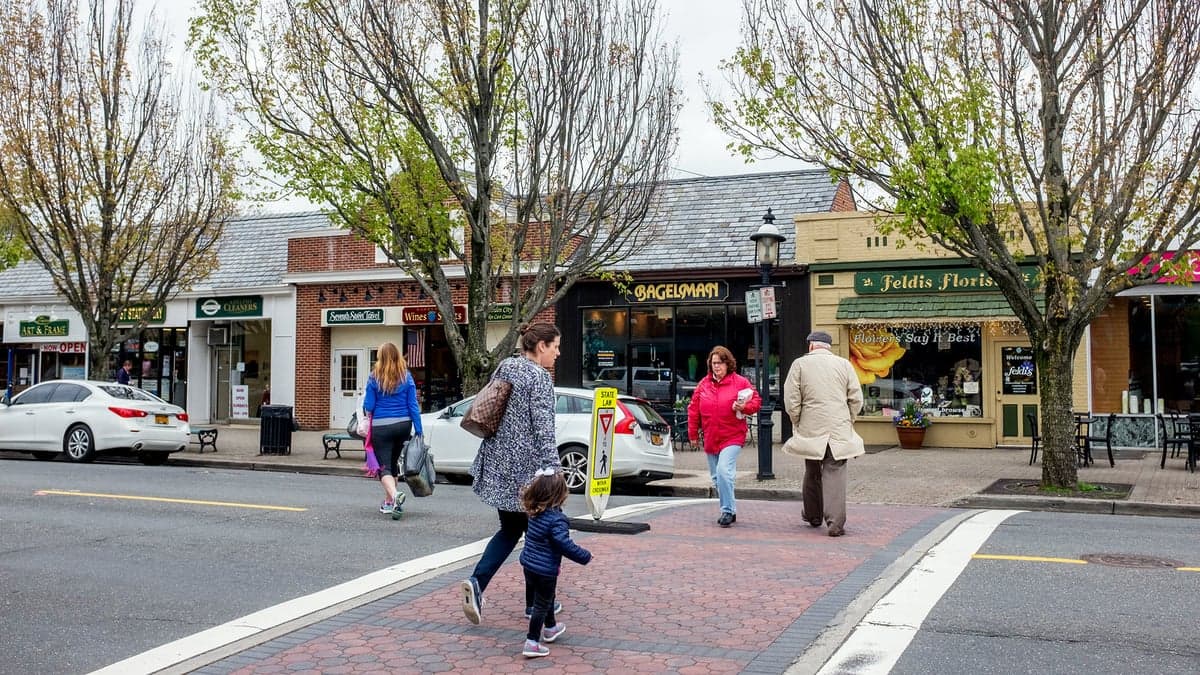
On the cultural side, Garden City still has a strong sense of community—the St. Patrick's Day parade, the village pool, the local sports leagues—but there's a growing tension between the old guard and the newcomers. The old guard remembers when the village board would meet for 20 minutes and be done; now meetings run hours, with debates over everything from library displays to street names. Long-term, the trend is toward more regulation, higher costs, and less local autonomy. If you're considering moving here, just know that the political climate is shifting, and it's not the same quiet, hands-off village it was 20 years ago. The next few election cycles will be critical in determining whether Garden City holds its conservative roots or fully embraces the progressive wave sweeping the county.

State Political ClimatePolitical Climate in New York
State Political AnalysisPolitical Environment in the State
New York State has long been a Democratic stronghold, but the reality on the ground is far more nuanced than the national headlines suggest. The state has voted for every Democratic presidential nominee since 1988, with margins exceeding 20 points in recent cycles, but that blue veneer is almost entirely powered by New York City and its immediate suburbs. Outside the five boroughs and a handful of college towns, much of the state is deeply conservative, and the political trajectory over the last 10-20 years has been one of accelerating polarization—where the urban core gets more progressive and the rural areas get more resentful, with the state government increasingly imposing one-size-fits-all policies from Albany that many upstate residents feel are designed for Manhattan, not for them.
Urban vs. rural divide
The political map of New York is a textbook case of urban-rural conflict. New York City, with its 8.5 million residents, drives the state's Democratic supermajority—Bronx, Manhattan, and Brooklyn routinely deliver 80-90% Democratic margins. The immediate suburbs—Nassau County on Long Island and Westchester County north of the city—have trended blue over the past decade, though they still have pockets of Republican strength in places like Oyster Bay and North Salem. The real story is the rest of the state. Upstate New York—from the Hudson Valley north to the Adirondacks and west to Buffalo—is a patchwork of red and purple. Counties like Wyoming, Orleans, and Allegany routinely vote 65-70% Republican. The Southern Tier, including places like Chemung County (Elmira) and Steuben County, is solidly conservative. Even in the "blue wall" counties around Albany, the rural townships vote heavily Republican while the city of Albany itself is deep blue. The divide is so stark that some upstate counties have passed resolutions calling for secession from the state, though those are mostly symbolic. A new resident moving to, say, Buffalo or Rochester will find a blue city surrounded by a red countryside; moving to a town like Jamestown or Plattsburgh means living in a conservative community that feels politically abandoned by Albany.
Policy environment
New York's policy environment is among the most progressive in the nation, and it shows no signs of moderating. The state has the highest combined state and local tax burden in the country—property taxes are particularly brutal, with effective rates often exceeding 2% of home value, especially in upstate counties like Erie and Monroe. The state income tax is progressive, with a top rate of 10.9% on income over $25 million, but the middle class still pays 5.5-6.85%. Regulatory posture is heavy: New York has strict rent control laws in New York City and some suburbs, a statewide ban on natural gas hookups in new construction starting in 2026, and some of the nation's toughest environmental regulations. Education policy is dominated by the teachers' unions, and the state has a "foundation aid" formula that heavily favors urban districts. School choice is virtually nonexistent—charter schools are capped and limited to New York City and a few other districts. Healthcare is heavily regulated, with the state expanding Medicaid eligibility and running its own health insurance exchange. Election laws are among the most liberal: no-excuse absentee voting, early voting, automatic voter registration, and same-day registration are all in place. For a conservative-leaning resident, the policy environment feels like a constant headwind—higher taxes, less local control, and a regulatory apparatus that seems designed to discourage business growth outside the city.
Trajectory & freedom
Over the past five years, New York has become less free by almost any measure a conservative would care about. The 2019 bail reform law eliminated cash bail for most misdemeanors and nonviolent felonies, leading to a surge in repeat offenses that has been a major political flashpoint—even some Democrats now admit it went too far. Gun rights have been severely restricted: the 2022 Concealed Carry Improvement Act (CCIA) banned firearms in "sensitive locations" like Times Square and public transit, required "good moral character" for permits, and mandated 18 hours of training. The law was partially struck down by a federal court in 2024, but the state is appealing. Parental rights took a hit with the 2022 "Gender Expression Non-Discrimination Act" (GENDA) and subsequent guidance that effectively allows schools to hide a child's gender transition from parents—a policy that has sparked massive backlash in places like Long Island and the Hudson Valley. Medical autonomy was curtailed during COVID with some of the nation's strictest mandates, including a vaccine mandate for healthcare workers that remains in effect. Property rights are under pressure from the state's aggressive housing agenda, which includes a push to override local zoning in suburbs to force higher density. The state's "Climate Leadership and Community Protection Act" (CLCPA) mandates a 85% reduction in greenhouse gas emissions by 2050, which is driving up energy costs and forcing the closure of natural gas plants. On the positive side for conservatives, the state did repeal the "journalist shield law" loophole that had been used to protect leakers, and there have been modest rollbacks to the bail reform law in 2023 and 2024. But the overall trajectory is clearly toward more government control over daily life.
Civil unrest & political movements
New York has been a flashpoint for political activism on both sides. The 2020 Black Lives Matter protests in New York City were among the largest in the nation, and the city's response—including the defunding of the NYPD by $1 billion—set a national template. The pro-Palestinian protests at Columbia University and other campuses in 2024 were a major news story, with encampments and arrests that highlighted the deep divisions within the Democratic coalition. On the right, the "Second Amendment Sanctuary" movement has gained traction in upstate counties—at least 30 counties have passed resolutions declaring themselves sanctuaries from state gun laws, though these are symbolic. The "Parents' Rights" movement exploded in 2022-2023, particularly in suburbs like those in Nassau County and Westchester, where school board meetings became battlegrounds over curriculum and transgender policies. Immigration politics are a constant undercurrent: New York City's "sanctuary city" policy, combined with the arrival of over 100,000 asylum seekers since 2022, has strained resources and created visible homelessness and encampments that even liberal residents find troubling. Election integrity remains a live issue—the state's 2020 election was marred by the "Buffalo ballot scandal" where thousands of absentee ballots were improperly handled, and the state's move to no-excuse absentee voting has fueled ongoing distrust. A new resident moving to, say, a suburb like Rockland County will find a community deeply engaged in these fights, while someone in Manhattan might barely notice them.
Projection
Over the next 5-10 years, New York is likely to become more progressive at the state level, but with increasing geographic and cultural fragmentation. Demographic trends favor the Democrats: New York City continues to attract young, diverse, left-leaning migrants, while upstate's population is aging and shrinking. The state's in-migration is overwhelmingly from other blue states and from abroad, while out-migration—which has been net negative for years—is disproportionately conservative-leaning families heading to Florida, Texas, and the Carolinas. This means the political balance will continue to shift left, even as the upstate economy struggles. The state's fiscal situation is precarious—the budget deficit is projected to hit $4.3 billion by 2027, and the combination of high taxes and out-migration is a long-term structural problem. Expect more mandates from Albany on housing, energy, and education, and less tolerance for local opt-outs. The "blue wall" counties around Albany may flip to purple as the state's policies become more unpopular, but that won't change the overall legislative math. A conservative moving to New York in 2026 should expect to live in a state where their vote for governor or Senate is effectively meaningless, but where local elections—county legislature, school board, town council—remain genuinely competitive and consequential. The practical reality is that upstate New York offers a decent quality of life for those who can afford the taxes and tolerate the regulatory environment, but the state's political direction is set by New York City, and that's not changing anytime soon.
For a conservative-leaning individual or family considering a move to New York, the bottom line is this: you can find like-minded communities in places like the Southern Tier, the Finger Lakes region, or the North Country, but you will be living under a state government that is actively hostile to many of your values. The taxes are high, the regulations are thick, and the cultural momentum is against you. If you're willing to fight for your local school board and your county government, you can carve out a decent life. But if you're looking for a state that respects your freedom on guns, taxes, education, and parental rights, New York is not that place—and it's getting less so every year.
* Values derived from national, state, county, city and local statistics and may differ in a specific area. Last updated: 2026-04-19T07:16:15.000Z
Narrative content on this page is AI-generated and may contain mistakes. Verify any details that matter before acting on them.
ReloMaps may earn a commission from affiliate links at no extra cost to you.

