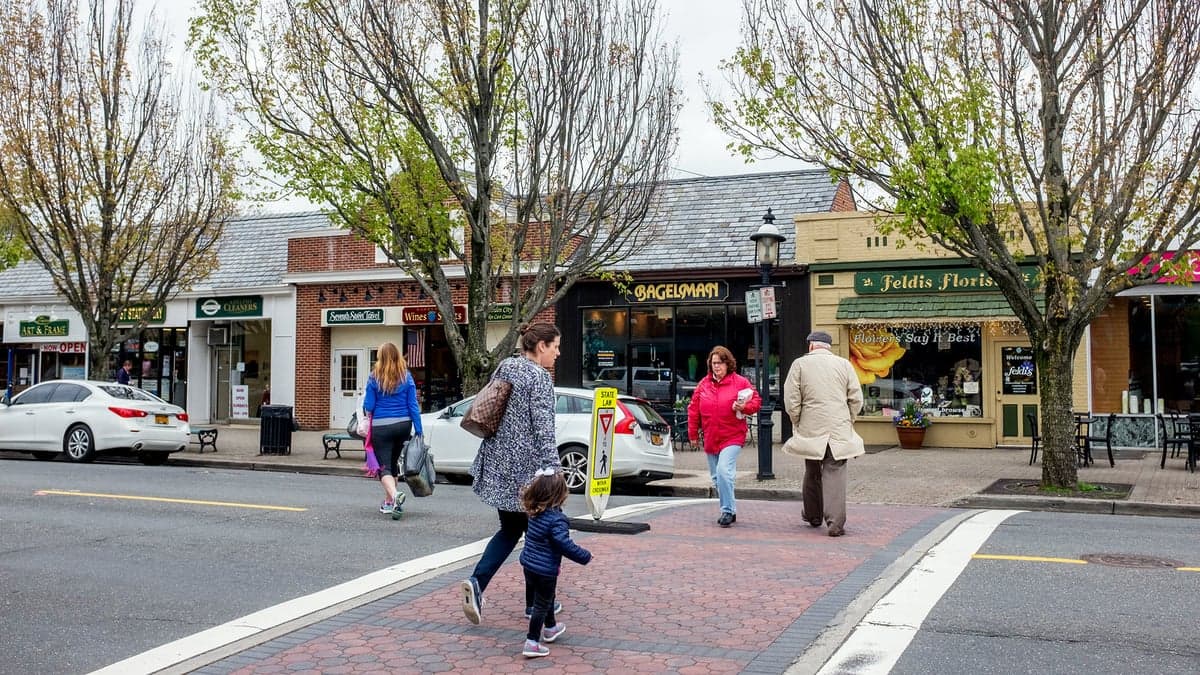
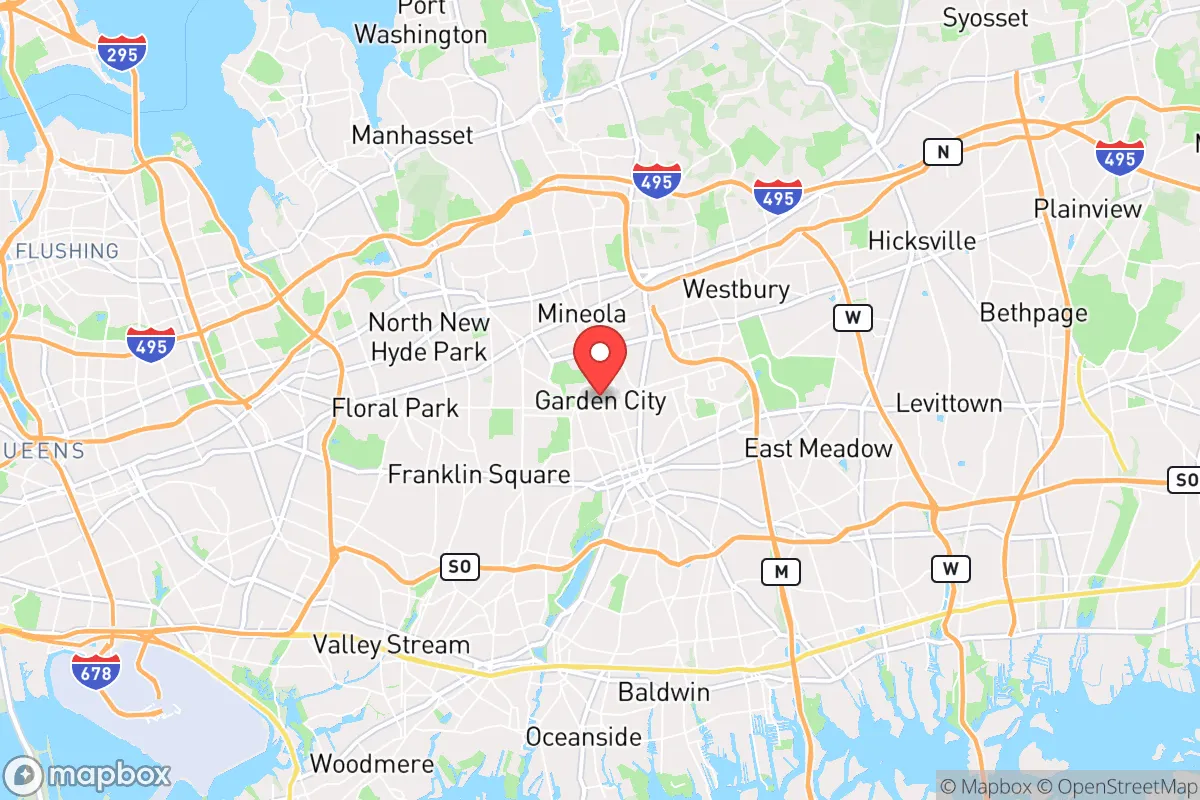
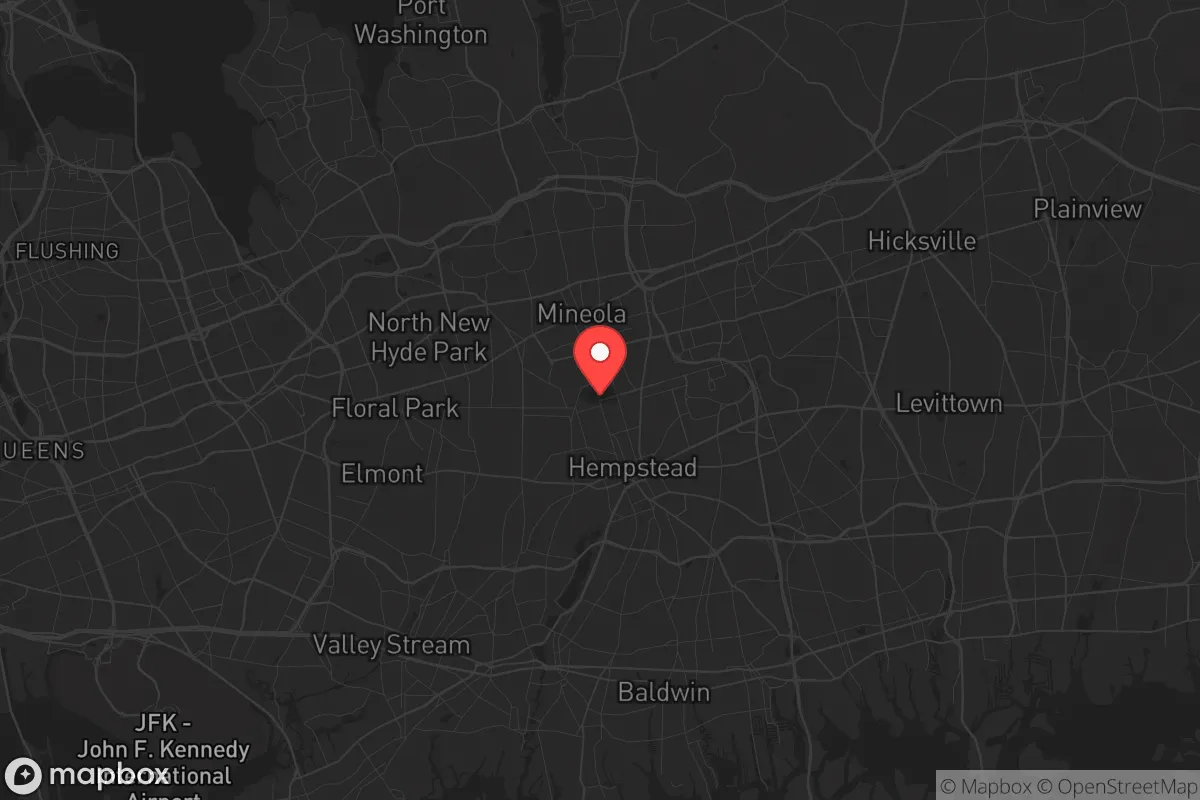
Photo: Wikipedia
Strategic Assessment of Garden City, NY
High tactical risk. This location is likely close to major population centers, strategic targets, or sits in a high-disaster corridor. A retreat property and careful exit planning is required.
What does the Strategic Assessment tell us?
Our Strategic Assessment grades tactical survivability of an area. Major population centers, military targets, fallout zones, natural disasters, and border exposure all drive risk — lower exposure means a more defensible position in a crisis.
This is heavily inspired by Joel Skousen's Strategic Relocation book. Highly recommended you checkout the book ($)What does this tell us?
Our Strategic Assessment grades tactical survivability of an area. Major population centers, military targets, fallout zones, natural disasters, and border exposure all drive risk — lower exposure means a more defensible position in a crisis.
This is heavily inspired by Joel Skousen's Strategic Relocation book. Highly recommended you checkout the book ($)Strategic Pillars

Key Distances
Regional Safe Places
Below is our recommended "safe zones" in New York and the surrounding area based on our strategic heuristics. For most people, it's unrealistic to live in a “safe zone” full-time due to work, family or other personal reasons. They tend to be more rural. However, many of these areas are perfect for second homes and retreat properties that double as a vacation home or even a short-term rental.
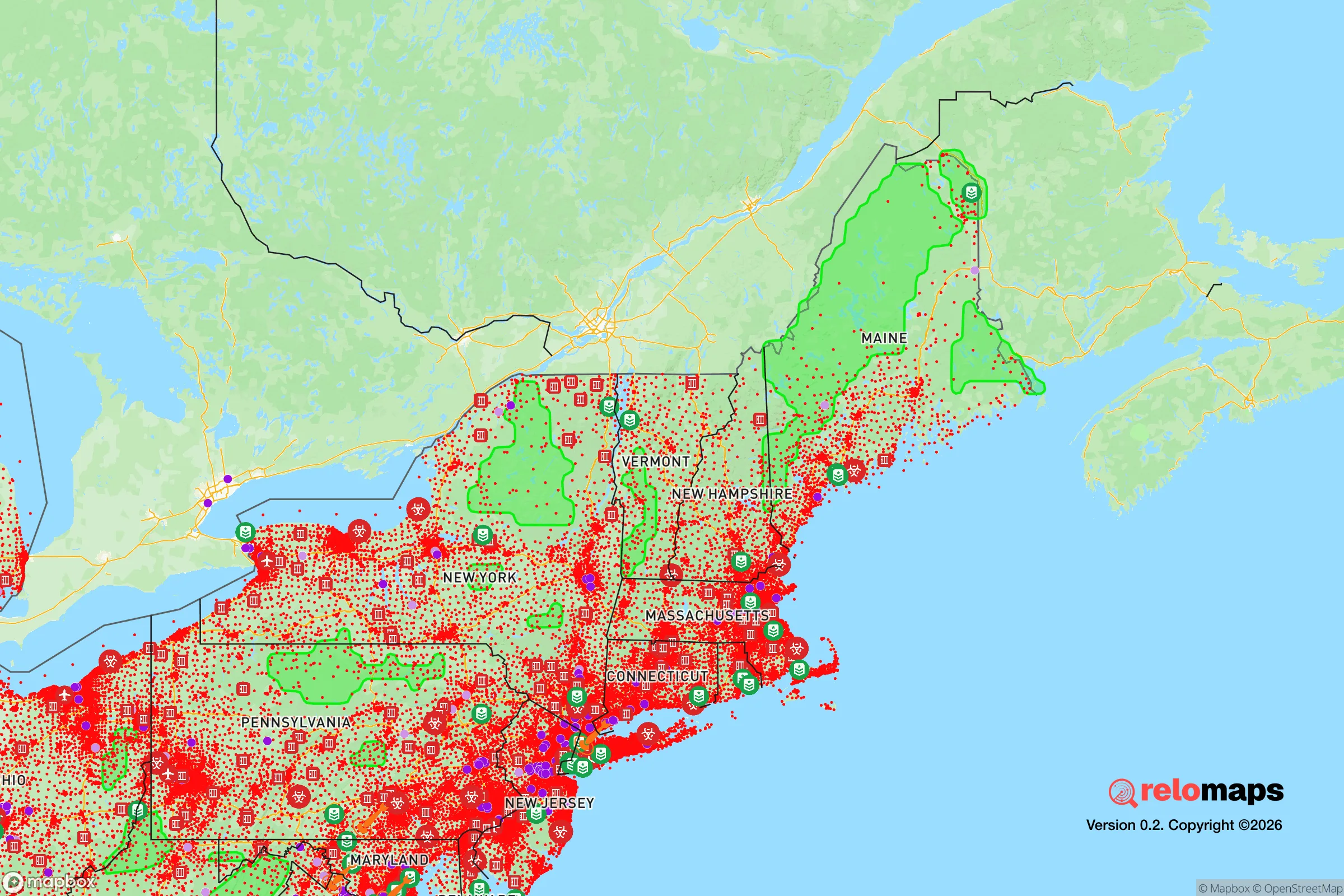
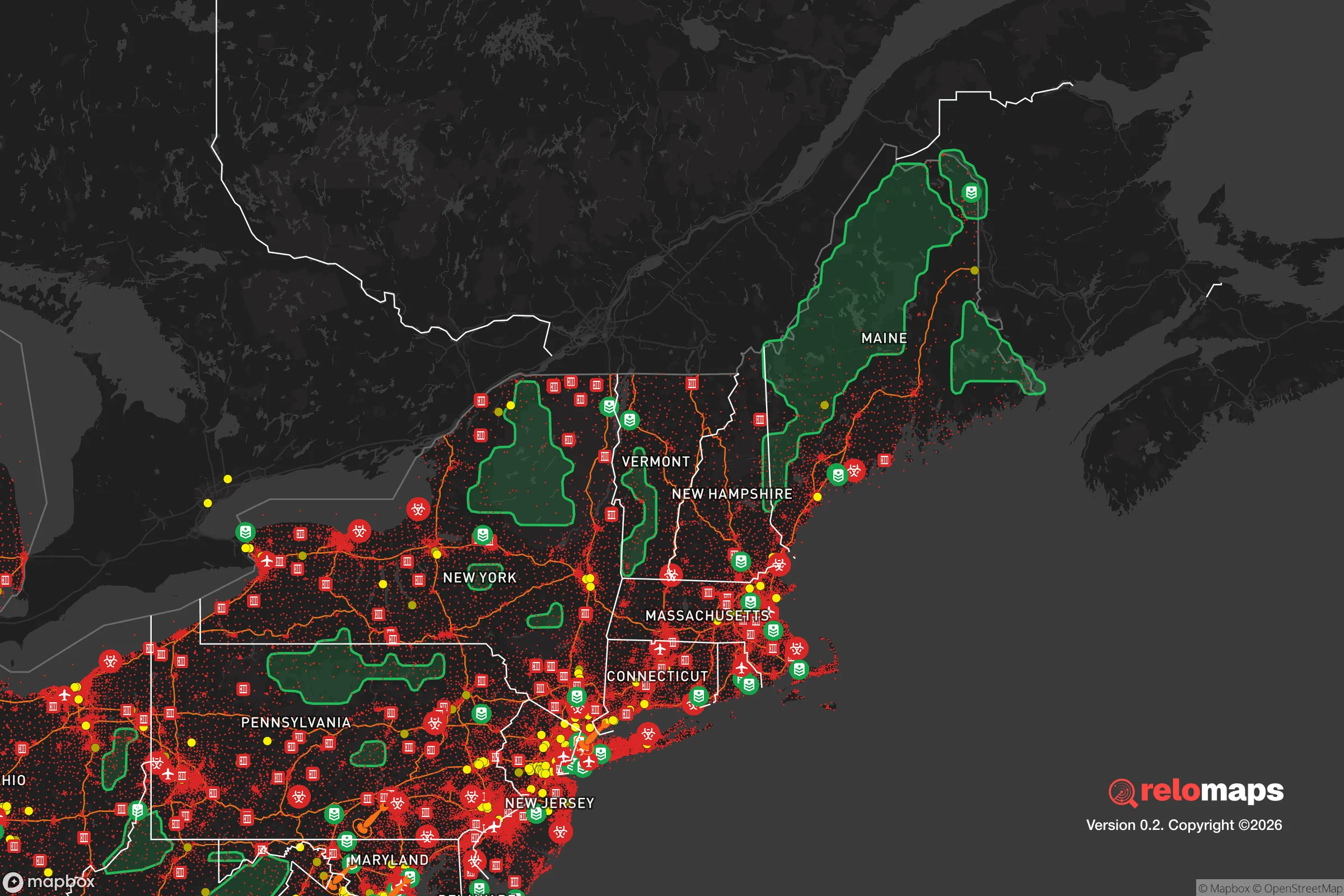


Important Note: For informational purposes only. This does not mean nothing bad ever happens in the green zones. Please use common sense. This is based on public data and modeled with AI. We tried to take a conservative approach but mistakes happen. We update this regularly as new information becomes available.
Solar Generator Recommendations
Backup power matters more here than in safer locations. We've picked three solar generators across budgets and capacity tiers — start with the budget unit if you only need a few essentials, or step up if you want to run a fridge and HVAC for days at a time.

Jackery Portable Power Station Explorer 300
Budget OptionPower on the Go: Weighing only 11 lbs, it's convenient to set up and store with book-sized foldable solar panels

BLUETTI Portable Power Station AC180
Designed for both indoor and outdoor scenarios, AC180 is highly capable as it has a robost capacity and continuous output power.

EF ECOFLOW DELTA Pro Ultra Power Station
Upgraded PickEcoFlow DELTA Pro Ultra is a whole-home energy system designed to grow with your family. Integrated with the Smart Home Panel 2, it scales to meet your evolving energy needs — keeping your home powered, intelligent, and secure through every stage of life.
We earn a commission, at no additional cost to you.
Strategic Assessment Analysis
Garden City, New York, presents a complex strategic picture for the conservative prepper or survivalist. On paper, it’s a wealthy, well-managed village on Long Island with strong infrastructure and a low crime rate. But its location—a dense, politically blue suburb just 18 miles from Manhattan and within striking distance of New York City’s primary fallout and target zones—introduces severe vulnerabilities that outweigh its peacetime advantages for anyone serious about long-term resilience. This assessment weighs the area’s genuine strengths against the hard realities of proximity to a major metropolitan target, offering a grounded look at what a relocator can expect when the grid goes down or the unthinkable happens.
Geographic position and natural advantages for long-term stability
Garden City sits on the Hempstead Plains, a flat, well-drained region of glacial outwash that gives it stable, sandy soil—excellent for drainage and less prone to the flooding that plagues coastal Long Island communities. The village itself is a planned community, laid out with wide boulevards and a robust tree canopy that provides some natural cover and shade. Its elevation, roughly 70 feet above sea level, keeps it out of storm surge zones, a meaningful advantage over areas like Long Beach or the South Shore. The local water table is high, and the area is underlain by the Magothy aquifer, one of the region’s primary freshwater sources. For a relocator, this means groundwater access is feasible with a well, though permits and depth requirements are strict. The climate is temperate—cold winters, warm summers—with reliable rainfall averaging 44 inches per year, supporting basic gardening if you have the space. The surrounding Nassau County landscape is suburban, not wilderness, but the nearby Massapequa Preserve and the sprawling 1,400-acre Bethpage State Park offer some wooded buffer and potential foraging or hunting, albeit heavily regulated. The flat terrain is a double-edged sword: easy to move through, but hard to defend without natural chokepoints.
Risks, exposures, and proximity to fallout-relevant landmarks
Here’s where the analysis gets sobering. Garden City’s primary strategic liability is its proximity to New York City—specifically, Manhattan’s financial district, the United Nations headquarters, and the Port of New York and New Jersey, all high-value targets in any major conflict scenario. Garden City lies roughly 18 miles east of Midtown Manhattan, well within the moderate-to-heavy fallout zone for a ground-level nuclear detonation at the city center. Depending on wind direction, the village could see lethal radiation levels within hours. Even a conventional attack on the city’s infrastructure—say, a coordinated EMP strike or a dirty bomb at JFK Airport (just 8 miles south)—would cripple the region’s power grid, communications, and supply chains. Garden City is also bisected by the Long Island Rail Road’s main line, with a major station at the village center. In a crisis, that rail corridor becomes a funnel for desperate evacuees from the city, turning the village into a chokepoint for human traffic. The nearby Nassau County Police Headquarters and the county jail in Mineola are potential targets for civil unrest or organized looting. The village’s wealth and visibility make it a likely target for post-disaster resource raids, not a safe haven. Flooding from nor’easters and hurricanes is a secondary but real risk—while the village itself is elevated, the surrounding road network (Meadowbrook Parkway, Southern State Parkway) frequently floods, cutting off egress routes.
Practical resilience for a relocator: food, water, energy, and defensibility
For a single individual or family looking to hunker down, Garden City offers a mixed bag. Food security is poor in the short term—the village is a bedroom community, not an agricultural hub. There are no working farms within the village limits, and the nearest significant farmland is in Suffolk County, 30 miles east. Local grocery stores (Stop & Shop, Whole Foods) will empty within hours of a crisis. A prepper would need to stockpile at least 90 days of supplies, and that stash would need to be hidden—Garden City’s dense housing (mostly single-family homes on quarter-acre lots) offers limited concealment. Water is more promising: the village’s municipal water comes from the Magothy aquifer, and many homes have access to private wells, though they require electric pumps. A hand pump or solar-powered backup would be essential. The local power grid is reliable in peacetime but vulnerable to EMP and storm damage. Solar panels are permitted but must be installed discreetly to avoid HOA scrutiny—Garden City has strict architectural review boards. Natural gas is piped in, but a major event would likely shut that down. Defensibility is the weakest link. The village’s grid-like street pattern, with multiple entry points from Hempstead Turnpike, Franklin Avenue, and Stewart Avenue, makes it nearly impossible to secure. There are no natural barriers—no rivers, cliffs, or dense forests—to slow an approaching threat. The best you can do is fortify a single home with reinforced doors, window bars, and a good line of sight down the street. Community defense would require organizing with neighbors, which is possible given the area’s strong civic associations, but that assumes trust and shared values—not a given in a politically diverse suburb. For a relocator with a prepper mindset, the practical takeaway is that Garden City is a good place to wait out a short-term disruption (a week-long power outage, a blizzard) but a poor place to survive a prolonged collapse or a major attack on New York City.
The overall strategic picture for Garden City is one of calculated risk. It offers genuine peacetime advantages—low crime, good schools, stable governance, and access to the largest medical and economic hub in the country. For a conservative family that values order and opportunity, it’s a comfortable place to live right now. But for anyone serious about long-term preparedness, the village’s proximity to a primary target zone, its lack of defensible terrain, and its dependence on fragile urban infrastructure make it a high-risk location. If you’re looking for a place to ride out a major crisis, you’d be better served by rural upstate New York, Pennsylvania, or the interior Northeast. Garden City is a fine base for a professional career, but it is not a redoubt. The smartest play for a prepper here is to treat it as a temporary staging point—build skills, stock supplies, and have a bug-out plan to a more remote location within 100 miles. In the end, the village’s greatest strength—its integration into the New York metro area—is also its greatest vulnerability. Plan accordingly.

* Values derived from national, state, county, city and local statistics and may differ in a specific area. Last updated: 2026-04-19T07:16:15.000Z
Narrative content on this page is AI-generated and may contain mistakes. Verify any details that matter before acting on them.
ReloMaps may earn a commission from affiliate links at no extra cost to you.

