Photo: Wikipedia
Demographics of Gardner, KS
Affluence Level in Gardner, KS
A middle-class area roughly in line with national averages across income, home values, education, and employment.
People of Gardner, KS
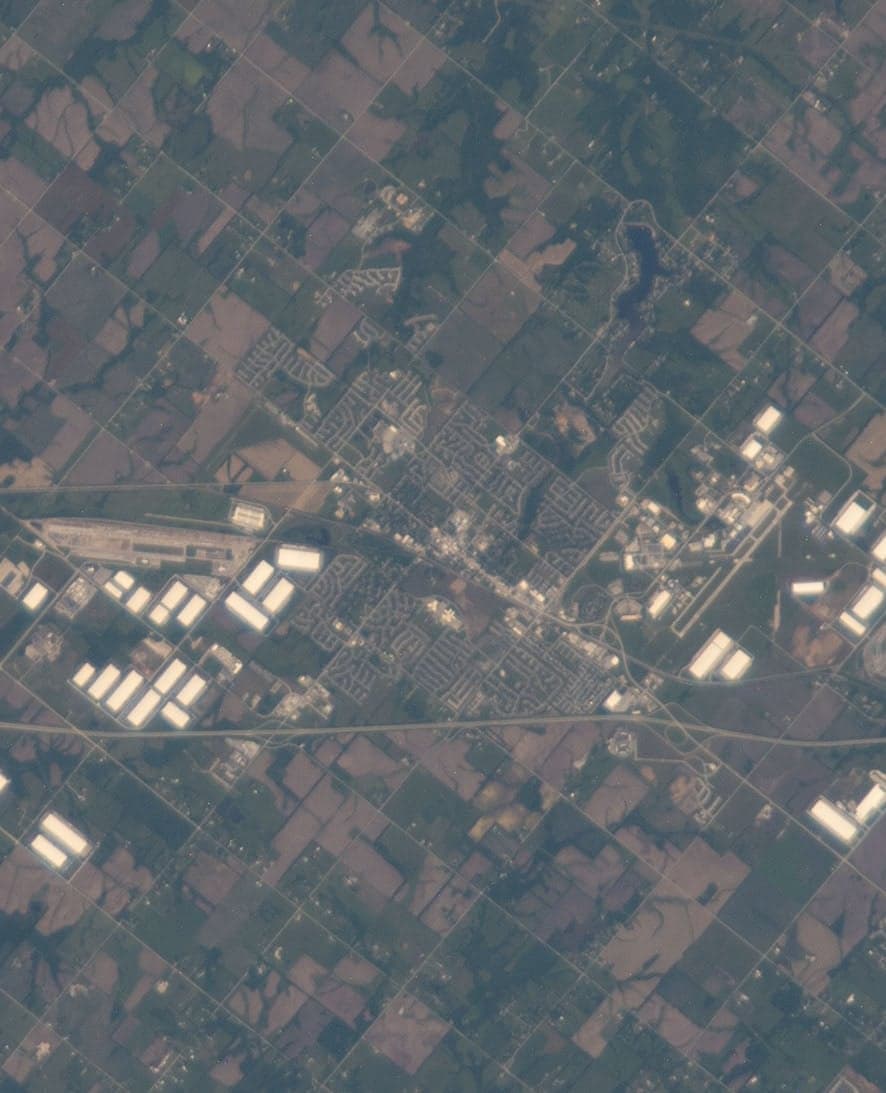
The people of Gardner, Kansas, today number roughly 24,020, forming a rapidly growing, predominantly white (76.8%) suburban community with a notable and rising Hispanic (9.6%) and Black (7.1%) presence. The city’s identity is shaped by its recent transformation from a quiet agricultural town into a bedroom community for the Kansas City metro, attracting families seeking affordable housing and new schools. With a foreign-born population of just 3.3% and a college-educated rate of 32.3%, Gardner’s character is distinctly native-born, middle-class, and family-oriented, marked by a strong sense of local civic pride and a conservative-leaning political culture. The population is young, with a median age well below the national average, driven by an influx of parents moving into new subdivisions.
How the city was settled and grew
Gardner’s original population was drawn by the 1854 Kansas-Nebraska Act and the promise of free-soil homesteading. Settlers, primarily of English, German, and Irish stock, arrived via the Santa Fe Trail, which passed just north of town. The city was officially platted in 1857 as a stop on the trail, and its early economy revolved around agriculture—wheat, corn, and livestock—with a small downtown core serving local farmers. The arrival of the Missouri Pacific Railroad in the 1880s spurred modest growth, but Gardner remained a small, rural hamlet of a few hundred people through the early 20th century. The historic Downtown Gardner district, centered on Center and Main Streets, contains the original commercial buildings and homes built by these early farming families, many of whose descendants still live in the area. The Old Town neighborhood, with its late-19th-century homes, reflects this first wave of settlement, while the Gardner Cemetery holds the graves of many pioneer families. The population remained overwhelmingly white and native-born through the 1950s, with no significant immigrant or minority communities.
Modern era (post-1965)
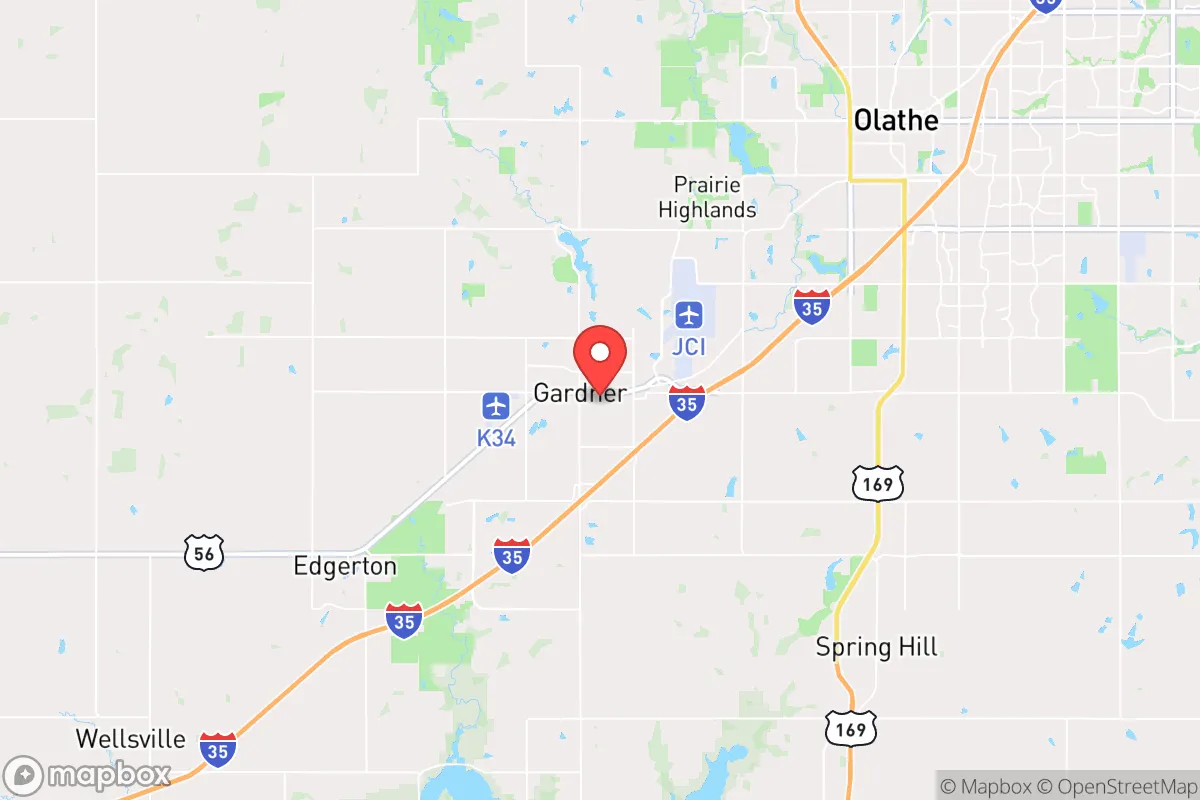
Gardner’s modern population boom began in the 1990s and accelerated after 2000, driven by suburban spillover from Johnson County, Kansas. The 1965 Hart-Cellar Act had little direct effect here—the foreign-born share remains low at 3.3%—but the city’s growth was fueled by domestic in-migration of white and, increasingly, minority families from the Kansas City metro. The construction of Interstate 35 and the expansion of the Gardner exit made the city a viable commuter suburb for jobs in Olathe, Overland Park, and downtown Kansas City. New subdivisions like Sunflower Ridge and Eagle Creek were built in the 2000s and 2010s, attracting a wave of young families, many of them white, but also a growing number of Hispanic and Black households. The Hispanic population, now 9.6%, is concentrated in the South Gardner area near 175th Street, where newer, more affordable housing stock and rental properties have drawn working-class families, many employed in construction, warehousing, and service industries. The Black population (7.1%) is more dispersed but has a visible presence in the Prairie Pines and Stonebridge neighborhoods, reflecting a broader trend of middle-class Black families moving to outer-ring suburbs for better schools and larger homes. The East/Southeast Asian community (1.2%) is small but present, with families in Eagle Creek and newer sections of Sunflower Ridge, often employed in professional and technical fields. The Indian subcontinent population (0.2%) is negligible, with no distinct enclave. Gardner’s modern identity is thus one of a predominantly white, native-born suburb that has become moderately diverse through domestic migration, not international immigration.
The future
Gardner’s population is projected to continue growing, potentially reaching 30,000 by 2035, driven by ongoing residential construction and the extension of city services. The city is not tribalizing into distinct ethnic enclaves; rather, it is homogenizing into a broadly middle-class, family-oriented suburb where racial and ethnic groups are increasingly integrated within the same subdivisions. The Hispanic and Black shares are likely to rise slowly, as these groups continue to follow the suburbanization pattern seen across Johnson and Miami counties. The foreign-born share will likely remain low, as Gardner lacks the industrial or service-sector jobs that attract large immigrant populations. The Gardner 2040 Comprehensive Plan emphasizes mixed-use development and higher-density housing near the I-35 corridor, which could attract more diverse residents, but the city’s character will remain predominantly white and native-born. The biggest demographic shift will be generational: as the current wave of millennial and Gen X parents ages, the city will see a growing senior population, potentially straining local services. For a newcomer, Gardner offers a stable, safe, and affordable environment with a conservative-leaning culture, but those seeking a highly diverse or internationally connected community will find it elsewhere.
In sum, Gardner is becoming a classic outer-ring suburb: predominantly white, middle-class, and family-focused, with moderate and slowly increasing diversity driven by domestic migration. The city’s history of agricultural settlement has given way to a commuter-based identity, and its future lies in managing growth while preserving the small-town feel that attracted its current residents. For a conservative-leaning individual or family moving in now, Gardner represents a predictable, low-crime, and community-oriented choice with good schools and a stable housing market.

* Values derived from national, state, county, city and local statistics and may differ in a specific area. Last updated: 2026-05-05T08:46:13.000Z
Narrative content on this page is AI-generated and may contain mistakes. Verify any details that matter before acting on them.
ReloMaps may earn a commission from affiliate links at no extra cost to you.

