
Photo: Wikipedia
Political ClimatePolitical Climate in Gardner, KS
District shown is the primary district for this city’s centroid. Cities may span multiple districts.
Local Political AnalysisPolitical Analysis of Gardner, KS
Gardner, Kansas, has historically been a reliably conservative community, but the political winds have shifted noticeably in recent years. The city now carries a Cook Partisan Voting Index (PVI) of D+2, meaning it leans slightly Democratic in national elections—a stark contrast to the surrounding state of Kansas, which sits at R+9. This change didn't happen overnight; it's been a slow creep as new developments and families from the Kansas City metro have moved in, bringing more progressive voting patterns with them. For those of us who remember when Gardner was a small, quiet farming town, seeing the local elections and school board races become more competitive—and sometimes leaning left—is a real concern.
How it compares
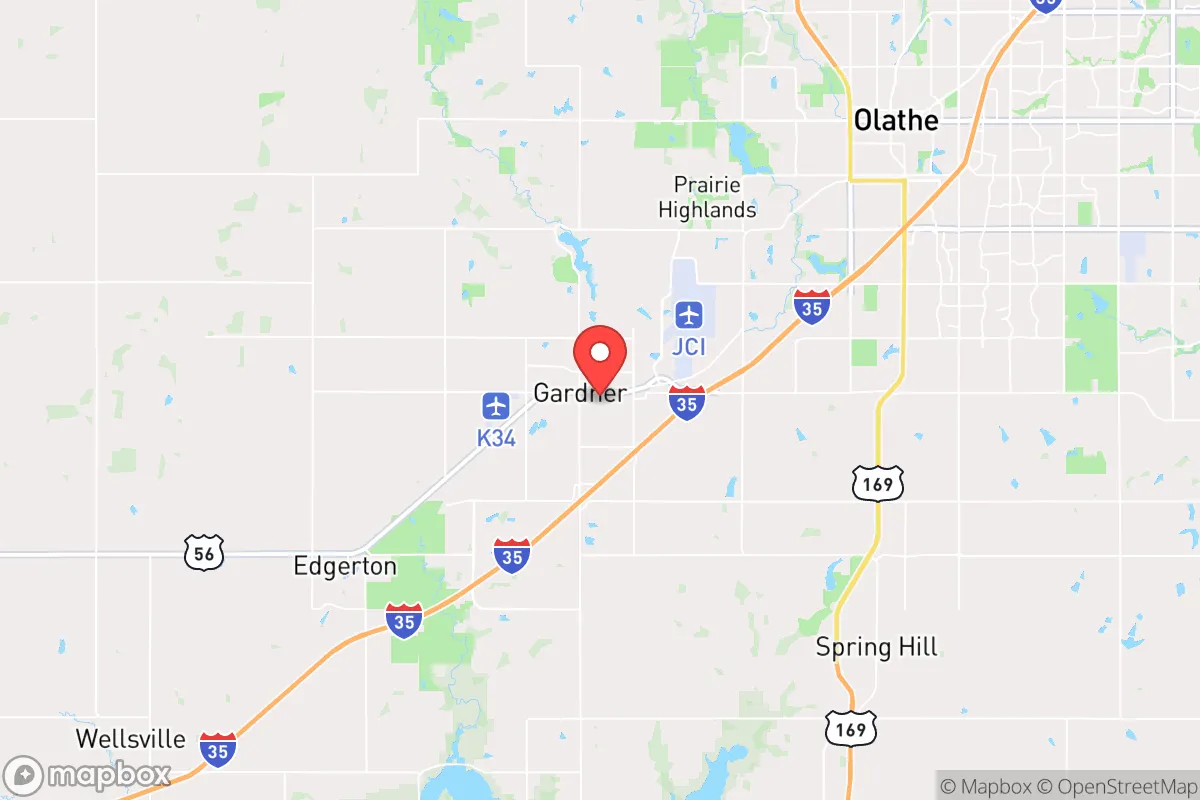
To understand Gardner's shift, you have to look at the broader region. Just a few miles north, Olathe and Overland Park are solidly in Johnson County, which has been trending purple for years. Gardner sits in southern Johnson County, but it's now feeling the same pressures. Compare that to nearby Edgerton or Spring Hill, which still vote heavily Republican, or to the rural areas west of Gardner like Baldwin City and Wellsville, where conservative values remain the norm. The state of Kansas as a whole is deeply red, but Gardner is becoming an outlier—a blue dot in a red sea. This isn't just about presidential elections; it's showing up in local races for city council and county commission, where candidates who support higher taxes, more regulations, and progressive social policies are gaining traction. For a longtime resident, it feels like the government is getting too big for its britches, meddling in things that used to be left to families and local communities.
What this means for residents
For families and individuals who value limited government and personal freedoms, Gardner's political trajectory is a red flag. The shift toward a D+2 lean means you're more likely to see policies that expand government reach—think stricter zoning laws, higher property taxes to fund new programs, and school curriculum changes that prioritize ideology over academics. The local school board, for instance, has seen heated debates over library books and classroom content, with some members pushing for more oversight that feels like government overreach into what parents should control. If you're moving here from a more conservative area, you'll notice that the city's growth has brought a more diverse set of opinions, but also a louder voice for progressive policies. The long-term trend is concerning: as more people move in from the metro, the political balance could tip further left, making it harder to preserve the community's traditional values.
One of the biggest cultural distinctions is how Gardner handles issues like property rights and business regulations. While the state of Kansas generally keeps a light touch, Gardner's local government has shown a willingness to impose new fees and restrictions on homeowners and small businesses. For example, recent debates over short-term rentals and home-based businesses have highlighted a growing divide between those who want more freedom and those who want more control. If you're looking for a place where you can live your life without the government looking over your shoulder, you might find Gardner's current path frustrating. The best advice I can give is to get involved in local politics—attend city council meetings, vote in every primary and general election, and support candidates who believe in limited government. Otherwise, you might wake up one day and realize the town you loved has changed more than you ever expected.

State Political ClimatePolitical Climate in Kansas
State Political AnalysisPolitical Environment in the State
Kansas is a solidly Republican state with a Cook PVI of R+9, but don’t let that number fool you into thinking it’s a monolith. Over the past 10-20 years, the state has been a battleground between traditional conservative governance and a more progressive, government-expanding agenda pushed by former Governor Sam Brownback’s tax experiment fallout and the subsequent “moderate” backlash. The dominant coalition is still center-right, but the trajectory has been a tug-of-war: after Brownback’s deep tax cuts in 2012 and 2013, the state saw a Republican-led legislature override his vetoes to raise taxes in 2017, followed by a return to tax-cutting under Governor Laura Kelly (a Democrat) and a GOP supermajority. The net effect is a state that remains reliably red in presidential elections—Trump won by 15 points in 2020—but with a legislature that often fights its own governor over spending and regulatory restraint.
Urban vs. rural divide
The political map of Kansas is a textbook case of urban-rural polarization. The Kansas City metro area, anchored by Johnson County (Overland Park, Olathe, Lenexa), is the state’s population and economic engine, and it’s where the GOP’s suburban slippage is most visible. Johnson County voted for Biden in 2020 by a narrow margin—a flip from its longtime Republican lean—driven by college-educated voters and professional-class families who are increasingly uncomfortable with the national GOP’s cultural stances. Wyandotte County (Kansas City, KS) is a deep blue, heavily minority, union-heavy stronghold that reliably delivers 70%+ Democratic margins. Douglas County (Lawrence, home to the University of Kansas) is another blue island, with a progressive, academic tilt that makes it a perennial outlier. Meanwhile, the rest of the state is deeply red. Sedgwick County (Wichita) is a bellwether—it voted for Trump but by narrower margins than the rural counties, and its suburban precincts are trending purple. The rural west and central plains—places like Garden City, Dodge City, and Hays—are rock-ribbed Republican, often voting 75-80% for the GOP. The divide isn’t just cultural; it’s economic, with rural areas feeling left behind by the urban-centric recovery and increasingly skeptical of state-level mandates from Topeka.
Policy environment
Kansas’s policy environment is a mixed bag for a conservative. On the plus side, the state has a flat income tax rate of 5.7% (down from a top rate of 6.45% a decade ago), and the legislature is actively working to eliminate the income tax entirely—a bill passed the House in 2025 but stalled in the Senate over fiscal concerns. Property taxes are a sore spot, especially in Johnson County, where rapid growth has driven assessments up faster than many retirees can stomach. The state has a constitutional carry law (no permit needed to carry a concealed firearm), and it’s a right-to-work state, which keeps union influence low. On the education front, the Kansas Supreme Court has repeatedly ordered the legislature to increase school funding, leading to a perennial battle between the judicial branch and the GOP supermajority. The result is that per-pupil spending has risen, but so have property taxes to fund it. Healthcare policy is a flashpoint: Kansas has not expanded Medicaid under the Affordable Care Act, despite Governor Kelly’s repeated pushes, leaving a coverage gap for low-income adults. Election laws are solidly conservative—voter ID is required, and the state purges inactive voters regularly. There’s no state-level rent control, and zoning in most cities remains single-family-friendly, though Overland Park and Lawrence have flirted with upzoning for density.
Trajectory & freedom
On the freedom front, Kansas has been a mixed story. The good news: the state passed a Second Amendment Preservation Act in 2021, affirming that state law enforcement won’t enforce federal gun bans. Parental rights got a boost with the Parental Bill of Rights (2022), which requires schools to notify parents about curriculum changes and medical decisions. The state also banned transgender athletes from girls’ sports (2023) and passed a law requiring schools to use students’ biological sex for bathroom access (2024). On the concerning side, the Kansas Supreme Court has been activist on abortion, ruling in 2019 that the state constitution protects a right to abortion—a decision that led to a 2022 constitutional amendment vote that failed by 18 points, a shocking defeat for pro-life advocates. That ruling means abortion remains legal up to 22 weeks, and the state has become a regional destination for out-of-state patients. Property rights are generally strong, but the state’s eminent domain powers have been used for economic development projects, notably in Wichita for the Airbus plant expansion. Medical autonomy took a hit with COVID-era mandates, but the legislature has since banned vaccine passports and prohibited mask mandates in schools. The overall trajectory is one of cultural conservatism clashing with judicial overreach—a dynamic that keeps the state from being as free as its rural base would like.
Civil unrest & political movements
Kansas hasn’t seen the kind of street-level unrest seen in coastal states, but there have been flashpoints. The 2020 George Floyd protests in Kansas City, KS and Lawrence saw some property damage and a heavy police response, but nothing on the scale of Portland or Seattle. The more persistent political movement has been on the right: the Kansas Republican Assembly and local Moms for Liberty chapters have been active in school board races, particularly in Johnson County, where they’ve successfully flipped several seats on platforms of curriculum transparency and parental rights. Immigration politics are a live wire in western Kansas, where Garden City and Dodge City have large meatpacking plant workforces that are heavily Hispanic. The state has no sanctuary city policies, and local law enforcement cooperates with ICE, but the economic dependence on immigrant labor creates a tension that rarely boils over into public protest. Election integrity controversies have been minimal—Kansas uses paper ballots and has robust post-election audits, and the 2020 and 2022 elections were largely uncontested. There’s no serious secession or nullification rhetoric, though some rural counties have passed “Second Amendment sanctuary” resolutions. The most visible flashpoint for a new resident would be the annual Kansas State Fair in Hutchinson, where political booths from both sides set up and debates get heated, but it’s still Midwestern polite.
Projection
Over the next 5-10 years, Kansas is likely to remain red but with a growing purple streak in its suburbs. The in-migration pattern is telling: people are moving to Johnson County from blue states like California and Illinois, drawn by lower taxes and housing costs, but they bring their cultural preferences with them. This will continue to shift the Kansas City suburbs leftward, while the rural areas will hold steady or even harden in their conservatism. The state’s demographic future is also shaped by the Hispanic population in western Kansas, which is growing but not yet voting in numbers that would flip any districts. The biggest wildcard is the state Supreme Court: if the court continues to block conservative legislation on abortion and school funding, expect a push for judicial selection reform—possibly moving from merit selection to partisan elections or Senate confirmation. The income tax elimination push will likely succeed within the next decade, but only if the state’s revenue holds up. For a conservative moving in now, expect to find a state where your vote matters in primaries but not in general elections, where your property taxes will rise faster than your income taxes fall, and where the cultural battles are fought in school board meetings and courtrooms rather than on the streets.
Bottom line for a new resident: Kansas is a good place for a conservative family if you’re willing to engage locally. The state government is reliably center-right, but the judiciary and the urban counties will push back on the most ambitious conservative reforms. You’ll find strong gun rights, low income taxes, and a culture of neighborly independence, but you’ll also pay rising property taxes and live under a state Supreme Court that has effectively nullified the legislature’s abortion restrictions. If you’re moving from a deep blue state, you’ll breathe easier here—but don’t expect a libertarian paradise. The fight for freedom in Kansas is ongoing, and it happens at the ballot box, in the courtroom, and at your local school board meeting.
* Values derived from national, state, county, city and local statistics and may differ in a specific area. Last updated: 2026-05-05T08:46:13.000Z
Narrative content on this page is AI-generated and may contain mistakes. Verify any details that matter before acting on them.
ReloMaps may earn a commission from affiliate links at no extra cost to you.

