
Photo: Wikipedia
Personal Sovereignty in Gardner, KS
Viable for self-reliance. Generally workable, though some barriers may limit total independence.
What does Personal Sovereignty tell us?
Personal Sovereignty measures your capacity for self-reliance and independence with minimal government friction. Higher scores mean fewer barriers between you and the way you want to live... but it assumes you have the space you need and good neighbors.
What does this tell us?
Personal Sovereignty measures your capacity for self-reliance and independence with minimal government friction. Higher scores mean fewer barriers between you and the way you want to live... but it assumes you have the space you need and good neighbors.
State Policy
Energy independence: Self-sufficient (80% of energy produced in-state)
Personal Liberty
Homesteading

Personal Liberty Analysis
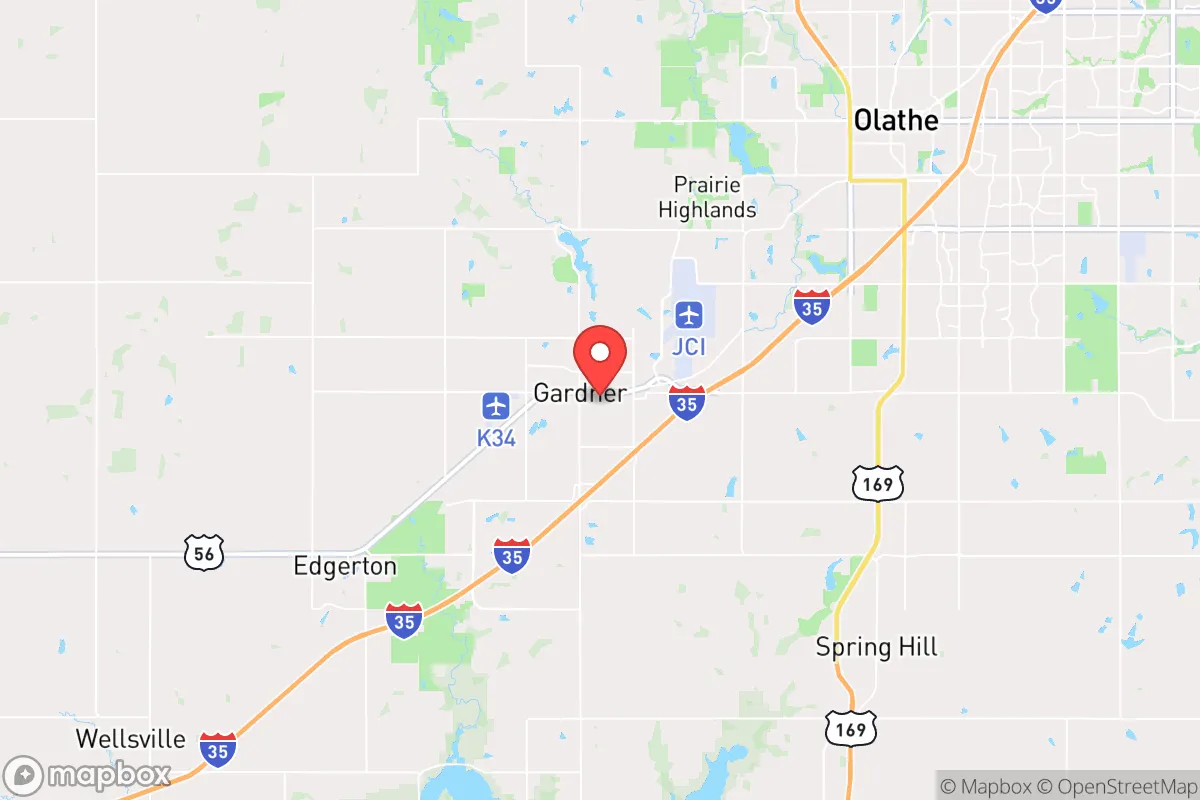
Gardner, Kansas, offers a notably high degree of personal sovereignty relative to many parts of the country, particularly for those who prioritize minimal government interference in daily life. As a growing suburb southwest of Kansas City, it sits within Johnson County, which consistently ranks among the most fiscally conservative and business-friendly counties in the nation. For the strategic-minded individual or family, Gardner represents a practical balance of proximity to urban resources and a regulatory environment that largely respects individual autonomy, though it is not a libertarian free-for-all. The key is understanding where the state and local lines are drawn, and how they align with a prepper or survivalist mindset focused on self-reliance and limited government overreach.
Tax burden and regulatory posture: How Kansas compares to surrounding states
Kansas has undergone significant tax reform in recent years, and Gardner residents benefit directly from a state-level posture that is generally favorable to personal and business sovereignty. The state’s flat income tax rate of 5.7% (as of 2025) is competitive, and Johnson County’s property tax rates, while not the lowest in the nation, are moderate for the Kansas City metro area. Crucially, Kansas does not tax Social Security benefits, and it offers a significant deduction on other retirement income, which is a strong signal for those planning long-term self-sufficiency. The regulatory environment in Gardner is pragmatic; the city has a streamlined permitting process for home-based businesses and accessory structures, which is a direct advantage for anyone looking to operate a small-scale enterprise or build a workshop without excessive red tape. Compared to neighboring Missouri, Kansas has a slightly higher income tax but lower sales tax on groceries and a more predictable property tax assessment process. For the prepper, the absence of a state-level estate tax and the relatively low corporate tax rate (4.0% for most businesses) mean that wealth accumulation and intergenerational transfer of property—whether land, tools, or supplies—face fewer government claims.
Self-defense and gun law specifics: What Gardner residents can legally do
Kansas is a strong Second Amendment state, and Gardner residents enjoy some of the most permissive self-defense laws in the region. The state is a constitutional carry jurisdiction, meaning no permit is required to carry a concealed firearm for any law-abiding adult 21 or older (18 for military members). Open carry is also legal without a permit. Gardner itself has no local ordinances that further restrict state law, so the full scope of Kansas’s preemption statute applies—local governments cannot ban or regulate the carrying of firearms. Stand-your-ground laws are in full effect, with no duty to retreat in any place where a person is lawfully present. For the survivalist, this means that defensive use of force in one’s home, vehicle, or even on public property is legally protected as long as it is reasonable. Magazine capacity restrictions do not exist, and there is no state-level registry for firearms or ammunition. The only notable limitation is that Kansas does not recognize out-of-state concealed carry permits from all states, so travelers should verify reciprocity. For those stockpiling or training, the legal environment is as close to unencumbered as one can find in a suburban setting, though federal restrictions on NFA items (suppressors, short-barreled rifles) still apply.
Self-reliance and homesteading viability: Lot sizes, zoning, and off-grid feasibility
Gardner’s zoning and lot size regulations offer a mixed but generally favorable picture for those seeking a self-reliant lifestyle. Within the city limits, standard residential lots range from one-quarter to one-half acre, which is enough for a substantial garden, a small chicken coop, and a sizable workshop or storage shed—but not for large livestock or full-scale farming. The city allows backyard chickens (hens only, no roosters) with a permit, and beekeeping is permitted with registration. Rainwater collection is legal and encouraged, though it must be used for non-potable purposes like irrigation. For those seeking true off-grid capability, the key is to look at the unincorporated areas of Johnson County just outside Gardner’s city limits, where lot sizes can be 1 to 5 acres or more. In those areas, there are no county-level restrictions on solar panels, composting toilets, or private wells, though a septic system permit is required. The biggest regulatory hurdle for off-grid living is the county’s building code, which requires permits for any habitable structure, but it does not mandate connection to municipal water or sewer if a well and septic are installed. For the prepper, the sweet spot is a property just outside the city limits—within a 10-minute drive of Gardner’s amenities but free from the city’s more restrictive zoning on livestock and accessory structures. The area’s relatively low land prices (compared to the rest of Johnson County) make this a viable option for those willing to commute.
Personal liberties: Parental rights, medical autonomy, speech, and property rights
On the broader spectrum of personal liberties, Kansas and Gardner score well for those concerned with government overreach. Parental rights are strongly protected under state law; Kansas has a parental rights statute that affirms parents’ fundamental right to direct the upbringing, education, and healthcare of their children. This has practical implications for school choice (Gardner is served by the Gardner Edgerton School District, which offers open enrollment and several charter options), as well as for medical decisions, including vaccination exemptions. Medical autonomy is further supported by Kansas’s lack of a state-level vaccine mandate for adults and its relatively relaxed scope-of-practice laws for alternative medicine. Free speech is robustly protected, with no local ordinances that restrict political expression, signage, or assembly beyond standard time-place-manner rules. Property rights are a strong point: Kansas has a right-to-farm law that protects agricultural operations from nuisance lawsuits, and eminent domain is rarely used for private development. The state also has a strong homestead exemption (up to $60,000 of a home’s value is protected from creditors), which is a critical asset for anyone building a self-sufficient homestead. The only area where personal sovereignty is notably constrained is in the realm of land use—the city’s zoning code does restrict the number of unrelated adults who can live in a single dwelling, which could be a concern for those planning a multi-family survival group. However, this restriction does not apply in unincorporated areas.
Overall, Gardner, Kansas, offers a level of personal sovereignty that is well above the national median, particularly for those who prioritize gun rights, low taxes, and parental control. It is not a remote, regulation-free zone—you cannot build a bunker without a permit or keep a herd of goats in a suburban backyard—but it provides a legal and cultural environment that respects individual autonomy more than most suburban alternatives in the Midwest. For the strategic relocator with a survivalist mindset, Gardner’s combination of constitutional carry, low tax burden, and strong property rights makes it a solid base of operations, especially when paired with a small acreage just outside the city limits. The trade-off is proximity to a major metro area, which brings some regulatory oversight, but for those who value both community and freedom, it is one of the better bets in the region.

* Values derived from national, state, county, city and local statistics and may differ in a specific area. Last updated: 2026-05-05T08:46:13.000Z
Narrative content on this page is AI-generated and may contain mistakes. Verify any details that matter before acting on them.
ReloMaps may earn a commission from affiliate links at no extra cost to you.

