Photo: Wikipedia
Strategic Assessment of Gardner, KS
Meaningful friction. Expect exposure to either population pressure, blast zones, or natural disaster risk. Consider buying a retreat property.
What does the Strategic Assessment tell us?
Our Strategic Assessment grades tactical survivability of an area. Major population centers, military targets, fallout zones, natural disasters, and border exposure all drive risk — lower exposure means a more defensible position in a crisis.
This is heavily inspired by Joel Skousen's Strategic Relocation book. Highly recommended you checkout the book ($)What does this tell us?
Our Strategic Assessment grades tactical survivability of an area. Major population centers, military targets, fallout zones, natural disasters, and border exposure all drive risk — lower exposure means a more defensible position in a crisis.
This is heavily inspired by Joel Skousen's Strategic Relocation book. Highly recommended you checkout the book ($)Strategic Pillars

Key Distances
Regional Safe Places
Below is our recommended "safe zones" in Kansas and the surrounding area based on our strategic heuristics. For most people, it's unrealistic to live in a “safe zone” full-time due to work, family or other personal reasons. They tend to be more rural. However, many of these areas are perfect for second homes and retreat properties that double as a vacation home or even a short-term rental.
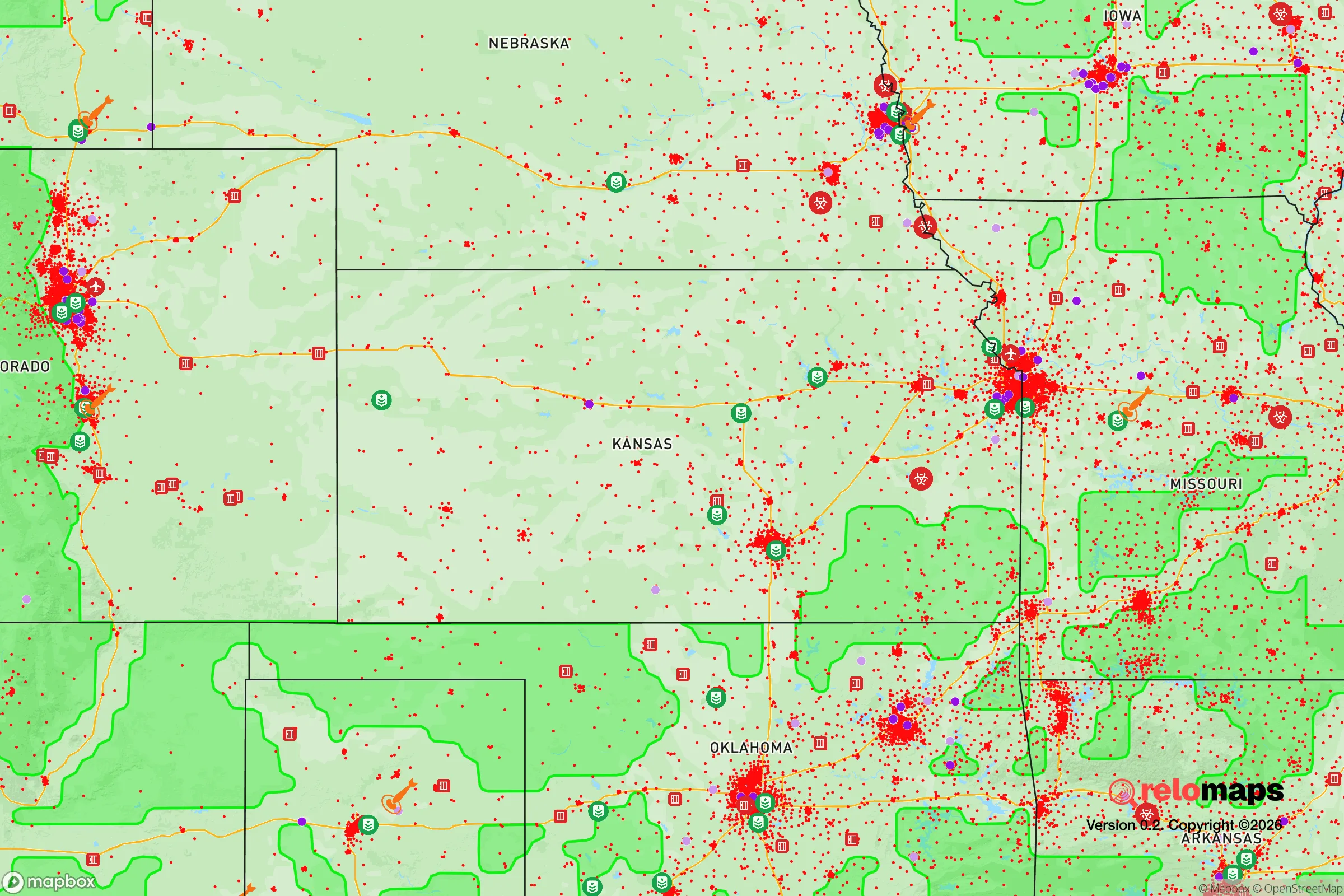
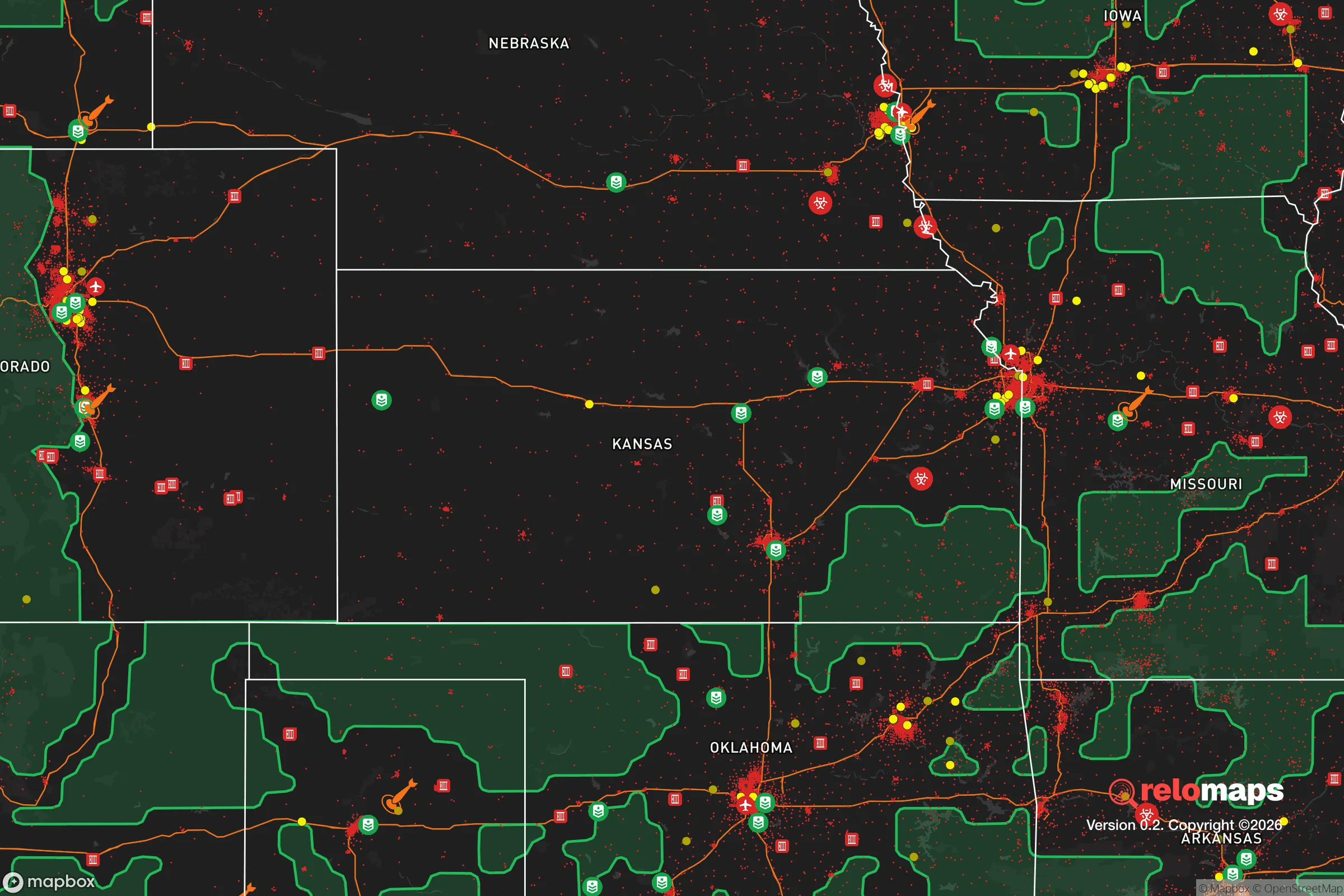


Important Note: For informational purposes only. This does not mean nothing bad ever happens in the green zones. Please use common sense. This is based on public data and modeled with AI. We tried to take a conservative approach but mistakes happen. We update this regularly as new information becomes available.
Solar Generator Recommendations
Backup power matters more here than in safer locations. We've picked three solar generators across budgets and capacity tiers — start with the budget unit if you only need a few essentials, or step up if you want to run a fridge and HVAC for days at a time.

Jackery Portable Power Station Explorer 300
Budget OptionPower on the Go: Weighing only 11 lbs, it's convenient to set up and store with book-sized foldable solar panels

BLUETTI Portable Power Station AC180
Designed for both indoor and outdoor scenarios, AC180 is highly capable as it has a robost capacity and continuous output power.

EF ECOFLOW DELTA Pro Ultra Power Station
Upgraded PickEcoFlow DELTA Pro Ultra is a whole-home energy system designed to grow with your family. Integrated with the Smart Home Panel 2, it scales to meet your evolving energy needs — keeping your home powered, intelligent, and secure through every stage of life.
We earn a commission, at no additional cost to you.
Strategic Assessment Analysis
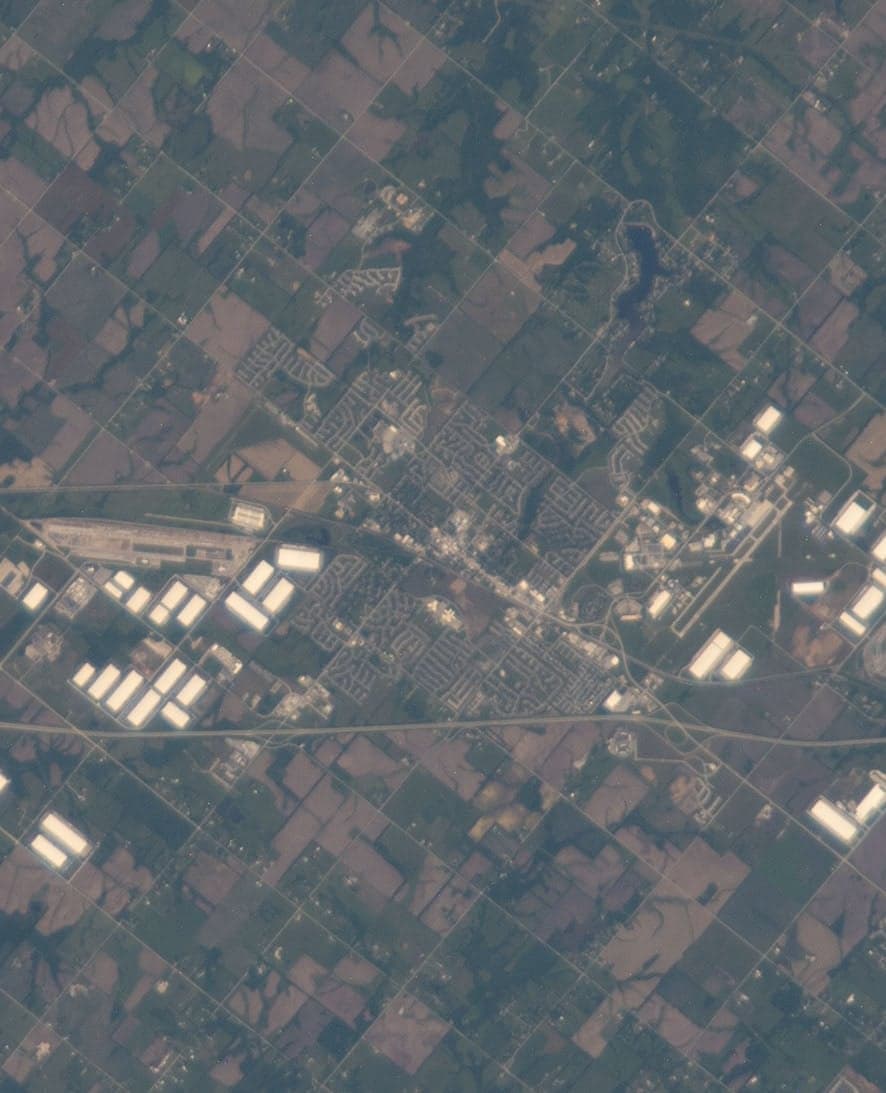
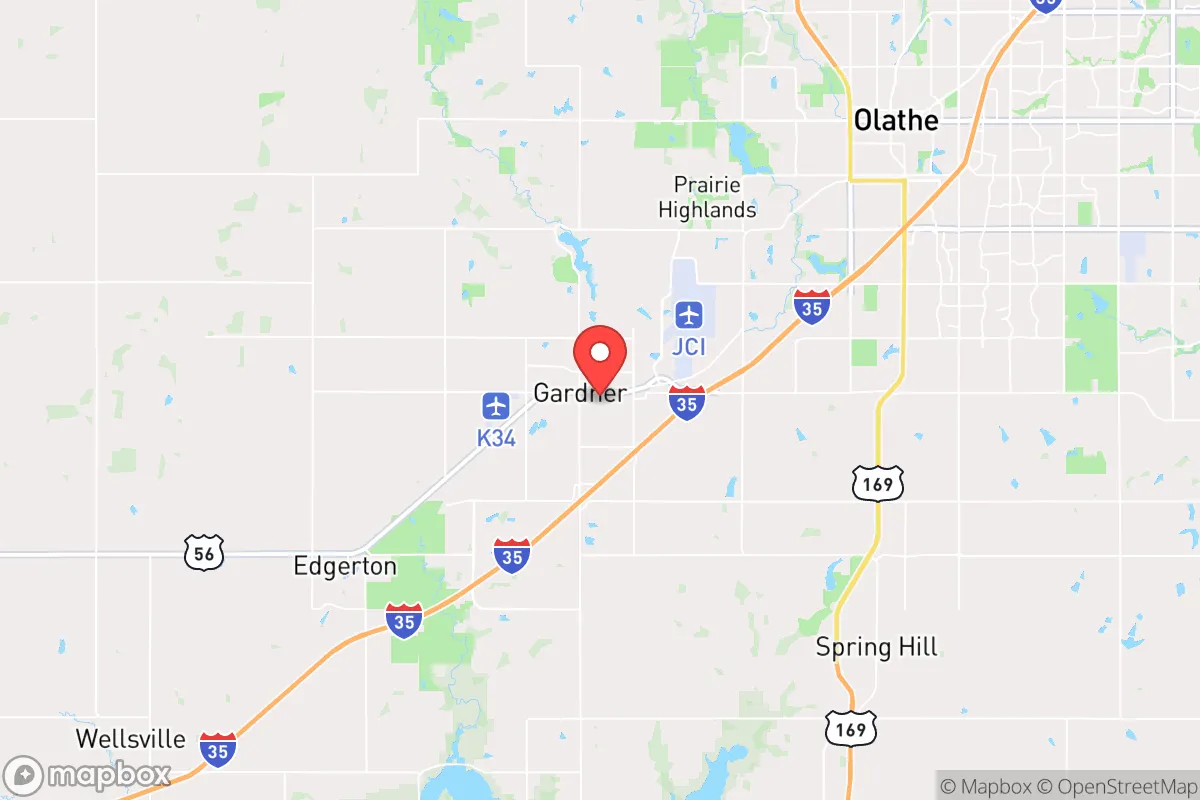
Gardner, Kansas, sits in a deceptive pocket of the American heartland that offers genuine strategic depth for those thinking seriously about resilience, but it demands clear-eyed trade-offs. Located roughly 30 miles southwest of Kansas City along the I-35 corridor, this Johnson County town of roughly 22,000 residents benefits from the economic buffer of a growing exurb while remaining close enough to major infrastructure to matter. For a relocator operating from a prepper or survivalist mindset, Gardner’s real value lies in its position on the edge of the Kansas Flint Hills—a vast, sparsely populated grassland region that provides natural cover, water access, and agricultural potential—while its primary risk is the same I-35 that connects it to a major metropolitan target zone. This analysis weighs those factors for single individuals and parents who want to be prepared for civic unrest, mass casualty events, or systemic disruptions, without romanticizing the area’s vulnerabilities.
Geographic position and natural advantages for long-term security
Gardner’s location at the intersection of U.S. Highway 56 and I-35 places it at a strategic hinge point. To the west and south lie the Flint Hills, a region of rolling tallgrass prairie with thin, rocky soil that discouraged dense settlement—meaning low population density, limited road networks, and natural terrain that channels movement. This is not mountainous terrain, but the hills and creek valleys provide enough undulation to break line of sight and slow vehicular travel off the main arteries. The area sits atop the Ozark Plateau aquifer system, with the Great Bend Prairie aquifer to the west, giving Gardner better groundwater access than many Plains towns. Surface water is available via the Marais des Cygnes River basin to the south and several smaller creeks that drain into the Kansas River system. For a relocator, this means you are not dependent on a single reservoir or pipeline—multiple water sources exist within a 20-mile radius. The climate is continental, with hot summers and cold winters, but annual precipitation averages around 38 inches, enough for dryland farming and rainwater catchment without the drought risk of the High Plains. Gardner’s position also places it outside the 50-mile blast radius of any major military or nuclear infrastructure—Whiteman Air Force Base is 80 miles southeast, and the Kansas City metro’s strategic targets (rail yards, FedEx hub, intelligence community facilities) are 30-plus miles northeast. That distance is enough to avoid direct blast effects from a ground burst, but not enough to ignore fallout patterns, which we’ll cover next.
Risks, exposures, and proximity to fallout-relevant landmarks
The single greatest strategic liability for Gardner is its proximity to the Kansas City metropolitan area, a population center of roughly 2.2 million that includes multiple high-value targets in a major crisis. The I-35 corridor runs directly through Gardner, and that highway is both a lifeline and a vulnerability. In a scenario involving civil unrest, supply chain collapse, or mass evacuation, I-35 would become a choke point—likely clogged, contested, or controlled by government or military checkpoints. Gardner’s position 30 miles from downtown Kansas City places it within the moderate fallout zone for a ground-level nuclear detonation at the city center. Using standard fallout models, a 10-kiloton device at surface level would produce dangerous radiation levels (above 100 rem/hr) extending roughly 15–20 miles downwind, with lower but still hazardous levels reaching 30–40 miles depending on wind direction. Prevailing winds in eastern Kansas are from the south and southwest, meaning Gardner is more likely to be upwind of a Kansas City strike than downwind—but that is a statistical probability, not a guarantee. The area also sits within 100 miles of the Wolf Creek Generating Station (nuclear power plant) near Burlington, Kansas, about 90 miles southwest. A major incident there could push fallout northeast toward Gardner. Additionally, the BNSF Railway main line runs through Gardner, carrying hazardous materials including crude oil, anhydrous ammonia, and chlorine. A derailment or intentional release could contaminate the local water table or air. For a relocator, these risks mean that Gardner is not a remote bug-out location—it is a suburban buffer zone that requires active monitoring of wind patterns and a pre-planned secondary retreat deeper into the Flint Hills if the situation deteriorates.
Practical resilience for a relocator: food, water, energy, and defensibility
Gardner’s practical resilience for a single individual or family depends heavily on whether you own land or are renting in a subdivision. The town itself is a standard exurban grid of single-family homes, strip malls, and big-box stores—not inherently defensible, but not indefensible either. The key advantage is that Johnson County has some of the best soil in Kansas for small-scale agriculture, and the surrounding farmland is actively productive. Corn, soybeans, and wheat are the dominant crops, but there are also numerous small farms raising cattle, hogs, and poultry within a 10-mile radius. For a relocator, this means local food sources exist, but they are commercial operations, not subsistence farms—you would need to establish relationships with farmers before a crisis, or secure your own acreage. Water is the stronger suit. Gardner’s municipal water comes from the Kansas River via the Johnson County Water District, but the area’s groundwater is accessible via shallow wells (typically 30–80 feet) in the alluvial valleys. Rainwater catchment is viable given the 38-inch annual rainfall, and the county does not restrict residential rainwater collection. Energy is a mixed picture. The grid is served by Evergy, which relies on a mix of coal, natural gas, and wind. Power outages are common during thunderstorms and ice storms, but the area has no history of rolling blackouts. Solar potential is moderate—eastern Kansas gets about 4.5 peak sun hours per day, enough for a grid-tied system with battery backup, but not for full off-grid reliance without significant panel area. Natural gas is widely available for heating and cooking, which is a resilience advantage over all-electric homes. Defensibility is the weakest point for in-town Gardner. The subdivision layouts are typical suburban cul-de-sacs with multiple access points, limited fields of fire, and close neighbor proximity. A rural property 5–10 miles south or west of town, on a dead-end gravel road with a creek boundary, would offer far better security. For parents, the local schools (Gardner Edgerton School District) are well-regarded and the community has a strong sense of local identity, which can be a social resilience asset—neighbors who know each other are more likely to cooperate in a crisis.
The overall strategic picture for Gardner, Kansas, is that of a solid B-tier relocation option for the prepper-minded conservative. It offers genuine natural advantages—good water, productive soil, low population density to the west, and a climate that supports year-round food production—while carrying the unavoidable risk of being within a day’s drive of a major city that could become a target or a source of unrest. It is not a remote sanctuary; it is a forward operating base on the edge of the Flint Hills. For a single individual or family willing to invest in a rural property outside the town limits, stockpile supplies, and maintain a low profile, Gardner provides a defensible position with access to resources that many more remote locations lack. But for those who want absolute isolation from metropolitan fallout and civil chaos, you need to go another 50–100 miles west, into the true empty quarter of the High Plains. Gardner is a compromise—and in a world of compromises, it is one of the more rational ones for the Midwest.

* Values derived from national, state, county, city and local statistics and may differ in a specific area. Last updated: 2026-05-05T08:46:13.000Z
Narrative content on this page is AI-generated and may contain mistakes. Verify any details that matter before acting on them.
ReloMaps may earn a commission from affiliate links at no extra cost to you.

