Photo: Wikipedia
Quality of Life in Garrison, ND
A livable area that tracks near national norms for affordability, walkability, and neighborhood health.
What does Quality of Life tell us?
Quality of Life blends cost of living, nearby amenities, socioeconomic signals, and neighborhood character. City-level scores represent the whole municipality; individual neighborhoods can differ.
What does this tell us?
Quality of Life blends cost of living, nearby amenities, socioeconomic signals, and neighborhood character. City-level scores represent the whole municipality; individual neighborhoods can differ.
Cost of Living
42% below national average
The Real Cost of Living in Garrison, ND for 2026
| Tier | Individual | Family (4) |
|---|---|---|
| Survival | $10k | $19k |
| Comfortable | $35k | $52k |
| Luxury | $99k+ | $154k+ |
| Elite (Top 5%) | $117k+ | $181k+ |
132%
The Area Signal
A metric tracking the socioeconomic signals of the area.


Limited data for this area
Limited data for this area
Hobbies
Explore the areaGroceries
4 within 10 miles
Gas
0 within 10 miles
Hospital
3 within 20 miles
Airport
JFK — John F. Kennedy Memorial
Post Office
USPS — Garrison, ND
Critical Amenities
Quality-of-Life Analysis
Garrison, North Dakota, presents a notably affordable quality of life in a community shaped by its proximity to Lake Sakakawea and a strong rural work ethic. With a cost of living index of 58—42 percent below the U.S. average—the town attracts a mix of retirees, outdoor enthusiasts, and workers in energy, agriculture, and education who value space and low expenses over urban convenience. The population of roughly 1,500 is predominantly white and older, with a median age near 45, reflecting a stable, long-term resident base rather than a transient workforce.
Cost of living, housing, and affordability compared to Minot and Bismarck
Garrison’s housing market is a primary draw, with a median home value of $181,800—roughly half the national median—and a median rent of just $625. This makes homeownership accessible even on modest incomes, and the gap widens when compared to larger regional hubs: Minot’s median home value hovers around $240,000, while Bismarck’s exceeds $300,000. Renters in Garrison pay about 30 percent less than their counterparts in Minot. The average commute of 18 minutes is short by any standard, reflecting the town’s compact layout and the fact that most residents work locally or within a 20-mile radius. Property taxes in McLean County are moderate, and no state income tax in North Dakota further stretches household budgets. However, the trade-off is limited rental inventory and an older housing stock; newer construction is rare and typically custom-built.
Local amenities, schools, and what daily life feels like
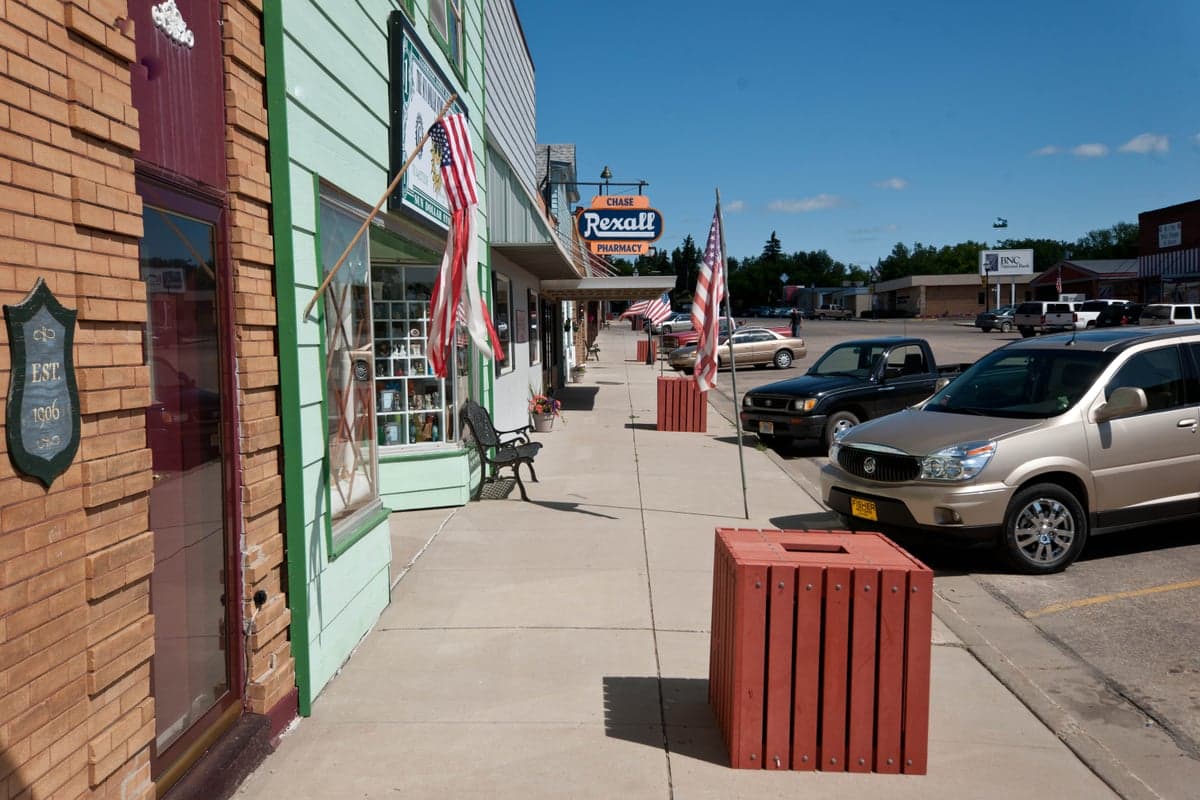
Daily life in Garrison revolves around a small downtown core anchored by a grocery store, a hardware store, a pharmacy, and a handful of cafes and bars. The Garrison Public School District serves K-12 with about 400 students total, maintaining a 12:1 student-teacher ratio and solid state test scores in reading and math. For healthcare, the Garrison Community Health Center provides primary care, but specialists and hospital services require a 45-minute drive to Minot. The town’s standout amenity is Lake Sakakawea State Park, located 10 minutes south, offering boating, fishing, hiking, and camping that define summer weekends. Winter brings ice fishing, snowmobiling, and a quieter pace. There is no major shopping mall or entertainment complex; residents rely on Minot for big-box retail, dining variety, and cultural events like the Norsk Høstfest. The local library and community center host book clubs, senior activities, and youth sports leagues, but nightlife is minimal.
Garrison is best suited for those who prioritize low cost, outdoor recreation, and a tight-knit, slower rhythm over career diversity or urban amenities. Retirees on fixed incomes, remote workers with stable internet (fiber is available in parts of town), and families seeking safe, affordable housing will find the most value. Professionals in specialized fields—tech, finance, advanced healthcare—may struggle with limited local job options and will likely need to commute or work remotely. The town’s political and social character is conservative and self-reliant; newcomers who engage in community events and volunteerism integrate quickly, while those expecting anonymity or a fast-paced lifestyle may feel isolated. For the right person, Garrison offers a financially sustainable, low-stress life with direct access to one of North Dakota’s premier natural assets.

Crime in Garrison, ND
Lower crime rates than 100% of comparable U.S. locations.
Violent CrimeViolent Crime Analysis
Property CrimeProperty Crime Analysis
Crime Analysis
Garrison, North Dakota, is one of the safest small communities in the state, reporting a violent crime rate of 0 per 100,000 residents and a property crime rate of 0 per 100,000 residents. These figures place the town far below both the North Dakota state average and the national median, reflecting a community where serious crime is virtually nonexistent. The data, drawn from the most recent FBI Uniform Crime Reporting statistics, underscores a living environment that is exceptionally secure by any standard.
Crime in context
Garrison’s crime rates are statistically zero, a distinction shared by very few incorporated places in the United States. For comparison, the national violent crime rate stands at approximately 380 per 100,000, and North Dakota’s own rate hovers around 340 per 100,000. Property crime nationally averages near 1,950 per 100,000, while Garrison’s reported rate of zero places it in the safest percentile of all U.S. municipalities. This level of safety is typical of small, tight-knit rural communities in central North Dakota, where social cohesion and low population density naturally deter criminal activity. It is important to note that Garrison is not a large metro area and does not contend with the systemic crime challenges associated with progressive prosecutorial policies in urban jurisdictions; the local justice system operates with a focus on public safety and accountability.
What residents experience
Residents of Garrison describe a daily life where unlocked doors and unattended property are common, and fear of victimization is minimal. The town’s police department, while small, maintains a visible and responsive presence, and community watch dynamics are informal but effective. The most common public safety concerns are minor traffic infractions and occasional disturbances, not violent or property crimes. For families, the primary safety consideration is not street crime but rather seasonal hazards like winter driving conditions on State Highway 37 or recreational safety on nearby Lake Sakakawea. The absence of gang activity, drug-related violence, or organized property crime rings is a direct result of the community’s isolation and strong social norms.
Neighborhood-level variation
Given Garrison’s uniformly low crime rate, neighborhood-level variation is negligible. The entire town, from the lakeside residential areas near the Garrison Dam to the central business district along Main Street, experiences the same baseline of safety. The only practical distinction is that homes directly on the lake may see occasional minor thefts from unattended boats or docks during peak tourist season, but these incidents are rare and do not affect the overall statistical picture. For anyone considering relocation, the entire town offers a consistent, high level of personal and property security.
* Values derived from national, state, county, city and local statistics and may differ in a specific area. Last updated: 2026-04-19T07:46:48.000Z
Narrative content on this page is AI-generated and may contain mistakes. Verify any details that matter before acting on them.
ReloMaps may earn a commission from affiliate links at no extra cost to you.

