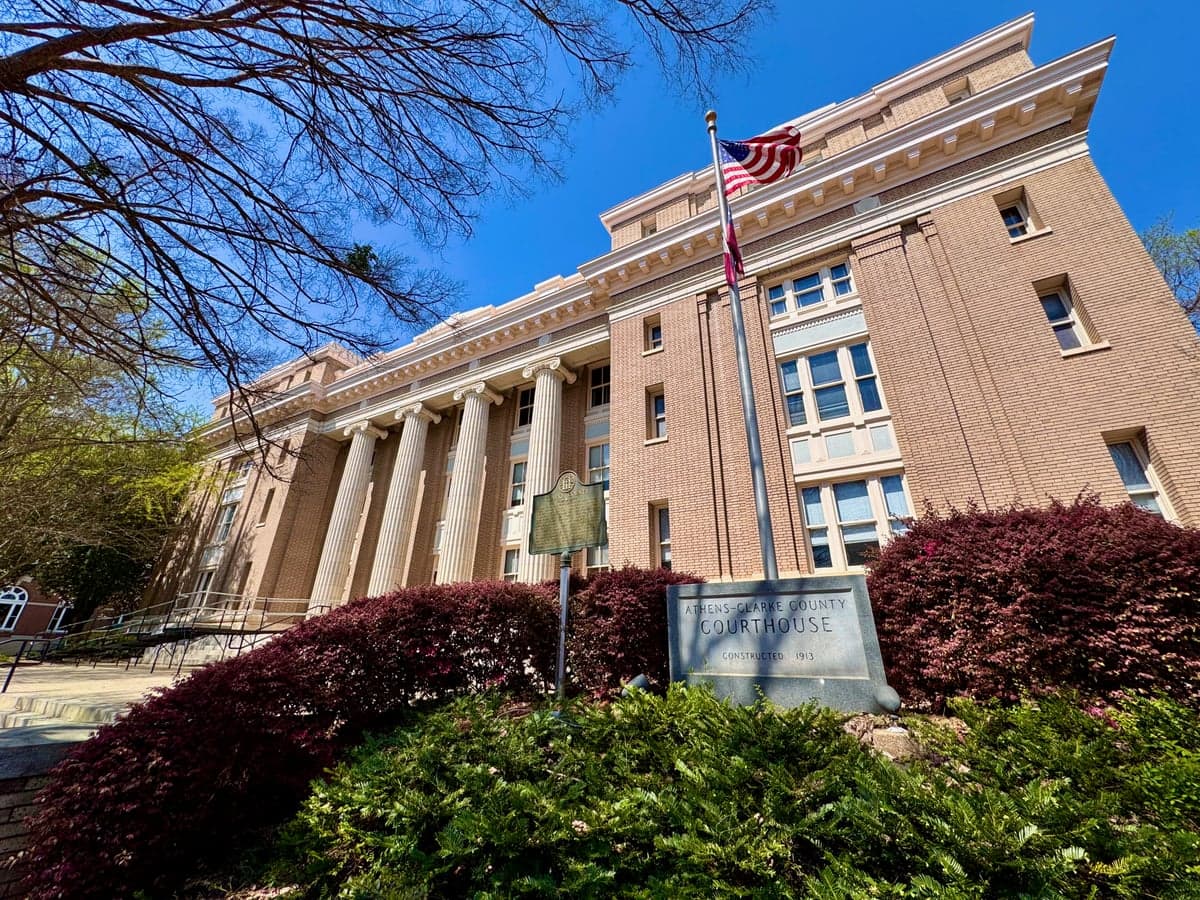
Photo: Wikipedia
Quality of Life in Clarke County
A livable area that tracks near national norms for affordability, walkability, and neighborhood health.
What does Quality of Life tell us?
Quality of Life measures an area by evaluating factors like cost of living, nearby amenities, country club access, airport proximity, socioeconomic signals and neighborhood character. For large states, this is a general average — quality of life can vary dramatically between metro areas, suburbs, and rural communities within the same state.
What does this tell us?
Quality of Life measures an area by evaluating factors like cost of living, nearby amenities, country club access, airport proximity, socioeconomic signals and neighborhood character. For large states, this is a general average — quality of life can vary dramatically between metro areas, suburbs, and rural communities within the same state.
Cost of Living
1% below national average
67%
The Real Cost of Living in Clarke County for 2026
| Tier | Individual | Family (4) |
|---|---|---|
| Survival | $19k | $35k |
| Comfortable | $53k | $78k |
| Luxury | $94k+ | $146k+ |
| Elite (Top 5%) | $132k+ | $205k+ |
Quality-of-Life Analysis
Clarke County, Georgia offers a quality-of-life spectrum that ranges from the vibrant, walkable college town of Athens to quiet, unincorporated crossroads communities, drawing everyone from university faculty and students to rural homesteaders and commuters. The county’s character is defined by this tension: a nationally recognized music and arts scene concentrated in its urban core, while just a few miles away, farmland and forest define daily life. With a cost-of-living index of 99 (on par with the national average), a median home value of $271,900, and a median rent of $1,162, the county provides more affordable entry points than metro Atlanta, though prices climb sharply in the most desirable in-town neighborhoods.
Largest town(s) & population centers
Athens is the county seat and dominant population center, home to the University of Georgia (UGA) and roughly 127,000 residents. Daily life here revolves around the university calendar, with downtown’s iconic music venues (the 40 Watt Club, the Georgia Theatre), a dense network of restaurants and bars, and a robust bike-and-pedestrian culture. The city’s historic districts—such as Five Points, Boulevard, and Cobbham—feature Victorian and Craftsman homes, while newer developments like the mixed-use Downtown Athens area and the Eastside (along Lexington Road) offer apartments and townhomes catering to students and young professionals. The average commute of 20.8 minutes is notably short for a city of this size, thanks to a compact urban footprint and limited regional sprawl. Winterville, a small town just east of Athens, functions as a quieter bedroom community with its own historic downtown, a popular farmers market, and a strong sense of local identity.
Smaller towns & rural pockets
Beyond Athens and Winterville, Clarke County’s smaller communities are largely unincorporated and defined by their proximity to the city. Bogart straddles the Clarke-Oconee county line and offers a mix of older ranch homes and newer subdivisions, with a small commercial strip along US-29. Watkinsville, technically in Oconee County but immediately adjacent to Clarke, is often grouped with the area due to its excellent schools and easy access to Athens. Within Clarke itself, rural pockets like Whitehall (south of the city) and Princeton (northwest) consist of scattered homes on acreage, small farms, and a handful of churches and convenience stores. These areas lack municipal services like public water and sewer, but offer larger lots—typically 1 to 5 acres—and a quieter pace of life. Timothy, a tiny crossroads near the Oglethorpe County line, is another example of the county’s rural fringe, where residents often keep horses or run small-scale agricultural operations.
Cost & lifestyle range
The cost of living in Clarke County varies dramatically by location. At the high end, Five Points and Boulevard in Athens command median home values well above the county average of $271,900, often exceeding $400,000 for renovated historic homes. Rents in these areas can reach $1,500–$2,000 for a two-bedroom. In contrast, the Eastside and Westside neighborhoods offer more affordable options, with median home values around $200,000–$250,000 and rents closer to the county median of $1,162. The most budget-friendly areas are the rural pockets: Whitehall and Princeton often have homes under $200,000, though they may require well water and septic systems. Winterville sits in the middle, with a median home value near $280,000 and a tight housing inventory that keeps prices stable. Lifestyle follows these price tiers: in-town residents walk to coffee shops and concerts, while rural residents trade convenience for space, quiet, and lower property taxes (Clarke County’s millage rate is roughly 30 mills, higher than neighboring Oconee but lower than many metro Atlanta counties).
Clarke County works best for people who want a mix of urban energy and rural possibility. Young professionals and academics thrive in Athens’ walkable core, while families and retirees often choose Winterville or the rural fringe for better school options (Oconee County schools are top-ranked) and larger lots. The county’s compact size—just 121 square miles—means that even the most remote home is rarely more than 20 minutes from a grocery store or hospital, making it a practical choice for those who want country living without isolation.

Crime in Clarke County
Generally safer than 57% of comparable U.S. locations.
Violent CrimeViolent Crime Analysis
Property CrimeProperty Crime Analysis
Crime Analysis
Clarke County, Georgia, presents a mixed safety picture for potential residents. The county’s violent crime rate of 253 incidents per 100,000 residents sits below the national average but above the Georgia state average, while its property crime rate of 1,189.7 per 100,000 significantly exceeds both state and national benchmarks. The county’s safety profile is heavily shaped by the city of Athens, home to the University of Georgia, where a progressive district attorney and judicial philosophy have drawn criticism for prioritizing offender rehabilitation over public safety, contributing to higher recidivism and a perception of leniency that concerns many residents.
Crime in context
Clarke County’s violent crime rate of 253 per 100,000 is roughly 30% lower than the national average of 380 per 100,000, but it is notably higher than the Georgia state average of approximately 230 per 100,000. Property crime, however, is a more pressing concern. At 1,189.7 per 100,000, the rate is nearly double the national average of 670 per 100,000 and well above Georgia’s state average of 850 per 100,000. This disparity is driven largely by theft and burglary in and around the University of Georgia campus and downtown Athens, where transient populations and high foot traffic create opportunities for crime. The progressive policies of the Western Judicial Circuit, which covers Clarke County, have been linked to reduced prosecution rates for property offenses, emboldening repeat offenders and undermining deterrence.
What residents experience
Residents of Clarke County report that property crime is the most visible safety issue, with car break-ins, package theft, and bicycle theft being common complaints, particularly in neighborhoods near the university such as Five Points and Normaltown. Violent crime, while less frequent, is concentrated in specific areas, including the eastern corridor along Lexington Road and parts of the West Broad Street corridor. The city of Athens accounts for the vast majority of the county’s crime, while smaller towns like Winterville and Bogart experience significantly lower rates, often falling below state averages. The progressive district attorney’s office has implemented policies such as declining to prosecute certain low-level drug and property offenses, which critics argue has led to a rise in shoplifting and theft in retail corridors like the Georgia Square Mall area. Residents in unincorporated areas of Clarke County, such as the neighborhoods around Timothy Road, report feeling safer than those in central Athens, though property crime remains a concern countywide.
Neighborhood-level variation is stark. The downtown Athens area, particularly near the intersection of Broad and Lumpkin Streets, sees elevated rates of both violent and property crime, driven by nightlife and student activity. In contrast, the western part of the county, including the community of Watkinsville (which is actually in adjacent Oconee County but serves as a bedroom community for Clarke County workers), offers a dramatically lower crime profile. Within Clarke County itself, the Cobbham and Boulevard historic districts report moderate property crime but low violent crime, while the Hancock Corridor and East Athens have higher violent crime rates. The progressive judicial philosophy in Athens has led to a revolving-door justice system for repeat property offenders, a pattern that frustrates residents and business owners alike. For families and professionals seeking a safer environment, the outlying towns of Winterville and Bogart provide a quieter alternative with crime rates that are a fraction of Athens’ totals, though they still fall within the same county’s judicial district.
* Values derived from national, state, county, city and local statistics and may differ in a specific area. Last updated: 2026-05-11T19:48:42.000Z
Narrative content on this page is AI-generated and may contain mistakes. Verify any details that matter before acting on them.
ReloMaps may earn a commission from affiliate links at no extra cost to you.

