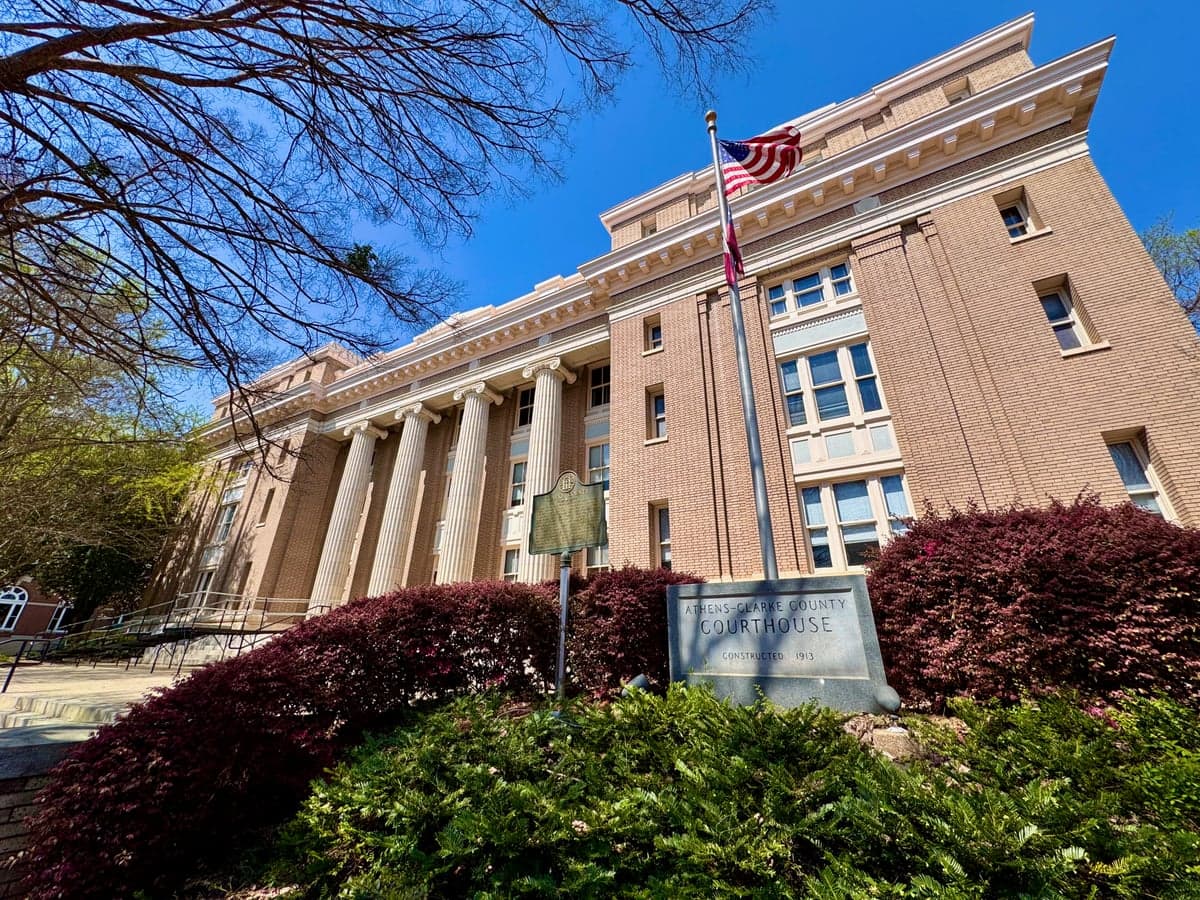
Photo: Wikipedia
Political ClimatePolitical Climate in Clarke County
Showing district-level results — no local-only data available.
Local Political AnalysisPolitical Analysis of Clarke County
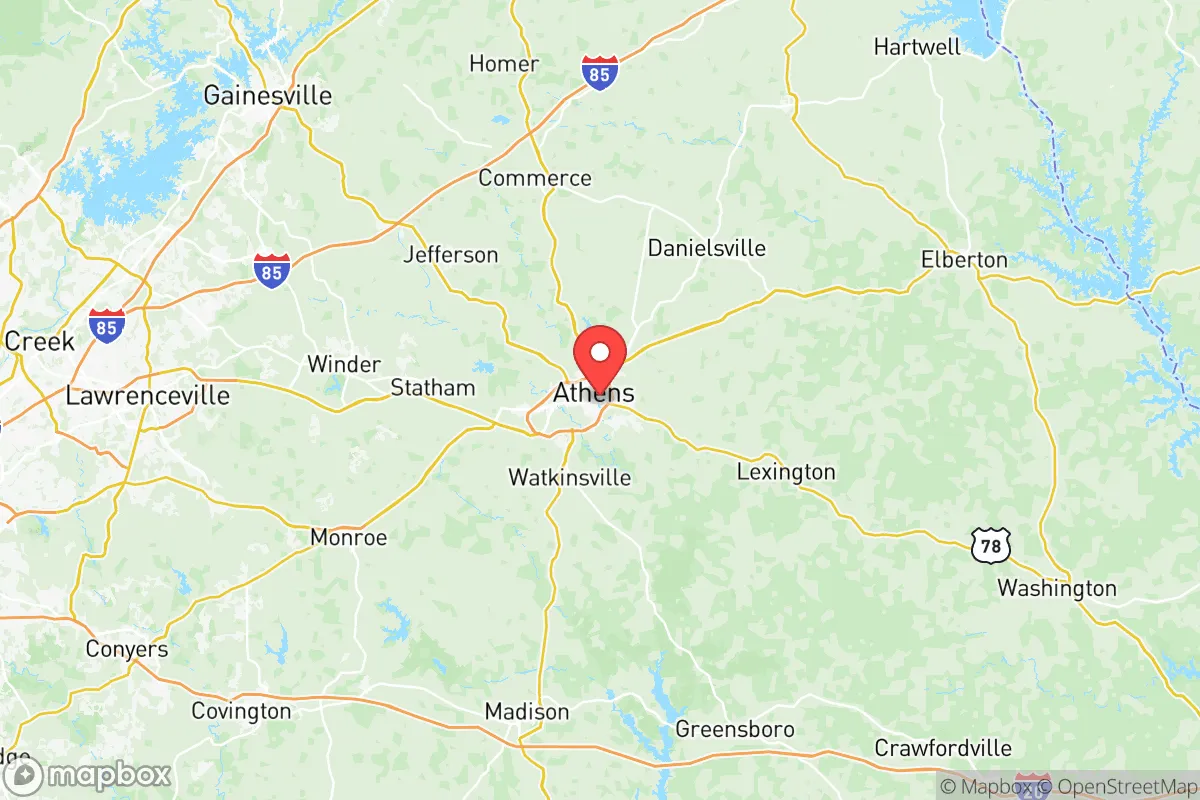
Clarke County, Georgia, is a deep blue island in a sea of red, and it’s been that way for a while. The Cook PVI here is R+11, meaning the county leans Republican by 11 points more than the national average, but that number is misleading because it’s driven by the rural parts of the county. The real story is in Athens, the county seat and home to the University of Georgia, where progressive politics have taken hold. The surrounding state of Georgia has a Cook PVI of EVEN, so the state as a whole is a true battleground, but Clarke County is a different animal entirely. If you’re looking for a place where traditional values and personal freedoms are respected, you’re going to find a mixed bag here, and the trend is concerning.
How it compares
Athens itself is the epicenter of the county’s liberal lean. The city council has been pushing progressive policies for years, from zoning changes that favor high-density development to symbolic resolutions on national issues. The rural parts of Clarke County, like the areas around Winterville and Bogart, are much more conservative, but they’re outvoted by the sheer population of Athens. In the 2024 election, Clarke County went for the Democratic candidate by a wide margin, while the surrounding counties—Oconee, Madison, and Jackson—all went red by double digits. The swing precincts are mostly in the suburban fringe, like the area around the Oconee County line, where you’ll find a mix of UGA faculty and longtime residents who are more moderate. But overall, the county’s politics are driven by the university, and that means a steady drift leftward.
What this means for residents
For a conservative or libertarian-leaning resident, the local government’s overreach is a real concern. Athens has implemented strict rental registration and inspection programs that some landlords see as an infringement on property rights. There’s also been a push for higher taxes to fund public transit and affordable housing initiatives, which hits homeowners and small business owners hard. The school board has adopted curriculum changes that emphasize social justice, which has caused friction with parents who want more focus on core academics and local control. If you value limited government and personal freedom, you’ll find yourself on the losing side of most local votes. The county commission and city council are dominated by Democrats, and there’s little appetite for rolling back regulations.
Cultural and policy distinctions
The cultural divide is stark. Athens has a vibrant music and arts scene, but it’s also home to a vocal activist community that pushes for things like defunding the police and removing historical monuments. The county’s gun laws are state-preempted, so you won’t see local restrictions on firearms, but the political climate is hostile to gun owners. The biggest distinction is the university’s influence: UGA employs a huge number of people, and its administration often weighs in on local politics, pushing for more spending on bike lanes, green energy, and diversity initiatives. If you’re looking for a place where the government stays out of your business, Clarke County is not it. The trajectory is toward more regulation, higher taxes, and a culture that’s increasingly at odds with traditional values. It’s a beautiful area with great people, but the political direction is something to watch closely if you’re considering a move.

State Political ClimatePolitical Climate in Georgia
State Political AnalysisPolitical Environment in the State
Georgia has transformed from a reliably Republican stronghold into the nation’s most hotly contested battleground, with a Cook PVI of EVEN that perfectly captures its 50/50 split. Over the past 20 years, the state has shifted from a +15-point GOP lean in 2004 to a dead-even toss-up today, driven by explosive growth in the Atlanta metro, a diversifying electorate, and suburban voters who have drifted leftward. For a conservative considering relocation, Georgia still offers low taxes, strong gun rights, and a business-friendly climate, but the political ground is shifting underfoot—and the direction of travel is unmistakably toward a more competitive, and in many ways more progressive, future.
Urban vs. rural divide
The political map of Georgia is a tale of two Georgias: the sprawling, diverse Atlanta metro and the rest of the state. Metro Atlanta—encompassing Fulton, DeKalb, Cobb, Gwinnett, and Clayton counties—now accounts for roughly 60% of the state’s population and votes overwhelmingly Democratic. Fulton County alone delivered 72% of its vote to Joe Biden in 2020, while DeKalb hit 85%. Meanwhile, rural and exurban counties like Murray, Gilmer, and Union in the north routinely vote 75-80% Republican. The real story is in the suburbs: Cobb County, once a GOP bastion, flipped to Biden by 2 points in 2020, and Gwinnett County—now majority-minority—went from +15 Romney in 2012 to +18 Biden in 2020. The cities of Savannah, Augusta, Columbus, and Macon all lean Democratic, but their margins are smaller than Atlanta’s. The rural-urban split is so stark that Georgia has the highest percentage of voters living in “landslide counties”—places where one party wins by 20+ points—of any swing state.
Policy environment
Georgia’s policy environment is a mixed bag for conservatives. On the plus side, the state has a flat income tax rate of 5.49% (down from 6% in 2022), no estate tax, and a relatively low property tax burden. The regulatory climate is business-friendly, with right-to-work laws and a tort reform cap on non-economic damages. On education, Georgia offers a robust school choice program—the Georgia Promise Scholarship Act (2024) provides up to $6,500 per student for private school or homeschooling expenses. However, the state also expanded Medicaid under the Affordable Care Act in 2023, a move many conservatives opposed. Election laws have been a flashpoint: the Election Integrity Act of 2021 (SB 202) added voter ID requirements for absentee ballots, limited drop boxes, and banned mobile voting units—but also expanded early voting hours. Critics call it voter suppression; supporters call it common-sense security. The state also passed a heartbeat abortion ban (HB 481) in 2019, which took effect after the Dobbs decision, banning most abortions after six weeks. For conservatives, this is a win; for those prioritizing medical autonomy, it’s a restriction.
Trajectory & freedom
Georgia’s trajectory on personal freedom is a study in contrasts. On the positive side, the state has expanded gun rights significantly: constitutional carry (SB 319) became law in 2022, allowing permitless carry of firearms for anyone 21 or older. The state also passed a parental rights bill (HB 1178) in 2023, requiring schools to notify parents of any changes to a student’s mental, emotional, or physical health—including gender identity—and banning instruction on sexual orientation in grades K-3. Property rights are strong, with no statewide zoning mandates and a “right to farm” law protecting agricultural operations from nuisance lawsuits. However, the state has also seen a push toward progressive policies: Atlanta’s city government has enacted sanctuary city-like policies limiting cooperation with ICE, and the state’s Clean Energy Plan (2022) mandates 100% clean energy by 2050, which could drive up electricity costs. The biggest concern for conservatives is the demographic trajectory: in-migration from blue states (California, New York, Illinois) is accelerating, and these newcomers tend to vote Democratic. The state’s Hispanic population grew 32% between 2010 and 2020, and Asian-American populations in Gwinnett and Forsyth counties have surged, both groups leaning left. The net effect is that Georgia is becoming less free in the sense of smaller government—more regulation, more spending, and a more progressive cultural tilt.
Civil unrest & political movements
Georgia has been a hotspot for political activism on both sides. The 2020 election aftermath saw massive protests in Atlanta over the death of George Floyd, with some turning violent and leading to property damage. The “Stop the Steal” movement was also active, with rallies at the state capitol and a contentious audit of absentee ballots in Cobb County. Immigration politics are a live wire: Georgia’s HB 87 (2011) was one of the strictest anti-sanctuary laws in the country, but Atlanta’s “Welcoming City” ordinance (2018) limits local police cooperation with ICE. In 2023, a controversy erupted over the Atlanta Public Safety Training Center (“Cop City”), leading to months of protests, arson attacks, and the killing of activist Manuel “Tortuguita” Terán by state troopers. The Georgia Republican Party has also been riven by internal fights between establishment conservatives and Trump-aligned populists, with the 2022 gubernatorial primary seeing a challenge from David Perdue. Election integrity remains a flashpoint: Fulton County’s 2020 ballot counting issues led to a state takeover of the county elections board in 2023. A new resident would notice the political tension in everyday conversations, especially in the suburbs where yard signs and bumper stickers are a near-daily reminder of the divide.
Projection
Over the next 5-10 years, Georgia is likely to become a lean-Democratic state if current trends hold. The Atlanta metro’s growth shows no signs of slowing—the region added 1.2 million people between 2010 and 2020, and projections suggest another 2 million by 2035. Most of these new residents are moving to Gwinnett, Forsyth, and Cherokee counties, which are rapidly diversifying. Forsyth County, once 95% white and heavily Republican, is now 30% minority and trending purple. Meanwhile, rural counties are losing population, shrinking the GOP’s base. The 2024 presidential election will be a key test: if Democrats hold Georgia again, it will cement the state’s swing-state status. For a conservative moving in now, the realistic expectation is that Georgia will be a competitive battleground for the next decade, but the long-term demographic math favors the left. The state’s policy environment will likely see more fights over education, voting, and taxes, with the GOP trying to hold the line while Democrats push for expansion of government programs.
Bottom line for a new resident: Georgia offers a low-tax, business-friendly environment with strong gun rights and school choice, but the political climate is increasingly volatile and the state is trending leftward due to rapid in-migration. If you’re a conservative, you’ll find plenty of like-minded communities in the exurbs and rural areas, but you’ll also be living in a state where every election is a nail-biter and where the cultural and political winds are shifting. Choose your county carefully—Forsyth, Cherokee, and Paulding remain reliably red, while Cobb and Gwinnett are now purple-to-blue. The freedom you’re looking for is still here, but it’s under constant pressure from the Atlanta metro’s expanding influence.
* Values derived from national, state, county, city and local statistics and may differ in a specific area. Last updated: 2026-05-11T19:48:42.000Z
Narrative content on this page is AI-generated and may contain mistakes. Verify any details that matter before acting on them.
ReloMaps may earn a commission from affiliate links at no extra cost to you.

