
Photo: Wikipedia
Quality of Life in Dekalb County
A livable area that tracks near national norms for affordability, walkability, and neighborhood health.
What does Quality of Life tell us?
Quality of Life measures an area by evaluating factors like cost of living, nearby amenities, country club access, airport proximity, socioeconomic signals and neighborhood character. For large states, this is a general average — quality of life can vary dramatically between metro areas, suburbs, and rural communities within the same state.
What does this tell us?
Quality of Life measures an area by evaluating factors like cost of living, nearby amenities, country club access, airport proximity, socioeconomic signals and neighborhood character. For large states, this is a general average — quality of life can vary dramatically between metro areas, suburbs, and rural communities within the same state.
Cost of Living
29% above national average
82%
The Real Cost of Living in Dekalb County for 2026
| Tier | Individual | Family (4) |
|---|---|---|
| Survival | $25k | $48k |
| Comfortable | $64k | $95k |
| Luxury | $140k+ | $218k+ |
| Elite (Top 5%) | $198k+ | $308k+ |
Quality-of-Life Analysis
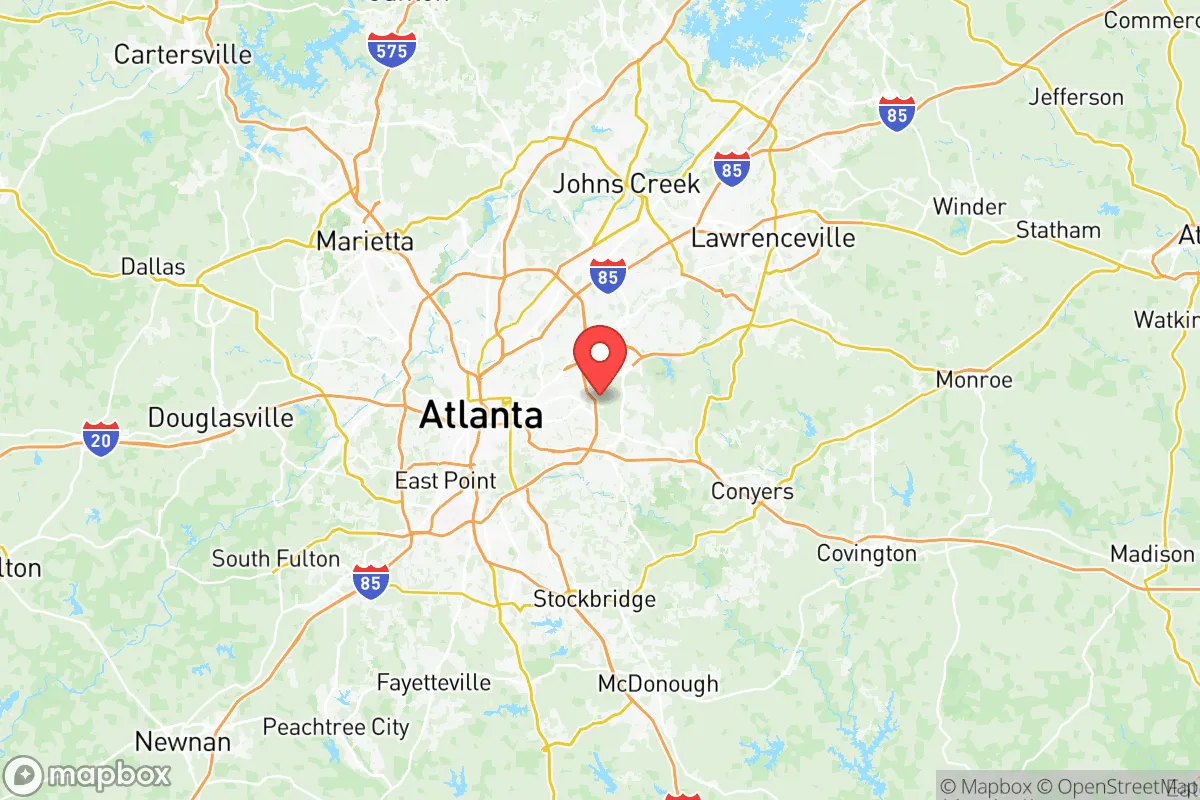
DeKalb County, Georgia, offers a quality-of-life spectrum that ranges from the dense, transit-connected urbanity of its eastern Atlanta neighborhoods to the quiet, semi-rural character of its far southeastern reaches. With a cost of living index of 129 (100 = U.S. average), a median home value of $331,400, and a median rent of $1,591, the county attracts a broad mix of residents: young professionals and students drawn to the city-adjacent energy of Decatur and Brookhaven, families seeking established suburban school districts in Dunwoody and Tucker, and those looking for more land and lower density in areas like Lithonia and Stonecrest. The average commute of roughly 31 minutes reflects the county's role as both a primary job hub and a bedroom community for Atlanta.
Largest town(s) & population centers
DeKalb's largest population centers are not a single downtown but a constellation of distinct cities and neighborhoods, each with its own daily rhythm. Decatur is the county's historic and cultural heart, a walkable, bikeable city centered around a vibrant square with independent restaurants, the Decatur Book Festival, and MARTA rail access. Daily life here is defined by a dense, pedestrian-oriented urbanism, with a median home value well above the county average and a strong sense of local identity. Dunwoody, in the county's north, is a more traditional suburban hub with high-end shopping at Perimeter Mall, a concentration of corporate offices (including UPS and Cox Enterprises), and top-rated public schools; its lifestyle is car-dependent but amenity-rich. Brookhaven and Chamblee offer a blend of older bungalow neighborhoods and new townhome developments, with Chamblee's antique row and Buford Highway's international dining corridor providing distinct cultural anchors. Stone Mountain, anchored by the massive granite monolith and state park, draws tourists and residents alike, with a more affordable housing stock and a slower pace than the northern cities.
Smaller towns & rural pockets
Beyond the major cities, DeKalb retains several smaller towns and unincorporated areas that feel markedly different from the county's urban core. Lithonia, in the southeastern quadrant, is a historic railroad town that now serves as a gateway to the Arabia Mountain National Heritage Area; its housing stock includes older single-family homes on larger lots, and its commercial corridors are less dense than those in the north. Stonecrest, incorporated in 2016, is a young city that blends suburban subdivisions with significant undeveloped land, including the 1,500-acre Davidson-Arabia Mountain Nature Preserve. Pine Lake, a tiny city of roughly 700 residents, is a wooded enclave with a small lake and a tight-knit community feel, offering a quiet alternative just minutes from I-285. The far southeastern corner of the county, near the Rockdale County line, contains unincorporated areas with horse properties, small farms, and a distinctly rural character, though these pockets are increasingly pressured by suburban expansion.
Cost & lifestyle range
The cost of living and lifestyle options in DeKalb vary dramatically by location. At the high end, Druid Hills and Decatur's city center command premium prices, with historic homes on tree-lined streets and walkable access to Emory University, the CDC, and MARTA; these areas are among the most expensive in metro Atlanta outside of Buckhead. Dunwoody and Brookhaven also sit well above the county median home value, driven by strong schools and proximity to Perimeter Center jobs. At the more affordable end, Lithonia and Stonecrest offer median home values often $50,000–$80,000 below the county average, with larger lots and a more relaxed pace. Clarkston, known as the "Ellis Island of the South" for its refugee resettlement history, offers some of the county's lowest rents and a uniquely diverse, walkable small-town atmosphere. The lifestyle trade-off is clear: northern and central DeKalb residents pay more for shorter commutes, better transit access, and denser amenities, while southeastern residents gain space and affordability at the cost of longer drives and fewer walkable options.
DeKalb County's diversity of settings means it can suit a wide range of preferences, but it is best suited for those who value proximity to Atlanta's urban core without living inside the city limits. Young professionals and academics thrive in Decatur and Druid Hills; families seeking strong schools and suburban comforts gravitate to Dunwoody and Tucker; and those wanting land, lower costs, and a quieter life find their niche in Lithonia and Stonecrest. The county's 31-minute average commute is a realistic trade-off for the mix of urban energy, suburban stability, and rural respite that DeKalb uniquely provides within a single county boundary.

Crime in Dekalb County
Generally safer than 57% of comparable U.S. locations.
Violent CrimeViolent Crime Analysis
Property CrimeProperty Crime Analysis
Crime Analysis
Dekalb County, Georgia, presents a mixed safety picture for potential residents. The county’s violent crime rate of 253 incidents per 100,000 residents is notably lower than the national average of 380 per 100,000, but its property crime rate of 1,189.7 per 100,000 sits significantly above the national figure of 1,954 per 100,000. This means that while the risk of a violent encounter is below the U.S. norm, the likelihood of experiencing theft, burglary, or vehicle break-ins is elevated, particularly in certain urban corridors. The county’s proximity to Atlanta and its diverse mix of affluent suburbs, struggling inner-ring communities, and unincorporated areas creates sharp contrasts in daily safety.
Crime in context
When compared to Georgia’s statewide averages, Dekalb County’s violent crime rate is roughly in line with the state’s 2024 figure of approximately 260 per 100,000, but its property crime rate is about 15% higher than the state average of 1,030 per 100,000. The county’s numbers are heavily influenced by its largest city, Decatur, which reports a violent crime rate near 300 per 100,000 and a property crime rate above 1,400 per 100,000, driven by its dense downtown and MARTA transit hub. In contrast, the city of Brookhaven posts a lower violent crime rate of roughly 200 per 100,000, though its property crime rate remains elevated due to retail theft along Buford Highway. The unincorporated areas around Stone Mountain and Lithonia see property crime rates exceeding 1,300 per 100,000, with vehicle break-ins and home burglaries being the most common complaints. The county’s overall property crime rate is dragged down somewhat by safer enclaves like Dunwoody, where property crime hovers around 900 per 100,000, but the countywide average remains high due to persistent issues in the southern and central precincts.
What residents experience
Residents in Dekalb County report that property crime is the most visible safety concern, with car break-ins and package theft being near-daily occurrences in apartment-heavy areas near Emory University and the North Druid Hills corridor. Violent crime, while less common, tends to cluster in specific zones: the Memorial Drive corridor east of I-285 and parts of South DeKalb near Panthersville see higher rates of aggravated assault and robbery. The county’s judicial system, overseen by the DeKalb County District Attorney’s Office, has faced criticism for progressive policies, including a 2023 directive to decline prosecution for certain low-level property crimes and a focus on diversion programs for repeat offenders. Critics argue that these policies, while intended to reduce incarceration, have contributed to a perception of impunity among property criminals, particularly in areas like Chamblee and Doraville, where residents report that stolen vehicles are often recovered but suspects are rarely charged. This approach, sympathetic to offenders, directly impacts public safety by keeping more criminals on the street, undermining justice for victims and eroding trust in the system.
Neighborhood-level variation is stark. The safest pockets include Dunwoody, where violent crime is under 150 per 100,000 and property crime is manageable, and parts of Avondale Estates, a small city with a tight-knit community and a police force that prioritizes proactive patrols. In contrast, the Redan and Stonecrest areas in southern DeKalb report violent crime rates above 350 per 100,000, with property crime exceeding 1,500 per 100,000. For newcomers, choosing a specific city within the county—rather than unincorporated areas—often means better police response times and more conservative local governance, which can mitigate the effects of the countywide progressive judicial trends. The data underscores that Dekalb County is not uniformly dangerous, but residents must be vigilant about property security and aware that the justice system’s leniency may leave repeat offenders active in their neighborhoods.
* Values derived from national, state, county, city and local statistics and may differ in a specific area. Last updated: 2026-05-12T09:42:34.000Z
Narrative content on this page is AI-generated and may contain mistakes. Verify any details that matter before acting on them.
ReloMaps may earn a commission from affiliate links at no extra cost to you.

