
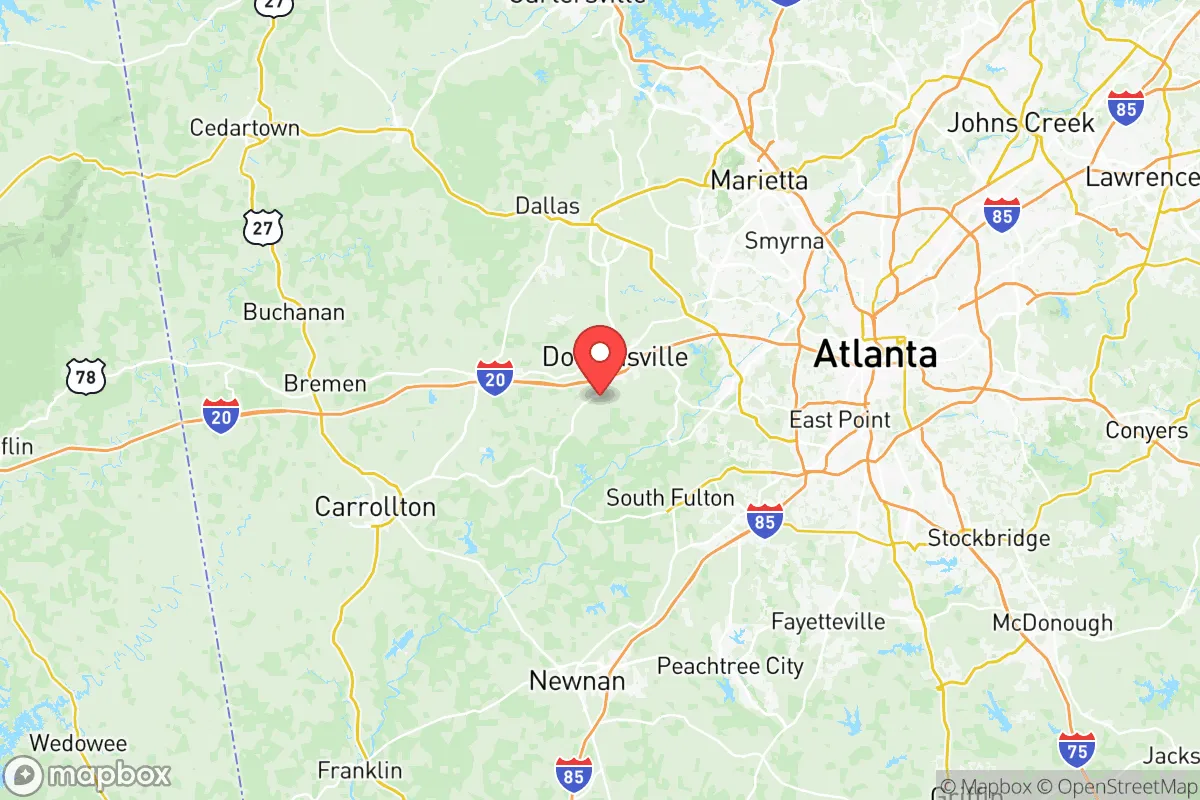
Photo: Wikipedia
Quality of Life in Douglas County
A livable area that tracks near national norms for affordability, walkability, and neighborhood health.
What does Quality of Life tell us?
Quality of Life measures an area by evaluating factors like cost of living, nearby amenities, country club access, airport proximity, socioeconomic signals and neighborhood character. For large states, this is a general average — quality of life can vary dramatically between metro areas, suburbs, and rural communities within the same state.
What does this tell us?
Quality of Life measures an area by evaluating factors like cost of living, nearby amenities, country club access, airport proximity, socioeconomic signals and neighborhood character. For large states, this is a general average — quality of life can vary dramatically between metro areas, suburbs, and rural communities within the same state.
Cost of Living
12% above national average
108%
The Real Cost of Living in Douglas County for 2026
| Tier | Individual | Family (4) |
|---|---|---|
| Survival | $23k | $43k |
| Comfortable | $51k | $75k |
| Luxury | $124k+ | $192k+ |
| Elite (Top 5%) | $146k+ | $226k+ |
Quality-of-Life Analysis
Douglas County, Georgia, offers a broad spectrum of living environments that range from the dense, amenity-rich core of its county seat, Douglasville, to the quiet, unincorporated crossroads communities like Winston and Lithia Springs. This diversity attracts a mix of residents: professionals and families who prioritize access to Atlanta (via I-20) and suburban conveniences, alongside those seeking more land, lower density, and a slower pace in the county’s western and southern rural pockets. With a cost of living index of 112 (12% above the national average) and a median commute of roughly 33 minutes, the county balances proximity to the metro with distinct lifestyle choices tied directly to where one lives within its borders.
Largest town(s) & population centers
Douglasville is the undisputed hub, home to roughly 35,000 residents and the county’s primary concentration of retail, dining, and employment. Daily life here revolves around the Arbor Place Mall corridor along Highway 5, the historic downtown square (with its courthouse, local breweries, and seasonal festivals), and a dense network of subdivisions like Chapel Hills and Fairfield Plantation. The city offers a full suburban package: multiple grocery stores, chain and local restaurants, a YMCA, and the Douglas County School System’s largest high schools (Douglas County and Chapel Hill). Just east, Lithia Springs (unincorporated but densely populated) functions as a secondary population center, anchored by the Sweetwater Creek State Park and a mix of older ranch homes and newer townhome developments. Life in these core areas is car-dependent but highly convenient, with most errands within a 10-minute drive and MARTA bus service connecting to the Douglasville station for commuter rail into Atlanta.
Smaller towns & rural pockets
West of Douglasville, the unincorporated community of Winston (population ~1,000) feels distinctly rural, with large lots, horse farms, and a single general store as its commercial anchor. The area around Bill Arp Road and Banks Mill Road offers five-plus-acre parcels and a landscape of pine forests and pastureland. South of Douglasville, the Villa Rica border area (the city itself straddles Douglas and Carroll counties) includes rural subdivisions like Mirror Lake and unincorporated pockets along Highway 166. Fairplay, in the county’s far south, is a true crossroads community with no downtown, dominated by agricultural land and scattered homes on acreage. These areas lack sidewalks and streetlights, and residents typically drive 15–25 minutes to Douglasville or Villa Rica for groceries and services. The trade-off is privacy, lower property taxes (no city tax), and the ability to keep livestock or operate a home-based business without HOA restrictions.
Cost & lifestyle range
The cost spread across Douglas County is significant. At the high end, the gated golf community of Fairfield Plantation (in western Douglasville) features median home values around $350,000–$400,000, with HOA fees covering a private lake, golf course, and security. Newer subdivisions near the Douglasville–Villa Rica line, like Chapel Hills, see homes in the $300,000–$375,000 range. At the lower end, older ranch homes in Lithia Springs and central Douglasville (built 1960s–1980s) sell for $200,000–$250,000, with some fixer-uppers below $180,000. The countywide median home value of $262,200 and median rent of $1,447 reflect this middle-market positioning. Renters in Douglasville’s newer apartment complexes (e.g., The Reserve at Douglasville) pay $1,500–$1,800 for two bedrooms, while older duplexes in Lithia Springs can be found for $1,100–$1,300. The 33-minute average commute is a key lifestyle factor: residents in eastern Douglas County (closer to I-20) can reach Hartsfield-Jackson Airport in 25 minutes, while those in Winston face a 40-minute drive to the same interstate on-ramp.
Douglas County works best for people who want Atlanta-region access without the premium prices of Cobb or Fulton counties. Families seeking good schools, a full-service suburban core, and a 30-minute commute to downtown Atlanta will gravitate toward Douglasville and Lithia Springs. Those who prioritize acreage, privacy, and a rural setting—while still being within an hour of the city—will find their niche in Winston, Fairplay, or the unincorporated areas along the Carroll County line. The county’s strength is its internal variety: a resident can choose between a golf-course subdivision with a homeowners’ pool or a 10-acre horse property, all within the same school district and tax base.

Crime in Douglas County
Generally safer than 56% of comparable U.S. locations.
Violent CrimeViolent Crime Analysis
Property CrimeProperty Crime Analysis
Crime Analysis
Douglas County, Georgia, reports a violent crime rate of 262 per 100,000 residents and a property crime rate of 1,236.6 per 100,000, placing it near the middle of metro Atlanta counties. While these figures are below national averages, the county's proximity to Atlanta means residents contend with spillover crime and progressive judicial policies that critics argue keep repeat offenders on the street. Understanding how crime varies between communities such as Douglasville, Lithia Springs, and Villa Rica is essential for anyone evaluating safety here.
Crime in context
Douglas County’s violent crime rate of 262 per 100,000 is roughly 30% lower than the U.S. average of 380 per 100,000, and property crime at 1,236.6 per 100,000 sits about 38% below the national figure of roughly 2,000 per 100,000. Statewide, Georgia’s violent crime rate hovers near 390 per 100,000, meaning Douglas County is a relatively safer choice within the metro region. However, the county is part of the Atlanta judicial circuit (Douglas County Judicial Circuit), where progressive-leaning district attorneys and judges have emphasized diversion programs and reduced sentencing for non-violent offenders. Critics point to this approach as a driver of recidivism: offenders released from the Douglas County jail or sentenced to probation in Douglasville often re-offend in nearby areas like Austell and Lithia Springs, where property crime rates cluster higher than the county average. In neighboring Cobb and Fulton counties, similarly liberal prosecutorial policies have drawn scrutiny for contributing to property-crime rings that cross jurisdictional lines.
What residents experience
Residents in Douglas County report that property crime—especially vehicle break-ins, package theft, and porch piracy—is the most common public safety concern. Douglasville, the county seat and largest city, sees the bulk of these incidents, particularly along the Thornton Road and I-20 corridor where retail and multifamily housing are concentrated. Lithia Springs, located near the Cobb County line, has a reputation for higher-than-average burglary rates, partly due to easy highway access for fleeing suspects. By contrast, Villa Rica (western Douglas County) and the unincorporated areas around Winston report lower crime volumes, though residents still cite occasional theft from vehicles. Violent crime is less frequent but spikes around domestic disputes and drug-related incidents; the county’s homicide rate remains under 5 per 100,000 in most years, according to local law enforcement reports. Many residents express frustration that progressive bail reform and soft-on-crime sentencing in the Douglas County courts allow habitual property offenders to cycle through the system without meaningful consequences, eroding trust in the justice system for victims and the public alike.
Neighborhood-level variation is pronounced in Douglas County. Safer enclaves like Chapel Hill and Bremen (though partly in Haralson County) offer suburban subdivisions with active homeowners’ associations and lower crime. In contrast, parts of Douglasville’s historic downtown and apartment complexes near Bankhead Highway experience more frequent police calls. Residents in Hiram (Paulding County, adjacent) often cite the contrast in prosecution philosophy as a reason for moving out of Douglas County’s judicial district. For those considering relocation, choosing a neighborhood with strong community watch programs and a proactive police presence—such as the Douglas County Sheriff’s Office’s targeted patrols in Lithia Springs—can mitigate risks. However, the broader trend of progressive criminal justice reform in the metro Atlanta area means potential newcomers should factor in the long-term impact of lenient policies on repeat offenders and recidivism rates when evaluating Douglas County safety.
* Values derived from national, state, county, city and local statistics and may differ in a specific area. Last updated: 2026-06-06T00:27:15.000Z
Narrative content on this page is AI-generated and may contain mistakes. Verify any details that matter before acting on them.
ReloMaps may earn a commission from affiliate links at no extra cost to you.

