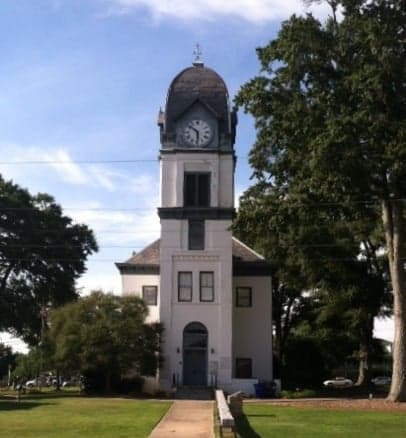
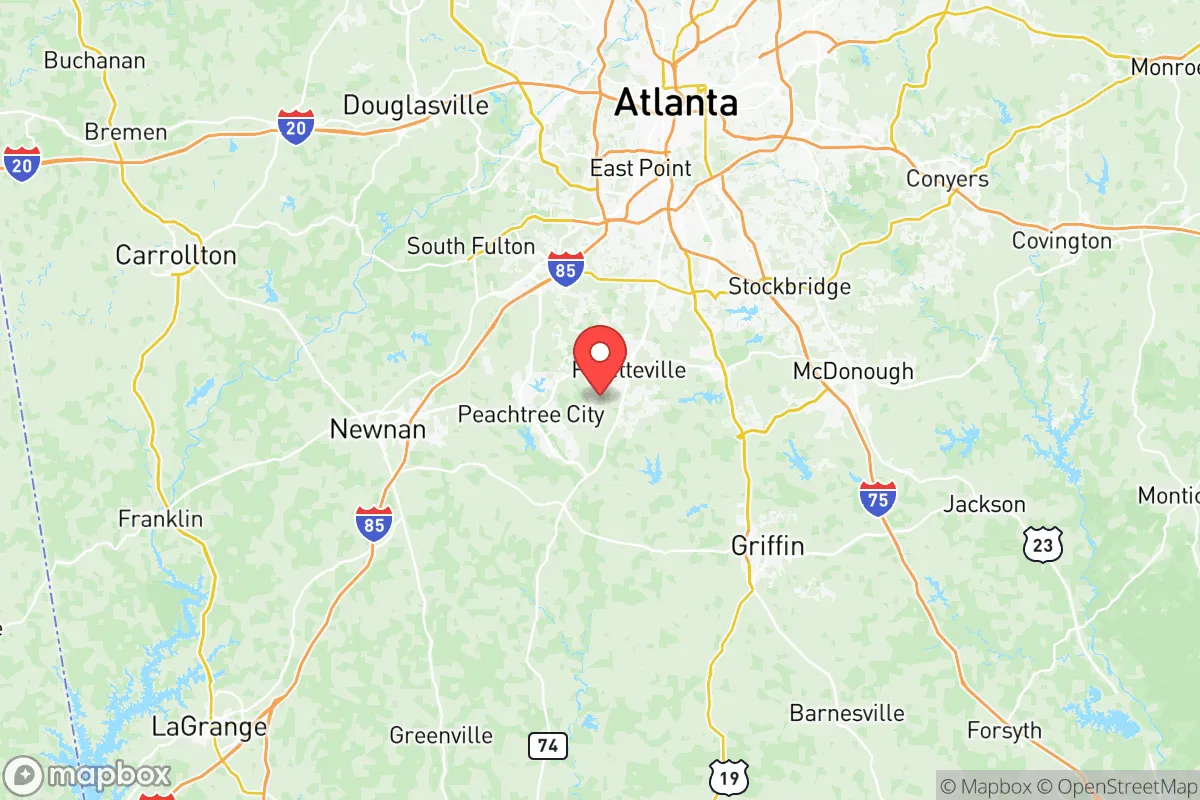
Photo: Wikipedia
Demographics of Fayette County
Affluence Level in Fayette County
An upper-middle-class area. Household wealth, education levels, and homeownership run ahead of national benchmarks.
People of Fayette County
Fayette County, Georgia, today is a predominantly white-collar, family-oriented suburban county of 120,689 residents, characterized by its high educational attainment (48.1% college-educated) and a notably diverse racial and ethnic mix that includes a significant Black population (25.2%), a growing Hispanic community (8.3%), and distinct East/Southeast Asian (3.1%) and Indian-subcontinent (1.6%) enclaves. The county’s identity is shaped by its blend of historic small-town roots in places like Fayetteville and Peachtree City with the rapid, master-planned growth that has attracted a conservative-leaning, upwardly mobile population. With a foreign-born share of just 5.2%, Fayette remains a largely native-born county, but its internal migration patterns—especially from other parts of metro Atlanta and the Rust Belt—are steadily reshaping its character.
Settlement & growth (pre-1960)
Before European settlement, the area now known as Fayette County was part of the ancestral homeland of the Creek (Muscogee) Nation, who used the region for hunting and established several villages along the Flint River and its tributaries. The Creeks ceded the land to the United States in the 1821 Treaty of Indian Springs, and the county was formally created in 1821, named after the Marquis de Lafayette. The first wave of settlers were predominantly Scots-Irish and English yeoman farmers from the Piedmont regions of Virginia, North Carolina, and South Carolina, drawn by the promise of cheap, fertile land distributed through the Georgia land lottery system. These early families established the county seat of Fayetteville in 1823, along with smaller crossroads communities like Woolsey and Brooks, which remain today as unincorporated hamlets.
Throughout the 19th century, the county’s economy was based on subsistence agriculture and cotton, worked by a growing population of enslaved African Americans. By 1860, enslaved people made up roughly 40% of the county’s population, a proportion that would shape the post-Civil War era. After emancipation, many freedmen remained in the area, establishing independent farming communities and churches, particularly in the southern part of the county around Inman and Haralson. The post-Reconstruction period saw little new immigration; the county remained overwhelmingly native-born white and Black, with a small number of German and Irish immigrants who worked as merchants or railroad laborers. The arrival of the Atlanta & West Point Railroad in the 1850s spurred modest growth in Fayetteville, but the county remained rural and isolated well into the 20th century. By 1950, Fayette County’s population was just 7,000, and its economy was still tied to agriculture and forestry.
Modern era (post-1965)
The transformation of Fayette County began in earnest in the 1960s and accelerated after the 1965 Hart-Cellar Act, though the county’s foreign-born population remains low compared to national averages. The primary driver of change was domestic migration: the construction of Interstate 85 and the expansion of Hartsfield-Jackson Atlanta International Airport made southern metro Atlanta accessible to white-collar commuters. The most dramatic development was the founding of Peachtree City in 1959, a master-planned community designed around golf carts, lakes, and curvilinear streets. Peachtree City grew explosively from a few hundred residents in the 1960s to over 34,000 by 2010, attracting upper-middle-class families—overwhelmingly white—from the Northeast, Midwest, and other parts of metro Atlanta. This wave of in-migration fundamentally shifted the county’s character from rural to suburban, and from a biracial Black-white dynamic to a more complex, multi-ethnic one.
Since the 1990s, Fayette County has seen significant Black suburbanization, mirroring trends across metro Atlanta. Many Black families moved from south Fulton County and the city of Atlanta to Fayetteville and Riverdale (the latter just over the Clayton County line), drawn by better schools, larger homes, and lower crime rates. Today, Black residents make up 25.2% of the county’s population, with concentrations in Fayetteville and the unincorporated areas around Fairburn and Union City on the northern edge. The Hispanic population, now 8.3%, began growing in the 2000s, driven by construction and service-industry jobs. Hispanic families are most concentrated in Fayetteville and along the Ga-85 corridor, with a smaller presence in Peachtree City. The East/Southeast Asian community (3.1%) includes a notable Korean and Vietnamese presence, many of whom are professionals in technology and healthcare, and are clustered in Peachtree City and the newer subdivisions around Tyrone. The Indian-subcontinent population (1.6%) is also heavily professional, with many families working in IT and engineering, and is concentrated in Peachtree City and the Shakerag area of unincorporated Fayette County.
The 1965 immigration reforms had a modest direct effect on Fayette County, as most foreign-born residents arrived later, in the 1990s and 2000s, as part of the broader Sun Belt migration. The county’s foreign-born share of 5.2% is well below the national average of 13.7%, but it is growing. The most visible change has been the rise of ethnic churches, restaurants, and grocery stores in Fayetteville and Peachtree City, reflecting the new diversity. Politically, the county has shifted from reliably Democratic in the Jim Crow era to strongly Republican since the 1990s, driven by the influx of conservative white suburbanites and, more recently, by a growing number of Black and Hispanic voters who lean moderate to conservative on many issues.
The future
Fayette County’s population is projected to continue growing, though at a slower pace than in the 1990s and 2000s, as developable land becomes scarcer. The county is not homogenizing into a single cultural bloc; instead, it is tribalizing into distinct enclaves. Peachtree City remains overwhelmingly white and affluent, with a growing but still small minority presence. Fayetteville is becoming more diverse, with a near-even split between white and Black residents and a growing Hispanic and Asian population. The unincorporated areas, particularly around Tyrone and Brooks, are seeing the most new construction and are attracting a mix of white and Black families from other parts of metro Atlanta.
The immigrant communities are growing but from a small base. The East/Southeast Asian and Indian-subcontinent populations are likely to continue increasing as professionals are drawn to the county’s top-rated schools and relatively affordable housing compared to north Fulton County. The Hispanic population is expected to grow steadily, driven by both domestic migration and some international immigration, but is unlikely to reach the proportions seen in Gwinnett or Cobb counties. The Black population is stable or slowly increasing, with many families choosing Fayette over more expensive or less safe alternatives. The white population, while still a majority at 56.9%, is declining as a share of the total, a trend that will continue as the county diversifies.
In-migration from other states—particularly California, New York, and Illinois—is bringing new cultural and political perspectives, but these newcomers are largely being absorbed into the county’s existing conservative suburban culture rather than transforming it. The next 10-20 years will likely see Fayette County become slightly more diverse, slightly more Democratic-leaning at the margins, and slightly denser, but it will retain its essential character as a family-oriented, high-amenity, low-crime suburb of Atlanta.
For someone moving in now, Fayette County offers a stable, well-governed environment with strong schools and a clear sense of place, but it is not a monoculture. The choice of where to live within the county—Peachtree City, Fayetteville, Tyrone, or the rural south—will largely determine the social and demographic experience. The county is becoming more diverse and more connected to the broader Atlanta region, but it remains, at its core, a place where native-born Americans of various backgrounds have chosen to build a suburban life.

* Values derived from national, state, county, city and local statistics and may differ in a specific area. Last updated: 2026-05-26T06:59:05.000Z
Narrative content on this page is AI-generated and may contain mistakes. Verify any details that matter before acting on them.
ReloMaps may earn a commission from affiliate links at no extra cost to you.

