
Photo: Wikipedia
Personal Sovereignty in Fayette County
Viable for self-reliance. Generally workable, though some barriers may limit total independence.
What does Personal Sovereignty tell us?
Personal Sovereignty measures your capacity for self-reliance and independence with minimal government friction. Higher scores mean fewer barriers between you and the way you want to live... but it assumes you have the space you need and good neighbors.
What does this tell us?
Personal Sovereignty measures your capacity for self-reliance and independence with minimal government friction. Higher scores mean fewer barriers between you and the way you want to live... but it assumes you have the space you need and good neighbors.
State Policy
Energy independence: Importer (12% of energy produced in-state)
Personal Liberty
Homesteading

Personal Liberty Analysis
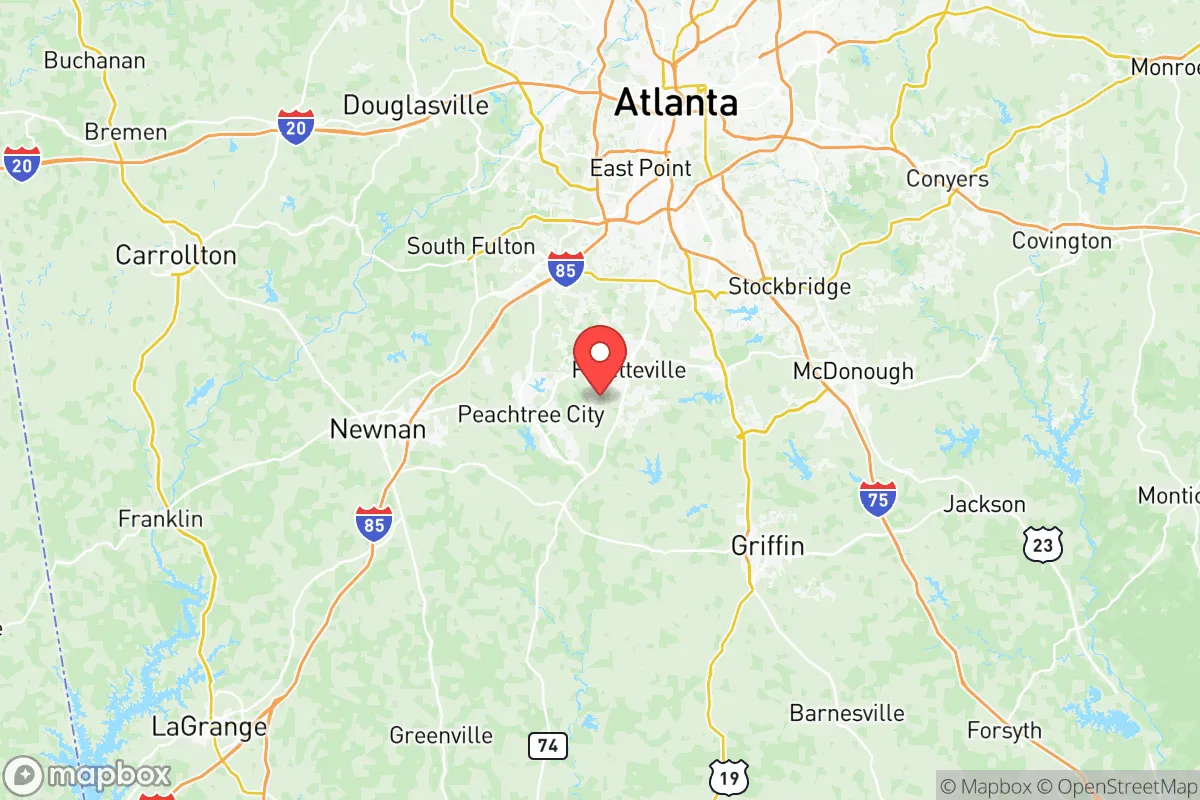
Fayette County, Georgia, offers a notably strong environment for personal sovereignty compared to metro Atlanta counties, with a political culture that prioritizes limited government and individual autonomy. The county's conservative majority and rural-suburban character create a buffer against the progressive policy trends seen in nearby DeKalb or Fulton counties, making it a strategic choice for those seeking to minimize government overreach. While not a libertarian enclave, Fayette County's zoning, tax structure, and gun culture provide a solid foundation for self-reliant living, though specific towns within the county vary in their regulatory posture.
Tax burden and regulatory posture in Fayette County
Fayette County's tax burden is moderate compared to surrounding metro Atlanta counties, with a millage rate that has remained relatively stable. The county's property tax rate is competitive, and there is no city income tax in any of its municipalities. The regulatory environment is generally business-friendly, with fewer permitting hurdles than in Atlanta proper. However, the county's zoning code is more restrictive than in rural counties to the south, particularly in unincorporated areas near Peachtree City and Fayetteville, where homeowners' associations (HOAs) often impose additional covenants. For those seeking maximum autonomy, the southern parts of the county near Brooks and Woolsey offer larger lots and less HOA oversight, while Tyrone and Peachtree City have stricter development standards. The county's approach to short-term rentals and home-based businesses is permissive but not laissez-faire, requiring business licenses and adherence to noise ordinances. Overall, the regulatory posture is favorable for those who value property rights, but it is not a free-for-all—expect reasonable, not arbitrary, enforcement.
Self-defense and gun law specifics in Fayette County
Georgia is a constitutional carry state, and Fayette County fully embraces that framework. No permit is required to carry a concealed firearm for law-abiding residents, and the county's sheriff's office is known for issuing weapons carry licenses (WCLs) efficiently for those who want reciprocity with other states. The county has no local ordinances restricting magazine capacity, firearm types, or storage requirements beyond state law. Stand-your-ground and castle doctrine protections apply fully, and the county's judicial circuit is conservative, meaning self-defense claims are taken seriously. Gun ranges are accessible, with the Fayette County Gun Club near Fayetteville and private ranges in the rural areas around Brooks and Woolsey. Peachtree City, while more suburban, has no local bans on firearms in parks or public spaces. For preppers, the key advantage is that Fayette County's law enforcement culture respects the Second Amendment as an individual right, not a privilege. There is no waiting period for purchases, and private sales between individuals are legal without background checks, though federal law applies to licensed dealers.
Self-reliance and homesteading viability in Fayette County
Homesteading viability in Fayette County is mixed, depending heavily on location. The county's minimum lot size in agricultural zones is 3 acres, but most residential zones require 1 to 2 acres, which limits large-scale self-sufficiency. In the southern parts of the county, near Brooks and Woolsey, you can find parcels of 5 to 10 acres with fewer restrictions on livestock, gardens, and outbuildings. Chickens, goats, and bees are generally allowed on lots of 2 acres or more, but pigs and cattle require larger tracts and may face HOA restrictions in subdivisions. Off-grid feasibility is limited by county building codes that require connection to the electrical grid for new construction, though solar panels are permitted as supplemental power. Rainwater collection is legal for non-potable uses, and wells are common on larger lots. Composting toilets are allowed with proper septic system permits. The county's agricultural extension office offers resources for small-scale farming, and the Fayette County Farmers Market supports local food production. For serious homesteaders, the areas around Brooks and the unincorporated parts of southern Fayette County are the best bets, while Peachtree City and Fayetteville proper are more oriented toward suburban convenience than self-reliance.
Personal liberties in Fayette County: parental rights, medical autonomy, speech, and property
Parental rights are strongly protected in Fayette County, with the local school board consistently opposing state-level curriculum mandates that conflict with conservative values. The county's public schools, part of the Fayette County School System, have a reputation for transparency and parental involvement, with policies that allow opt-outs for sex education and controversial materials. Medical autonomy is generally respected, though Georgia's vaccine mandates for school attendance apply, and the county has not enacted any local health orders that restrict individual choice beyond state law. During the COVID-19 pandemic, Fayette County's government did not impose mask mandates or business closures, reflecting a hands-off approach. Free speech is robust, with no local ordinances restricting political signage, public assembly, or expressive conduct. Property rights are protected by Georgia's strong eminent domain laws, which require just compensation and public purpose. The county's zoning board of appeals is known for granting variances for reasonable uses, such as home businesses or accessory dwellings. For those concerned about government overreach, Fayette County's culture of limited interference is a significant advantage over more progressive jurisdictions.
Overall, Fayette County offers a high degree of personal sovereignty relative to most metro Atlanta counties, with a political and legal environment that respects individual rights in taxation, self-defense, and personal liberties. The county is not a rural stronghold like counties further south, but its conservative governance and practical approach to regulation make it a strategic choice for those prioritizing autonomy. For preppers and survivalists, the key is to choose the right location within the county—Brooks and Woolsey for homesteading, Fayetteville for access to services with minimal HOA interference, and Peachtree City for those who want suburban amenities without sacrificing gun rights. Compared to areas like Fulton or DeKalb, Fayette County is a clear win for personal sovereignty; compared to more rural counties, it offers better infrastructure and community resources. The trade-off is worth it for those who want to live free without going completely off-grid.

* Values derived from national, state, county, city and local statistics and may differ in a specific area. Last updated: 2026-05-26T06:59:05.000Z
Narrative content on this page is AI-generated and may contain mistakes. Verify any details that matter before acting on them.
ReloMaps may earn a commission from affiliate links at no extra cost to you.

