
Photo: Wikipedia
Quality of Life in Fayette County
A livable area that tracks near national norms for affordability, walkability, and neighborhood health.
What does Quality of Life tell us?
Quality of Life measures an area by evaluating factors like cost of living, nearby amenities, country club access, airport proximity, socioeconomic signals and neighborhood character. For large states, this is a general average — quality of life can vary dramatically between metro areas, suburbs, and rural communities within the same state.
What does this tell us?
Quality of Life measures an area by evaluating factors like cost of living, nearby amenities, country club access, airport proximity, socioeconomic signals and neighborhood character. For large states, this is a general average — quality of life can vary dramatically between metro areas, suburbs, and rural communities within the same state.
Cost of Living
50% above national average
94%
The Real Cost of Living in Fayette County for 2026
| Tier | Individual | Family (4) |
|---|---|---|
| Survival | $29k | $54k |
| Comfortable | $79k | $116k |
| Luxury | $184k+ | $285k+ |
| Elite (Top 5%) | $216k+ | $335k+ |
Quality-of-Life Analysis
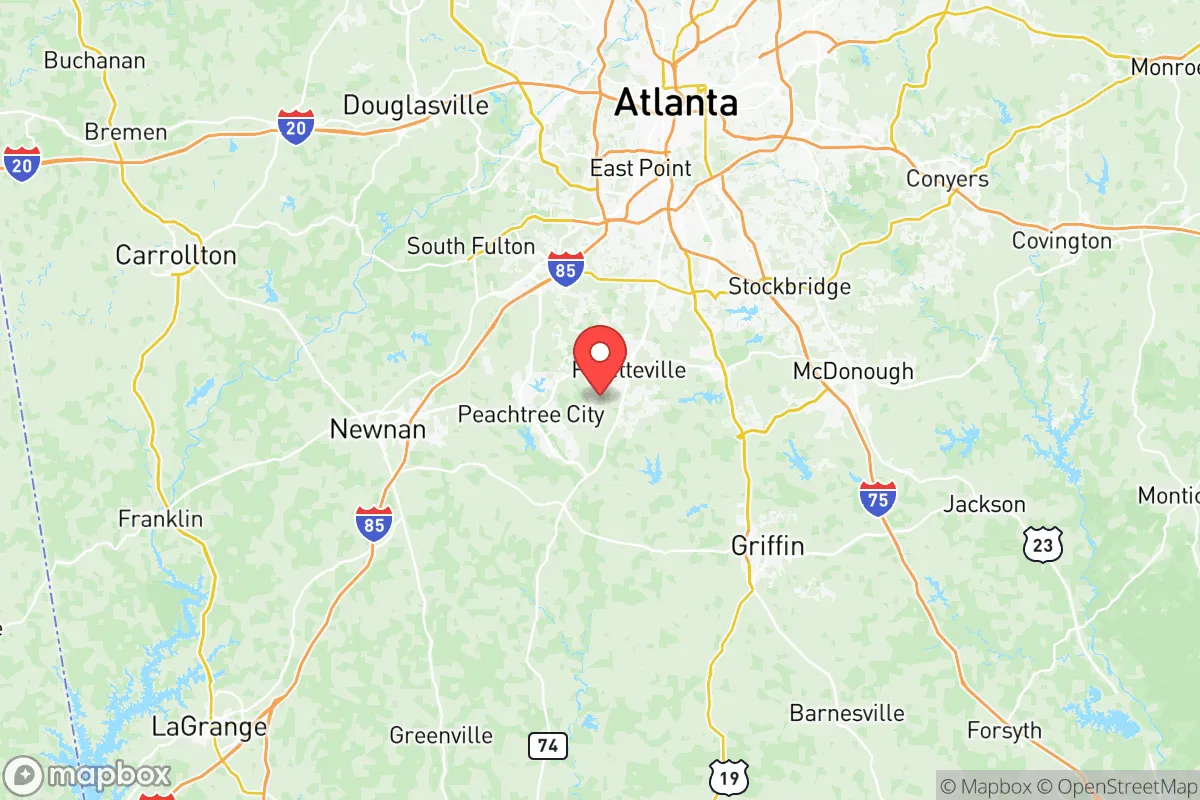
Fayette County, Georgia, offers a broad quality-of-life spectrum that ranges from the walkable, amenity-rich town centers of its largest communities to the quiet, horse-farm dotted landscapes of its rural southern and western reaches. The county draws a diverse mix of residents, including Atlanta commuters seeking top-rated schools and suburban convenience, families looking for newer master-planned subdivisions, and long-time locals or equestrian enthusiasts who value acreage and privacy. With a cost of living index of 150 (50% above the national average) and a median home value of $405,600, the county commands a premium, but the trade-off is consistently high marks for safety, schools, and access to both nature and urban job centers.
Largest town(s) & population centers
The county's primary population anchor is Fayetteville, the county seat, which combines a historic downtown square with modern retail corridors along GA-85 and GA-54. Daily life here revolves around the courthouse square's local restaurants and boutiques, the sprawling Fayette Pavilion shopping complex, and the Piedmont Fayette Hospital medical hub. Just north, Peachtree City is the county's most distinctive community, planned around a 100-mile network of golf cart paths that connect nearly every home to shopping, schools, and recreation. Peachtree City's three large lakes (Lake Peachtree, Lake Kedron, and Lake McIntosh) and its ban on commercial through-traffic in residential areas create a uniquely quiet, family-oriented atmosphere. Tyrone, in the county's northwest corner, has grown rapidly with new subdivisions and the Tyrone Crossing retail center, offering a slightly more affordable entry point than Peachtree City while still feeding into the highly regarded Fayette County School System. The average commute across the county is just over 32 minutes, with most workers heading north into Fulton County or Atlanta via GA-74, GA-85, and I-85.
Smaller towns & rural pockets
South of Fayetteville, Brooks and Woolsey represent the county's small-town and rural character. Brooks, with a population under 600, centers on a single traffic light and a historic depot, surrounded by large-lot homes, cattle pastures, and pecan orchards. Woolsey, even smaller, is essentially a crossroads community with a few churches and a general store, where homes often sit on 2-10 acre lots. The unincorporated areas along Horton Street and Redwine Road south of Fayetteville transition quickly from suburban subdivisions to horse farms and timberland. Inman, in the county's far southwest corner near the Coweta County line, is a true rural hamlet with no commercial core, where residents rely on nearby Brooks or Griffin for groceries and services. These areas offer the lowest housing densities in the county, with many properties featuring septic systems and well water.
Cost & lifestyle range
The cost spread across Fayette County is significant. At the high end, Peachtree City commands median home values well above the county average of $405,600, often exceeding $500,000 for homes with golf cart garage access and lake views. Rent in Peachtree City's newer complexes, such as those near The Avenue, frequently surpasses the county median of $1,787. In contrast, Tyrone and parts of south Fayetteville near the Brooks line offer more attainable pricing, with some three-bedroom homes in the $320,000-$380,000 range. The rural areas around Brooks and Woolsey provide the most land for the money, where a $400,000 purchase can yield 3-5 acres with a ranch home, compared to a half-acre lot in Peachtree City. Lifestyle trade-offs are clear: Peachtree City and central Fayetteville residents enjoy walkable paths, immediate retail, and top-tier schools within a 10-minute drive, while Brooks and Woolsey residents accept longer drives to grocery stores and restaurants in exchange for privacy, lower property taxes, and the ability to keep horses or livestock. The county's property tax rate is moderate for metro Atlanta, but the higher home values in Peachtree City and northern Fayetteville mean significantly higher annual tax bills than in the rural south.
Fayette County is best suited for families and professionals who prioritize school quality and safety above all else, and who are willing to pay a premium for either suburban convenience or rural acreage. Commuters who can tolerate a 30-40 minute drive to Hartsfield-Jackson or midtown Atlanta will find the trade-off worthwhile, while those seeking nightlife or urban density will likely feel underserved. The county's strength lies in its internal diversity: a resident can live on a quiet country lane in Brooks and still reach a Whole Foods or a top-ranked high school within 20 minutes, a balance that few metro Atlanta counties can match.

Crime in Fayette County
Generally safer than 56% of comparable U.S. locations.
Violent CrimeViolent Crime Analysis
Property CrimeProperty Crime Analysis
Crime Analysis
Fayette County, Georgia, consistently ranks among the safest large counties in the Atlanta metropolitan area, with violent crime rates well below both the state and national averages. The county’s overall crime profile is driven by its affluent, suburban character, but residents should be aware of specific property crime trends and the potential impact of judicial policies in the broader metro area. With a violent crime rate of 262 per 100,000 residents and a property crime rate of 1,236.6 per 100,000, Fayette County offers a notably secure environment compared to nearby jurisdictions like Clayton County or Fulton County.
Crime in context
Fayette County’s violent crime rate of 262 per 100,000 is roughly 30% lower than the Georgia state average and about 40% lower than the national average. This places the county in a favorable position among metro Atlanta’s suburban rings. Property crime, at 1,236.6 per 100,000, is also below the national median but remains the more common concern for residents. For comparison, neighboring Clayton County reports violent crime rates exceeding 500 per 100,000, while the city of Atlanta proper hovers near 1,100 per 100,000. The contrast is stark: Fayetteville and Peachtree City, the county’s two largest municipalities, both maintain rates that are a fraction of those seen just 20 miles north in the city core.
What residents experience
Residents of Fayette County most frequently encounter property-related offenses, particularly larceny-theft and vehicle break-ins, which account for the bulk of the 1,236.6 per 100,000 property crime figure. Burglary rates are moderate, and violent incidents—such as aggravated assault and robbery—are rare and often isolated to specific commercial corridors or apartment complexes. The county’s law enforcement agencies, including the Fayette County Sheriff’s Office and police departments in Fayetteville, Peachtree City, and Tyrone, maintain proactive community policing models. However, a significant concern for safety-conscious residents is the influence of the Griffin Judicial Circuit, which covers Fayette and surrounding counties. While Fayette County itself has historically elected conservative district attorneys, the broader circuit’s policies—particularly in neighboring Spalding County—have at times leaned toward progressive sentencing reforms. This can result in shorter sentences for repeat property offenders, who may then cycle back into Fayette County’s quieter neighborhoods. Residents in unincorporated areas near the county line, such as Brooks and Woolsey, should be especially vigilant about property crime, as these areas have fewer patrol resources than the incorporated cities.
Neighborhood-level variation
Safety within Fayette County varies noticeably by municipality. Peachtree City, with its gated golf-cart paths and strict homeowners’ associations, consistently reports the lowest crime rates in the county—often below 150 violent crimes per 100,000. Fayetteville, the county seat, sees slightly higher property crime due to its commercial density along Highway 85 and the Fayette Pavilion shopping area. Tyrone and Brooks are generally safe but experience occasional vehicle thefts and mailbox break-ins. The most significant risk factor for any Fayette County resident is proximity to the I-75 corridor, which funnels transient property criminals from the Atlanta metro southward. Homeowners in subdivisions near exits 56 and 61 should consider layered security measures, including outdoor lighting and neighborhood watch programs. Overall, Fayette County remains a strong choice for families and retirees seeking low crime, but the property crime rate—while below national averages—requires routine precaution, especially given the lenient judicial trends in the broader region.
* Values derived from national, state, county, city and local statistics and may differ in a specific area. Last updated: 2026-05-26T06:59:05.000Z
Narrative content on this page is AI-generated and may contain mistakes. Verify any details that matter before acting on them.
ReloMaps may earn a commission from affiliate links at no extra cost to you.

