
Photo: Wikipedia
Political ClimatePolitical Climate in Fayette County
Showing district-level results — no local-only data available.
Local Political AnalysisPolitical Analysis of Fayette County
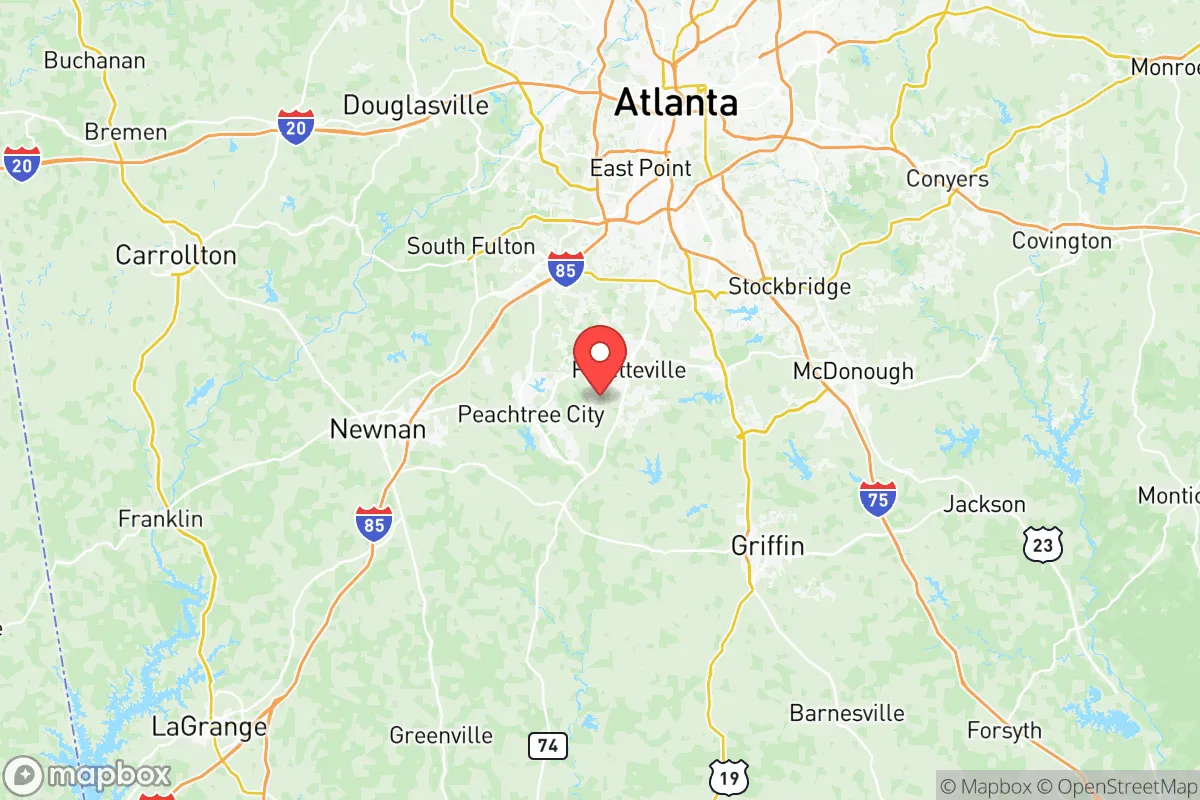
Fayette County has long been a reliably conservative stronghold in Georgia, with a Cook PVI of R+15 that puts it well to the right of the state as a whole, which sits at EVEN. But if you've lived here as long as I have, you've watched the political ground shift beneath your feet—not in a dramatic flip, but in a slow, steady creep that's worth paying attention to. The county still votes solidly red in most races, but the margins have tightened in some precincts, and the cultural battles playing out in school boards and zoning meetings are where the real story lies.
How it compares
Georgia as a state is a true battleground—EVEN on the Cook PVI means it can swing either way, and we've seen that in presidential elections. Fayette County, by contrast, is 15 points more Republican than the national average, and that gap is even wider when you compare it to metro Atlanta's leftward drift. But here's the nuance: not every corner of Fayette votes the same. Peachtree City and Tyrone are reliably red, with GOP candidates routinely pulling 65-70% of the vote. Fayetteville is more of a mixed bag—some precincts near the courthouse and along Highway 85 have shown slight blue shifts in recent cycles, especially in presidential years. Brooks and Woolsey remain deeply conservative, often breaking 75%+ for Republican candidates. The swing precincts are mostly in the newer subdivisions around Fayetteville's southern edge and near the Starr's Mill area, where transplants from DeKalb and Fulton counties have brought more progressive voting habits. That's the quiet concern: as Atlanta's sprawl pushes south, the political character of the county is being diluted.
What this means for residents
For those of us who moved here specifically to escape the overreach we saw in places like Decatur or Sandy Springs, the warning signs are real. School board meetings in Fayetteville have become battlegrounds over curriculum transparency and parental rights, with progressive activists pushing for critical race theory and gender ideology materials in classrooms. The county commission has held the line on zoning that keeps high-density, low-tax-base development at bay, but developers are circling. Property taxes have crept up as the county tries to fund infrastructure for new residents while maintaining the low-tax ethos that made Fayette attractive in the first place. The real test will come in the next few election cycles: if the blue-trending precincts in Fayetteville and along the southern corridor grow faster than the red strongholds in Peachtree City and Tyrone, we could see the county's R+15 rating slip to R+10 or worse within a decade. That's not a flip, but it's a drift—and drift is how you lose the character of a place.
Culturally, Fayette County still feels like old Georgia in the best ways: church attendance is high, gun ownership is common, and the Fourth of July parade in Peachtree City is still a red-white-and-blue affair. But there's a growing tension between the long-timers who remember when the county was rural and the newcomers who want it to be a bedroom suburb of Atlanta with all the progressive amenities that implies. The policy fights that matter most right now are local: school choice, property tax caps, and land-use regulations that keep the county from being overrun by apartment complexes and chain stores. If you value personal freedom and limited government, Fayette County is still a good bet—but you'd better show up to the precinct meetings and vote in every primary, because the other side is organized and they're not going anywhere.

State Political ClimatePolitical Climate in Georgia
State Political AnalysisPolitical Environment in the State
Georgia is a classic battleground state that has shifted from reliably red to a true toss-up over the past two decades, with a Cook PVI of EVEN. The state’s political soul is split between the rapidly growing, diverse metro Atlanta area—which now leans Democratic—and the rest of the state, which remains deeply conservative. This tug-of-war has produced razor-thin margins in recent presidential elections, with Joe Biden winning by just 0.2% in 2020 and Donald Trump losing the state by a similar margin in 2024, while Republicans continue to hold the governor’s mansion and both chambers of the legislature.
Urban vs. rural divide
The political map of Georgia is a tale of two Georgias. Metro Atlanta’s core counties—Fulton, DeKalb, Cobb, Gwinnett, and Clayton—drive the Democratic vote. Gwinnett County flipped from red to blue between 2016 and 2020, and it now reliably delivers 60%+ margins for Democrats, fueled by a diverse suburban population of Asian, Hispanic, and Black families. Meanwhile, the rural and exurban counties that ring Atlanta—like Forsyth, Cherokee, and Paulding—are deep red, often voting 70-80% Republican. Outside the Atlanta metro, the state’s second-largest city, Augusta, leans Democratic but is surrounded by conservative Richmond County suburbs. Savannah’s Chatham County is a Democratic stronghold, while Columbus (Muscogee County) and Macon (Bibb County) are purple-to-blue. The real conservative firepower comes from the state’s small towns and agricultural regions: Valdosta, Albany, and the entire southwestern corner of the state vote reliably Republican, as do the mountain counties in the north like Union and Fannin. The divide isn’t just urban vs. rural—it’s also about race and education. White voters without college degrees lean heavily Republican, while Black voters (roughly 33% of the state’s population) vote overwhelmingly Democratic, and college-educated white voters in the suburbs have shifted leftward since 2016.
Policy environment
Georgia’s policy environment is a mixed bag that reflects its divided politics. On taxes, the state has a flat income tax rate of 5.49% (down from 5.75% in 2024) and a state sales tax of 4%, with local options pushing it to 7-8% in most areas. Property taxes are relatively low, with a median effective rate of 0.87% of home value, though assessments have been rising fast in hot markets like Atlanta and Savannah. The regulatory posture is generally business-friendly—Georgia is a right-to-work state with weak unions and a reputation for low corporate taxes. On education, the state has a robust school choice program: the Georgia Promise Scholarship Act (2024) provides $6,500 per student for private school or homeschooling expenses, and there are over 80 charter schools statewide. However, the state’s public schools are a mixed bag—metro Atlanta’s top districts (like North Gwinnett and Walton) are excellent, but rural schools often struggle. Healthcare policy is more contentious: Georgia did not expand Medicaid under the Affordable Care Act, leaving roughly 300,000 low-income adults in a coverage gap. The state’s abortion law (HB 481) bans most abortions after six weeks, with narrow exceptions, and has been a flashpoint. On election integrity, Georgia passed SB 202 in 2021, which added voter ID requirements for absentee ballots, limited drop boxes, and shortened runoff periods—a law that drew national attention and legal challenges. Gun laws are among the most permissive in the country: Georgia is a constitutional carry state (since 2022), with no permit required for concealed carry, no state-level waiting periods, and no universal background checks for private sales.
Trajectory & freedom
Georgia’s trajectory on personal freedom is a study in contrasts. On the positive side for conservatives, the state has expanded gun rights significantly: the 2022 constitutional carry law (SB 319) removed the permit requirement for concealed carry, and the state preempts local governments from enacting stricter gun ordinances. Parental rights were strengthened with the 2022 “Parents’ Bill of Rights” (HB 1178), which requires schools to notify parents of any changes to a student’s mental, emotional, or physical health—a direct response to transgender policies in schools. On medical freedom, Georgia passed a law in 2023 banning COVID-19 vaccine mandates for state employees and contractors, and the state has no mask or vaccine mandates in effect. However, there are concerning trends. The state’s tax burden is creeping up—the flat income tax was cut from 5.75% to 5.49%, but property taxes have risen sharply in metro Atlanta due to soaring home values, and the state’s gas tax (29 cents per gallon) is above the national average. On speech, Georgia has no state-level shield law for journalists, and the state’s “campus free speech” law (SB 17, 2023) is relatively weak compared to other states. The biggest red flag for liberty-minded residents is the growing influence of the Atlanta metro’s progressive politics on state policy. Atlanta’s city council has passed sanctuary city-like ordinances limiting cooperation with ICE, and the state legislature has responded with preemption bills (like HB 1105, which bans sanctuary policies). This back-and-forth creates a patchwork of local vs. state control that can be confusing for new residents.
Civil unrest & political movements
Georgia has been a hotspot for political activism on both sides. The 2020 election aftermath saw massive protests in Atlanta—both from the left (racial justice protests after George Floyd’s death) and the right (the “Stop the Steal” rally at the state capitol in January 2021). The state’s election integrity debate remains raw, with many conservatives still distrustful of the 2020 results in Fulton County, where a 2023 audit found 2,600 duplicate ballots (though no evidence of widespread fraud). Immigration politics are a flashpoint: Georgia has a strict E-Verify law (SB 529, 2006) requiring all employers to check work authorization, but Atlanta’s growing immigrant population has led to tensions. The “sanctuary city” debate flared up in 2024 when the state legislature passed HB 1105, which withholds state funding from any local government that refuses to cooperate with ICE. On the left, groups like the Georgia Coalition for the People’s Agenda and the New Georgia Project have been highly active in voter registration drives, particularly in Black and Latino communities. Secession or nullification rhetoric is minimal, but there is a strong “10th Amendment” movement in rural counties, with some local governments passing resolutions asserting local control over federal land and gun laws. The most visible flashpoint for a new resident would be the constant political advertising—Georgia is a perennial swing state, so TV, radio, and digital ads from both parties are relentless during election cycles.
Projection
Over the next 5-10 years, Georgia is likely to become more competitive, not less. The key demographic driver is the continued growth of metro Atlanta’s diverse suburbs—Gwinnett, Cobb, and Forsyth counties are adding tens of thousands of new residents annually, many from blue states like California and New York. These newcomers tend to be more moderate-to-liberal on social issues but fiscally conservative, which could push the state further toward the center. However, the rural and exurban areas are also growing, driven by domestic migration from other Southern states. The net effect is that Georgia will likely remain a toss-up for the foreseeable future, with presidential elections decided by 1-2 points. For conservatives, the most concerning trend is the leftward drift of the Atlanta suburbs—if Forsyth County (currently red) flips blue in the next decade, the state will become reliably Democratic. On policy, expect continued battles over election laws, abortion, and education. The state’s school choice program will likely expand, but so will efforts to increase funding for public schools. The biggest wildcard is the 2026 gubernatorial election—if a Democrat wins, expect a sharp leftward turn on healthcare (Medicaid expansion) and criminal justice reform. If a Republican holds the seat, the state will remain a conservative island in a purple region.
For a new resident, the bottom line is that Georgia offers a relatively low-tax, business-friendly environment with strong gun rights and school choice, but you’ll be living in a state that is politically divided and constantly contested. If you’re moving to a rural or exurban area like Forsyth County, Cherokee County, or the Savannah suburbs, you’ll find a conservative community that aligns with your values. If you’re moving to Atlanta proper, Decatur, or parts of Gwinnett County, you’ll be in a blue bubble where progressive policies dominate local government. The key is to choose your location carefully—Georgia’s political climate varies dramatically from one county to the next, and your experience will depend entirely on where you land.
* Values derived from national, state, county, city and local statistics and may differ in a specific area. Last updated: 2026-05-26T06:59:05.000Z
Narrative content on this page is AI-generated and may contain mistakes. Verify any details that matter before acting on them.
ReloMaps may earn a commission from affiliate links at no extra cost to you.

