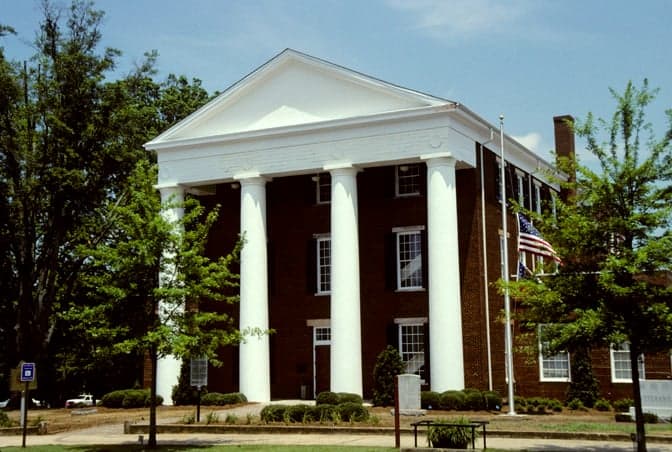
Photo: Wikipedia
Strategic Assessment of Greene County
Workable tactical position. Some exposure to population density or targets, but generally defensible in a crisis.
What does the Strategic Assessment tell us?
Our Strategic Assessment grades tactical survivability of an area. Major population centers, military targets, fallout zones, natural disasters, and border exposure all drive risk — lower exposure means a more defensible position in a crisis.
This is heavily inspired by Joel Skousen's Strategic Relocation book. Highly recommended you checkout the book ($)What does this tell us?
Our Strategic Assessment grades tactical survivability of an area. Major population centers, military targets, fallout zones, natural disasters, and border exposure all drive risk — lower exposure means a more defensible position in a crisis.
This is heavily inspired by Joel Skousen's Strategic Relocation book. Highly recommended you checkout the book ($)Strategic Pillars

Key Distances
Strategic Assessment Analysis
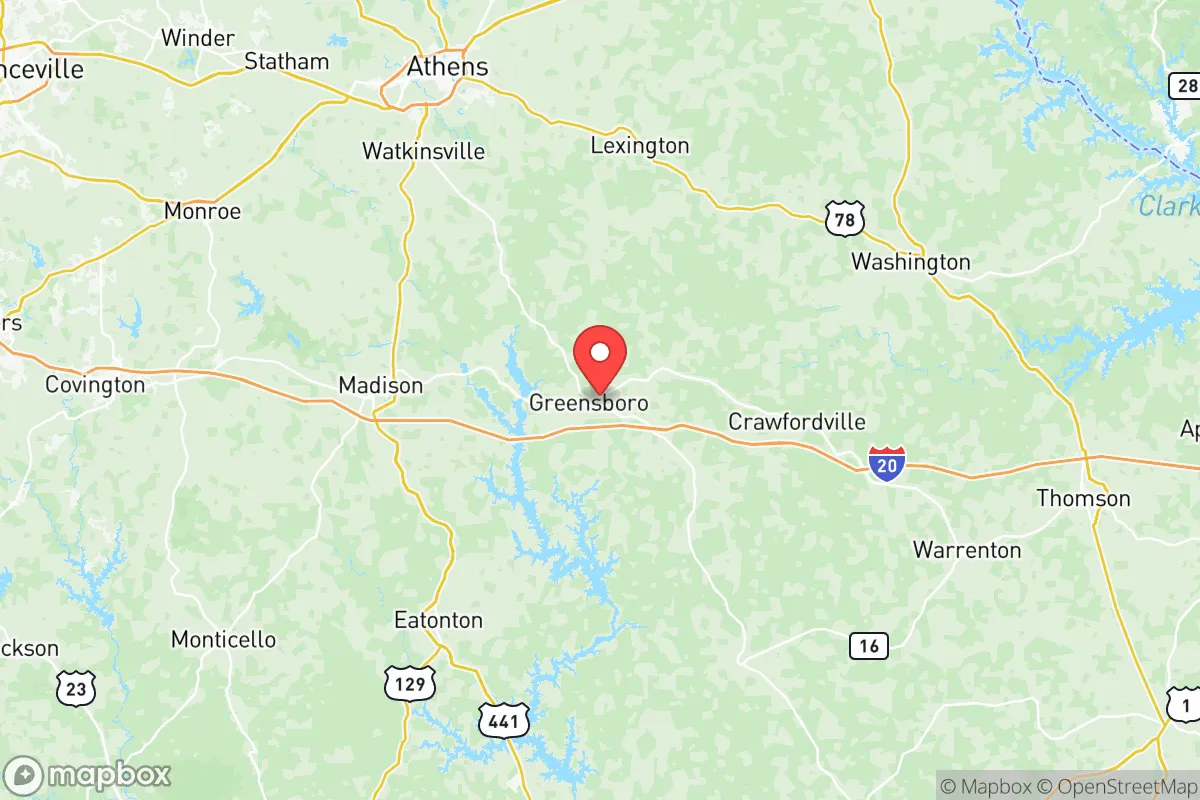
Greene County, Georgia, offers a compelling strategic position for relocators prioritizing resilience and self-sufficiency, balancing rural seclusion with practical access to regional infrastructure. Located roughly 70 miles east of Atlanta and 30 miles south of Athens, the county sits in the Piedmont region, a zone historically less prone to the severe weather events that plague coastal or plains areas. Its population of around 20,000 is spread across small towns like Greensboro (the county seat), Siloam, and Union Point, creating a low-density environment that inherently reduces exposure to cascading failures common in urban centers. For a reader weighing disaster readiness, Greene County’s combination of geographic insulation, water resources, and agricultural potential makes it a serious contender, though not without specific vulnerabilities tied to its proximity to regional infrastructure.
Geographic position and natural advantages for long-term stability
Greene County’s location in the Georgia Piedmont provides several structural advantages for resilience. The region sits on a foundation of ancient, weathered bedrock, which offers stable ground for construction and reduces risks from seismic activity—earthquakes are virtually nonexistent here. The county is bisected by the Oconee River and contains the massive Lake Oconee, a 19,000-acre reservoir created by the Wallace Dam. This water body is a dual asset: it supplies a reliable freshwater source for drinking and irrigation, and its hydroelectric capacity at the Wallace Dam (operated by Georgia Power) provides a decentralized energy node that could function independently during grid disruptions. The surrounding topography is gently rolling, with elevations around 500-700 feet, which mitigates flood risks compared to low-lying coastal areas. Forest cover is extensive—roughly 60% of the county is wooded—offering natural windbreaks, timber for construction or fuel, and wildlife for subsistence hunting. The climate is humid subtropical, with mild winters and long growing seasons (USDA hardiness zone 8a), supporting year-round food production. For a relocator, this means the land itself is forgiving: fertile soils, ample rainfall (averaging 48 inches annually), and minimal extreme weather threats like tornadoes (which are less frequent and weaker than in the Plains) or hurricanes (which weaken significantly by the time they reach inland Georgia).
Risks, exposures, and proximity to fallout-relevant landmarks
While Greene County avoids many natural disaster hotspots, its strategic exposure to man-made risks requires careful consideration. The most significant vulnerability is its proximity to the Atlanta metropolitan area, roughly 70 miles west. Atlanta is a major transportation and logistics hub, home to Hartsfield-Jackson International Airport, multiple interstate corridors (I-20 runs just north of the county), and critical infrastructure like fuel pipelines and data centers. In a major disruption—whether from a cyberattack, pandemic, or geopolitical event—Greene County could face secondary effects: refugee flows from Atlanta, supply chain interruptions, or targeted attacks on regional infrastructure. The county is also within 100 miles of the Savannah River Site (SRS), a nuclear weapons facility and waste storage complex near Aiken, SC, about 90 miles east. While SRS is heavily secured, a catastrophic event there could theoretically affect air or water quality downwind. More immediately, Greene County lies under the flight path of military aircraft from Fort Moore (formerly Fort Benning), about 120 miles south, and Robins Air Force Base near Macon, 60 miles southwest. These bases are potential targets in a conflict scenario, though their distance reduces direct blast or fallout risks. On the ground, the county has no major refineries, chemical plants, or nuclear power plants within its borders—the nearest nuclear plant is Plant Vogtle, 80 miles southeast near Waynesboro. For a relocator, the key takeaway is that Greene County is not a primary target but sits within a zone that could experience indirect fallout from regional infrastructure failures. The risk is moderate, not extreme, and can be mitigated by stockpiling supplies and maintaining situational awareness.
Practical resilience for a relocator: food, water, energy, and defensibility
Greene County offers strong fundamentals for self-sufficiency, but practical implementation requires planning. Water security is excellent: Lake Oconee and the Oconee River provide surface water, while the county’s groundwater aquifers are productive, with many rural properties capable of supporting wells at depths of 100-300 feet. The county’s water treatment infrastructure is managed by the Greene County Water Authority, but a relocator should plan for private well installation or rainwater catchment as a backup. Food production is viable: the county has a strong agricultural heritage, with row crops (corn, soybeans), livestock (cattle, poultry), and a growing local food scene. The Greene County Farmers Market in Greensboro operates seasonally, and the area has several u-pick farms and orchards. For a family, a 1-5 acre plot can support a substantial garden, fruit trees, and small livestock. The long growing season allows for multiple harvests, and the local extension office (University of Georgia Cooperative Extension) offers resources on soil testing and pest management. Energy resilience is mixed: the grid is reliable but centralized, with power primarily from Georgia Power’s coal and nuclear mix. Solar potential is good—the county averages 4.5 peak sun hours per day—and there are no zoning restrictions that prohibit residential solar panels. However, battery storage is essential for off-grid capability. Propane is widely available for heating and cooking, and wood heating is practical given the forest cover. Defensibility is a relative strength: the county’s low population density and rural character make it easier to secure a property than in suburban areas. Many homes are set back from main roads, with natural barriers like woods and creeks. The local law enforcement presence is modest—the Greene County Sheriff’s Office has about 30 deputies—so community-based security (neighborhood watches, mutual aid groups) is more realistic than relying on rapid response. The county has no major military installations or police state infrastructure, which reduces the risk of martial law scenarios but also means less federal support during emergencies.
The overall strategic picture for Greene County is one of balanced opportunity with manageable trade-offs. It is not a hardened bunker location—it lacks the extreme isolation of Montana or the high-altitude security of Colorado—but it offers a realistic, livable environment for a family or individual seeking to build resilience without abandoning modern conveniences. The county’s proximity to Atlanta is a double-edged sword: it provides access to medical centers (Piedmont Greensboro is a small hospital; major trauma care is in Athens or Atlanta), supply chains, and employment, but it also introduces the risks of urban spillover. For a relocator with a conservative leaning, Greene County aligns with values of self-reliance, community, and land stewardship. The key is to act deliberately: secure a property with water access, invest in renewable energy and food production, and build relationships with neighbors. The area’s resilience is not automatic—it requires effort—but the foundation is solid. In a world of increasing uncertainty, Greene County stands out as a place where a prepared family can thrive, not just survive.

* Values derived from national, state, county, city and local statistics and may differ in a specific area. Last updated: 2026-08-21T02:24:49.000Z
Narrative content on this page is AI-generated and may contain mistakes. Verify any details that matter before acting on them.
ReloMaps may earn a commission from affiliate links at no extra cost to you.

