 Popular
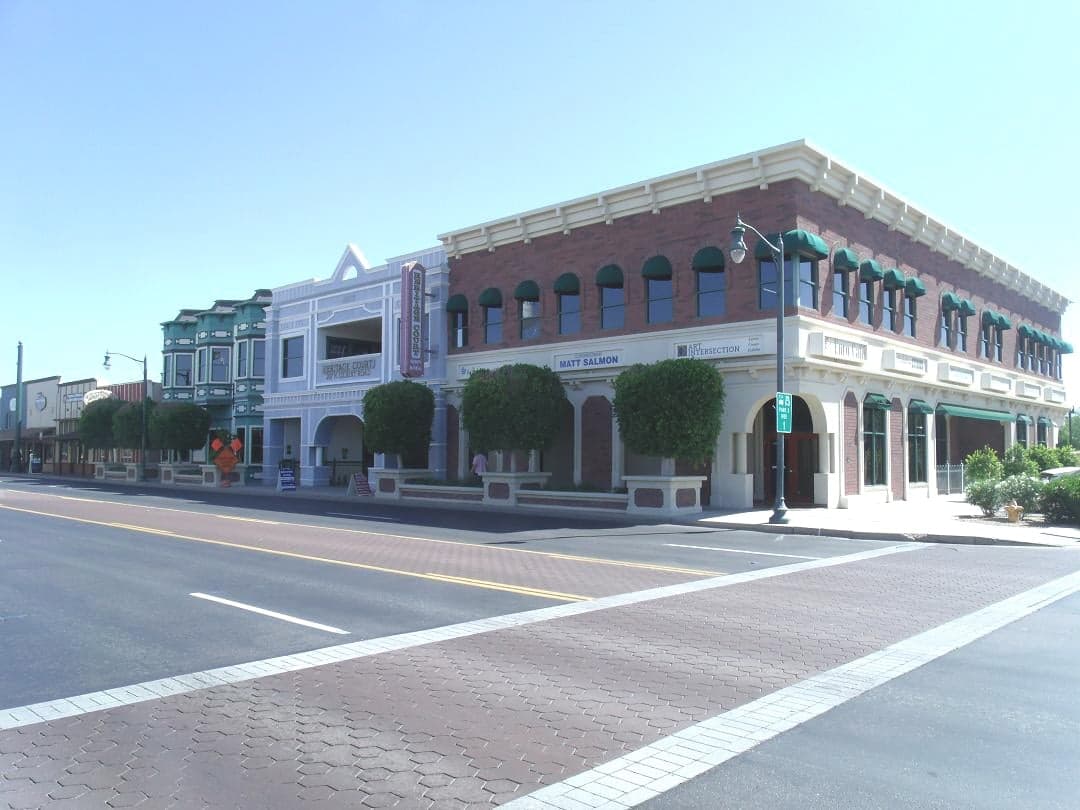
Photo: Wikipedia
Demographics of Gilbert, AZ
Affluence Level in Gilbert, AZ
An upper-middle-class area. Household wealth, education levels, and homeownership run ahead of national benchmarks.
People of Gilbert, AZ
The people of Gilbert, Arizona today form one of the fastest-growing, most family-oriented populations in the Phoenix metro area, with 271,118 residents who are notably younger and more educated than the national average. The city is predominantly white (66.4%) with a significant Hispanic minority (17.5%), a growing East/Southeast Asian community (5.0%), and a small but established Indian-subcontinent population (1.5%). Gilbert’s identity is shaped by its rapid suburban expansion, high median household income, and a culture that blends Western heritage with modern master-planned living. The city consistently ranks among the safest in Arizona, attracting conservative-leaning families and professionals seeking good schools and low crime.
How the city was settled and grew
Gilbert was founded in 1920 as a railroad town, named after William Gilbert, a railroad contractor who helped build the Arizona Eastern Railway. The original settlers were predominantly Anglo-American farmers drawn by the promise of irrigated agriculture along the newly completed canal system. The Heritage District, centered around the original downtown along Gilbert Road, was the heart of this early community, where small wood-frame homes and commercial buildings housed the families who worked the cotton, alfalfa, and citrus fields. Through the 1940s and 1950s, Gilbert remained a tiny agricultural hamlet—its population barely reached 1,000 by 1950. The Val Vista Lakes area, now a large residential subdivision, was originally part of the vast farmland that sustained the town. The post-World War II era saw a trickle of returning veterans settling in modest homes near the railroad tracks, but the town’s character remained rural and overwhelmingly white until the 1970s.
Modern era (post-1965)
The 1965 Immigration and Nationality Act had little immediate effect on Gilbert, as the city remained a sleepy farm town through the 1970s. The real transformation began in the 1980s and 1990s, when Phoenix’s suburban sprawl reached Gilbert. Domestic in-migration—primarily from California, the Midwest, and the Northeast—drove explosive growth. The population soared from 5,717 in 1980 to 72,976 in 1990, then to 109,697 in 2000. Master-planned communities like Power Ranch (developed in the late 1990s) and Seville (opened in the 2000s) attracted white-collar families and professionals, cementing Gilbert’s reputation as a safe, family-oriented suburb. The Hispanic population grew steadily during this period, largely from domestic migration and natural increase, settling in older neighborhoods like the Heritage District and along the Baseline Road corridor. The East/Southeast Asian community, now 5.0% of the population, began arriving in the 2000s, drawn by tech and healthcare jobs; they concentrated in newer developments like Val Vista Lakes and Power Ranch. The Indian-subcontinent population (1.5%) followed a similar pattern, clustering in the same master-planned communities. Gilbert’s foreign-born share remains low at 3.1%, reflecting its character as a destination for domestic migrants rather than international immigrants.
The future
Gilbert’s population is projected to continue growing, though at a slower pace, as available land for new development diminishes. The city is becoming more diverse, but not through rapid immigration—rather through natural increase and the aging of existing minority families. The Hispanic share is expected to rise gradually, while the white share will decline slowly. The East/Southeast Asian and Indian communities are likely to grow modestly as professionals continue to be attracted to Gilbert’s schools and safety. However, the city is not tribalizing into distinct ethnic enclaves; instead, it is homogenizing into a broadly middle-to-upper-middle-class suburban culture. The Heritage District remains the most diverse area, with a mix of older Anglo and Hispanic residents, while newer neighborhoods like Seville and Power Ranch are more uniformly white and Asian. The next 10-20 years will likely see Gilbert become slightly more diverse but retain its core identity as a safe, conservative-leaning, family-oriented suburb. The biggest demographic shift may be an aging population, as the families who moved in during the 1990s and 2000s grow older and their children leave for college.
For someone moving in now, Gilbert offers a stable, predictable environment with strong schools, low crime, and a population that values community and tradition. The city is not a melting pot in the traditional sense but rather a collection of like-minded families who prioritize safety, education, and a high quality of life. The demographic trends suggest Gilbert will remain a predominantly white, conservative suburb with growing Hispanic and Asian minorities, making it an attractive option for families seeking a secure, well-managed community in the Phoenix metro area.

* Values derived from national, state, county, city and local statistics and may differ in a specific area. Last updated: 2026-04-16T00:47:20.000Z
Narrative content on this page is AI-generated and may contain mistakes. Verify any details that matter before acting on them.
ReloMaps may earn a commission from affiliate links at no extra cost to you.

