 Popular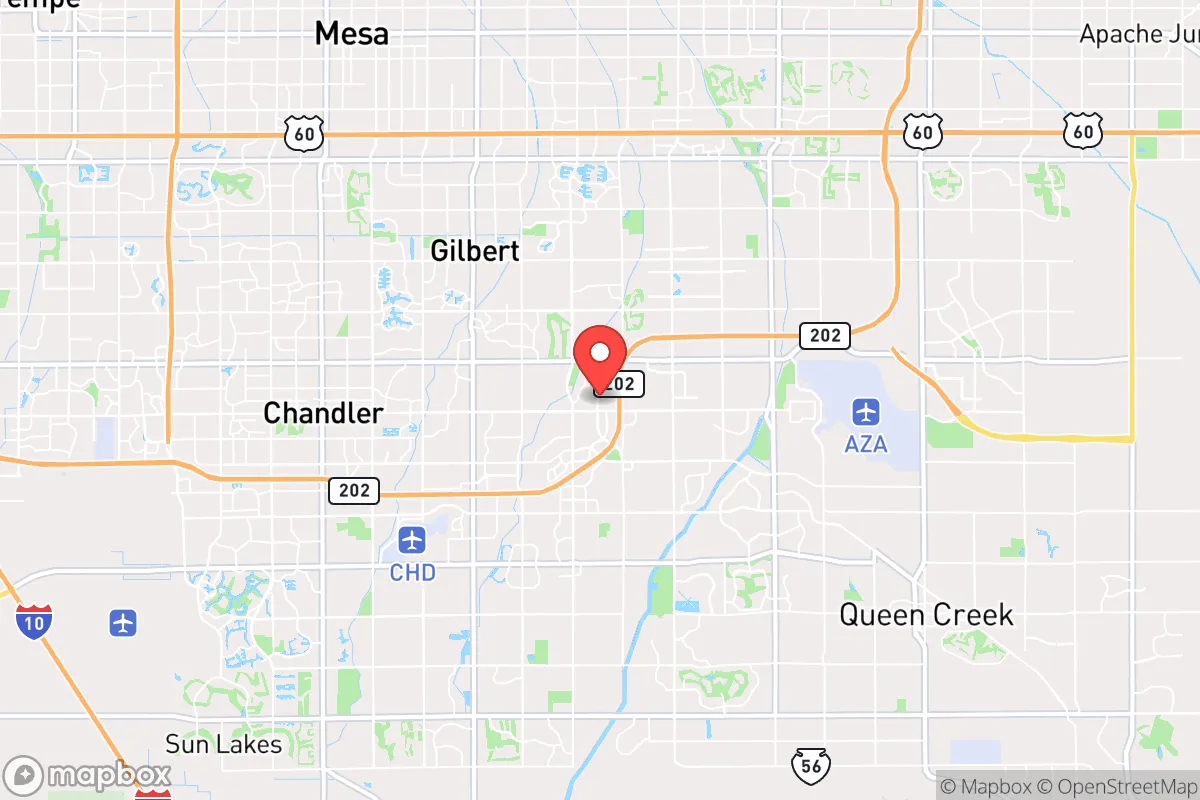
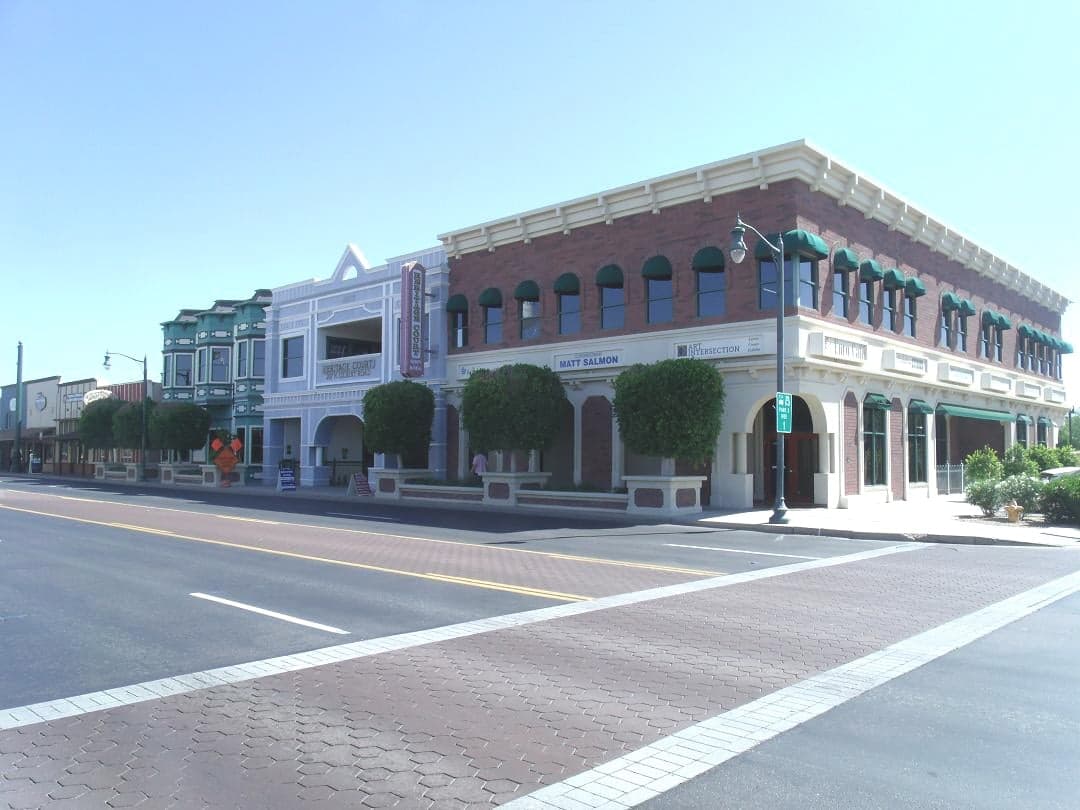
Photo: Wikipedia
Strategic Assessment of Gilbert, AZ
Multiple tactical vulnerabilities. Population density, target proximity, or disaster risk are likely compounding. A retreat property and exit planning is required.
What does the Strategic Assessment tell us?
Our Strategic Assessment grades tactical survivability of an area. Major population centers, military targets, fallout zones, natural disasters, and border exposure all drive risk — lower exposure means a more defensible position in a crisis.
This is heavily inspired by Joel Skousen's Strategic Relocation book. Highly recommended you checkout the book ($)What does this tell us?
Our Strategic Assessment grades tactical survivability of an area. Major population centers, military targets, fallout zones, natural disasters, and border exposure all drive risk — lower exposure means a more defensible position in a crisis.
This is heavily inspired by Joel Skousen's Strategic Relocation book. Highly recommended you checkout the book ($)Strategic Pillars

Key Distances
Regional Safe Places
Below is our recommended "safe zones" in Arizona and the surrounding area based on our strategic heuristics. For most people, it's unrealistic to live in a “safe zone” full-time due to work, family or other personal reasons. They tend to be more rural. However, many of these areas are perfect for second homes and retreat properties that double as a vacation home or even a short-term rental.
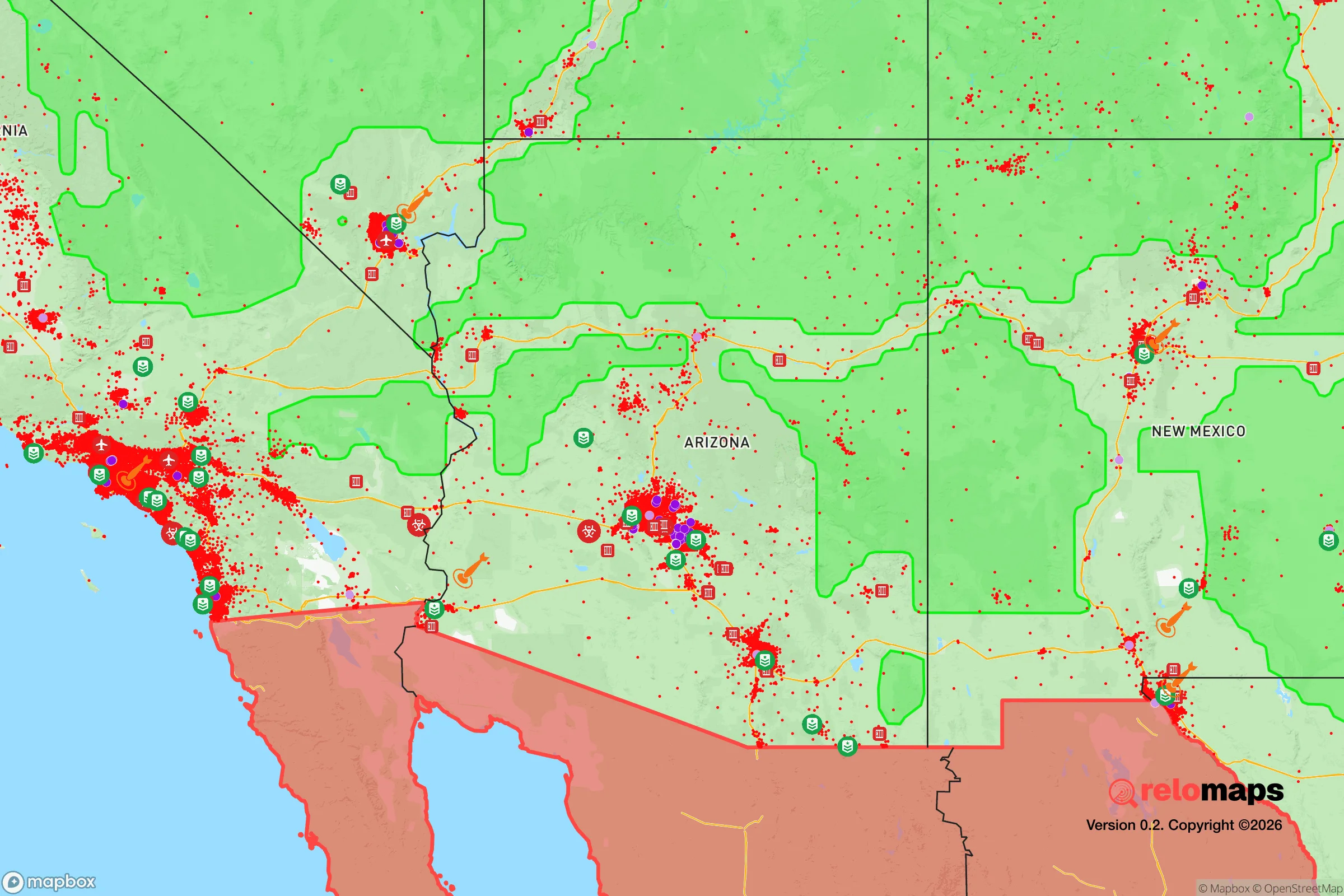
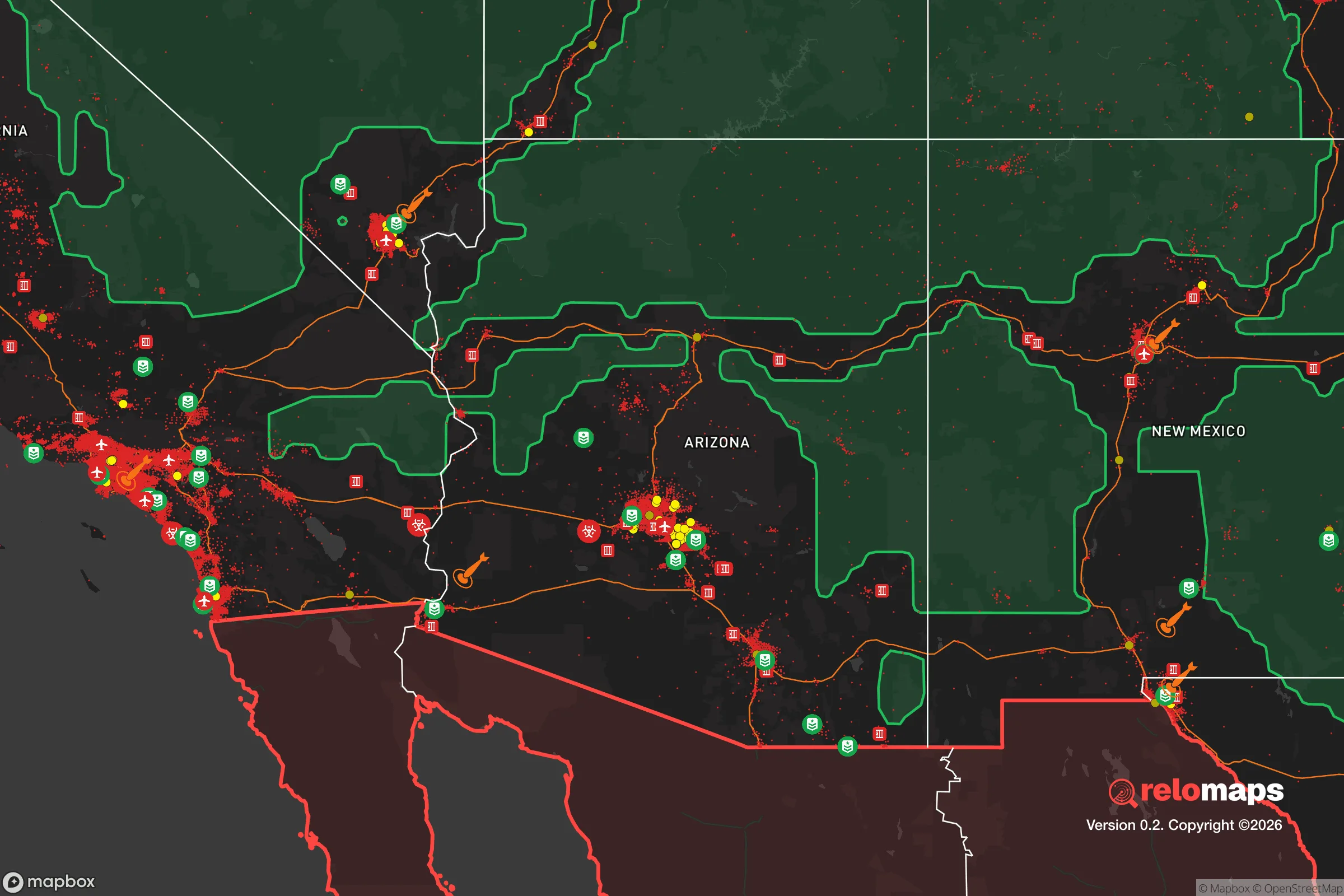


Important Note: For informational purposes only. This does not mean nothing bad ever happens in the green zones. Please use common sense. This is based on public data and modeled with AI. We tried to take a conservative approach but mistakes happen. We update this regularly as new information becomes available.
Solar Generator Recommendations
Backup power matters more here than in safer locations. We've picked three solar generators across budgets and capacity tiers — start with the budget unit if you only need a few essentials, or step up if you want to run a fridge and HVAC for days at a time.

Jackery Portable Power Station Explorer 300
Budget OptionPower on the Go: Weighing only 11 lbs, it's convenient to set up and store with book-sized foldable solar panels

BLUETTI Portable Power Station AC180
Designed for both indoor and outdoor scenarios, AC180 is highly capable as it has a robost capacity and continuous output power.

EF ECOFLOW DELTA Pro Ultra Power Station
Upgraded PickEcoFlow DELTA Pro Ultra is a whole-home energy system designed to grow with your family. Integrated with the Smart Home Panel 2, it scales to meet your evolving energy needs — keeping your home powered, intelligent, and secure through every stage of life.
We earn a commission, at no additional cost to you.
Strategic Assessment Analysis
Gilbert, Arizona, presents a mixed strategic picture for the conservative prepper. Its explosive growth—from a farming town of 5,000 in 1990 to over 300,000 today—has created a modern, well-planned suburb with strong infrastructure, but that same growth places it squarely within the Phoenix metropolitan area’s shadow, a significant liability for those prioritizing long-term resilience. The town’s location offers genuine advantages in water rights and grid stability, yet its proximity to a major population center and critical infrastructure targets demands a sober assessment of risks. For the relocator thinking in decades, not years, Gilbert is a study in trade-offs: excellent day-to-day living conditions paired with vulnerabilities that require deliberate mitigation.
Geographic position and natural advantages for long-term security
Gilbert sits in the southeastern quadrant of the Phoenix metro, roughly 20 miles from downtown Phoenix and 15 miles from the East Valley hub of Mesa. Its position on the relatively flat Salt River Valley floor gives it access to the Central Arizona Project canal system, which delivers Colorado River water—a critical advantage in a state facing chronic drought. The town’s elevation at about 1,200 feet provides a slightly cooler climate than Phoenix proper, though summer highs still routinely exceed 105°F. The surrounding terrain is open Sonoran Desert, offering limited natural cover but also clear sightlines and minimal wildfire risk compared to forested mountain communities. The nearby San Tan Mountains to the south and the Superstition Mountains to the east provide some geographic buffer, but Gilbert itself is not defensible by terrain. Its grid-like street layout, while efficient for daily life, creates predictable chokepoints that could be problematic in a disorder scenario. The area’s natural advantages are real—consistent sunshine for solar power, a growing aquifer recharge program, and relatively low seismic risk—but they are offset by extreme heat and a built environment designed for convenience, not security.
Risks, exposures, and proximity to fallout-relevant landmarks
The primary strategic liability is Gilbert’s location within the Phoenix metropolitan statistical area, home to nearly 5 million people. In a mass casualty event, civil unrest, or grid-down scenario, that population density becomes a liability. Gilbert is within 25 miles of Phoenix Sky Harbor International Airport, a major transportation hub and potential target for both conventional and asymmetric threats. The nearby Palo Verde Nuclear Generating Station, located about 50 miles west near Tonopah, is the largest nuclear power plant in the United States by output. While Gilbert is outside the most severe plume exposure pathways for a Palo Verde incident, prevailing winds from the west could carry fallout across the East Valley. The town also sits near the Salt River, which, while usually dry, has flash flood potential during monsoon storms. More prosaically, Gilbert’s reliance on just a few major arterial roads—US 60, Loop 202, and Val Vista Drive—means that a single accident or road closure can paralyze movement. For the prepper, the key takeaway is that Gilbert is not a remote retreat; it is a suburb with all the vulnerabilities that entails, including dependence on just-in-time supply chains for food, fuel, and medical supplies. The presence of multiple big-box distribution centers in the area (Amazon, Walmart, Kroger) means that a disruption would hit local shelves hard and fast.
Practical resilience for a relocator: food, water, energy, and defensibility
On the practical side, Gilbert offers some genuine resilience advantages for those willing to invest. The town has a robust municipal water system fed by the CAP canal and local groundwater wells, but individual well drilling is generally not feasible within city limits due to lot sizes and regulations. A serious prepper should plan for at least 30 days of stored water per person, plus a Berkey or similar filtration system for emergency use. The area’s 300+ days of sunshine make rooftop solar a strong play, though net metering policies have become less favorable in recent years. Battery storage is essential, as grid outages during summer heat waves can be deadly. Food resilience is limited: Gilbert has a few community gardens and farmers markets, but the town’s agricultural heritage has been largely paved over. The nearest significant farming operations are in Queen Creek and Coolidge, 15-20 miles southeast. For defensibility, Gilbert’s HOA-heavy neighborhoods with uniform setbacks and limited fencing create a suburban landscape that is hard to secure. A better option for the security-minded is to look at properties on the town’s periphery—near the San Tan Mountains or along the southern edge—where larger lots and more varied terrain offer some tactical advantage. The local gun culture is strong, with multiple shooting ranges and a generally pro-Second Amendment climate, but the Maricopa County Sheriff’s Office response times in a widespread event would likely be measured in hours, not minutes.
The overall strategic picture for Gilbert is one of calculated risk. It is a well-run, conservative-leaning community with low crime, good schools, and a strong sense of local identity—qualities that matter for day-to-day stability and for building a network of like-minded neighbors. But it is not a bug-out location. Its resilience depends on the continued functioning of regional infrastructure, and its proximity to Phoenix means that any major disruption—whether from economic collapse, civil unrest, or a natural disaster—will ripple through Gilbert quickly. For the relocator who wants a comfortable base with decent infrastructure and a like-minded community, Gilbert works, provided you invest in water storage, solar backup, and a solid plan for self-sufficiency. For those seeking true strategic depth—remote, defensible, and self-reliant—the desert towns further east, like Safford or Show Low, offer a more secure long-term bet. Gilbert is a good place to live; it is not a good place to hide.

* Values derived from national, state, county, city and local statistics and may differ in a specific area. Last updated: 2026-04-16T00:47:20.000Z
Narrative content on this page is AI-generated and may contain mistakes. Verify any details that matter before acting on them.
ReloMaps may earn a commission from affiliate links at no extra cost to you.

