Photo: Wikipedia
Demographics of Glassboro, NJ
Affluence Level in Glassboro, NJ
A middle-class area roughly in line with national averages across income, home values, education, and employment.
People of Glassboro, NJ
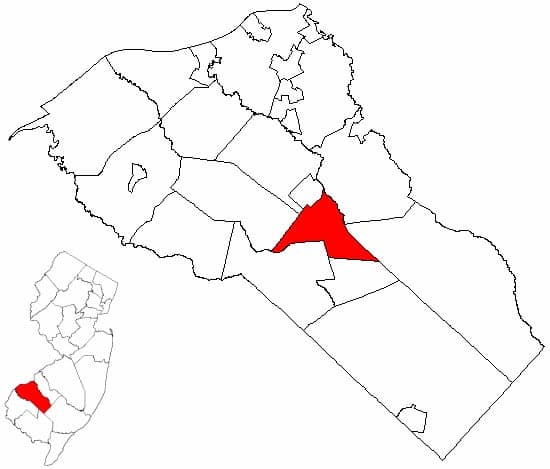
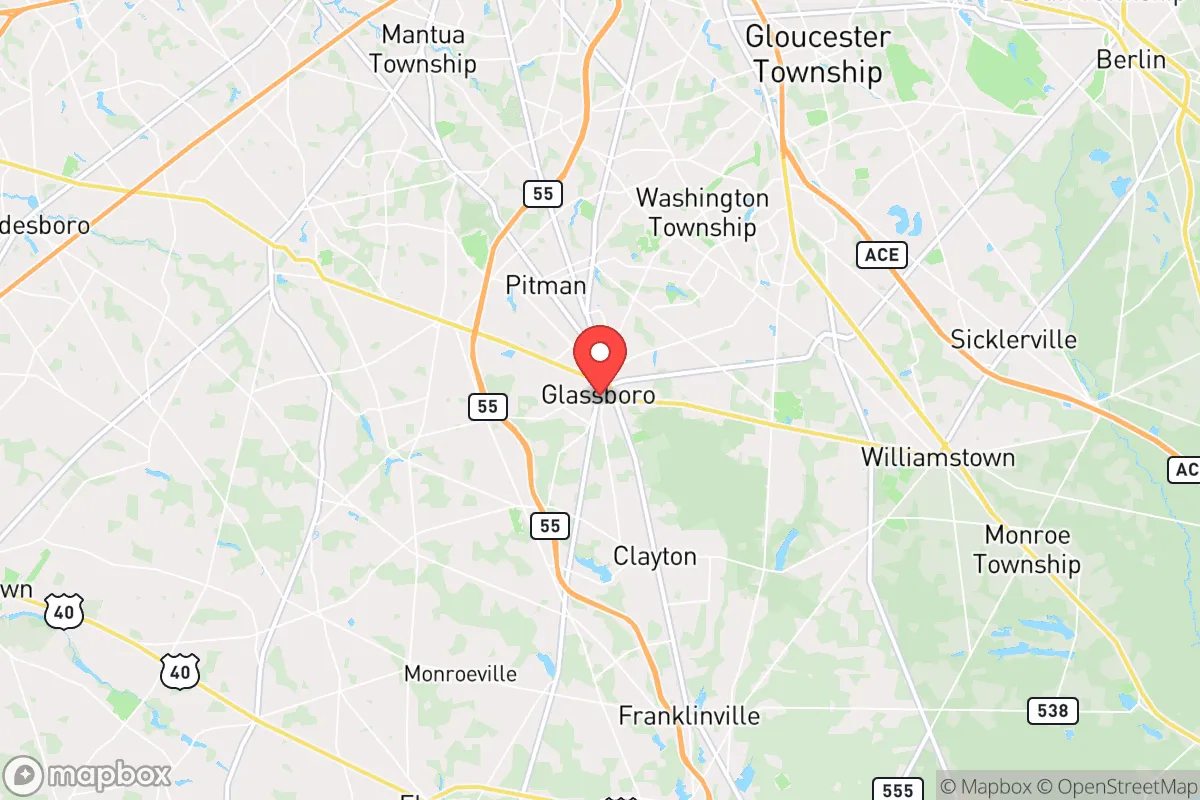
Glassboro, New Jersey, is a small city of 23,375 residents that blends a historic college-town character with a diversifying, family-oriented population. Its identity is shaped by Rowan University, which anchors the downtown and draws a young, educated cohort, while the broader community remains majority white (61.9%) with significant Black (17.4%) and Hispanic (10.4%) populations. The city is notably more educated than the national average, with 41.0% of adults holding a bachelor's degree or higher, yet its foreign-born share is low at just 3.9%, reflecting a largely native-born, multi-generational character. Glassboro feels like a compact, walkable borough where university life and suburban residential streets coexist, giving it a distinctive identity among South Jersey towns.
How the city was settled and grew
Glassboro’s population history begins with its name—glass manufacturing. Founded in the late 18th century around the glassworks of the Whitney and Bodine families, the town drew skilled German and English glassblowers who settled in what is now the Historic Glassboro Village district, centered near Main Street and the original factory sites. By the mid-19th century, the glass industry attracted Irish immigrants fleeing the Potato Famine, who built homes in the Borough of Glassboro’s working-class blocks along Delsea Drive and State Street. A second wave came with Italian immigrants in the early 1900s, who worked in the glass factories and established a tight-knit enclave in the Italian District around North Main Street and High Street, where descendants still live today. The city incorporated in 1878 and grew steadily through the 1920s, reaching about 5,000 residents by 1930, with a population that was overwhelmingly white and of European descent.
Modern era (post-1965)
After the 1965 Hart-Cellar Act, Glassboro saw modest diversification, but the biggest demographic shift came from domestic migration. The expansion of Rowan University (then Glassboro State College) in the 1970s and 1980s drew Black and Hispanic families from nearby Philadelphia and Camden, who settled in the West End neighborhood west of Rowan’s campus, an area of older single-family homes and duplexes. The 1990s and 2000s brought a small but notable influx of East/Southeast Asian families (3.2% of the population today), primarily Vietnamese and Filipino, who concentrated near the Rowan Boulevard corridor and the Glassboro Crossings apartment complex, drawn by university jobs and affordable housing. Indian-subcontinent residents (3.3%) arrived later, many as Rowan faculty or graduate students, and settled in the University Court area and newer subdivisions off Bowe Boulevard. The Black population grew from roughly 8% in 1980 to 17.4% today, while the Hispanic share rose from under 3% to 10.4%, largely through Puerto Rican and Dominican families moving into the South Glassboro district near the borough line with Clayton. The white population declined from over 85% in 1980 to 61.9% today, but remains the largest group, concentrated in the older Historic Village and North Glassboro neighborhoods.
The future
Glassboro’s population is trending toward greater racial and ethnic diversity, but at a slower pace than nearby urban centers. The foreign-born share (3.9%) is low and stable, suggesting that future growth will come primarily from domestic migration—especially from Camden and Philadelphia—rather than new immigration. The Indian-subcontinent and East/Southeast Asian communities are small but growing, driven by Rowan University’s expanding graduate programs and STEM hiring, and are likely to remain concentrated near campus rather than dispersing citywide. The Hispanic population is the fastest-growing segment, projected to reach 13-15% by 2035, with new arrivals settling in South Glassboro and the Delsea Drive corridor. The Black population is plateauing, while the white share continues a gradual decline. Glassboro is not tribalizing into stark enclaves—neighborhoods remain relatively mixed—but distinct clusters persist: the Historic Village remains predominantly white and older, the West End is majority Black, and the Rowan Boulevard area is a young, multi-ethnic zone of students and professionals. The city is becoming more educated and more diverse, but it is not homogenizing; instead, it is evolving into a layered community where university life and working-class roots coexist.
For someone moving to Glassboro now, the city offers a stable, family-friendly environment with a strong educational anchor and a population that is diversifying without rapid turnover. It is not a melting pot in the classic sense, but a place where distinct groups—longtime white families, Black and Hispanic residents from the region, and a small but growing Asian and Indian professional class—share a compact, walkable space. The low crime rate, good schools, and Rowan-driven economy make it attractive for conservative-leaning families seeking a traditional small-town feel with modern amenities. The demographic trajectory suggests a slow, steady diversification that will continue to reshape the city’s character over the next two decades, but without the dramatic shifts seen in larger cities. Glassboro is becoming a more inclusive, educated, and stable community—a solid choice for those who value predictability and community cohesion.

* Values derived from national, state, county, city and local statistics and may differ in a specific area. Last updated: 2026-04-29T19:13:30.000Z
Narrative content on this page is AI-generated and may contain mistakes. Verify any details that matter before acting on them.
ReloMaps may earn a commission from affiliate links at no extra cost to you.

