Photo: Wikipedia
Strategic Assessment of Glassboro, NJ
Multiple tactical vulnerabilities. Population density, target proximity, or disaster risk are likely compounding. A retreat property and exit planning is required.
What does the Strategic Assessment tell us?
Our Strategic Assessment grades tactical survivability of an area. Major population centers, military targets, fallout zones, natural disasters, and border exposure all drive risk — lower exposure means a more defensible position in a crisis.
This is heavily inspired by Joel Skousen's Strategic Relocation book. Highly recommended you checkout the book ($)What does this tell us?
Our Strategic Assessment grades tactical survivability of an area. Major population centers, military targets, fallout zones, natural disasters, and border exposure all drive risk — lower exposure means a more defensible position in a crisis.
This is heavily inspired by Joel Skousen's Strategic Relocation book. Highly recommended you checkout the book ($)Strategic Pillars

Key Distances
Regional Safe Places
Below is our recommended "safe zones" in New Jersey and the surrounding area based on our strategic heuristics. For most people, it's unrealistic to live in a “safe zone” full-time due to work, family or other personal reasons. They tend to be more rural. However, many of these areas are perfect for second homes and retreat properties that double as a vacation home or even a short-term rental.
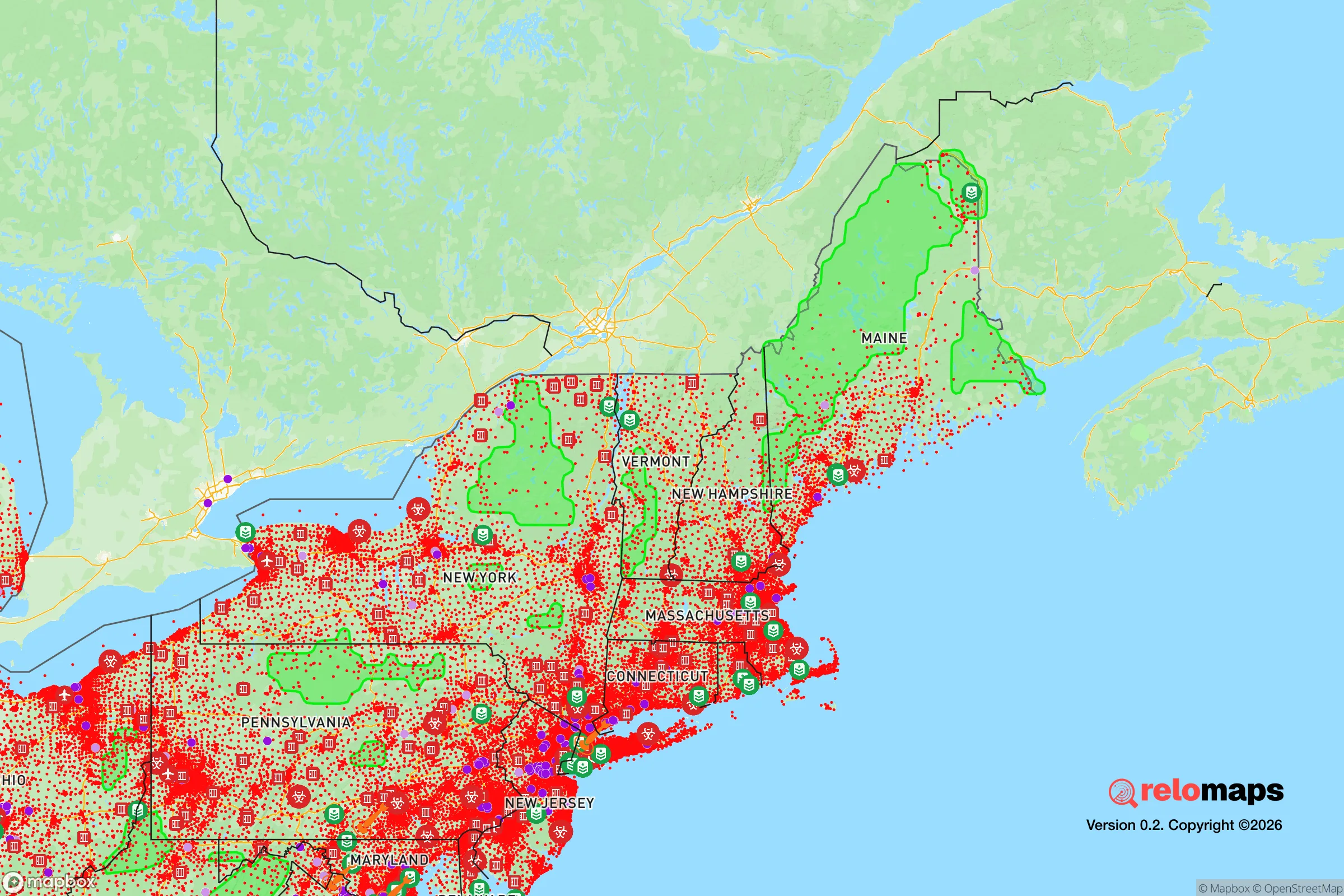
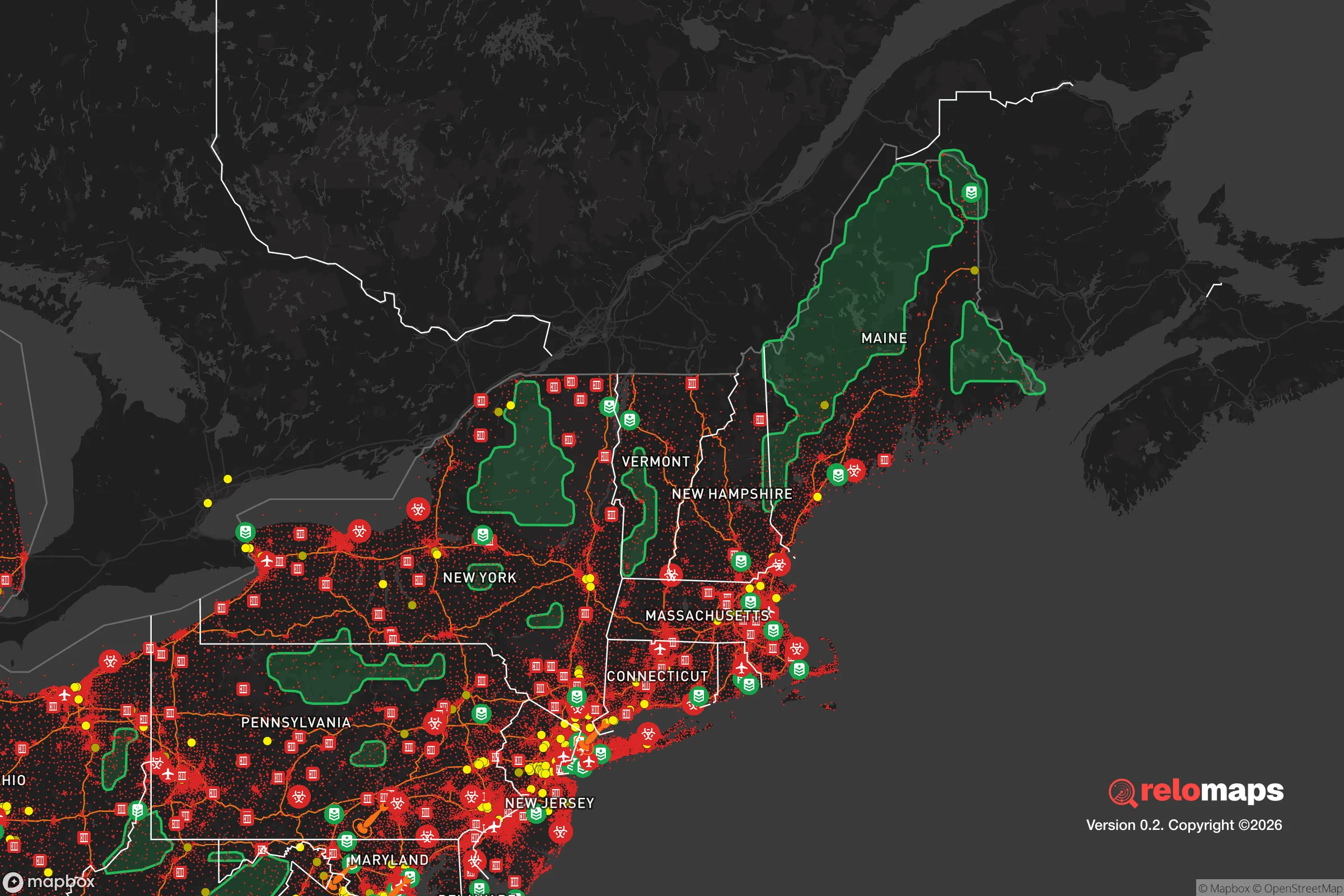


Important Note: For informational purposes only. This does not mean nothing bad ever happens in the green zones. Please use common sense. This is based on public data and modeled with AI. We tried to take a conservative approach but mistakes happen. We update this regularly as new information becomes available.
Solar Generator Recommendations
Backup power matters more here than in safer locations. We've picked three solar generators across budgets and capacity tiers — start with the budget unit if you only need a few essentials, or step up if you want to run a fridge and HVAC for days at a time.

Jackery Portable Power Station Explorer 300
Budget OptionPower on the Go: Weighing only 11 lbs, it's convenient to set up and store with book-sized foldable solar panels

BLUETTI Portable Power Station AC180
Designed for both indoor and outdoor scenarios, AC180 is highly capable as it has a robost capacity and continuous output power.

EF ECOFLOW DELTA Pro Ultra Power Station
Upgraded PickEcoFlow DELTA Pro Ultra is a whole-home energy system designed to grow with your family. Integrated with the Smart Home Panel 2, it scales to meet your evolving energy needs — keeping your home powered, intelligent, and secure through every stage of life.
We earn a commission, at no additional cost to you.
Strategic Assessment Analysis
Glassboro, New Jersey, presents a mixed bag for the strategic relocator. Its location in the heart of South Jersey offers a deceptive sense of rural calm, but the reality is that you are never more than 30 minutes from Philadelphia and its sprawling suburbs. For a prepper or survivalist, this means you get the benefits of a small-town community with a historic college (Rowan University) anchoring the local economy, but you also inherit the risks of being within the blast radius of a major metropolitan target. The town’s resilience is tied directly to its ability to function as a quiet, self-contained node while being acutely aware that the surrounding region is a high-value target in any national crisis scenario.
Geographic position and natural advantages for long-term survival
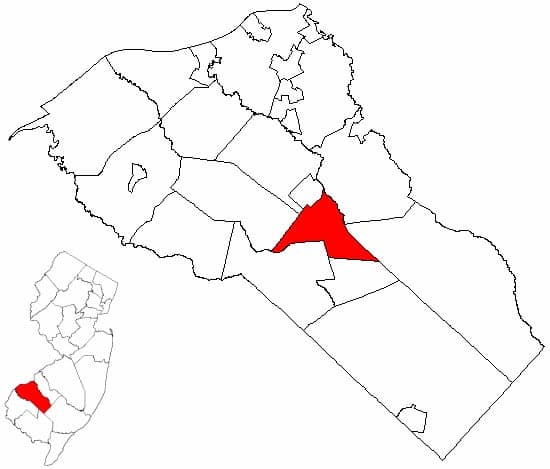
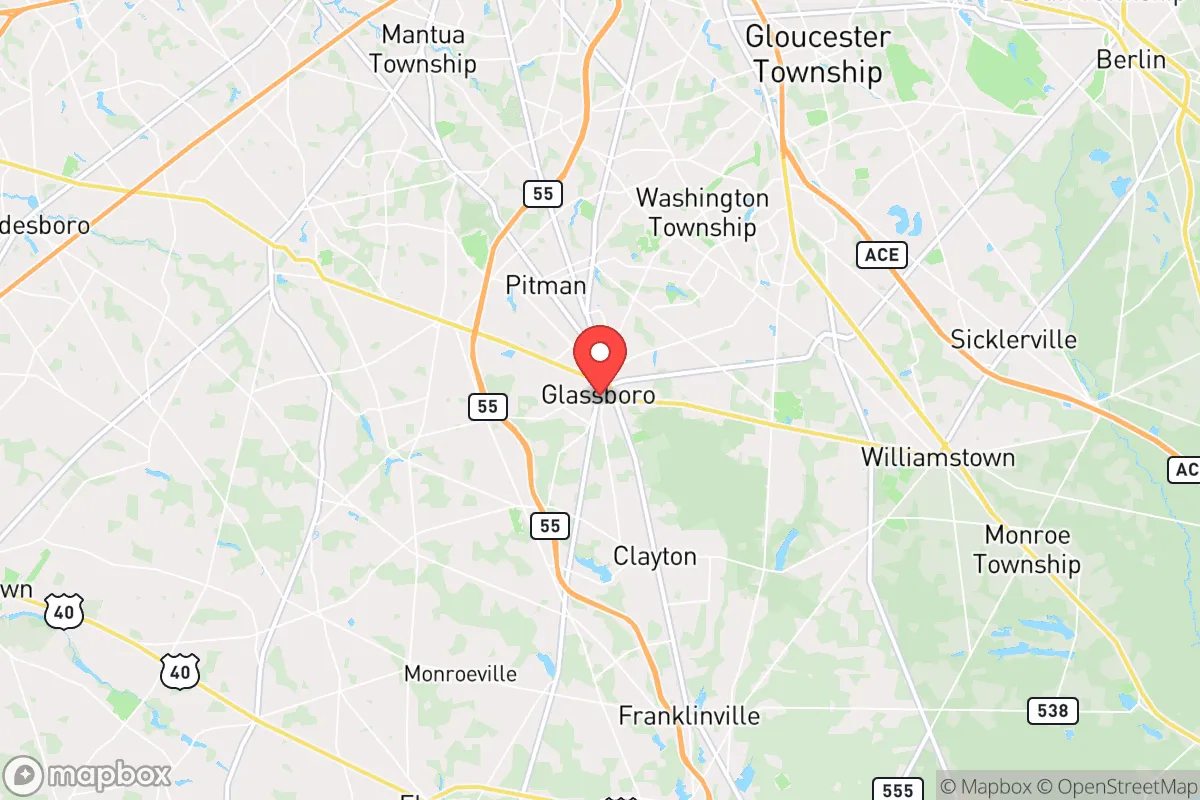
Glassboro sits in Gloucester County, roughly 18 miles southeast of Philadelphia and about 30 miles from the Delaware Memorial Bridge. The area is part of the New Jersey Pine Barrens, a massive, sparsely populated forest ecosystem that offers significant natural advantages. The Pine Barrens provide a natural buffer zone—dense woods, limited road networks, and a low population density that makes it harder for large-scale unrest to spread quickly. The terrain is flat to gently rolling, which is good for farming and water catchment, though it offers little in the way of defensible high ground. The proximity to the Delaware River and its tributaries (like Mantua Creek and Raccoon Creek) means surface water is abundant, but you must be prepared to treat it—the Pine Barrens water is naturally acidic and tannic, not ideal for long-term storage without filtration. The region’s sandy soil drains quickly, which is a plus for avoiding flooding but a minus for traditional agriculture without significant amendment. For a relocator, the key advantage is the sheer amount of undeveloped land within a 15-minute drive of town, offering potential retreat options that are still close enough to supply runs but far enough from the immediate chaos of a Philadelphia evacuation.
Risks, exposures, and proximity to fallout-relevant landmarks
The single greatest risk for a Glassboro-based prepper is its proximity to Philadelphia. In any major event—civil unrest, a coordinated attack, or a natural disaster—Philadelphia’s 1.6 million residents will become a human wave heading south and east. Route 55, the main artery through Glassboro, will be a parking lot. You are also within 25 miles of the Salem Nuclear Generating Station (Hope Creek and Salem 1 & 2), which is a significant fallout-relevant landmark. While the plants have robust containment, a major incident or a targeted attack would place Glassboro in the potential plume zone, depending on wind direction. Additionally, the town is within 40 miles of the Philadelphia International Airport, the Port of Philadelphia, and the region’s major rail and chemical storage facilities along the Delaware River. The area is also prone to nor’easters and occasional hurricane remnants that can cause widespread power outages and flooding in low-lying areas. The risk profile is moderate-high: you are not in a direct blast zone for a major city, but you are in the secondary impact zone for everything from refugee flows to fallout patterns. The Pine Barrens themselves are a fire risk during dry summers, though this is manageable with proper defensible space.
Practical resilience for a relocator: food, water, energy, and defensibility
For the individual or family looking to establish a resilient setup, Glassboro offers a few solid advantages and some notable gaps. Water is the biggest win. The Pine Barrens sit atop the Kirkwood-Cohansey aquifer, one of the most productive freshwater aquifers in the Northeast. A properly sited well can produce abundant water, but you must test for acidity and iron. Rainwater catchment is also viable, given the region averages 45 inches of rain per year. Food production is possible but requires work. The sandy soil is poor for row crops without heavy amendment, but raised beds, greenhouses, and hydroponics work well. The local growing season runs from April to October, and there are several small farms and farmers’ markets in the area that can serve as supply nodes in normal times. Energy resilience is a challenge. The grid is reliable in normal weather but vulnerable to storms. Solar is viable—the region gets about 4.5 peak sun hours per day—but tree cover in the Pine Barrens can be an issue. A generator with a 200-gallon propane tank is a practical baseline. Defensibility is moderate. Glassboro itself is a dense, walkable college town with narrow streets and limited choke points. A rural property on the outskirts, with a long driveway and tree cover, offers better security. The local police department is responsive, but in a prolonged crisis, you are largely on your own. The community is generally law-abiding, but the presence of Rowan University (over 20,000 students) means a transient population that could become a liability in a collapse scenario—students will try to leave, creating traffic and potential conflict.
The overall strategic picture for Glassboro is one of calculated risk. It is not a remote mountain redoubt, nor is it an urban death trap. It is a suburban-rural hybrid that offers genuine natural resources (water, forest, farmland potential) but sits uncomfortably close to a major city and a nuclear power plant. For a conservative-leaning relocator who values community, local governance, and the ability to live quietly while maintaining a low profile, Glassboro can work—if you are prepared for the reality that you are on the edge of a high-risk zone. The best approach is to secure a property with a well, solar capability, and a defensible perimeter on the town’s southern or eastern fringe, away from the main evacuation routes. Stockpile for 90 days minimum, build relationships with local farmers and gun clubs, and have a bug-out plan for a secondary location deeper in the Pine Barrens or into Pennsylvania’s rural interior. Glassboro is a solid B-tier location: livable in good times, survivable in bad, but not a place to be caught unprepared when the sirens go off.

* Values derived from national, state, county, city and local statistics and may differ in a specific area. Last updated: 2026-04-29T19:13:30.000Z
Narrative content on this page is AI-generated and may contain mistakes. Verify any details that matter before acting on them.
ReloMaps may earn a commission from affiliate links at no extra cost to you.

