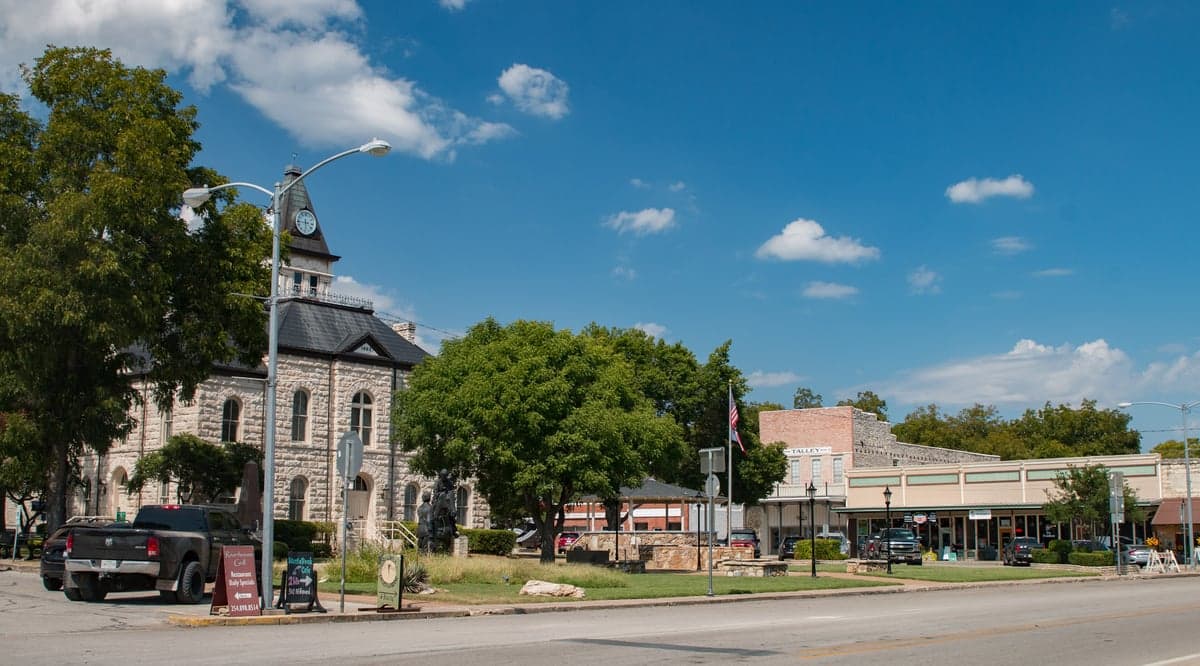
Photo: Wikipedia
Strategic Assessment of Glen Rose, TX
Meaningful friction. Expect exposure to either population pressure, blast zones, or natural disaster risk. Consider buying a retreat property.
What does the Strategic Assessment tell us?
Our Strategic Assessment grades tactical survivability of an area. Major population centers, military targets, fallout zones, natural disasters, and border exposure all drive risk — lower exposure means a more defensible position in a crisis.
This is heavily inspired by Joel Skousen's Strategic Relocation book. Highly recommended you checkout the book ($)What does this tell us?
Our Strategic Assessment grades tactical survivability of an area. Major population centers, military targets, fallout zones, natural disasters, and border exposure all drive risk — lower exposure means a more defensible position in a crisis.
This is heavily inspired by Joel Skousen's Strategic Relocation book. Highly recommended you checkout the book ($)Strategic Pillars

Key Distances
Regional Safe Places
Below is our recommended "safe zones" in Texas and the surrounding area based on our strategic heuristics. For most people, it's unrealistic to live in a “safe zone” full-time due to work, family or other personal reasons. They tend to be more rural. However, many of these areas are perfect for second homes and retreat properties that double as a vacation home or even a short-term rental.

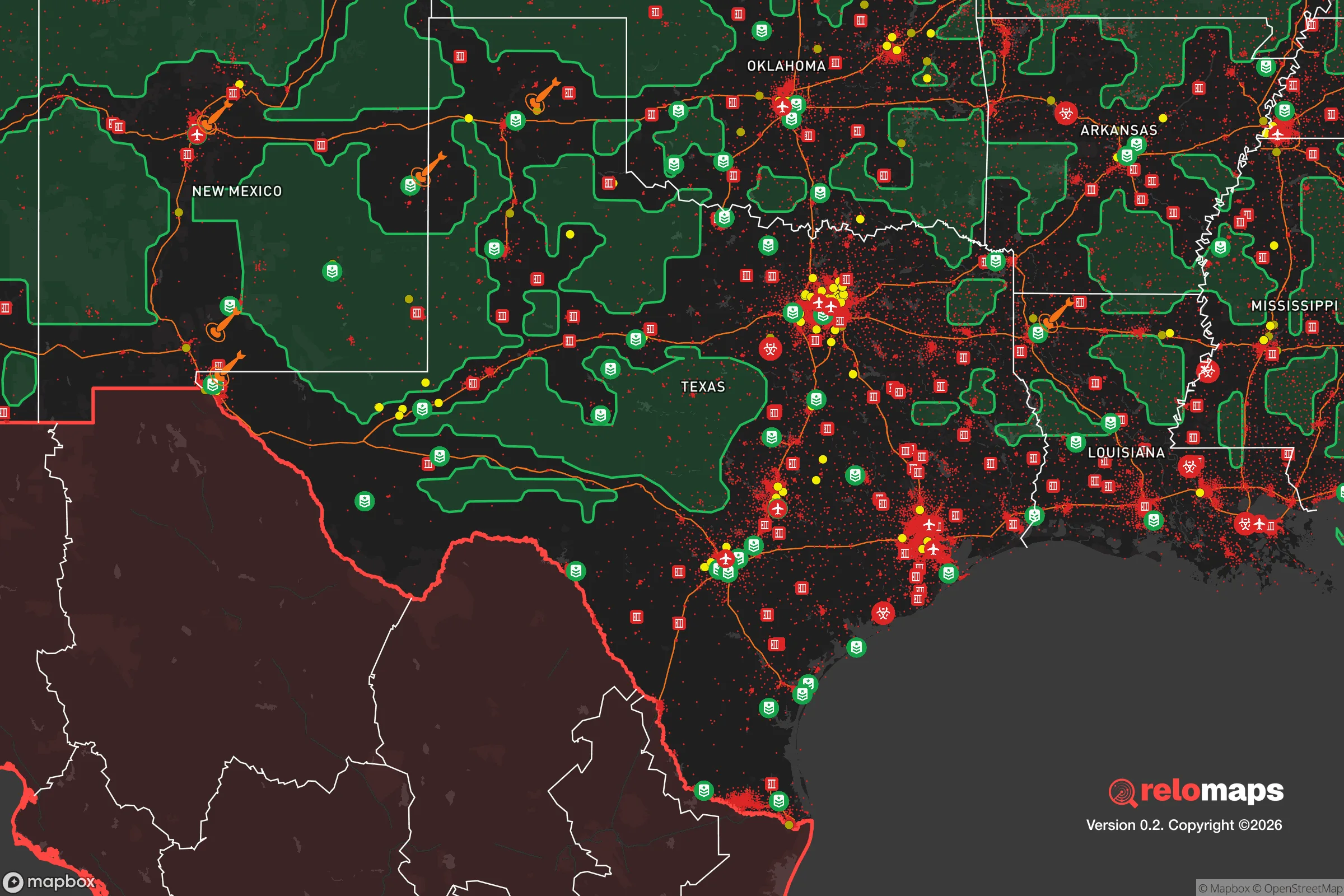


Important Note: For informational purposes only. This does not mean nothing bad ever happens in the green zones. Please use common sense. This is based on public data and modeled with AI. We tried to take a conservative approach but mistakes happen. We update this regularly as new information becomes available.
Solar Generator Recommendations
Backup power matters more here than in safer locations. We've picked three solar generators across budgets and capacity tiers — start with the budget unit if you only need a few essentials, or step up if you want to run a fridge and HVAC for days at a time.

Jackery Portable Power Station Explorer 300
Budget OptionPower on the Go: Weighing only 11 lbs, it's convenient to set up and store with book-sized foldable solar panels

BLUETTI Portable Power Station AC180
Designed for both indoor and outdoor scenarios, AC180 is highly capable as it has a robost capacity and continuous output power.

EF ECOFLOW DELTA Pro Ultra Power Station
Upgraded PickEcoFlow DELTA Pro Ultra is a whole-home energy system designed to grow with your family. Integrated with the Smart Home Panel 2, it scales to meet your evolving energy needs — keeping your home powered, intelligent, and secure through every stage of life.
We earn a commission, at no additional cost to you.
Strategic Assessment Analysis
Glen Rose, Texas, sits in a sweet spot that few small towns can claim: close enough to the DFW metroplex for access to major medical and supply chains, yet far enough to dodge the worst of urban chaos when things go sideways. This Somervell County seat, population roughly 2,700, offers a strategic buffer zone that preppers and survivalists should take seriously. Its location along the Brazos River, combined with low population density and limited through-traffic, gives it a resilience profile that outperforms most suburban options within a 90-minute drive of a major city.
Geographic position and natural advantages for long-term security
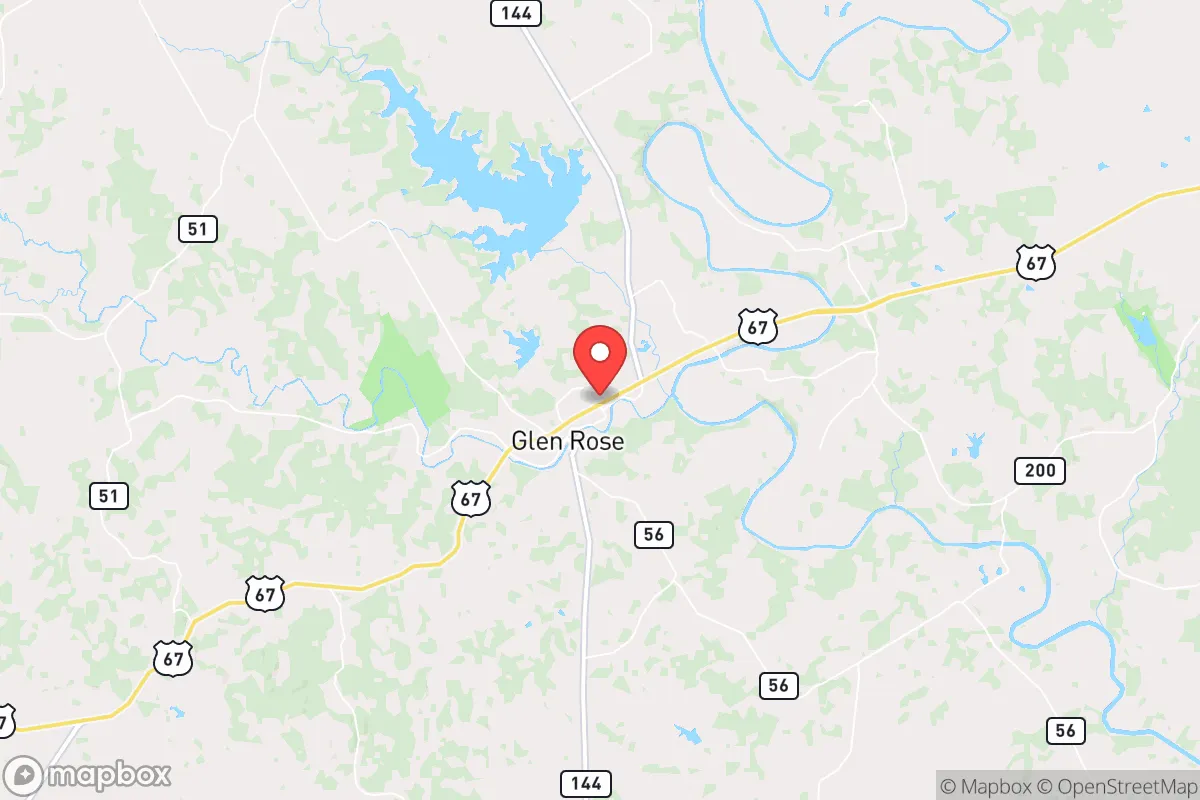
Glen Rose sits about 60 miles southwest of Fort Worth, placing it outside the immediate blast radius or riot zone of a major metropolitan collapse. The town is nestled in the Cross Timbers region, where limestone bluffs, oak-juniper woodlands, and the Brazos River create natural chokepoints and defensible terrain. The river itself provides a reliable water source, though treatment and pumping infrastructure would need to be secured in a prolonged grid-down scenario. The area's rolling hills and scattered ranchland mean that a relocator can find properties with good line-of-sight and limited neighbor density, which is critical for operational security. The Paluxy River, a tributary of the Brazos, runs right through town and offers additional water access for those who stake a claim near it. The local aquifer, the Trinity Group, is generally reliable for private wells, though depth varies—any serious prepper should test well yield before buying.
Risks, exposures, and proximity to fallout-relevant landmarks
No location is without vulnerabilities, and Glen Rose has a few that demand attention. The most obvious is the Comanche Peak Nuclear Power Plant, located just 12 miles northeast of town. While the plant has a solid safety record, any nuclear facility within 20 miles is a liability in a major disaster scenario—whether from a direct strike, a cascading grid failure, or a containment breach during an earthquake (rare but not impossible in this region). The plant's two reactors produce 2,300 MW, and while the evacuation zone is officially 10 miles, a serious event could render the area uninhabitable for years. Additionally, Glen Rose sits within 100 miles of DFW International Airport, a high-value target in any conflict scenario. The town is also near the intersection of US-67 and TX-144, which could become evacuation routes during a crisis, bringing waves of refugees from the metroplex. Flooding is a real concern along the Brazos and Paluxy—the 2015 Memorial Day flood caused significant damage in the area, and any low-lying property near the river should be avoided or hardened accordingly.
Practical resilience for a relocator: food, water, energy, and defensibility
For a prepper looking to establish a sustainable homestead, Glen Rose offers a mixed bag. The growing season runs about 230 days, with average first frost in early November and last frost in mid-March—enough to produce a solid annual garden yield. The soil is predominantly clay-loam over limestone, which means raised beds or heavy amending will be necessary for serious food production. Local ranchers run cattle and goats, and there's a small but active farmers' market in town during warmer months. For water, the Brazos River is a perennial stream, but surface water rights are tightly regulated in Texas; a private well is the smarter play. Electricity comes from the ERCOT grid, which has proven unreliable during winter storms (see February 2021). Solar with battery backup is a must here, and the area gets about 220 sunny days per year—adequate for a modest off-grid setup. Defensibility is decent: the town has only a few main roads in and out, and the surrounding ranchland offers natural cover and fields of fire. The local sheriff's office is small (about 10 deputies), so in a SHTF scenario, you are your own first responder. The nearest Level 1 trauma center is in Fort Worth, 60 miles away—a 90-minute drive in normal traffic, likely longer during a crisis.
The overall strategic picture for Glen Rose is cautiously optimistic for the prepared relocator. It avoids the worst of urban exposure while retaining enough infrastructure to make a transition manageable. The nuclear plant is a real concern, but for those willing to monitor conditions and have a secondary bug-out location further west (say, the Hill Country or West Texas), the risk can be mitigated. The town's small size and conservative culture align well with a prepper mindset—neighbors tend to keep to themselves but will rally in a localized emergency. If you can secure a property with a well, solar, and good drainage, Glen Rose offers a solid base of operations for weathering the next decade's uncertainties. Just don't expect to go unnoticed; in a town this small, newcomers are watched closely, and building trust takes time. That's not a bug—it's a feature for anyone serious about long-term survival.

* Values derived from national, state, county, city and local statistics and may differ in a specific area. Last updated: 2026-05-11T20:08:28.000Z
Narrative content on this page is AI-generated and may contain mistakes. Verify any details that matter before acting on them.
ReloMaps may earn a commission from affiliate links at no extra cost to you.

