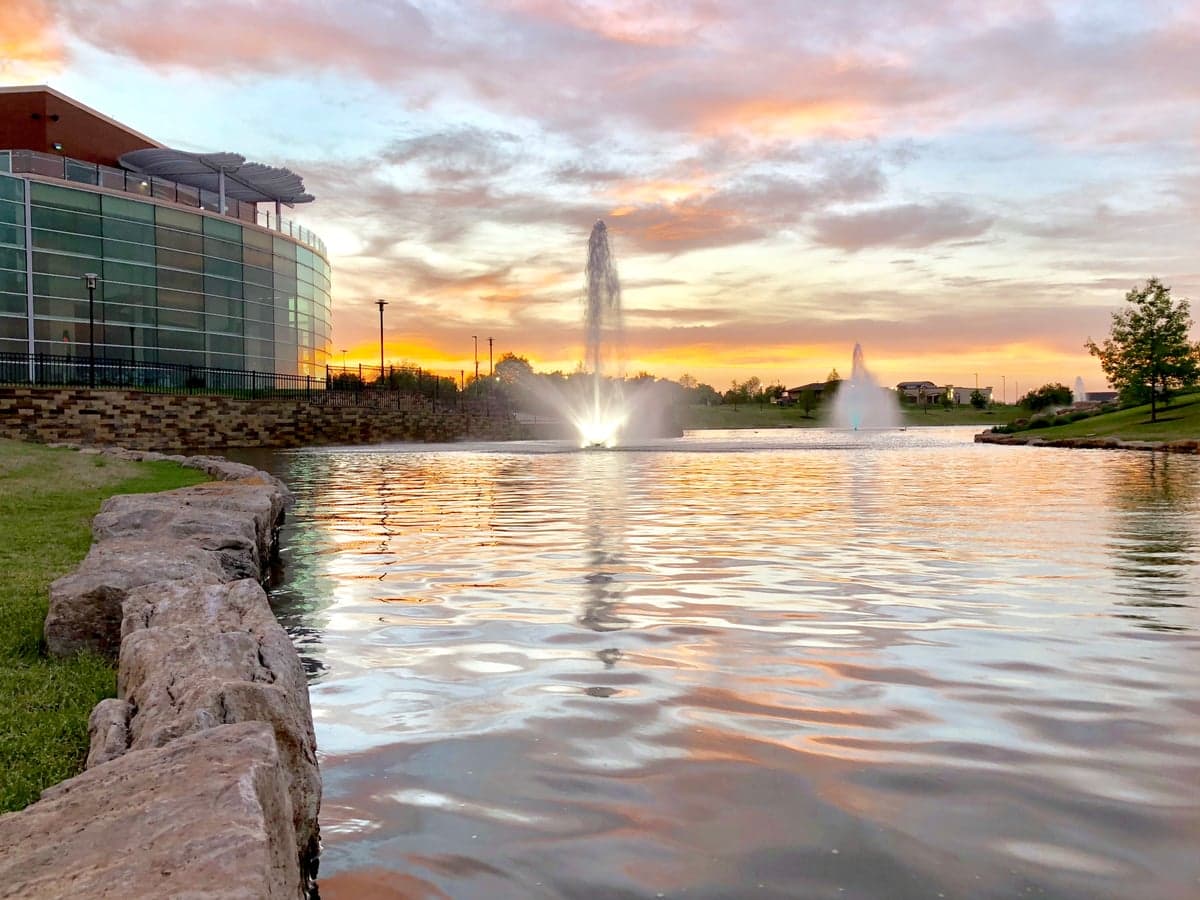
Photo: Wikipedia
Personal Sovereignty in Glenpool, OK
Strong independent fundamentals that actively favor personal liberty and low regulation.
What does Personal Sovereignty tell us?
Personal Sovereignty measures your capacity for self-reliance and independence with minimal government friction. Higher scores mean fewer barriers between you and the way you want to live... but it assumes you have the space you need and good neighbors.
What does this tell us?
Personal Sovereignty measures your capacity for self-reliance and independence with minimal government friction. Higher scores mean fewer barriers between you and the way you want to live... but it assumes you have the space you need and good neighbors.
State Policy
Energy independence: Net exporter (180% of energy produced in-state)
Personal Liberty
Homesteading

Personal Liberty Analysis
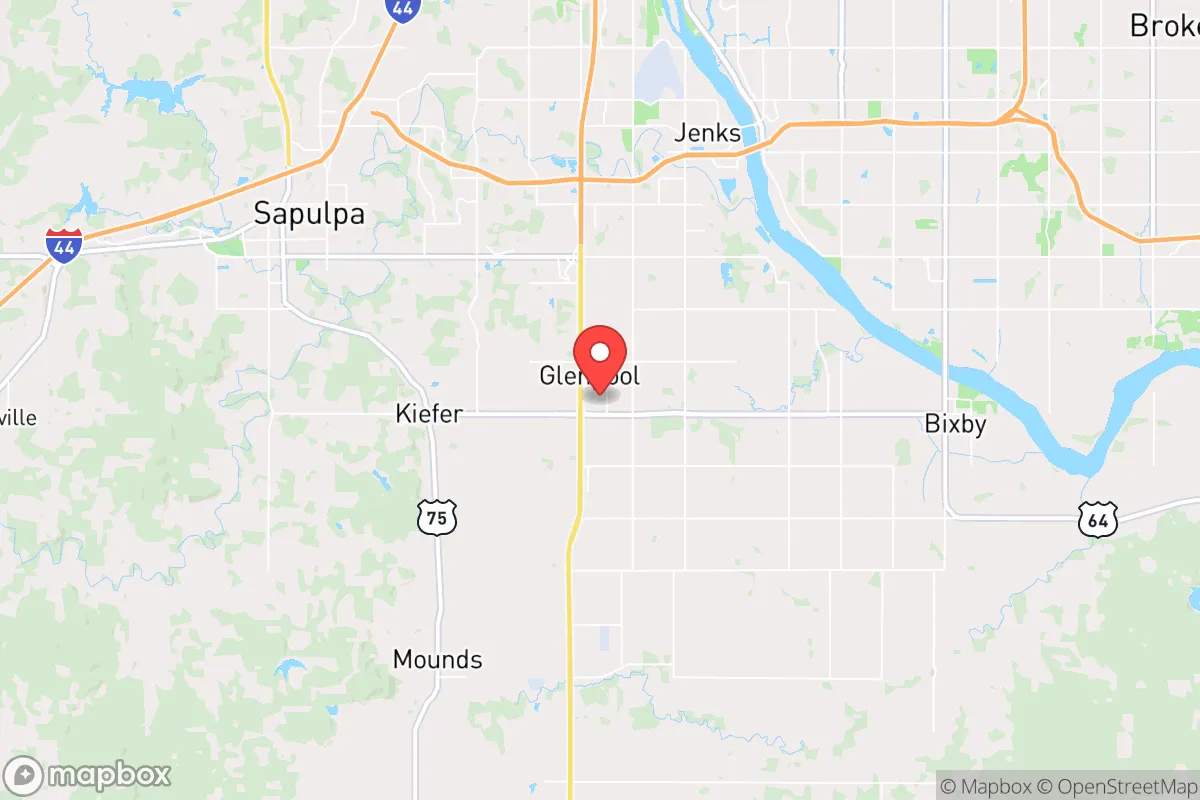
For the individual or family prioritizing personal sovereignty above all else, Glenpool, Oklahoma, offers a strategic foothold in a state that has deliberately positioned itself as a bulwark against federal overreach. While no location is a perfect fortress, Glenpool’s legal and cultural environment leans heavily toward self-determination, with a state-level framework that actively resists many of the encroachments seen in coastal and urban centers. The key question for the survivalist-minded relocator is whether this small city’s practical realities—its tax code, zoning laws, and community norms—match the promise of its state’s rhetoric. The answer, as of 2026, is largely affirmative, though with specific caveats regarding land use and local governance that demand careful due diligence.
Tax burden and regulatory posture: How Oklahoma’s low-tax framework protects your autonomy
Oklahoma’s tax structure is a deliberate tool for maximizing personal financial sovereignty, and Glenpool residents benefit directly from it. There is no state property tax; instead, counties levy an average of roughly 0.85% of assessed home value, which in Tulsa County (where Glenpool sits) translates to a modest annual bill. More critically, the state’s income tax is a flat 4.75% as of 2026, with no progressive brackets that penalize increased earnings—a feature that rewards self-reliance and side hustles common in prepper circles. Sales tax in Glenpool hovers around 9.5% (combining state, county, and city rates), which is higher than some rural Oklahoma areas but still below many blue-state metros. The regulatory posture is equally favorable: Oklahoma is a right-to-work state with minimal occupational licensing burdens compared to the coasts, meaning you can start a home-based business, offer trade services, or engage in small-scale manufacturing without drowning in red tape. Zoning in Glenpool is present but not oppressive—the city’s municipal code allows for home occupations and limited agricultural uses on residential lots, though you’ll want to verify specific plat restrictions before buying. For the sovereignty-minded, the key takeaway is that Oklahoma’s state-level tax and regulatory climate is designed to keep government off your back and money in your pocket, and Glenpool’s local implementation largely follows that philosophy.
Self-defense and gun law specifics: What the Second Sanctuary means for your family
Oklahoma is a constitutional carry state, and Glenpool sits squarely within that framework. As of 2026, no permit is required to openly carry or conceal a firearm for any law-abiding adult 21 or older (18 for long guns). This is not a theoretical right—it is actively protected by state preemption laws that prohibit local municipalities from enacting their own gun control ordinances. Glenpool cannot ban carry in city parks, impose waiting periods, or require registration, which means your self-defense choices are uniform across the metro area. Stand-your-ground laws are fully in effect, with no duty to retreat in any place you have a legal right to be. For the prepper, this extends beyond handguns: Oklahoma allows ownership of suppressors, short-barreled rifles, and machine guns (with federal NFA compliance), and there are no state-level bans on magazine capacity or specific firearm features. The state also has a robust castle doctrine that presumes reasonable fear of death or great bodily harm if an intruder unlawfully enters your occupied home, vehicle, or place of business. For parents, this legal environment means you can train your children in firearms safety without fear of state interference, and you can store defensive weapons in a manner that suits your family’s readiness level. The only practical limitation in Glenpool is that discharging a firearm within city limits is restricted to ranges or lawful self-defense—so zeroing your rifle on your own half-acre requires a trip to a rural range or private land outside the city.
Self-reliance and homesteading viability: Lot sizes, zoning, and off-grid feasibility
Glenpool’s residential landscape is a mixed bag for the serious homesteader. The city’s older neighborhoods feature lots averaging 0.25 to 0.5 acres, which is sufficient for a substantial garden, a few chickens, and rainwater catchment, but not for livestock or significant timber management. Newer subdivisions often have smaller lots with HOA covenants that can restrict everything from clotheslines to vehicle storage—a red flag for the sovereignty-minded buyer. The strategic play is to target the unincorporated areas just outside Glenpool’s city limits, where zoning loosens considerably and lot sizes jump to 1-5 acres. In those areas, you can legally keep goats, bees, and even a horse, and you’re not subject to city code enforcement. Off-grid feasibility is moderate: Oklahoma has no state-level ban on solar panels or rainwater collection, and the net metering policy (as of 2026) allows you to sell excess power back to the grid at a reasonable rate. However, the local utility, Public Service Company of Oklahoma, requires interconnection agreements, and going fully off-grid (disconnecting entirely) may trigger code compliance issues if you have a mortgage or property insurance. For the prepper, the ideal setup is a property just outside Glenpool’s jurisdiction with a well, septic, solar array, and propane backup—all of which are legally achievable with proper permitting. The city’s water supply is municipal and treated, so if you’re concerned about grid dependency, a private well on rural acreage is the superior choice.
Personal liberties: Parental rights, medical autonomy, speech, and property
Oklahoma has been a battleground for parental rights, and the current legal landscape strongly favors family autonomy. The state’s Parents’ Bill of Rights (enacted in 2022 and reinforced since) guarantees that parents have the fundamental right to direct their children’s education, medical care, and moral upbringing. This means no school or government entity can override your decisions on vaccinations, curriculum objections, or mental health interventions without a court order. Glenpool Public Schools, while not exceptional academically, operate under this framework, and the district has not been a hotspot for controversial policies. Medical autonomy is more nuanced: Oklahoma has not expanded Medicaid under the ACA, which means fewer government hooks into healthcare, but also fewer safety nets. For the self-reliant, this is a feature—you are free to choose direct primary care, health-sharing ministries, or cash-pay services without state mandates. The state does have a vaccine mandate for school attendance (standard childhood immunizations), but medical and religious exemptions are available and generally respected. Free speech protections are robust, with no state-level hate speech laws that chill political or religious expression. Property rights are protected by Oklahoma’s version of the Private Property Protection Act, which limits eminent domain to traditional public uses (roads, schools, utilities) and prohibits its use for private economic development. For the prepper, this means your land is not easily seized for a shopping mall or corporate campus—a critical safeguard against government overreach.
In the broader landscape of American personal sovereignty, Glenpool offers a solid B+ grade. It lacks the extreme rural isolation of the Oklahoma panhandle, where you can own 40 acres and never see a code enforcement officer, but it compensates with proximity to infrastructure, medical care, and supply chains that a survivalist family needs for long-term resilience. The state’s constitutional carry, low taxes, and parental rights laws provide a legal foundation that is genuinely superior to most of the country. The primary threats to your sovereignty here are not state-level—they are local HOAs, city zoning for smaller lots, and the creeping influence of federal environmental regulations on water and energy use. For the strategic relocator who values freedom over convenience, the winning move is to buy land just outside Glenpool’s city limits, embrace Oklahoma’s legal protections, and build your self-reliant life with the knowledge that the state government is more ally than adversary. In a nation where personal autonomy is increasingly under siege, this corner of Green Country remains a viable redoubt.

* Values derived from national, state, county, city and local statistics and may differ in a specific area. Last updated: 2026-04-21T11:44:59.000Z
Narrative content on this page is AI-generated and may contain mistakes. Verify any details that matter before acting on them.
ReloMaps may earn a commission from affiliate links at no extra cost to you.

