Photo: Wikipedia
Political ClimatePolitical Climate in Glenpool, OK
District shown is the primary district for this city’s centroid. Cities may span multiple districts.
Local Political AnalysisPolitical Analysis of Glenpool, OK
Glenpool, Oklahoma, is about as solidly conservative as they come, with a Cook PVI of R+11 that tells you exactly where things stand. This isn't a place that's suddenly flipped or is on the fence—it's been reliably red for as long as anyone can remember, and the local culture reflects that. The political lean here is rooted in a deep sense of personal responsibility and a healthy skepticism of government overreach, which most folks see as a core part of living in Oklahoma. If you're looking for a place where the political winds haven't shifted toward progressive ideology, Glenpool is still holding the line, though you can see some subtle changes creeping in from the edges of the metro area.
How it compares
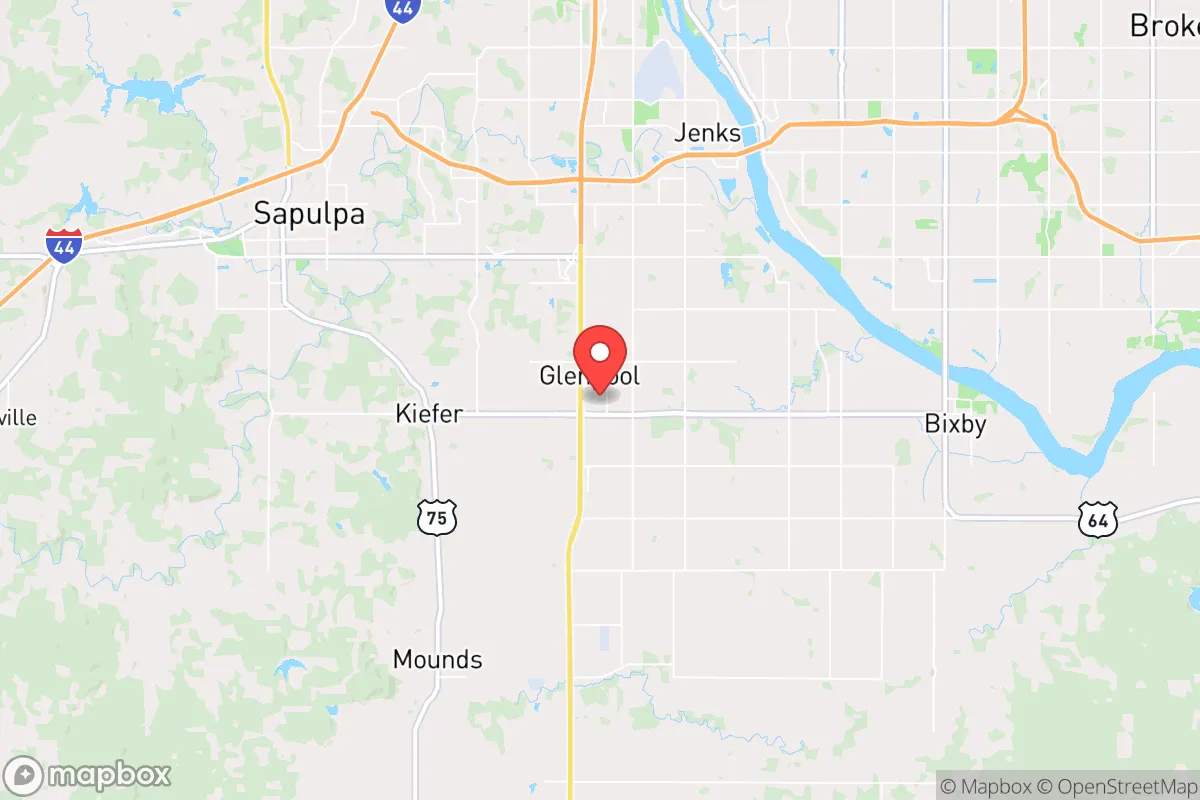
When you stack Glenpool up against its neighbors, the contrast is pretty telling. Head north into Tulsa proper, and you'll start seeing a more mixed bag—Tulsa County as a whole leans more moderate, with pockets of progressive influence, especially around downtown and the arts districts. That's a world away from Glenpool's vibe. Down south, places like Bixby and Jenks are also conservative, but they've got a more polished, suburban feel with higher property values and a bit more of a "country club" Republican flavor. Glenpool, by contrast, feels more working-class and no-nonsense. The real eye-opener is if you go west to Sapulpa or east to Mounds—those areas are even more rural and deeply conservative, but they don't have the same exposure to Tulsa's growth pressures. Glenpool sits right at that intersection: close enough to the city for jobs and amenities, but far enough to keep its own identity. The R+11 rating isn't just a number—it means the area votes about 11 points more Republican than the national average, which is a strong signal that local elections and policy decisions will stay focused on limited government, lower taxes, and individual freedoms.
What this means for residents
For someone living here, the political climate translates into a pretty straightforward daily life. You won't see a lot of heavy-handed local regulations or zoning fights that try to tell you what you can do with your property. The city council and county commissioners tend to take a hands-off approach, which is exactly what most folks want. That said, there's been a slow but noticeable push from some newer residents—often folks moving up from Texas or out from California—who bring different ideas about things like land use, school policies, or even mask mandates. That's where the concern comes in. If you value your rights to make your own choices without the government breathing down your neck, you'll want to keep an eye on local elections. The school board races, in particular, have become a battleground over the last few years, with some candidates pushing for more progressive curriculum changes that don't sit well with the traditional values here. The good news is that the R+11 lean gives conservatives a strong buffer, but it's not a guarantee—complacency is the real enemy.
Culturally, Glenpool still holds onto its small-town roots, with a strong emphasis on church, family, and community events like the annual Oil Field Days festival. There's a palpable distrust of federal overreach, whether it's about gun rights, energy regulations, or health mandates. The oil and gas industry is still a backbone here, so any talk of "green energy" policies or environmental restrictions is met with serious side-eye. Long-term, the trajectory depends on how much the area grows. If development keeps bringing in folks who share those conservative values, Glenpool will stay the course. But if the growth tilts toward the progressive side, you could see a slow erosion of the freedoms that make this place worth living in. For now, it's still a solid bet for anyone who wants a community that respects personal liberty and doesn't buy into the idea that government knows best.

State Political ClimatePolitical Climate in Oklahoma
State Political AnalysisPolitical Environment in the State
Oklahoma has been a reliably red state for decades, with Republicans holding every statewide office and supermajorities in both legislative chambers, but the political climate here is more nuanced than a simple party label suggests. The state’s conservative lean is deep-rooted and durable, driven by a strong rural and suburban base that values limited government, gun rights, and traditional social values. Over the last 10-20 years, Oklahoma has shifted further right, with the GOP gaining ground even in historically Democratic areas, though a growing urban-liberal bloc in Oklahoma City and Tulsa is beginning to create visible friction.
Urban vs. rural divide
The political map of Oklahoma is a classic story of urban islands in a rural red sea. Oklahoma City and Tulsa are the two major metros, and they’re where you’ll find the state’s most competitive districts. Oklahoma County (Oklahoma City) has been trending purple, with Democratic candidates winning it in recent presidential cycles, driven by a growing professional class and younger voters in areas like the Paseo Arts District and Midtown. Tulsa County is still reliably red but has pockets of blue in the city’s core, particularly around the University of Tulsa and the Pearl District. Meanwhile, the rest of the state is deeply conservative. Counties like Texas County in the Panhandle, Canadian County west of OKC, and Rogers County near Tulsa routinely vote 75-80% Republican. The rural-urban split is stark: a voter in Boise City or Woodward has almost nothing in common politically with a voter in Norman or Edmond. This divide is only widening as in-migration to the metros brings more diverse perspectives, while rural areas double down on their traditional values.
Policy environment
Oklahoma’s policy environment is aggressively pro-business and limited-government, with a flat state income tax rate of 4.75% that lawmakers are actively trying to eliminate. The state has a right-to-work law, no statewide property tax on business inventory, and some of the lowest energy costs in the nation. On education, the state has embraced school choice, with the Oklahoma Parental Choice Tax Credit Act (2023) offering up to $7,500 per child for private school expenses, making it one of the most expansive programs in the country. Healthcare policy is more mixed: the state expanded Medicaid under a 2020 ballot initiative (State Question 802), which was a rare win for progressives, but the legislature has since imposed work requirements and other restrictions. Election laws are strict: voter ID is required, and the state has purged inactive voters aggressively. There’s no early voting by mail without an excuse, and absentee ballot drop boxes are not allowed. This is a state that makes it easy to do business but hard to vote if you’re not plugged into the system.
Trajectory & freedom
Oklahoma is moving in a direction that many conservatives would call freer, but with some notable caveats. On gun rights, the state passed constitutional carry in 2019 (SB 1212), allowing permitless carry of firearms, and has a strong preemption law that prevents cities like Oklahoma City and Tulsa from enacting their own gun restrictions. Parental rights got a major boost with the Parents’ Bill of Rights (HB 1440, 2022), which requires schools to notify parents about curriculum changes and medical services. On medical autonomy, the state banned nearly all abortions in 2022 (SB 612) and has restricted gender-affirming care for minors (SB 613, 2023). However, there are worrying signs of government overreach in other areas. The state’s medical marijuana program, which voters approved in 2018 (State Question 788), has been heavily regulated by the legislature, with strict licensing and testing requirements that many small growers say are designed to choke the industry. Property rights are generally strong, but the state’s use of eminent domain for oil and gas pipelines has been a flashpoint. Taxation is trending in the right direction, with the income tax rate dropping from 5.25% to 4.75% in 2024, but the state still has one of the highest combined sales tax rates in the country, often exceeding 10% in cities like Lawton and Muskogee.
Civil unrest & political movements
Oklahoma has seen its share of political flashpoints, but they’re more localized than the national chaos. The most visible movement in recent years has been the fight over education funding and teacher pay, which culminated in the 2018 teacher walkout that shut down schools for weeks. That was a rare moment of progressive mobilization, and it led to a $6,000 average teacher pay raise, but the legislature has since reasserted control. On the right, the “Ten Commandments” movement has been strong, with the state requiring the display of the Ten Commandments in public schools (HB 2690, 2024), a law that is currently being challenged in court. Immigration politics are heated but not chaotic: the state passed a strict anti-sanctuary city law (HB 4156, 2024) that requires local law enforcement to cooperate with federal immigration authorities, and there’s been no serious sanctuary movement in any major city. Election integrity is a live issue, with the state’s voter ID laws and purge processes drawing criticism from the left but broad support from conservatives. You won’t see large-scale protests in Oklahoma City or Tulsa like you do in Portland or Seattle, but you will see passionate debates at school board meetings and county commission hearings, especially over library books and curriculum.
Projection
Over the next 5-10 years, Oklahoma is likely to stay solidly red, but the urban-rural divide will intensify. In-migration is picking up, particularly from blue states like California and Colorado, with people moving to suburbs like Edmond, Broken Arrow, and Mustang for lower costs and a more traditional lifestyle. These newcomers are often conservative-leaning but bring different cultural expectations, which could create friction with the state’s more rural, evangelical base. The Democratic Party will continue to hold ground in Oklahoma City and Tulsa, but they’re unlikely to win statewide office unless the GOP fractures. The biggest wildcard is the state’s budget: Oklahoma relies heavily on oil and gas revenue, and a long-term shift away from fossil fuels could force painful cuts or tax increases. If that happens, the current low-tax, low-service model could come under pressure. For now, expect more of the same: more school choice, more gun rights, and more cultural battles over education and medical freedom.
For a new resident, the bottom line is this: Oklahoma offers a high degree of personal freedom in most areas, especially if you value gun rights, low taxes, and local control. You’ll find a welcoming community in places like Stillwater or Enid, but you’ll also encounter a state government that isn’t shy about using its power to enforce a specific moral vision. If you’re looking for a place where you can live your life without much interference from the state, Oklahoma is a strong contender—just be prepared for a political climate that is deeply engaged and increasingly polarized, even if it stays reliably red.
* Values derived from national, state, county, city and local statistics and may differ in a specific area. Last updated: 2026-04-21T11:44:59.000Z
Narrative content on this page is AI-generated and may contain mistakes. Verify any details that matter before acting on them.
ReloMaps may earn a commission from affiliate links at no extra cost to you.

