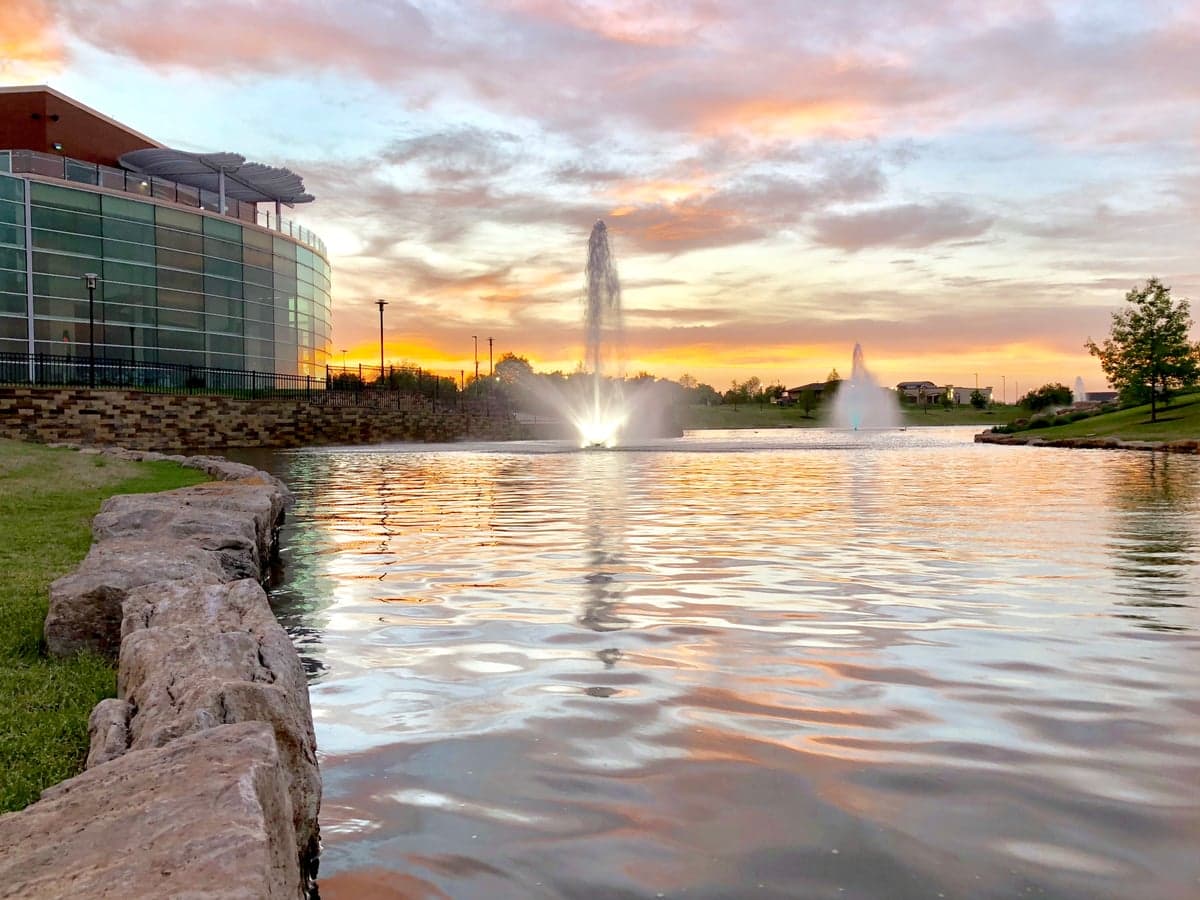
Photo: Wikipedia
Strategic Assessment of Glenpool, OK
Meaningful friction. Expect exposure to either population pressure, blast zones, or natural disaster risk. Consider buying a retreat property.
What does the Strategic Assessment tell us?
Our Strategic Assessment grades tactical survivability of an area. Major population centers, military targets, fallout zones, natural disasters, and border exposure all drive risk — lower exposure means a more defensible position in a crisis.
This is heavily inspired by Joel Skousen's Strategic Relocation book. Highly recommended you checkout the book ($)What does this tell us?
Our Strategic Assessment grades tactical survivability of an area. Major population centers, military targets, fallout zones, natural disasters, and border exposure all drive risk — lower exposure means a more defensible position in a crisis.
This is heavily inspired by Joel Skousen's Strategic Relocation book. Highly recommended you checkout the book ($)Strategic Pillars

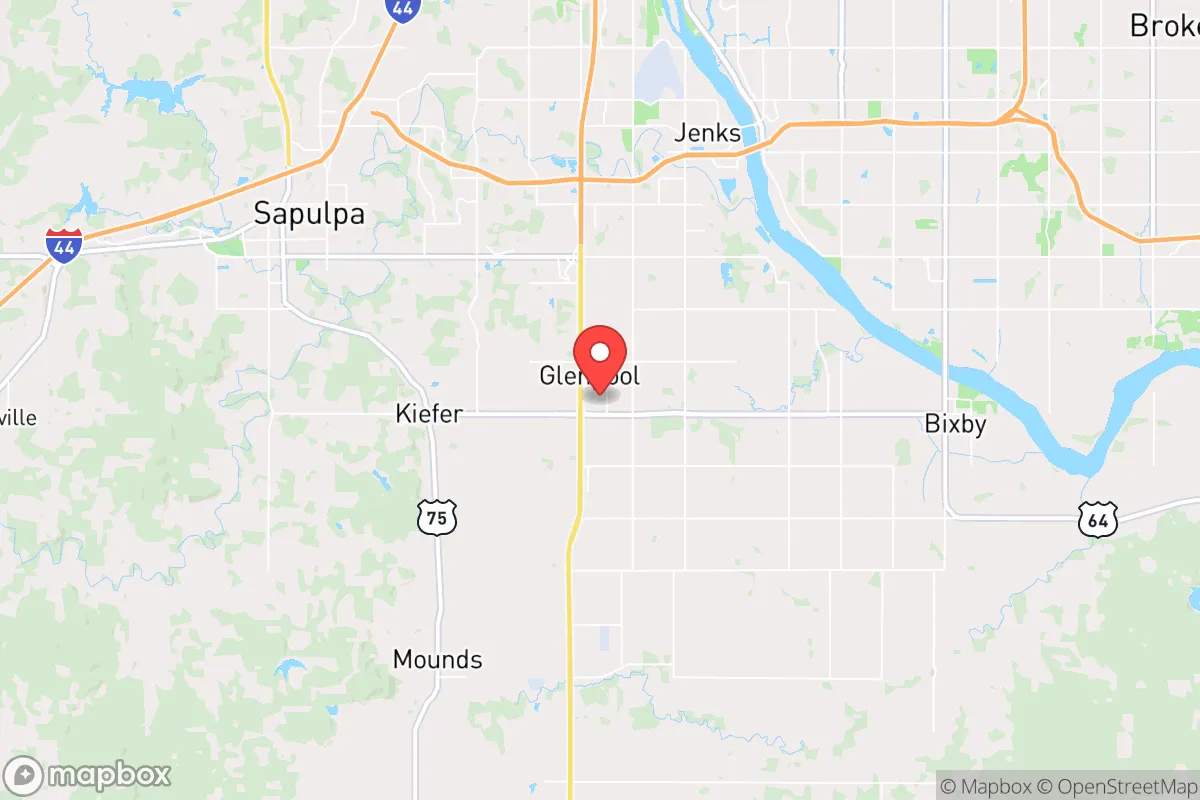
Key Distances
Regional Safe Places
Below is our recommended "safe zones" in Oklahoma and the surrounding area based on our strategic heuristics. For most people, it's unrealistic to live in a “safe zone” full-time due to work, family or other personal reasons. They tend to be more rural. However, many of these areas are perfect for second homes and retreat properties that double as a vacation home or even a short-term rental.
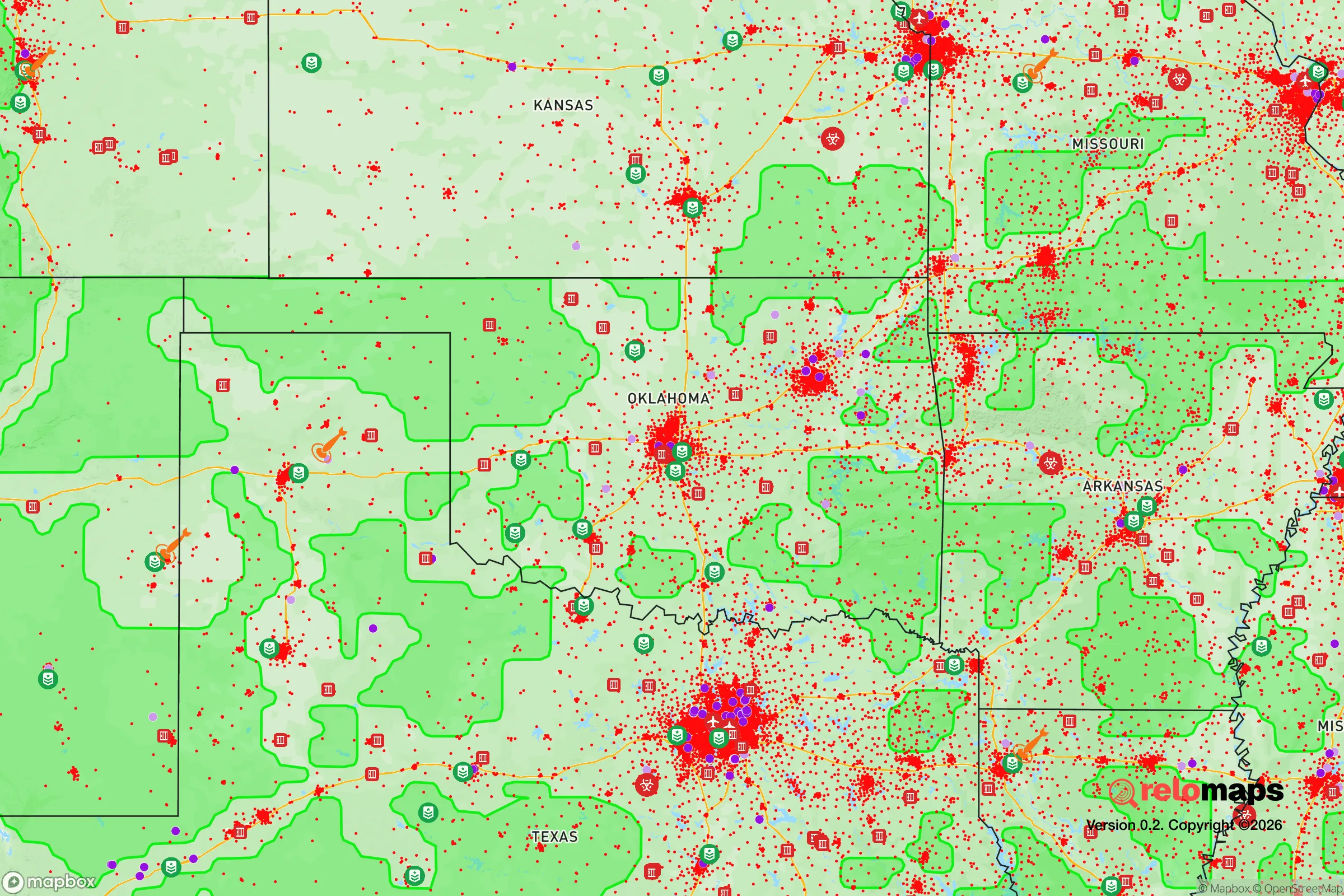
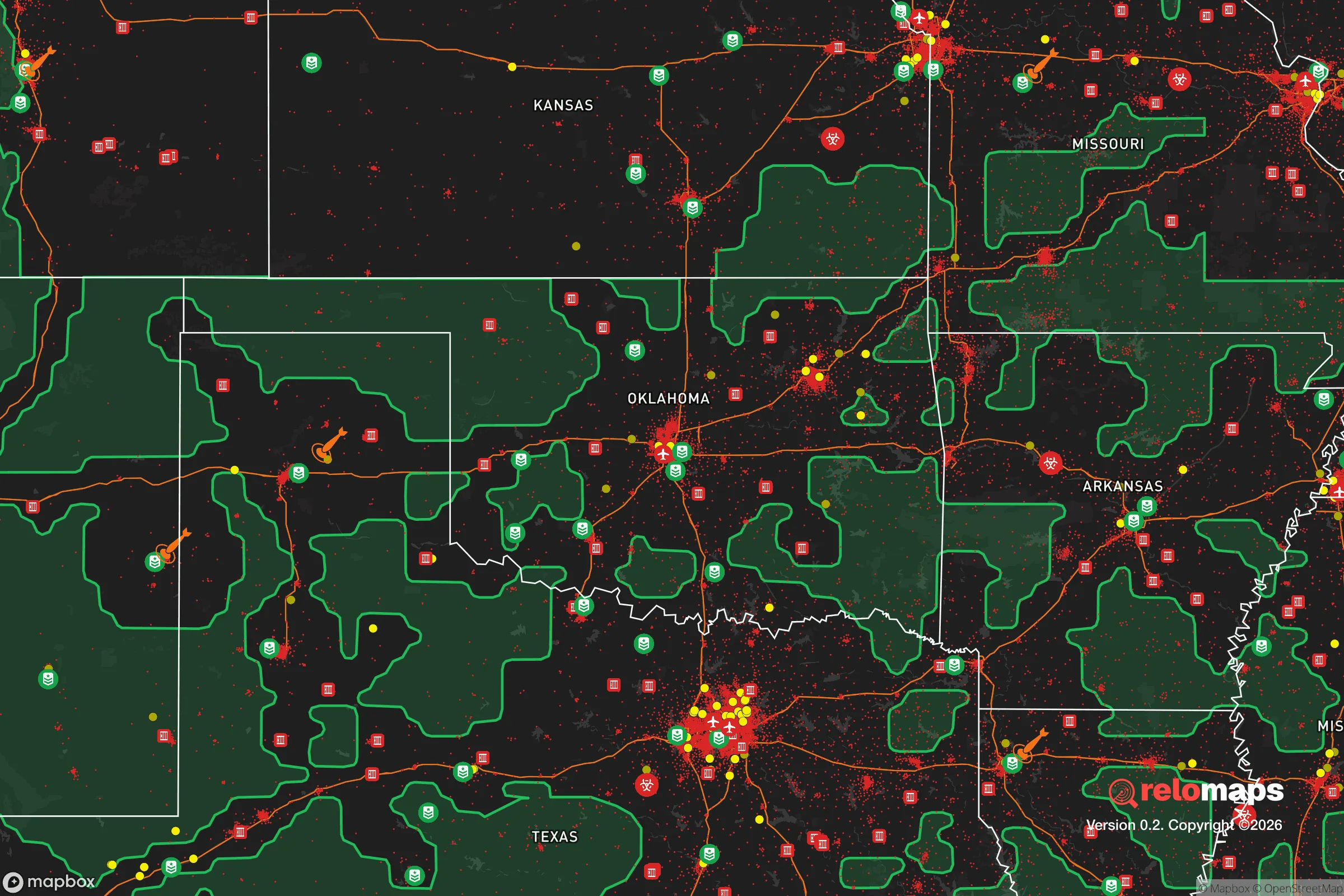


Important Note: For informational purposes only. This does not mean nothing bad ever happens in the green zones. Please use common sense. This is based on public data and modeled with AI. We tried to take a conservative approach but mistakes happen. We update this regularly as new information becomes available.
Solar Generator Recommendations
Backup power matters more here than in safer locations. We've picked three solar generators across budgets and capacity tiers — start with the budget unit if you only need a few essentials, or step up if you want to run a fridge and HVAC for days at a time.

Jackery Portable Power Station Explorer 300
Budget OptionPower on the Go: Weighing only 11 lbs, it's convenient to set up and store with book-sized foldable solar panels

BLUETTI Portable Power Station AC180
Designed for both indoor and outdoor scenarios, AC180 is highly capable as it has a robost capacity and continuous output power.

EF ECOFLOW DELTA Pro Ultra Power Station
Upgraded PickEcoFlow DELTA Pro Ultra is a whole-home energy system designed to grow with your family. Integrated with the Smart Home Panel 2, it scales to meet your evolving energy needs — keeping your home powered, intelligent, and secure through every stage of life.
We earn a commission, at no additional cost to you.
Strategic Assessment Analysis
Glenpool, Oklahoma, sits in a strategic pocket that offers a surprising blend of resilience and vulnerability for those prioritizing long-term preparedness. Located just south of Tulsa, this small city of roughly 14,000 residents provides a buffer from the immediate chaos of a major metropolitan area while still granting access to its resources—a classic "gray man" positioning. The area's geography, anchored by the Keystone Lake system and the Arkansas River corridor, creates a natural defensive layer against the kind of sprawling, uncontrollable growth that makes cities like Dallas or Oklahoma City harder to secure. For a relocator with a prepper mindset, Glenpool's real advantage is its ability to function as a semi-autonomous node: close enough to tap into supply chains and medical infrastructure, but far enough that a grid-down scenario or civil unrest in Tulsa won't immediately spill over into your neighborhood.
Geographic position and natural defensive advantages
Glenpool sits on the southern edge of the Tulsa metropolitan area, with the Arkansas River forming a natural barrier to the north and east. This river corridor, combined with the rolling Osage Hills to the northwest, creates a funnel effect that limits approach vectors for any large-scale movement—whether that's a fleeing population or a coordinated threat. The land itself is gently sloped, with enough tree cover and creek beds to offer concealment and natural water sources, but not so rugged that it becomes impassable for vehicles or supply runs. The Keystone Lake system, about 20 miles west, provides a massive freshwater reservoir that could sustain a community for months if the municipal grid fails. For a survivalist, this is the kind of terrain that allows for both retreat and resupply without being a dead-end box canyon. The local soil is also a plus: it's mostly sandy loam over clay, which drains well for gardening and septic systems, unlike the heavy red clay that plagues parts of eastern Oklahoma.
Risks, exposures, and proximity to fallout-relevant landmarks
The biggest strategic weakness of Glenpool is its proximity to Tulsa's industrial and energy infrastructure. The city itself was built on oil—Glenpool was the site of a major 1905 gusher—and the remnants of that industry dot the landscape with storage tanks, pipelines, and refineries. The HollyFrontier Tulsa refinery, about 12 miles north in West Tulsa, is a prime target for both accidental disaster and deliberate attack. A major fire or explosion there could send a toxic plume southward, directly over Glenpool, depending on wind direction. Additionally, the Tulsa International Airport and the Port of Catoosa (a major inland river port) are within 20 miles, making the entire corridor a potential secondary target in any conflict involving critical infrastructure. For a prepper, this means you need a solid air filtration plan and a bug-out route that heads south or southwest, away from the industrial spine. The good news is that Glenpool itself has no major military bases, nuclear plants, or government command centers within 50 miles—the nearest significant military installation is Tinker Air Force Base near Oklahoma City, about 100 miles southwest. That distance reduces the risk of being caught in a first-strike scenario or a targeted evacuation zone.
Practical resilience for a relocator: food, water, energy, and defensibility
For daily life in a degraded scenario, Glenpool offers a mix of suburban convenience and rural practicality. The city's water supply comes from Lake Bixhoma and the Arkansas River via the Tulsa system, but many homes in the outlying areas have private wells—a critical advantage if municipal water treatment fails. The local water table is high enough that a shallow well (30-50 feet) can yield decent water, though you'll want to test for the high mineral content common in the region. Food resilience is moderate: the surrounding area is agricultural, with cattle ranches and hay fields dominating the landscape, but row crops are less common than in the Oklahoma Panhandle. You'll need to establish relationships with local farmers and ranchers early, as the "buy local" network is tight-knit and suspicious of outsiders. For energy, natural gas is the primary heating source, and the region has abundant wind and solar potential—solar panels on a south-facing roof can generate meaningful power even in winter, thanks to the relatively low cloud cover. Defensibility is where Glenpool shines: the street layout is a mix of cul-de-sacs and winding rural roads, making it easy to establish checkpoints or chokepoints. The city's police force is small but professional, and the surrounding Creek County Sheriff's Office has a reputation for being responsive. However, don't count on law enforcement in a widespread collapse—your best bet is a tight neighborhood watch and a well-stocked armory. The local gun culture is strong, with several ranges and gun shops within a 15-minute drive, and Oklahoma's constitutional carry law means you can train and equip without bureaucratic hurdles.
The overall strategic picture for Glenpool is one of calculated trade-offs. You get a solid geographic buffer from the worst of Tulsa's chaos, a defensible terrain, and access to water and agricultural land, but you also live in the shadow of industrial targets and a major metro area that could become a humanitarian disaster zone overnight. For a single individual or a family with a prepper mindset, the key is to treat Glenpool as a base camp, not a fortress. Invest in a well, solar panels, and a good water filtration system. Build relationships with neighbors who share your outlook—the area has a strong conservative and libertarian streak, so you'll find kindred spirits. Have a bug-out plan that heads south toward the Arbuckle Mountains or southeast toward the Ouachita National Forest if things go truly sideways. But for most scenarios—economic collapse, civil unrest, a pandemic, or a localized disaster—Glenpool offers enough distance from the epicenter and enough local resources to ride it out. It's not a survivalist paradise, but it's a smart, sober choice for someone who wants to be prepared without living off-grid in a remote cabin. The bottom line: Glenpool works if you work it.

* Values derived from national, state, county, city and local statistics and may differ in a specific area. Last updated: 2026-04-21T11:44:59.000Z
Narrative content on this page is AI-generated and may contain mistakes. Verify any details that matter before acting on them.
ReloMaps may earn a commission from affiliate links at no extra cost to you.

