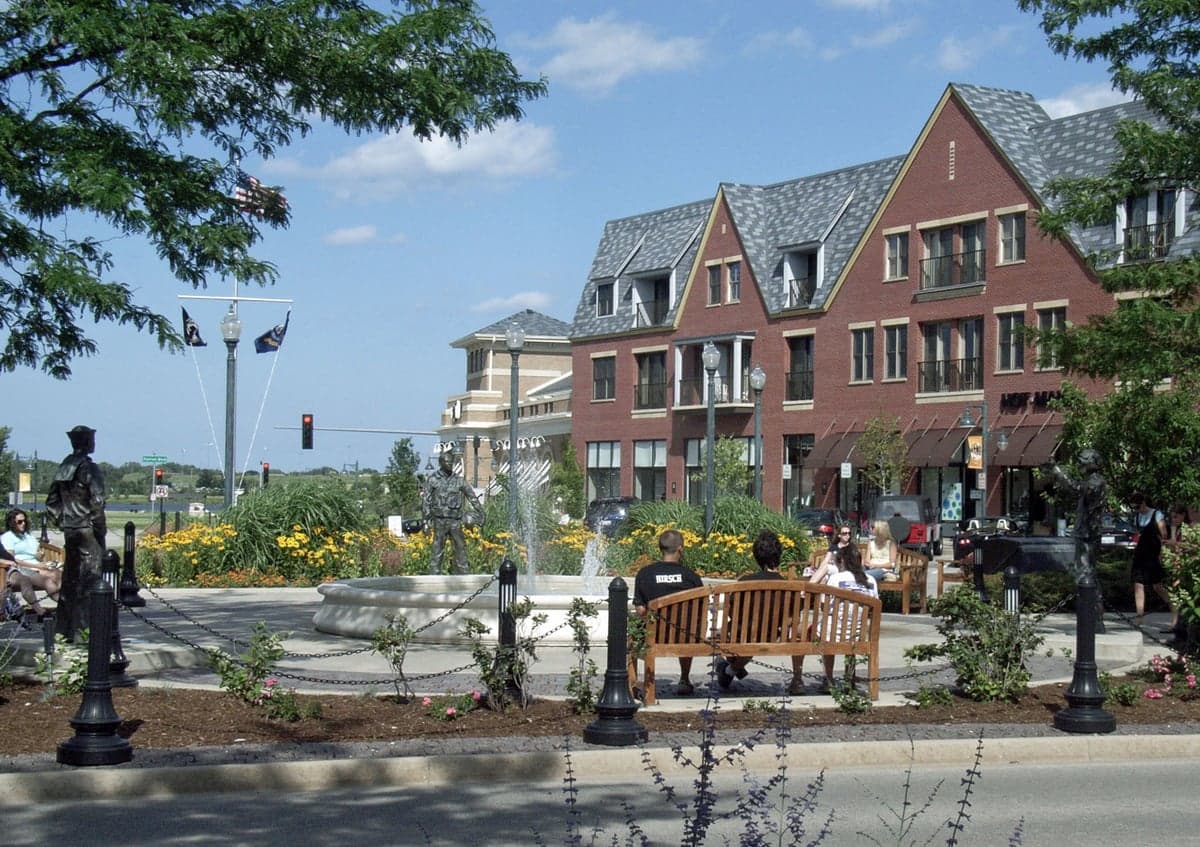
Photo: Wikipedia
Personal Sovereignty in Glenview, IL
Viable for self-reliance. Generally workable, though some barriers may limit total independence.
What does Personal Sovereignty tell us?
Personal Sovereignty measures your capacity for self-reliance and independence with minimal government friction. Higher scores mean fewer barriers between you and the way you want to live... but it assumes you have the space you need and good neighbors.
What does this tell us?
Personal Sovereignty measures your capacity for self-reliance and independence with minimal government friction. Higher scores mean fewer barriers between you and the way you want to live... but it assumes you have the space you need and good neighbors.
State Policy
Energy independence: Importer (45% of energy produced in-state)
Personal Liberty
Homesteading

Personal Liberty Analysis
Glenview, Illinois, presents a complex sovereignty picture for the conservative-leaning individual or family prioritizing autonomy. While the village itself maintains a relatively orderly, low-crime environment, the overarching legal and fiscal framework of Cook County and the State of Illinois imposes significant constraints on personal freedom, particularly in the realms of taxation, self-defense, and medical choice. For the survivalist or prepper, Glenview offers strong community stability and property rights, but the surrounding regulatory climate requires careful strategic planning to preserve true personal sovereignty.
Tax burden and regulatory posture: how Illinois state policy affects Glenview residents
The most immediate threat to personal sovereignty in Glenview is the state and local tax burden. Illinois has the second-highest property tax rate in the nation, and Cook County is among the highest within the state. A typical Glenview home valued at $500,000 carries an annual property tax bill of roughly $10,000 to $12,000, a substantial recurring cost that directly reduces financial independence. The state income tax is a flat 4.95%, and sales taxes in Cook County push the combined rate to around 10.25%. This fiscal posture means a significant portion of earnings is redirected to government programs before the resident can allocate it to personal preparedness, land acquisition, or savings. Regulatory posture is similarly heavy: Illinois mandates strict building codes, environmental regulations, and licensing requirements that can complicate even minor home improvements or small-scale agricultural projects. For the prepper, this means that any attempt at self-sufficiency—whether installing solar panels, rainwater collection, or a backyard greenhouse—must navigate a permitting process that can be both time-consuming and costly. The state’s pension debt and fiscal instability also create long-term uncertainty, as future tax increases are a near-certainty to cover unfunded liabilities.
Self-defense and gun law specifics: what Glenview residents can and cannot do
Illinois is one of the most restrictive states in the nation for firearm ownership, and Glenview residents operate under these constraints. The state requires a Firearm Owner’s Identification (FOID) card to possess any firearm or ammunition, a process that includes a background check and can take months due to processing delays. Concealed carry is permitted only with a state-issued Concealed Carry License (CCL), which requires 16 hours of training, a live-fire qualification, and a fee. However, Illinois does not recognize concealed carry permits from any other state, and reciprocity is essentially nonexistent. This means that even a legally armed visitor from a more permissive state cannot carry in Glenview. The state also bans "assault weapons" and high-capacity magazines under the Protect Illinois Communities Act, passed in 2023. For the survivalist, this is a critical limitation: the ability to defend one’s home and family with standard-capacity rifles is legally curtailed. Castle doctrine is recognized in Illinois, meaning there is no duty to retreat in one’s own home, but the use of deadly force is still subject to reasonableness standards that can lead to legal scrutiny. In practice, Glenview is a low-crime area—violent crime rates are well below national averages—so the immediate self-defense need is lower than in urban centers, but the legal framework remains a significant constraint on the right to keep and bear arms.
Self-reliance and homesteading viability: lot sizes, zoning, and off-grid feasibility
Glenview is a densely developed suburb with typical lot sizes ranging from one-quarter to one-half acre. This limits the scale of any homesteading or self-reliance project. Zoning regulations are strict: keeping chickens is permitted in some residential zones but requires a permit and limits on the number of birds; goats, pigs, or larger livestock are generally prohibited. Vegetable gardens are allowed, but front-yard gardens may be subject to aesthetic ordinances. Off-grid living is effectively impossible within village limits. The village requires connection to municipal water and sewer, and solar panel installations must comply with building codes and homeowners’ association rules where applicable. Rainwater collection is not explicitly prohibited but is subject to state water rights laws that limit capture to non-potable uses. For the prepper seeking true self-sufficiency, Glenview is not the ideal location. However, the village’s proximity to rural areas in Lake County or McHenry County—within a 45-minute drive—offers a viable "bug-out" strategy: maintain a primary residence in Glenview for work and community, while acquiring a small rural property for gardening, livestock, and off-grid infrastructure. This dual-property approach is common among preparedness-minded residents in the Chicago suburbs, balancing the convenience of suburban life with the sovereignty of a rural retreat.
Personal liberties: parental rights, medical autonomy, speech, and property
Parental rights in Illinois have been a battleground. The state has passed laws that allow minors to consent to certain medical treatments—including reproductive health care and gender-affirming care—without parental notification, which directly undermines parental authority. School boards in Glenview, part of Glenview School District 34 and Glenbrook High School District 225, have generally followed state mandates on curriculum and health education, which may include comprehensive sex education and social-emotional learning programs that some conservative parents find intrusive. Medical autonomy is further constrained by state vaccine mandates for school attendance, though religious exemptions are available. On speech and assembly, Illinois law does not have a specific "right to farm" or strong property rights protections beyond what the Fifth Amendment provides. The state’s eminent domain powers are broad, and Cook County has used them for redevelopment projects. Property rights are generally respected for existing homeowners, but new development is heavily regulated. For the survivalist, the most concerning aspect is the erosion of parental rights and medical choice, as these directly affect the ability to raise children according to one’s values and to make independent health decisions. The state’s public health emergency powers, which were used extensively during the COVID-19 pandemic, remain a source of concern for those who prioritize medical autonomy.
Overall, Glenview offers a mixed sovereignty profile. The village itself is safe, stable, and property-respecting, but the state and county overlay imposes heavy taxes, restrictive gun laws, and expanding government control over family and medical decisions. Compared to areas in the South or Mountain West, where property taxes are lower, gun laws are more permissive, and parental rights are stronger, Glenview falls short for the committed survivalist. However, for those who must remain in the Chicago region for work or family, Glenview is one of the better options due to its low crime, strong schools, and proximity to rural escape routes. The strategic approach is to treat Glenview as a base of operations—not a fortress—and to invest in legal compliance, financial resilience, and a secondary property in a more liberty-friendly jurisdiction.

* Values derived from national, state, county, city and local statistics and may differ in a specific area. Last updated: 2026-04-19T19:56:08.000Z
Narrative content on this page is AI-generated and may contain mistakes. Verify any details that matter before acting on them.
ReloMaps may earn a commission from affiliate links at no extra cost to you.

