Photo: Wikipedia
Political ClimatePolitical Climate in Glenview, IL
District shown is the primary district for this city’s centroid. Cities may span multiple districts.
Local Political AnalysisPolitical Analysis of Glenview, IL
Glenview leans heavily Democratic, with a Cook Partisan Voting Index (PVI) of D+19, meaning it votes about 19 points more Democratic than the national average. In recent presidential elections, the village has consistently favored Democratic candidates by margins of 60-70%, a shift that has accelerated noticeably since 2016. Longtime residents will tell you this wasn’t always the case—Glenview used to be a reliably moderate Republican stronghold, with many families voting for fiscally conservative candidates while keeping social issues on the back burner. That’s changed, and the trajectory is clearly toward a more progressive, one-party-dominant political culture.
How it compares
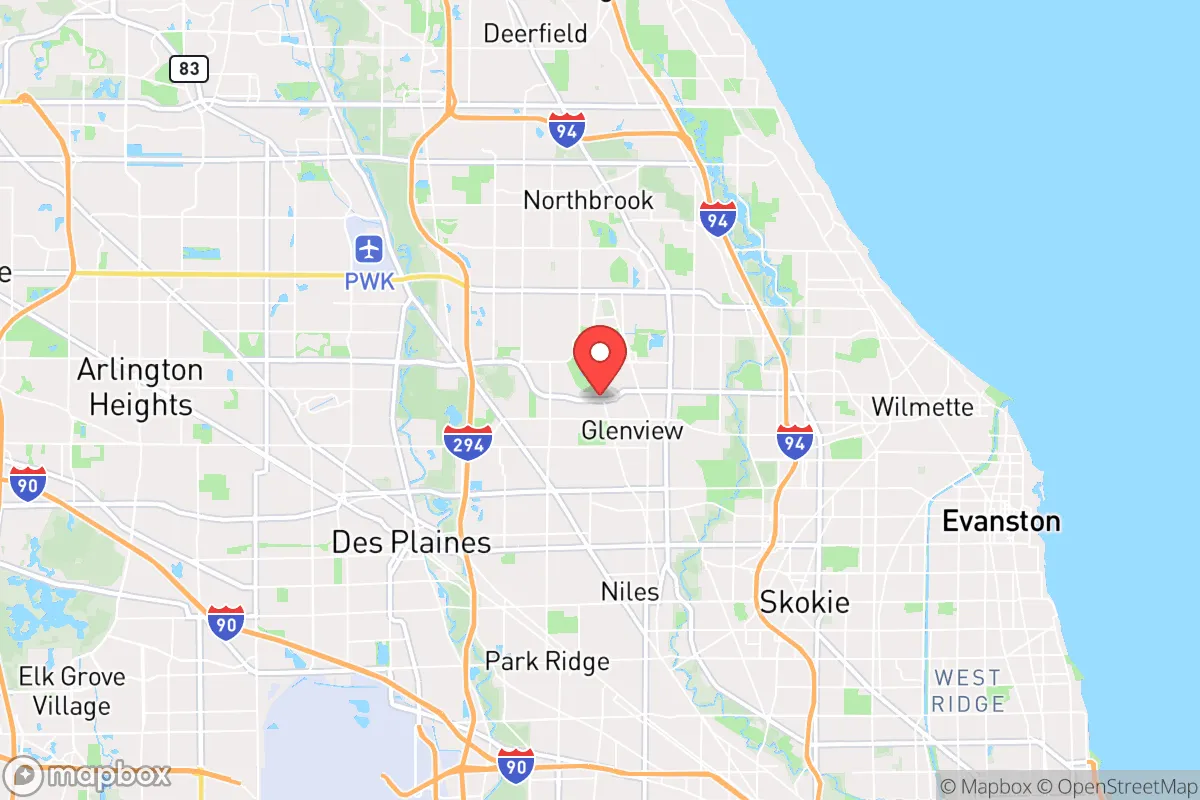
Drive 15 minutes north to Northbrook or Deerfield, and you’ll find similar Democratic leanings, though Glenview’s D+19 PVI is actually a bit more moderate than Northbrook’s D+22. Head west to Mount Prospect or Arlington Heights, and the politics are slightly more balanced, with those towns still electing some Republican trustees and state representatives. The real contrast comes when you go south or southwest: Park Ridge (Hillary Clinton’s hometown) is D+15, but Des Plaines and Niles are more working-class and have a stronger independent streak. If you really want to see a different world, drive 30 minutes west to Barrington or Inverness, where the PVI flips to R+5 or R+8. In Glenview, though, the local school board, village board, and park district are now dominated by candidates who run on progressive platforms—things like equity initiatives, DEI training, and climate action plans that often come with new regulations and spending mandates.
What this means for residents
For a resident who values personal freedoms and limited government, the biggest concern is the steady creep of government overreach into daily life. The village has adopted “Welcoming City” ordinances that limit cooperation with federal immigration enforcement, which some see as prioritizing political statements over public safety. Property taxes in Cook County are already among the highest in the nation, and Glenview’s local governments have shown little appetite for cutting spending—instead, they’ve pushed for new stormwater fees, plastic bag bans, and stricter building codes that add costs for homeowners and small businesses. The school district (Glenbrook High Schools and District 34) has also moved aggressively into social-emotional learning and equity audits, which some parents feel prioritize ideological training over academic rigor. If you’re a conservative or even a moderate, you’ll find yourself increasingly out of step with the local political class, and your vote in local elections often feels like a symbolic gesture rather than a meaningful check on power.
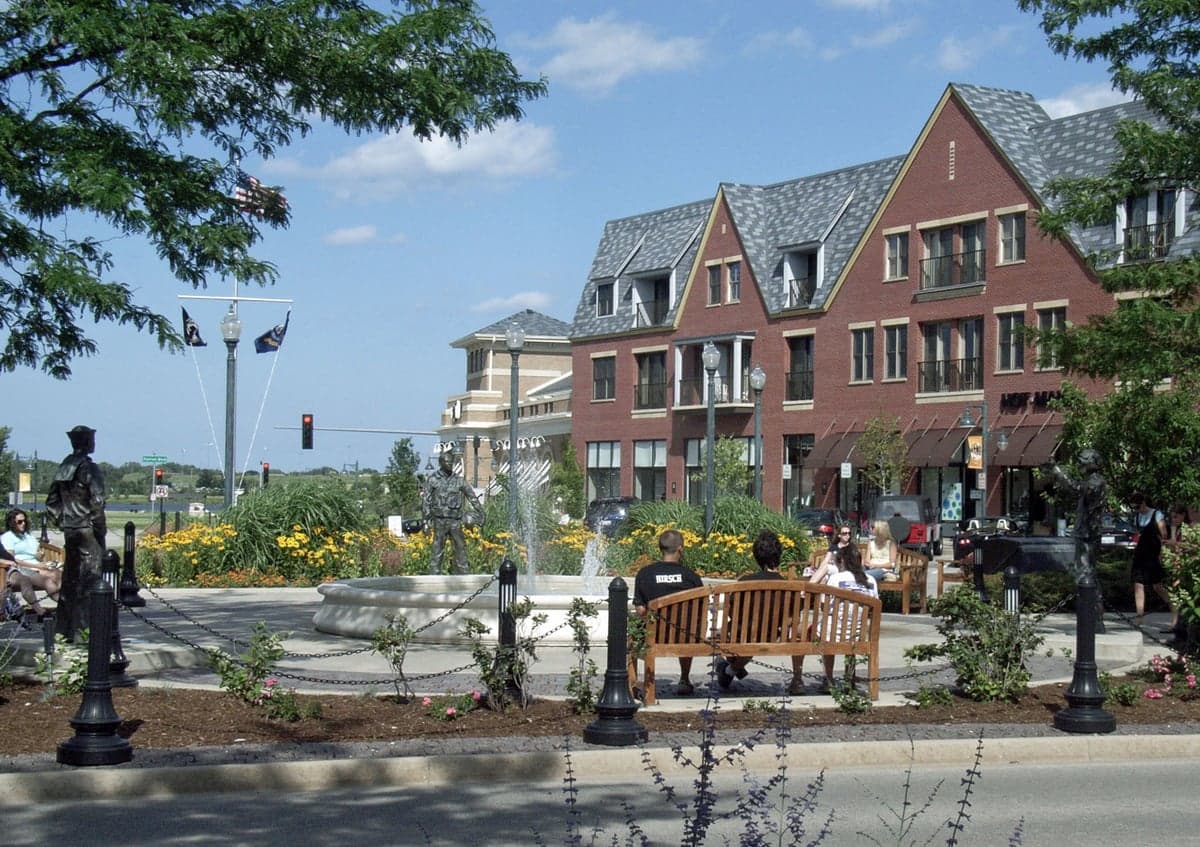
Culturally, Glenview still has a strong sense of community—the Fourth of July parade, the farmers market, and the Glen Town Center are genuine gathering spots. But the political culture has become more performative. You’ll see yard signs for progressive candidates and causes everywhere, and local Facebook groups are dominated by debates over mask mandates, library book content, and police funding. The long-term trend is concerning: as the village gets younger and more diverse, the political center of gravity keeps shifting left, and there’s no organized opposition to push back. If you’re looking for a place where your personal freedoms—whether it’s choosing your child’s curriculum, keeping your property taxes in check, or simply being left alone by local government—are respected, Glenview is becoming a harder place to call home.

State Political ClimatePolitical Climate in Illinois
State Political AnalysisPolitical Environment in the State
Illinois has been a reliably blue state in presidential elections since 1992, but its political landscape is far more fractured than the statewide numbers suggest. The Democratic stronghold of Cook County and the Chicago metro area, which holds about 40% of the state’s population, consistently delivers margins that overwhelm the rest of the state. Over the last 20 years, the state has shifted from a moderate Midwestern swing state to a solidly progressive one, driven by a combination of Chicago’s demographic growth, suburban shifts to the left, and a shrinking rural base. For a conservative-leaning individual or family, the state’s trajectory is a cautionary tale of one-party rule and expanding government reach.
Urban vs. rural divide
The political map of Illinois is a tale of two worlds. Chicago and its inner suburbs—places like Evanston, Oak Park, and Naperville—are the engine of Democratic dominance. Cook County alone delivered over 74% of its vote to Joe Biden in 2020, effectively deciding the state’s outcome before downstate votes are fully counted. The collar counties (DuPage, Lake, Kane, Will, and McHenry) have been trending blue since the 2010s, with Naperville and Aurora now reliably Democratic, a shift driven by professional-class migration and changing demographics. In contrast, the rest of Illinois—from Rockford and Peoria down to the Metro East area across from St. Louis—is deeply red. Counties like Effingham, Jasper, and Wayne routinely vote 70-80% Republican. The divide is stark: drive 30 miles west of Chicago’s O’Hare Airport into DeKalb County, and you’ll find a mix of college town (DeKalb) and deep-red farm country. The state’s political power is concentrated in the northeast corner, leaving rural and small-town residents feeling increasingly voiceless in Springfield.
Policy environment
Illinois’s policy environment reflects its one-party control. The state has the second-highest property tax burden in the nation, with an average effective rate of 2.07%—a crushing reality for homeowners. The state income tax is a flat 4.95%, but there’s a real push for a graduated income tax, which voters rejected in 2020 but could return. The regulatory posture is heavy: Illinois has some of the strictest gun laws in the country, including a 2023 ban on assault weapons and high-capacity magazines (the Protect Illinois Communities Act), which passed on a party-line vote. Education policy is dominated by the Chicago Teachers Union, which has pushed for progressive curricula and defunded police movements in Chicago Public Schools. Healthcare is heavily regulated, with a state-run insurance exchange and Medicaid expansion under the Affordable Care Act. Election laws are among the most liberal: no-excuse mail-in voting, same-day registration, and automatic voter registration are all in place. For a conservative, the policy environment feels like a slow-motion expansion of government control over daily life, from your property taxes to your Second Amendment rights.
Trajectory & freedom
Illinois is becoming less free by any objective measure. The Protect Illinois Communities Act (2023) is the most significant gun rights restriction in state history, banning the sale of AR-15s and standard-capacity magazines. The state also passed the Reproductive Health Act (2019), which codified abortion access and removed parental notification requirements for minors—a move that alarmed many pro-life families. On the parental rights front, Illinois has no law requiring schools to notify parents of a child’s gender identity changes, and the state’s Department of Children and Family Services has been accused of investigating parents who refuse to affirm a child’s gender transition. Property rights are under pressure from high property taxes and a state Supreme Court that has upheld local rent control ordinances. The state’s pension crisis—$140 billion in unfunded liabilities—means taxes will likely rise further. The trajectory is clear: more regulation, less local control, and a government that increasingly prioritizes progressive social policy over individual liberty.
Civil unrest & political movements
Illinois has seen its share of civil unrest, particularly in Chicago. The 2020 George Floyd protests turned into widespread looting and property destruction in the Loop and along the Magnificent Mile, with the city’s response criticized as slow and ineffective. The state’s sanctuary policies—Illinois is a “Welcoming City” state, with Chicago and Cook County refusing to cooperate with ICE—have made it a flashpoint in immigration politics. In 2023, Governor JB Pritzker signed a law banning local law enforcement from cooperating with federal immigration authorities, leading to clashes with downstate sheriffs in places like Effingham and Macon County. There’s a growing secession movement in downstate Illinois, with several counties voting to explore breaking away from Cook County’s dominance—though it’s largely symbolic. Election integrity is a hot-button issue: the state’s mail-in voting expansion and lack of strict voter ID laws have fueled distrust among conservatives, especially after the 2020 election saw record mail-in ballots. A new resident will notice the political tension is palpable, especially in rural areas where “Pritzker Must Go” signs are common.
Projection
Over the next 5-10 years, Illinois will likely become more progressive, not less. Demographic trends favor the Chicago metro area, which is growing younger and more diverse, while downstate continues to lose population. In-migration from other blue states (California, New York) is accelerating the shift, particularly in the collar counties. The state’s pension crisis will force either massive tax hikes or service cuts—neither of which bodes well for fiscal conservatives. The gun ban is likely to survive legal challenges, and further restrictions on speech and parental rights are possible. However, there are pockets of resilience: places like McHenry County (northwest of Chicago) and the Metro East area are growing as conservative refuges, and the state’s strong agricultural economy provides a buffer. A new resident moving in now should expect a state where their vote in statewide elections is effectively meaningless, but where local control in red counties still offers some breathing room. The bottom line: Illinois is a state where you can find a conservative community, but you’ll be fighting an uphill battle against a government that sees personal freedom as an obstacle to its agenda.
For a conservative family or individual, Illinois offers a mixed bag. The property taxes alone can be a dealbreaker, and the policy environment is increasingly hostile to gun rights, parental authority, and fiscal conservatism. But if you’re willing to live in a red county like Effingham or McHenry, you can find a community that shares your values—just don’t expect Springfield to listen. The state’s trajectory is clear: more government, less freedom. If that doesn’t sit well, you might want to look west or south.
* Values derived from national, state, county, city and local statistics and may differ in a specific area. Last updated: 2026-04-19T19:56:08.000Z
Narrative content on this page is AI-generated and may contain mistakes. Verify any details that matter before acting on them.
ReloMaps may earn a commission from affiliate links at no extra cost to you.

