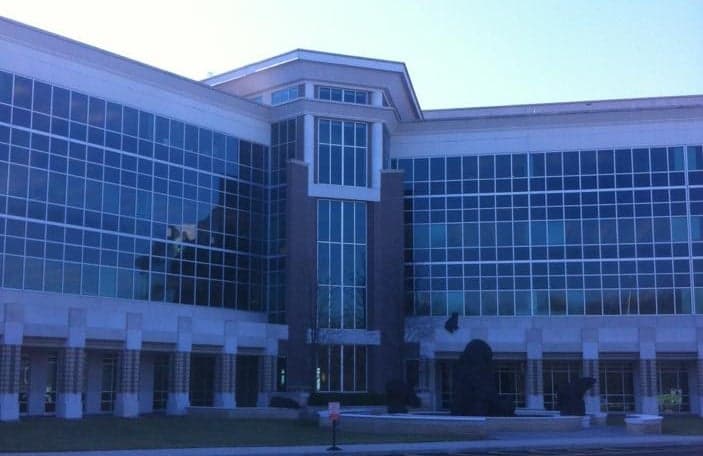
Photo: Wikipedia
Demographics of Goodlettsville, TN
Affluence Level in Goodlettsville, TN
A middle-class area roughly in line with national averages across income, home values, education, and employment.
People of Goodlettsville, TN
Goodlettsville, Tennessee, is a city of roughly 17,600 residents whose character blends historic Southern roots with modern suburban growth, anchored by a strong sense of local identity and a notably diverse population. The city’s people today are predominantly White (54.0%) and Black (25.9%), with a growing Hispanic community (9.8%) and small but established East/Southeast Asian (1.3%) and Indian-subcontinent (0.9%) populations. With a foreign-born share of just 2.7% and a college-educated rate of 32.7%, Goodlettsville remains a largely native-born, middle-class community where family ties and civic pride run deep, distinct from the more transient suburbs of Nashville’s outer ring.
How the city was settled and grew
Goodlettsville’s population history begins with early European-American settlers drawn to the fertile land along the Cumberland River and the Mansker Creek area in the late 1700s. The city’s namesake, Dr. Robert Goodlett, arrived in the 1820s and established a stagecoach stop and trading post, which became the nucleus of the settlement. The original population was overwhelmingly of Scots-Irish and English descent, with families like the Manskers and the Goodletts themselves building the first homes in what is now Historic Goodlettsville, a district centered around Main Street and the 1840s Bowen Plantation House. The arrival of the Louisville and Nashville Railroad in the 1850s spurred a second wave of growth, attracting merchants, craftsmen, and a small number of free Black families who settled in the Moss-Wright Park area, then a separate community known as “Moss Town.” Through the early 20th century, Goodlettsville remained a small farming and railroad town, with its population swelling modestly during the Great Depression as rural families moved in seeking work at the local grist mills and tobacco warehouses. The post-World War II era brought the first significant suburban wave, as returning veterans and their families built homes in the Riverwood and Lakeside Park neighborhoods, drawn by affordable land and the promise of a quieter life just north of Nashville’s growing industrial base.
Modern era (post-1965)
The 1965 Hart-Cellar Act had a limited direct impact on Goodlettsville’s demographics, as the city’s foreign-born population remains low at 2.7%. Instead, the modern era has been defined by domestic in-migration, particularly from other parts of Tennessee and the broader South. The 1970s and 1980s saw a steady influx of Black families moving from Nashville’s inner city into the Amqui Station and Greenwood neighborhoods, drawn by newer housing stock and lower property taxes. This wave, combined with natural growth, pushed the Black population share to roughly 20% by 1990. The 1990s and 2000s brought a surge of White families from California and the Midwest, attracted by Tennessee’s lack of a state income tax and the region’s booming automotive and healthcare sectors. These newcomers settled heavily in the Hunters Point and Long Hollow Pike corridor developments, where large single-family homes on cul-de-sacs became the norm. The Hispanic population, now 9.8%, began growing in the 2000s, primarily as construction and service workers drawn to the Nashville metro’s building boom, with many renting in the older Moss-Wright Park area and the apartment complexes along Dickerson Pike. The East/Southeast Asian community (1.3%) and Indian-subcontinent community (0.9%) are small but visible, with families concentrated in the newer subdivisions near Long Hollow Pike, often employed in Nashville’s healthcare and tech sectors.
The future
Goodlettsville’s population is heading toward continued diversification, though at a measured pace compared to Nashville proper. The White share (54.0%) is declining gradually as the Hispanic and Black populations grow, a trend likely to persist as the city’s affordable housing stock attracts younger families priced out of Davidson County. The Hispanic community, while still modest, is the fastest-growing segment and is expected to reach 12-14% by 2035, with new arrivals settling in the Moss-Wright Park and Dickerson Pike corridors, where existing ethnic grocery stores and churches provide a support network. The Black population is projected to hold steady or increase slightly, as the Amqui Station and Greenwood neighborhoods remain stable and attract some return migration from Nashville. The East/Southeast Asian and Indian-subcontinent communities are likely to grow slowly, as Goodlettsville lacks the ethnic infrastructure and job clusters that draw larger numbers to cities like Brentwood or Franklin. The city is not tribalizing into distinct enclaves but rather homogenizing into a broadly middle-class, family-oriented suburb, with most new development occurring in master-planned subdivisions along the Long Hollow Pike corridor that attract a mix of White, Black, and Hispanic buyers.
For someone moving in now, Goodlettsville offers a stable, family-focused community with a genuinely diverse population that is becoming more so, but without the rapid demographic churn seen in Nashville’s closer-in suburbs. The city’s character remains rooted in its historic Southern identity, with a growing Hispanic presence adding new cultural layers, while the low foreign-born share means English remains the near-universal language of daily life. It is a place where a newcomer can find a solid home, good schools, and neighbors who have been there for decades — a rare combination in the fast-growing Nashville metro.

* Values derived from national, state, county, city and local statistics and may differ in a specific area. Last updated: 2026-05-01T00:56:34.000Z
Narrative content on this page is AI-generated and may contain mistakes. Verify any details that matter before acting on them.
ReloMaps may earn a commission from affiliate links at no extra cost to you.

