
Photo: Wikipedia
Political ClimatePolitical Climate in Goodlettsville, TN
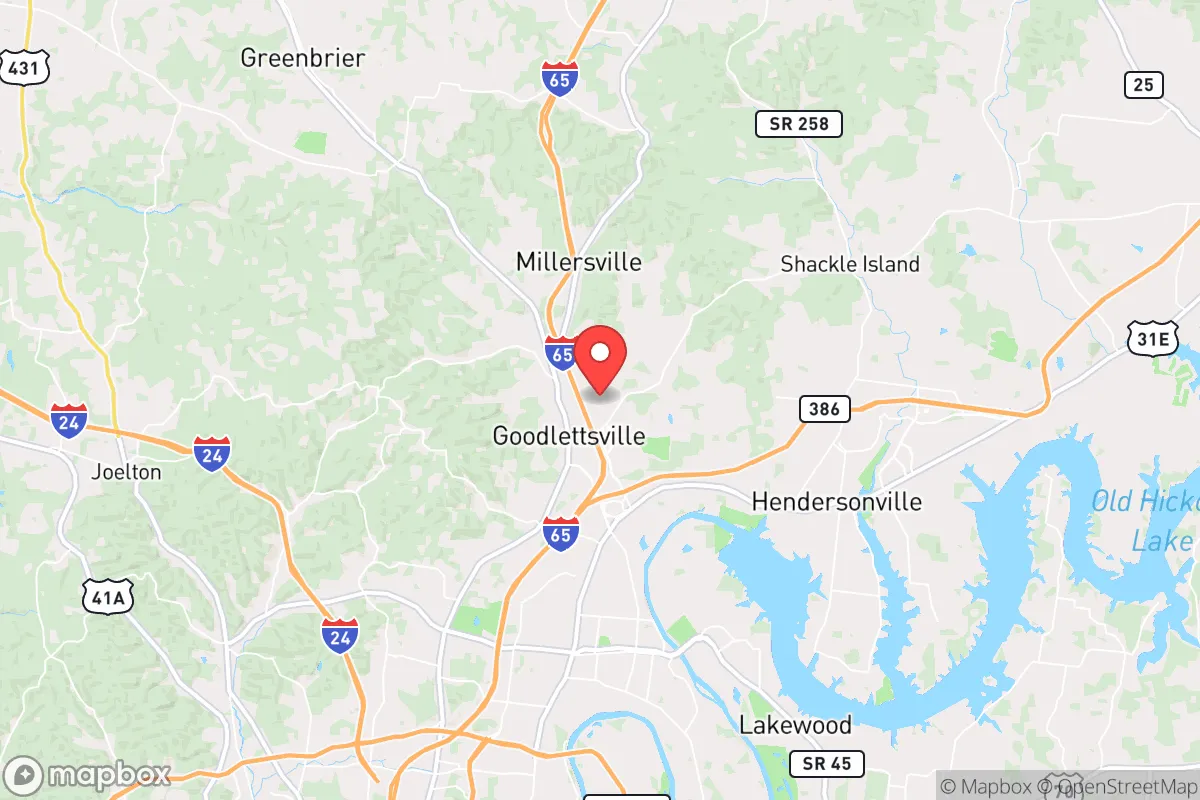
District shown is the primary district for this city’s centroid. Cities may span multiple districts.
Local Political AnalysisPolitical Analysis of Goodlettsville, TN
Goodlettsville leans heavily conservative, and that’s not just a feeling—it’s baked into the numbers. The area carries a Cook Partisan Voting Index of R+17, meaning it votes about 17 points more Republican than the national average. That’s a solid, reliable red, and it’s been that way for as long as most folks around here can remember. You don’t see wild swings from election to election; people here tend to vote their values, and those values are rooted in limited government, personal responsibility, and a healthy skepticism of anyone in Nashville telling you how to live your life.
How it compares
Drive ten minutes south into Nashville proper, and you’re in a different world politically—Davidson County is reliably blue, with a Cook PVI around D+15 or so. That’s a 32-point swing in just a few miles. Up north in Goodlettsville, you’re closer in spirit to places like Hendersonville or Gallatin, where the conservative tilt is just as strong. Even nearby Madison, which is more purple, still leans right of the city core. The contrast is stark: you can be at a neighborhood barbecue in Goodlettsville talking about property taxes and school boards, then cross into Nashville and hear about zoning overhauls and progressive social policies. It’s a reminder that a short commute can take you from a place where folks mind their own business to one where the government’s got its hand in everything from short-term rentals to what kind of lightbulbs you can buy.
What this means for residents
For the people living here, the political climate translates into a pretty straightforward daily life. You’re not dealing with a city council that’s itching to experiment with new social programs or rewrite the zoning code every other month. The local government tends to focus on basics—roads, schools, public safety—and stays out of the way otherwise. That’s a big deal if you value personal freedoms like choosing your own healthcare, deciding how to educate your kids, or running a small business without a stack of new regulations every year. The downside? If you’re hoping for rapid change on things like transit or urban development, you’ll find the pace slow. But for most residents, that’s a feature, not a bug. The concern around here is always about government overreach—whether it’s from the state or the feds—and the local culture reflects that wariness. People vote accordingly, and they expect their representatives to push back against any mandate that feels like it’s coming from too far away.
One thing that stands out culturally is the strong sense of local identity that resists being absorbed into the Nashville metro machine. Goodlettsville has its own history, its own small-town feel, and a lot of folks are protective of that. You’ll see it in the way people talk about preserving green space, keeping development manageable, and maintaining a community where neighbors know each other. There’s a quiet pride in being just outside the fray—close enough to Nashville for work or a night out, but far enough to raise a family without the city’s political noise. If you’re looking for a place where the government doesn’t treat you like a project, and where the trajectory is still toward common-sense conservatism, Goodlettsville fits that bill. Just keep an eye on the county lines—because as Nashville grows, the pressure to expand its influence northward is real, and that’s something the locals here are watching closely.

State Political ClimatePolitical Climate in Tennessee
State Political AnalysisPolitical Environment in the State
Tennessee has been a reliably red state for decades, but the political climate here isn't a monolith — it’s a dynamic mix of deep-red rural strongholds, fast-growing purple suburbs, and a few deep-blue urban cores. Over the last 10-20 years, the state has shifted noticeably rightward, driven by an influx of conservative-leaning transplants from California, Illinois, and New York, as well as a Republican supermajority that has aggressively pursued a limited-government agenda. In 2024, Donald Trump carried Tennessee by roughly 30 points, and the GOP holds every statewide office and supermajorities in both legislative chambers. But beneath that surface, the real story is the tension between Nashville’s explosive growth and the state’s increasingly assertive conservative policy machine.
Urban vs. rural divide
The political map of Tennessee is a textbook study in urban-rural polarization. Nashville (Davidson County) is the state’s liberal anchor — it voted for Joe Biden by 30 points in 2020 and has a Democratic mayor, a city council that leans progressive, and a growing activist class. Memphis (Shelby County) is similarly blue, driven by a large African American population and a Democratic machine that’s been in power for generations. Knoxville (Knox County) and Chattanooga (Hamilton County) are more competitive — Knox County voted for Trump by 20 points in 2024, but the city itself is a purple island with a growing progressive presence, especially among younger professionals and University of Tennessee students. Chattanooga is similar: the city core is trending left, but the surrounding Hamilton County suburbs like Ooltewah and Signal Mountain are reliably red. The real engine of Tennessee’s conservatism is the vast rural and exurban expanse — counties like Lincoln, Giles, Macon, and Fentress routinely vote 80%+ Republican. The fast-growing suburbs around Nashville — Williamson County (Franklin, Brentwood), Rutherford County (Murfreesboro), and Wilson County (Lebanon, Mount Juliet) — are the state’s political battlegrounds. Williamson County is one of the wealthiest and most educated counties in America, yet it votes reliably red (Trump won it by 20 points in 2024), though its GOP primary voters are split between traditional Chamber-of-Commerce conservatives and more populist, culturally conservative factions.
Policy environment
Tennessee’s policy environment is among the most conservative in the nation, and it’s been getting more so. The state has no personal income tax — a major draw for relocators — and a relatively low sales tax rate (7% state, plus local add-ons). Property taxes are low by national standards, though they vary widely: Williamson County’s rates are higher than rural counties, but still a fraction of what you’d pay in New Jersey or California. The regulatory climate is business-friendly, with right-to-work laws and a tort reform system that caps noneconomic damages. On education, Tennessee has a robust school choice movement: the state expanded its Education Savings Account program in 2023 to cover more counties, and Governor Bill Lee has pushed for universal school choice. Public schools are locally controlled, but the state has adopted a conservative curriculum framework that emphasizes civics, American history, and parental rights. Healthcare policy is a flashpoint: Tennessee did not expand Medicaid under the ACA, leaving a coverage gap for low-income adults, but the state has pursued a block grant waiver to manage its Medicaid program (TennCare) with more flexibility. Election laws are strict: voter ID is required, early voting is available but limited, and the state has purged inactive voters from rolls. In 2023, the legislature passed a law making it a felony for election officials to send unsolicited absentee ballot applications — a response to 2020 concerns. The state also passed a law banning ranked-choice voting, which is a direct shot at any future progressive electoral reforms.
Trajectory & freedom
Tennessee is on a trajectory of expanding personal freedom in several key areas, though not without controversy. On gun rights, the state became a constitutional carry state in 2021 — no permit needed to carry a concealed handgun for anyone 21 or older who can legally possess a firearm. That’s a major win for Second Amendment advocates. On parental rights, the state passed the “Parental Bill of Rights” in 2022, which gives parents the right to review curriculum, opt their children out of certain instruction, and be notified of any medical or mental health services provided at school. The state also banned transgender surgeries and hormone therapies for minors in 2023 (SB 1), and passed a law requiring schools to notify parents if a student requests a name or pronoun change. On medical autonomy, Tennessee has a broad religious exemption for vaccine mandates and a law prohibiting employers from requiring COVID-19 vaccines as a condition of employment. On property rights, the state has a strong eminent domain protection law and has resisted local zoning overreach, though Nashville’s growth has created tension between developers and neighborhood groups. The biggest freedom concern for conservatives is the state’s broad surveillance and data collection apparatus — Tennessee has a statewide license plate reader network and a fusion center that shares data with federal agencies, which some see as a creeping government overreach. But overall, the trend is toward more individual liberty, especially in the cultural and economic spheres.
Civil unrest & political movements
Tennessee has seen its share of political flashpoints. In 2023, the Nashville Covenant School shooting sparked massive protests at the state capitol, with thousands of activists demanding gun control measures — including a ban on assault weapons and red flag laws. The Republican supermajority responded by passing a law to protect gun manufacturers from lawsuits and expanding the ability of teachers to carry firearms on campus. That same year, the expulsion of two Democratic state representatives (Justin Jones and Justin Pearson) for leading a gun control protest on the House floor became a national story, energizing progressive activists in Nashville and Memphis. Immigration politics are less visible here than in border states, but the legislature passed a law in 2024 requiring local law enforcement to cooperate with ICE and banning sanctuary city policies. There’s been no serious secession or nullification rhetoric, though some rural counties have passed symbolic “Second Amendment sanctuary” resolutions. Election integrity remains a live issue: the state’s voter ID law and purge processes are supported by conservatives but criticized by voting rights groups. A new resident in Nashville would notice the occasional protest at the capitol, but in most of the state, political life is quiet — church, community events, and local government meetings are the main arenas.
Projection
Over the next 5-10 years, Tennessee is likely to become even more conservative in its policy posture, even as its urban cores grow more liberal. The in-migration pattern is key: the people moving to Nashville, Franklin, and Chattanooga are disproportionately young, educated, and often left-leaning, but the people moving to the exurbs and smaller cities (like Clarksville, Murfreesboro, and Johnson City) are often conservative families and retirees fleeing high-tax states. The net effect is that the state’s rural and suburban Republican base is growing faster than its urban Democratic base. The legislature will likely continue to preempt local ordinances — we’ve already seen Nashville’s transit plan, housing policies, and mask mandates overridden by state law. Expect more school choice expansion, further tax cuts (possibly a phase-out of the state’s small franchise tax), and continued resistance to federal overreach on environmental and labor regulations. The biggest wild card is Nashville’s growth: if the city’s progressive activism spills into statewide politics, you could see a more competitive gubernatorial race in 2030. But for now, the trajectory is clear: Tennessee is doubling down on its conservative identity.
Bottom line for a new resident: If you’re moving to Tennessee for lower taxes, more personal freedom, and a culture that respects individual rights, you’re making a smart bet. The state government is actively working to protect those values, and the political climate is stable and predictable. Just be aware that the urban centers — especially Nashville — are increasingly at odds with the state’s direction, and that tension will shape local politics for years to come. If you’re a parent, you’ll find strong school choice options and a legal framework that supports your authority. If you’re a single professional, you’ll enjoy a low-tax, low-regulation environment that rewards ambition. Tennessee isn’t perfect — no state is — but it’s one of the few places in America where the political trajectory is clearly toward more liberty, not less.
* Values derived from national, state, county, city and local statistics and may differ in a specific area. Last updated: 2026-05-01T00:56:34.000Z
Narrative content on this page is AI-generated and may contain mistakes. Verify any details that matter before acting on them.
ReloMaps may earn a commission from affiliate links at no extra cost to you.

