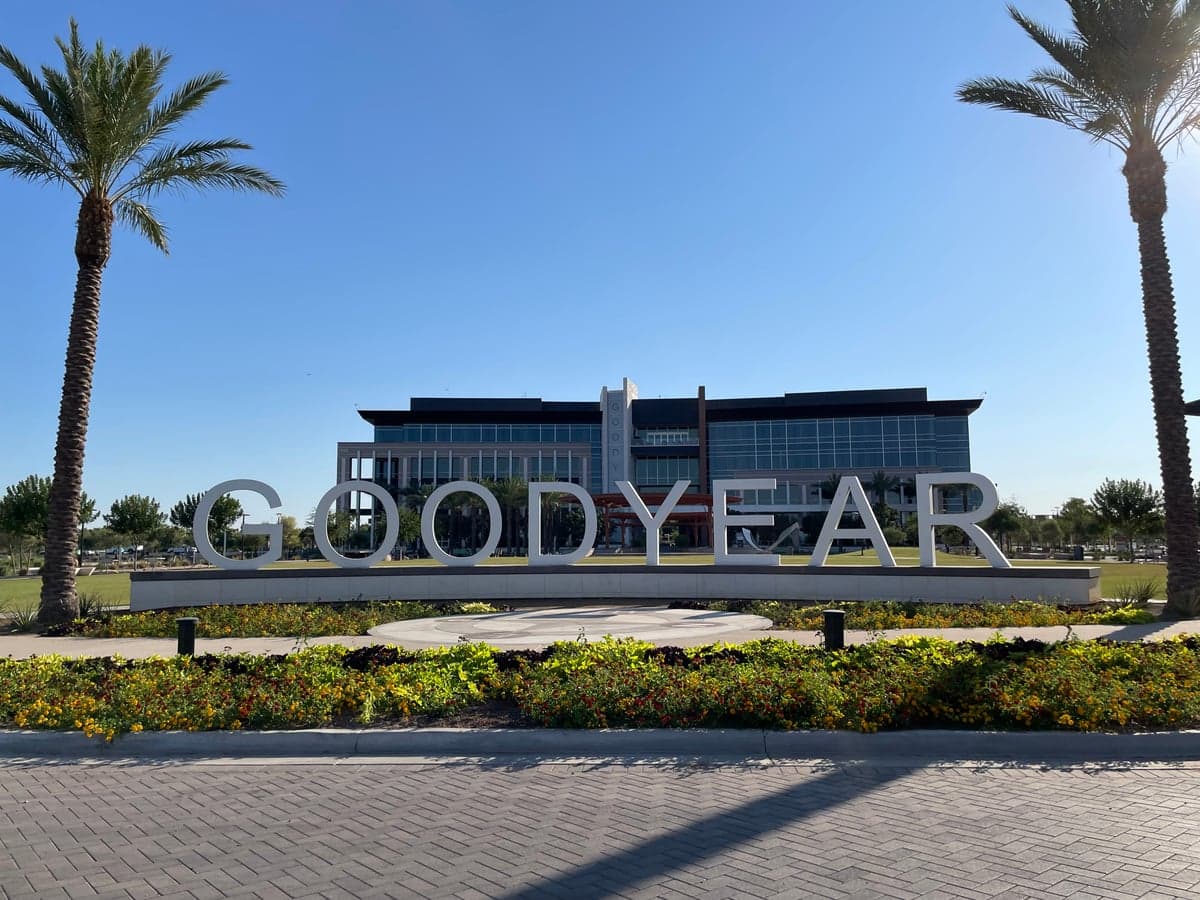
Photo: Wikipedia
Strategic Assessment of Goodyear, AZ
Multiple tactical vulnerabilities. Population density, target proximity, or disaster risk are likely compounding. A retreat property and exit planning is required.
What does the Strategic Assessment tell us?
Our Strategic Assessment grades tactical survivability of an area. Major population centers, military targets, fallout zones, natural disasters, and border exposure all drive risk — lower exposure means a more defensible position in a crisis.
This is heavily inspired by Joel Skousen's Strategic Relocation book. Highly recommended you checkout the book ($)What does this tell us?
Our Strategic Assessment grades tactical survivability of an area. Major population centers, military targets, fallout zones, natural disasters, and border exposure all drive risk — lower exposure means a more defensible position in a crisis.
This is heavily inspired by Joel Skousen's Strategic Relocation book. Highly recommended you checkout the book ($)Strategic Pillars

Key Distances
Regional Safe Places
Below is our recommended "safe zones" in Arizona and the surrounding area based on our strategic heuristics. For most people, it's unrealistic to live in a “safe zone” full-time due to work, family or other personal reasons. They tend to be more rural. However, many of these areas are perfect for second homes and retreat properties that double as a vacation home or even a short-term rental.
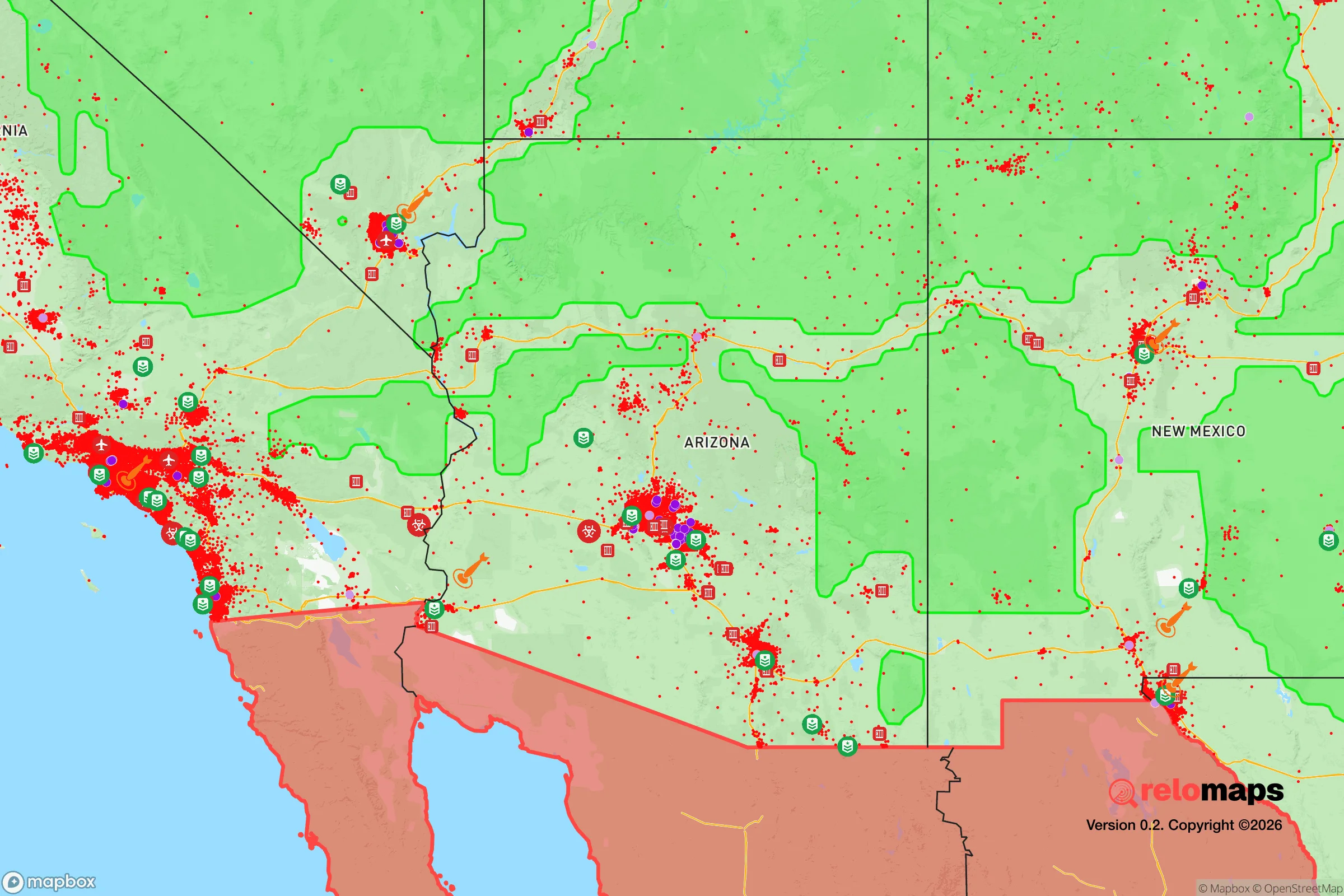
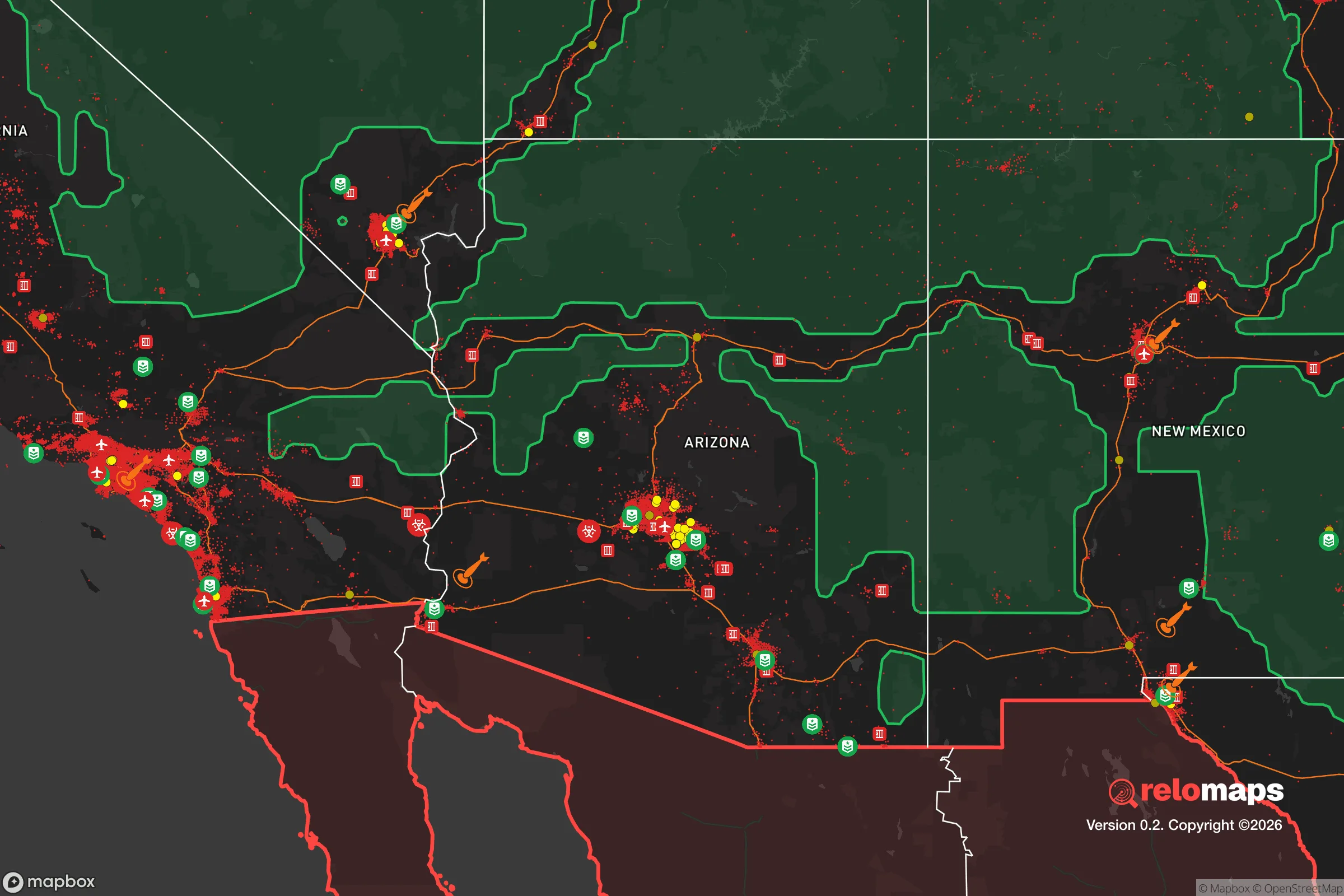


Important Note: For informational purposes only. This does not mean nothing bad ever happens in the green zones. Please use common sense. This is based on public data and modeled with AI. We tried to take a conservative approach but mistakes happen. We update this regularly as new information becomes available.
Solar Generator Recommendations
Backup power matters more here than in safer locations. We've picked three solar generators across budgets and capacity tiers — start with the budget unit if you only need a few essentials, or step up if you want to run a fridge and HVAC for days at a time.

Jackery Portable Power Station Explorer 300
Budget OptionPower on the Go: Weighing only 11 lbs, it's convenient to set up and store with book-sized foldable solar panels

BLUETTI Portable Power Station AC180
Designed for both indoor and outdoor scenarios, AC180 is highly capable as it has a robost capacity and continuous output power.

EF ECOFLOW DELTA Pro Ultra Power Station
Upgraded PickEcoFlow DELTA Pro Ultra is a whole-home energy system designed to grow with your family. Integrated with the Smart Home Panel 2, it scales to meet your evolving energy needs — keeping your home powered, intelligent, and secure through every stage of life.
We earn a commission, at no additional cost to you.
Strategic Assessment Analysis
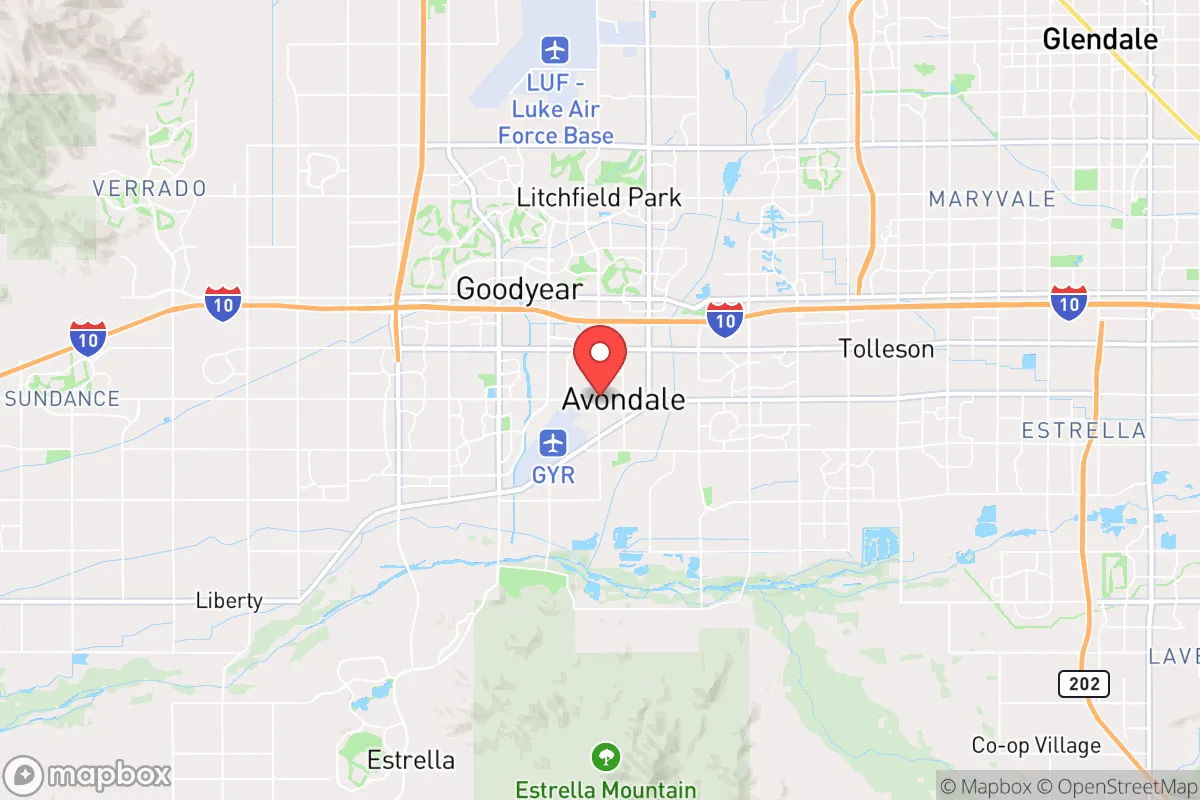
Goodyear, Arizona, occupies a strategic position in the rapidly growing West Valley, offering a blend of new infrastructure and relative isolation from the densest urban cores. Its location roughly 20 miles west of downtown Phoenix provides a buffer against the immediate chaos of a major metropolitan collapse, while still granting access to critical supply chains and medical facilities. For a relocator with a prepper mindset, Goodyear’s recent explosive growth—from about 65,000 residents in 2010 to over 100,000 today—signals both opportunity and risk: the area is building modern resilience features, but it’s also attracting the very population density that can become a liability in a crisis.
Geographic position and natural advantages for long-term survival
Goodyear sits on the flat floor of the Salt River Valley, flanked by the Estrella Mountains to the south and the White Tank Mountains to the west. This topography offers a natural funnel for movement—escape routes into the Sonoran Desert are limited but defensible. The city’s elevation at roughly 970 feet means summer temperatures regularly exceed 110°F, which is a double-edged sword: extreme heat is a natural barrier to unprepared populations, but it also imposes severe water and energy demands on anyone trying to hold a position. The Gila River, though often dry, runs just south of the city, and the Central Arizona Project canal passes within a few miles—both are potential water sources for those who know how to access them. The area’s low humidity and clear skies make solar power highly viable, and the flat terrain simplifies off-grid construction. For a relocator, the key advantage is the ability to see threats coming from miles away across the open desert, a tactical edge that dense urban environments simply cannot offer.
Risks, exposures, and proximity to high-value targets
The most glaring vulnerability for Goodyear is its proximity to Luke Air Force Base, located just 10 miles to the northwest in Glendale. Luke is a primary training base for F-35 and F-16 pilots, making it a Tier-1 target in any major conflict scenario. A strike on Luke would likely produce a massive electromagnetic pulse (EMP) or conventional blast that could cripple electronics and infrastructure across the entire West Valley, including Goodyear. Additionally, the city lies within 30 miles of the Palo Verde Nuclear Generating Station, the largest nuclear power plant in the United States by output. While the plant has robust containment, a catastrophic failure or deliberate attack would place Goodyear directly in the prevailing wind pattern, which blows from the southwest in summer. On the civil unrest front, Goodyear’s rapid growth has brought a mix of demographics and political tensions; the city leans conservative but is surrounded by more liberal suburbs like Avondale and Tolleson. In a breakdown scenario, the main highways—Interstate 10 and the Loop 303—would become chokepoints for fleeing populations, potentially turning the city into a traffic-jammed kill zone. The 2020 civil disturbances in Phoenix demonstrated how quickly unrest can spread to the West Valley, with looting and protests reaching as far as the Estrella area.
Practical resilience for a relocator: food, water, energy, and defensibility
Water is the single most critical factor in the desert, and Goodyear’s situation is mixed. The city draws from the Salt River Project and the Central Arizona Project, both of which are vulnerable to drought and upstream politics. A relocator should plan for at least 90 days of stored water per person, plus a means to purify from the Gila River or canal—both of which are open to contamination. The soil is alkaline and rocky, making traditional gardening a challenge, but raised beds with imported soil and drip irrigation can yield decent crops of heat-tolerant varieties like okra, cowpeas, and desert-adapted squash. For energy, the 300+ days of sunshine per year make solar panels a no-brainer, but battery storage is essential given the grid’s fragility during summer heat waves. Defensibility is a mixed bag: newer subdivisions like Estrella and PebbleCreek are gated with single points of entry, which can be secured but also become traps if the only exit is blocked. Older neighborhoods near the historic downtown have more grid-like street patterns, offering multiple escape routes but less inherent security. The Estrella Mountains provide natural cover and vantage points for anyone willing to hike or set up a remote cache. For a family, the best bet is a property on the western or southern fringe, away from the major highways and closer to open desert, where retreat into the wilderness is a viable option.
The overall strategic picture for Goodyear is one of calculated risk. It offers genuine advantages—distance from the densest urban chaos, abundant solar potential, and a conservative-leaning community that tends to value self-reliance—but those are offset by its proximity to two of the most consequential military and energy targets in the Southwest. A relocator who chooses Goodyear must invest seriously in water storage, off-grid power, and a solid evacuation plan that accounts for the likely closure of I-10 and the Loop 303. The city is not a bug-out location; it’s a forward operating base that requires constant preparation. For those willing to put in the work, it provides a foothold in a region that, despite its heat and hazards, remains one of the few places in the lower 48 where a determined individual can still carve out a defensible, self-sufficient life without being immediately overrun by the masses.

* Values derived from national, state, county, city and local statistics and may differ in a specific area. Last updated: 2026-04-19T08:16:42.000Z
Narrative content on this page is AI-generated and may contain mistakes. Verify any details that matter before acting on them.
ReloMaps may earn a commission from affiliate links at no extra cost to you.

