Photo: Wikipedia
Demographics of Grafton, WV
Affluence Level in Grafton, WV
A low-income area with significant economic hardship. Household wealth and educational attainment are well below national averages.
People of Grafton, WV
The people of Grafton, West Virginia, today number 4,671, forming a predominantly white (96.3%) community with a minuscule foreign-born population (0.3%) and a college attainment rate of just 11.3%. The city is characterized by its deep Appalachian roots, a strong sense of local heritage tied to the Tygart Valley River, and a population density that feels intimate and slow-paced. Distinctive identity markers include a history tied to the first Mother’s Day observance and a lingering connection to the railroad and glassmaking industries that once defined the town.
How the city was settled and grew
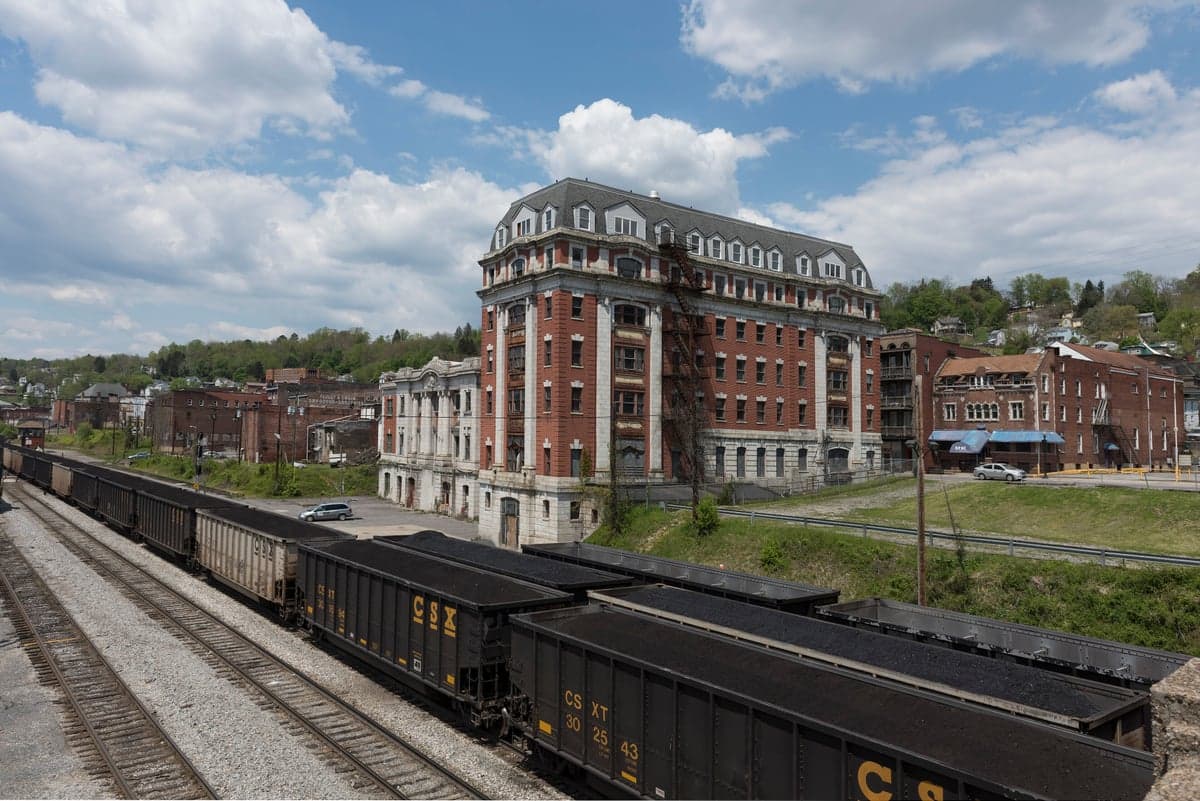
Grafton’s settlement began in the early 1850s, driven not by colonial land grants but by the arrival of the Baltimore and Ohio Railroad. The town was officially incorporated in 1856, and its original population was a mix of Anglo-American farmers, railroad laborers, and skilled craftsmen from the Mid-Atlantic states. The railroad depot became the economic heart, and the first wave of workers settled in the Downtown Grafton district, near the tracks and the Tygart Valley River. By the late 19th century, the glass industry—particularly the Grafton Glass Company—drew a second wave of European immigrants, including German and Irish glassblowers, who established homes in the North Grafton neighborhood, just north of the downtown core. These groups built modest frame houses and small churches, creating a tight-knit, working-class community. The population peaked around 7,000 in the 1920s, sustained by the railroad and glass factories, with the South Grafton area absorbing later arrivals of laborers from rural West Virginia and Pennsylvania.
Modern era (post-1965)
After the 1965 Hart-Cellar Act, Grafton saw virtually no immigration—the foreign-born share today is 0.3%, and the city remains overwhelmingly non-Hispanic white (96.3%). The post-1965 era was instead defined by domestic out-migration as the railroad and glass industries declined. The population dropped from roughly 5,500 in 1970 to 4,671 today. The Fetterman neighborhood, a historic district along the river, saw many homes vacated as younger residents left for larger cities. The Blueville area, a small residential pocket east of downtown, retained a stable core of older, long-term residents. No significant new ethnic or racial groups arrived; the Black population is 0.0%, and East/Southeast Asian residents make up just 0.3%. The city’s demographic story since 1965 is one of slow, steady shrinkage and aging, with the college-educated share (11.3%) well below the national average, reflecting a population that has not attracted new knowledge-economy workers.
The future
Grafton’s population is likely to continue its gradual decline, homogenizing further as younger, more mobile residents leave for regional hubs like Morgantown or Bridgeport. The city is not tribalizing into distinct enclaves—it is too small and homogeneous for that—but the Downtown and North Grafton neighborhoods are aging faster, while South Grafton retains a slightly younger, family-oriented base. Immigrant communities are nonexistent and not expected to grow; the foreign-born share has been flat for decades. Over the next 10-20 years, Grafton will likely become an older, whiter, and more economically stagnant community, with any population growth dependent on attracting retirees or remote workers seeking low-cost housing. The city’s low housing costs and quiet character could draw a small number of domestic migrants from higher-cost states, but this is not a major trend.
For someone moving in now, Grafton offers a deeply rooted, stable, and culturally homogeneous environment—a place where community ties are strong but economic and demographic dynamism is absent. It is becoming a quieter, older version of itself, best suited for those seeking low costs and a close-knit, traditional Appalachian setting rather than diversity or rapid growth.

* Values derived from national, state, county, city and local statistics and may differ in a specific area. Last updated: 2026-05-01T21:36:50.000Z
Narrative content on this page is AI-generated and may contain mistakes. Verify any details that matter before acting on them.
ReloMaps may earn a commission from affiliate links at no extra cost to you.

