Photo: Wikipedia
Demographics of Grand Blanc, MI
Affluence Level in Grand Blanc, MI
A middle-class area roughly in line with national averages across income, home values, education, and employment.
People of Grand Blanc, MI
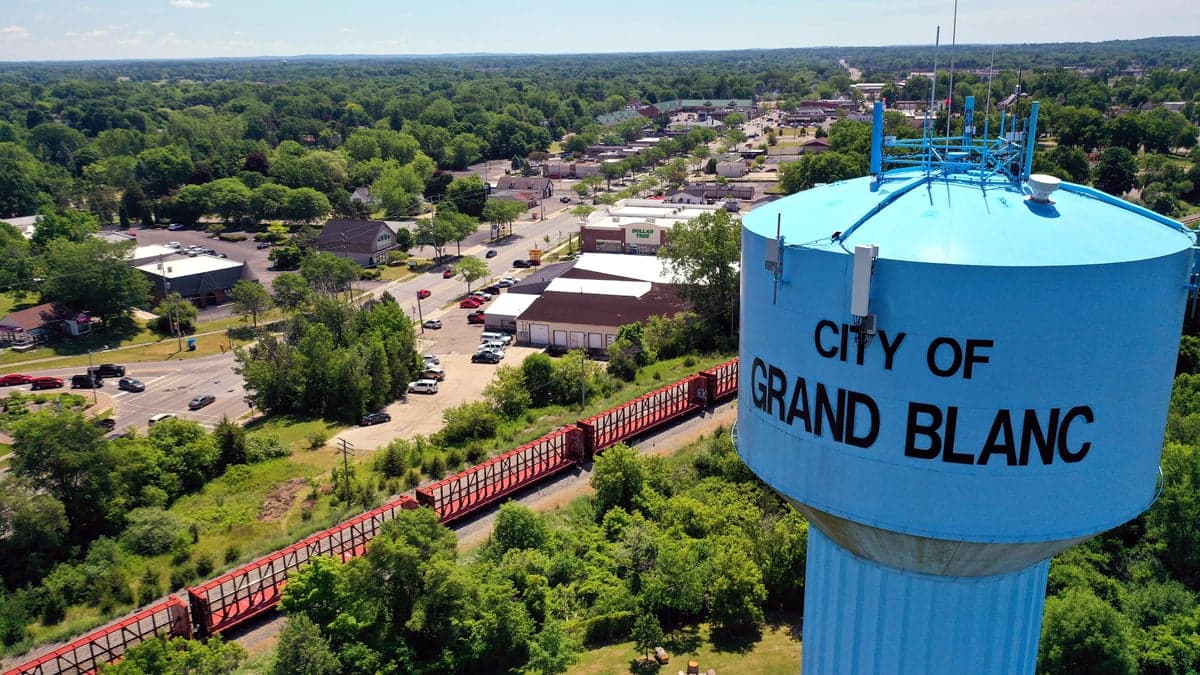
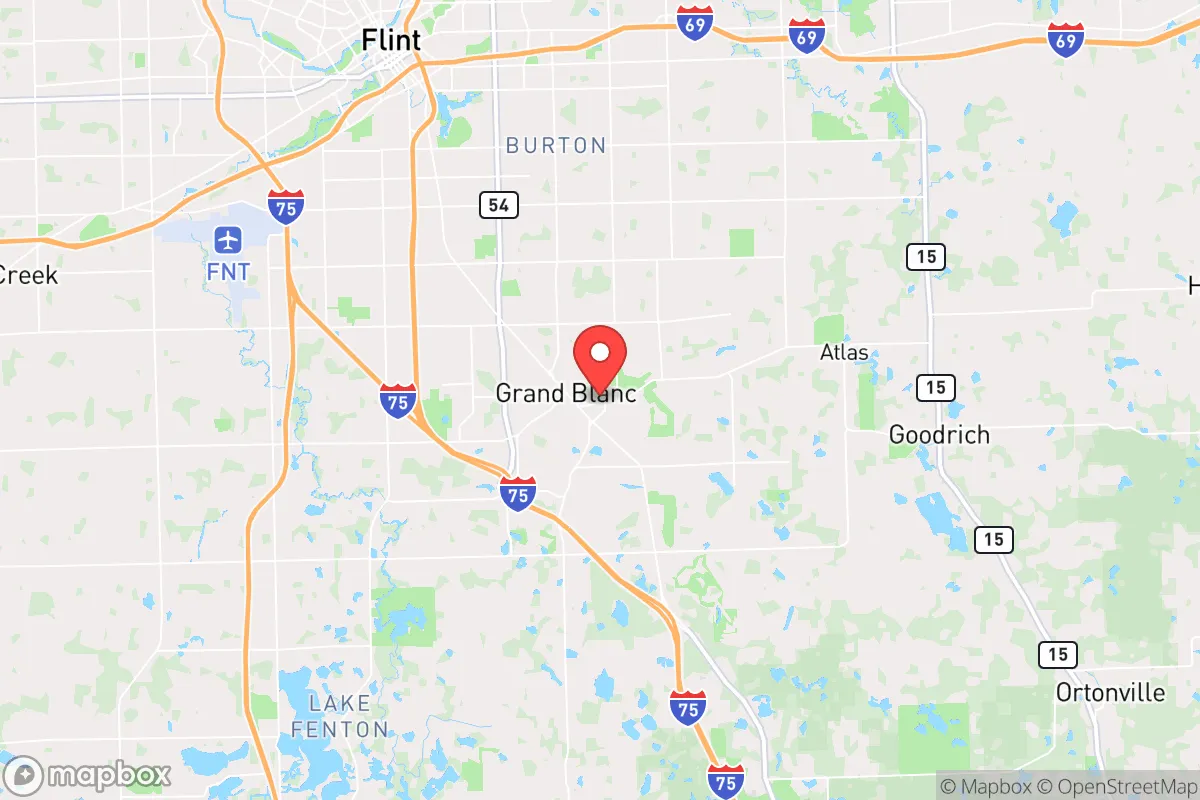
Grand Blanc, Michigan, is a small, predominantly white city of 7,995 residents where a strong sense of local identity is rooted in its historic downtown and well-established neighborhoods. With a college-educated rate of 43.0%, the population skews professional and family-oriented, and the city’s character is defined by its stable, owner-occupied housing stock and a noticeable absence of the rapid demographic churn seen in larger Genesee County communities. The city’s people are notably less diverse than the surrounding Flint area, with a Black population of 14.3% and a Hispanic population of 4.4%, reflecting a community that has grown through steady domestic in-migration rather than international arrivals.
How the city was settled and grew
Grand Blanc’s original settlers were Yankee farmers from New York and New England who arrived in the 1830s, drawn by the fertile, well-drained land of the “Grand Blanc” plains—a name French voyageurs had given the area for its white, sandy soil. These early families established farms along what is now Perry Road and Saginaw Street, and the village’s first commercial core formed around the intersection of Grand Blanc Road and Saginaw Street, an area still known as Historic Downtown Grand Blanc. By the late 19th century, the arrival of the Grand Trunk Railroad spurred a second wave of German and Irish immigrants, who settled in the East Side neighborhood near the rail depot, building modest frame homes and working in the local sawmills and gristmills. The city incorporated in 1930, and through the mid-20th century, its population remained small and overwhelmingly white, with growth driven by families moving out of Flint for more space. The West Side neighborhood, centered around Reid Road and Baldwin Road, developed during this period as a middle-class enclave of ranch homes and Cape Cods, built for auto workers and small business owners.
Modern era (post-1965)
After the 1965 Hart-Cellar Act, Grand Blanc saw little direct impact from new immigration—the city’s foreign-born population today is just 1.6%, and East/Southeast Asian residents make up only 0.7% of the population, with no measurable Indian-subcontinent community. Instead, the post-1965 story is one of domestic suburbanization. As Flint’s industrial base declined and racial tensions rose in the 1970s, white families moved east into Grand Blanc, fueling a population surge that peaked in the 1990s. This wave settled primarily in the Grand Blanc Estates subdivision (off Baldwin Road) and the Woodfield neighborhood (near Perry and Hill roads), areas characterized by larger lots and newer construction. The Black population, which grew from negligible to 14.3% by 2020, arrived primarily in the 1990s and 2000s, with many families moving from Flint and settling in the Southern Meadows area south of Grand Blanc Road, where housing was more affordable. The Hispanic population (4.4%) is a more recent presence, concentrated in the Oak Hill neighborhood near the city’s southern edge, drawn by service-sector jobs in nearby retail corridors.
The future
Grand Blanc’s population is projected to remain stable or grow modestly, as the city is nearly built out and annexation is limited. The demographic trend is toward slow diversification: the white share has declined from roughly 85% in 2000 to 75.4% today, while the Black and Hispanic shares have risen incrementally. New residents are overwhelmingly domestic movers—families from Genesee County and the outer Detroit suburbs seeking good schools (Grand Blanc Community Schools are a regional draw) and lower crime rates. The Grand Blanc Farms subdivision, a newer development off Reid Road, is absorbing most of this growth, attracting a mix of white and Black middle-class families. The city’s cultural identity is likely to remain that of a stable, family-oriented suburb, with diversity increasing slowly through domestic migration rather than international immigration. The foreign-born share is expected to stay below 3% for the foreseeable future.
For someone moving in now, Grand Blanc offers a predictable, safe, and well-regarded school district in a community that is gradually becoming more diverse but remains overwhelmingly white and native-born. The city’s future is one of slow, organic change—not a demographic revolution—making it a comfortable fit for families who value stability and a traditional suburban lifestyle.

* Values derived from national, state, county, city and local statistics and may differ in a specific area. Last updated: 2026-10-20T19:33:00.000Z
Narrative content on this page is AI-generated and may contain mistakes. Verify any details that matter before acting on them.
ReloMaps may earn a commission from affiliate links at no extra cost to you.

