Photo: Wikipedia
Personal Sovereignty in Grand Blanc, MI
Strong independent fundamentals that actively favor personal liberty and low regulation.
What does Personal Sovereignty tell us?
Personal Sovereignty measures your capacity for self-reliance and independence with minimal government friction. Higher scores mean fewer barriers between you and the way you want to live... but it assumes you have the space you need and good neighbors.
What does this tell us?
Personal Sovereignty measures your capacity for self-reliance and independence with minimal government friction. Higher scores mean fewer barriers between you and the way you want to live... but it assumes you have the space you need and good neighbors.
State Policy
Energy independence: Importer (20% of energy produced in-state)
Personal Liberty
Homesteading

Personal Liberty Analysis
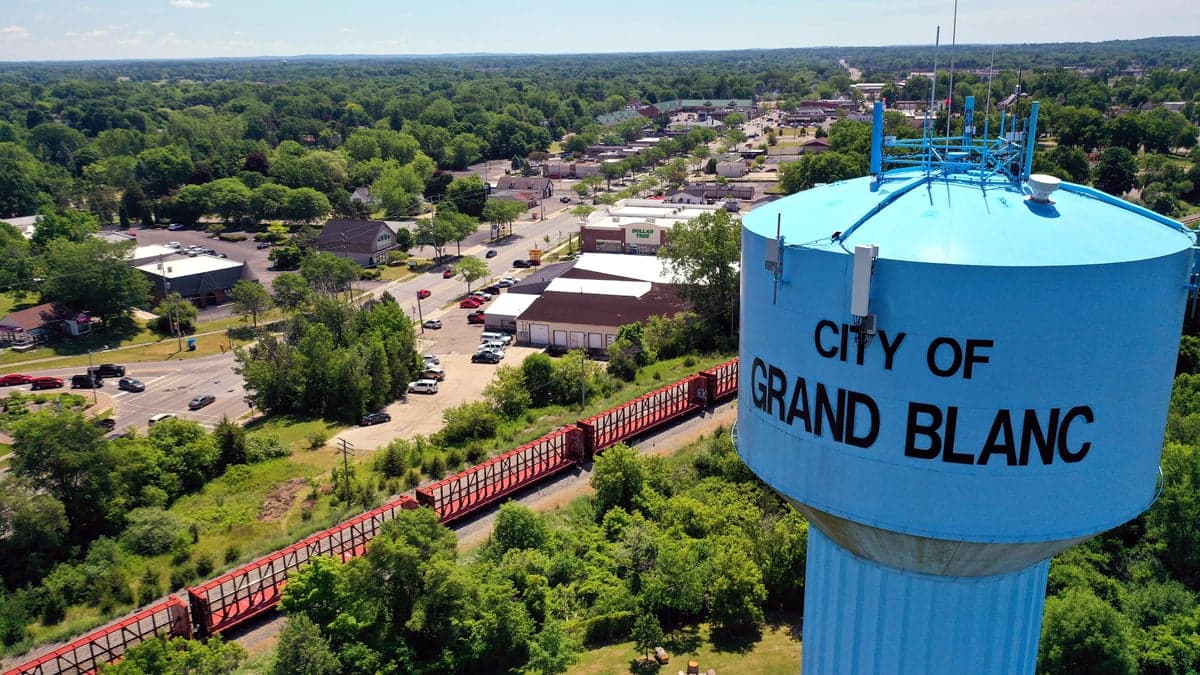
Grand Blanc, Michigan, offers a personal sovereignty environment that is best described as a mixed bag: the state-level framework imposes moderate tax and regulatory burdens, but local conditions in this Genesee County suburb provide meaningful room for self-reliance, particularly in housing and property use. For a conservative-leaning individual or family weighing autonomy, the key trade-off is between Michigan’s relatively high state income tax and its strong constitutional protections for gun rights, property rights, and parental authority. The city itself leans moderately conservative, and its zoning and lot-size patterns support a degree of homesteading and off-grid feasibility that is rare in suburban Michigan.
Tax burden and regulatory posture: what you pay and what you can do
Michigan’s tax burden ranks in the middle nationally, but the structure matters for sovereignty-minded residents. The state levies a flat 4.25% personal income tax on all earned income, with no local income tax in Grand Blanc itself (though nearby Flint imposes a 1% city income tax for residents who work there). Property taxes are a more significant factor: the state’s average effective rate is about 1.54% of assessed value, but Grand Blanc’s total millage rate, including school and county levies, typically runs between 50 and 55 mills on taxable value (roughly half of market value under Proposal A). That translates to an annual tax of about $2,500–$3,000 on a $200,000 home — noticeable but not punitive compared to high-tax states like Illinois or New York. Sales tax is a flat 6% on most goods, with no local add-ons. On the regulatory side, Michigan is a right-to-work state (though the 2023 repeal of the 2012 law means union security agreements are again permissible in private-sector workplaces; the law is currently tied up in court challenges). Occupational licensing is moderate: many trades require state certification, but home-based businesses face relatively light local oversight in Grand Blanc, with no special zoning permits needed for low-impact operations like consulting or online retail. The city’s zoning code is standard suburban — no heavy industry in residential zones, but accessory dwelling units and home offices are generally permitted by right.
Self-defense and gun law specifics: what Michigan allows and restricts
Michigan is a shall-issue state for concealed pistol licenses (CPL), meaning the county gun board must issue a permit if the applicant meets statutory requirements — no discretionary denial by local sheriffs. Genesee County processes CPL applications within the 45-day statutory window, and renewal is straightforward. The state does not require a permit to openly carry a handgun, and long guns (rifles and shotguns) require no license for purchase or carry. However, Michigan has a universal background check law for handgun purchases (effective 2024), and a red flag law (extreme risk protection order) that allows family members or law enforcement to petition a court to temporarily remove firearms from an individual deemed a danger. These are the most significant restrictions for sovereignty-minded gun owners. Grand Blanc itself has no additional local gun ordinances beyond state law — no magazine capacity limits, no assault weapon bans, and no storage requirements. The city’s police department is generally supportive of lawful carry, and there are no “gun-free zones” beyond the standard federal prohibitions (schools, federal buildings). For a family prioritizing self-defense, the practical takeaway is that you can carry concealed in Grand Blanc with a CPL, and the county sheriff’s office is conservative-leaning (Genesee County voted +5 for Trump in 2024, though the city of Flint is heavily Democratic). Stand-your-ground laws apply in Michigan: there is no duty to retreat in any place where the individual has a legal right to be, including public spaces.
Self-reliance and homesteading viability: lot sizes, zoning, and off-grid feasibility
Grand Blanc’s residential zoning is a key asset for self-reliance. The city’s standard single-family lot size is 0.25 to 0.5 acres in most subdivisions, but the township (which surrounds the city) allows lots as large as 2–5 acres in agricultural-residential zones. This means a family can buy a home on a half-acre lot within city limits and still have room for a substantial vegetable garden, a small orchard, or a chicken coop (up to 6 hens are permitted by city ordinance; roosters are prohibited due to noise). In the township, livestock including goats, sheep, and even a single horse are allowed on lots of 2+ acres with a simple zoning permit. Off-grid feasibility is limited within city limits because Grand Blanc requires connection to municipal water and sewer. However, in the township, wells and septic systems are standard, and there is no ordinance prohibiting solar panels or rainwater collection. The city’s building code follows the Michigan Residential Code, which is moderately prescriptive but does not ban alternative construction methods like straw bale or earth-sheltered homes — though permitting such structures requires engineering sign-off. For a family seeking to reduce reliance on the grid, the best strategy is to buy in Grand Blanc Township on a 2+ acre parcel, where you can install grid-tied solar with net metering (Michigan’s net metering law caps systems at 150 kW and credits excess generation at the retail rate) and drill a well. The area’s growing season (zone 6a, about 150 frost-free days) supports a wide range of vegetables and fruits, and the local soil is loamy and fertile.
Personal liberties: parental rights, medical autonomy, speech, and property
Michigan provides a relatively strong legal framework for parental rights. The state’s Parental Rights Restoration Act (MCL 722.601) affirms that parents have the fundamental right to direct the upbringing, education, and care of their children. In practice, this means Grand Blanc Community Schools (the local public district) cannot administer medical or mental health screenings without parental consent, and parents can opt their children out of any sex education curriculum. The district’s policy on library materials allows parents to request review of any book they deem inappropriate. On medical autonomy, Michigan is a mixed environment: the state does not have a religious or philosophical exemption to vaccine mandates for school entry (only medical exemption is recognized), which is a significant limitation for families seeking full medical freedom. However, there is no state-level mask or vaccine mandate currently in effect, and Grand Blanc’s local government has not imposed any health orders beyond state requirements. Speech and assembly rights are robust: Michigan has no hate speech law that criminalizes protected expression, and Grand Blanc has no local noise or signage ordinances that restrict political speech beyond standard time-place-manner rules. Property rights are well-protected under Michigan’s Private Property Rights Protection Act, which requires government to compensate landowners for any regulatory taking that reduces property value by more than 50%. The city’s zoning enforcement is complaint-driven and generally non-intrusive — no annual property inspections, no restrictions on political signs (within size limits), and no ban on home-based firearms manufacturing or reloading as long as it complies with federal law.
Overall, Grand Blanc offers a personal sovereignty profile that is stronger than most Michigan suburbs but weaker than rural northern Michigan or states like Texas or Florida. The tax burden is moderate, the gun laws are favorable with the caveat of the new red flag and universal background check laws, and the zoning in the township supports a meaningful degree of homesteading and self-reliance. For a family that values parental rights and property autonomy, the area is a solid choice within the Great Lakes region — particularly when compared to high-tax, high-regulation jurisdictions like Ann Arbor or Oakland County. The key is to choose your specific parcel carefully: inside city limits trades off some off-grid flexibility for better services and lower insurance rates, while township land offers more room to live independently. If you prioritize maximum sovereignty, look for a 2+ acre lot in Grand Blanc Township with a well and septic, and budget for the state income tax as the price of living in a state with strong infrastructure and schools.

* Values derived from national, state, county, city and local statistics and may differ in a specific area. Last updated: 2026-10-20T19:33:00.000Z
Narrative content on this page is AI-generated and may contain mistakes. Verify any details that matter before acting on them.
ReloMaps may earn a commission from affiliate links at no extra cost to you.

