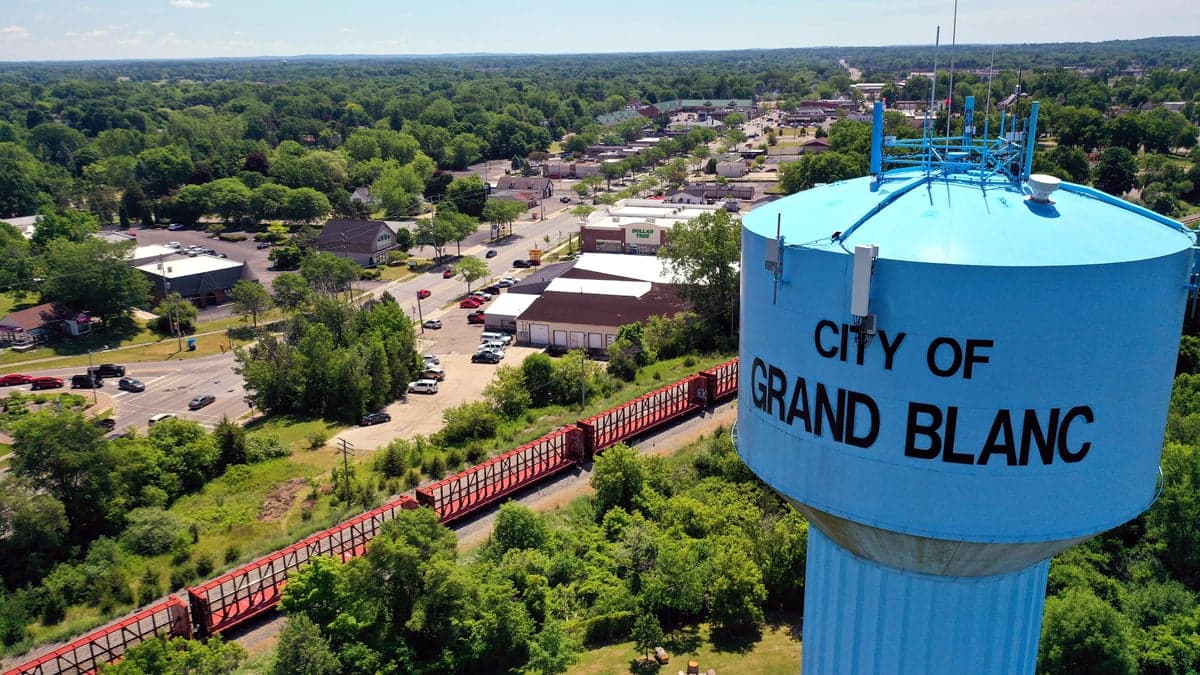
Photo: Wikipedia
Political ClimatePolitical Climate in Grand Blanc, MI
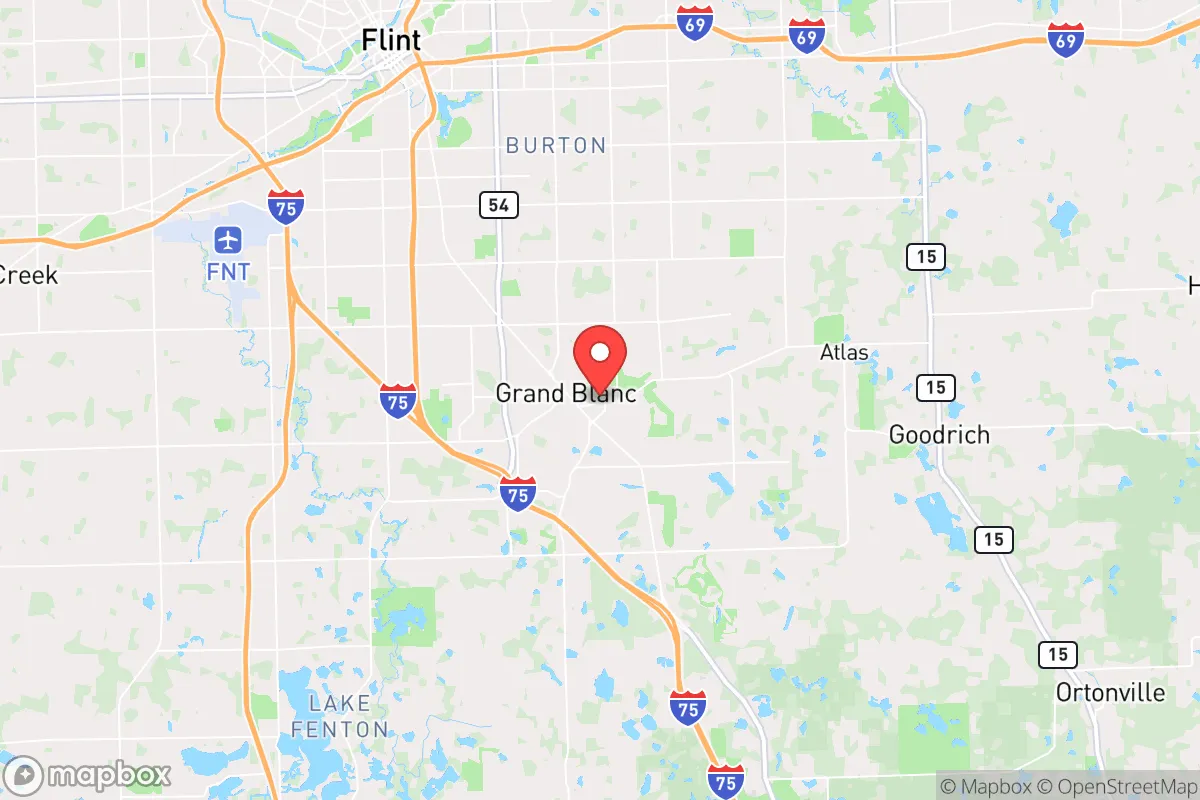
District shown is the primary district for this city’s centroid. Cities may span multiple districts.
Local Political AnalysisPolitical Analysis of Grand Blanc, MI
Grand Blanc is one of those places in Michigan that feels like it’s caught between two worlds politically. The city and its immediate township lean slightly Republican, with a Cook PVI of R+1, but that’s a much softer shade of red than the surrounding rural areas of Genesee County. If you look at the broader state of Michigan, which has a Cook PVI of EVEN, Grand Blanc is just a hair more conservative than the state as a whole. But the real story is how this lean has shifted over the past decade—it used to be a solidly Republican stronghold, but as the Detroit suburbs have diversified and younger families have moved in, the margin has tightened. In 2020, Biden actually carried Genesee County by about 3 points, but Grand Blanc Township still went for Trump by a narrow margin. It’s a bellwether area: if you want to know which way Michigan is leaning, watch how Grand Blanc votes.
How it compares
Compared to the rest of Michigan, Grand Blanc is a moderate Republican enclave surrounded by more polarized areas. Drive 10 miles north to Flint, and you’re in a heavily Democratic, working-class city that voted for Biden by a 2-to-1 margin. Head 15 miles south to Fenton or Holly, and you hit deeper red territory—those areas are more like R+5 or R+6, with strong Trump support. Grand Blanc sits right in the middle, politically and geographically. The city itself is more purple than the township, thanks to a mix of auto industry retirees, young professionals commuting to Detroit or Ann Arbor, and a growing number of out-of-state transplants. The state’s EVEN rating means Grand Blanc’s R+1 is essentially a mirror of Michigan’s overall split, but with a slightly more conservative tilt on local issues like taxes and school funding. In state elections, Grand Blanc often votes for Republican candidates for governor or Senate by a few points, but it’s not unusual to see a Democrat win here if they run as a moderate.
What this means for residents
For conservative residents, Grand Blanc is a comfortable place to live without feeling like you’re in a political bubble. You’ll find plenty of neighbors who share your views on lower taxes and Second Amendment rights, and the local Republican Party is active but not extreme. The city council and school board tend to lean center-right, but they’re pragmatic—they focus on keeping the schools well-funded and the roads paved, not on culture war issues. For liberal residents, it’s not hostile territory, but you’ll notice the difference in casual conversation. Most people keep politics polite, and you’ll find like-minded folks at the farmers market or the local coffee shop, especially if you’re near the downtown area. The practical effect of the R+1 lean is that property taxes are lower than in nearby Democratic strongholds like Ann Arbor, but you’ll also see less investment in public transit and social services. The biggest cultural distinction is that Grand Blanc feels more suburban and family-oriented than the surrounding rural areas—it’s a place where people care more about the school district’s test scores than national politics.
One thing that sets Grand Blanc apart is its history as a General Motors town. The old Buick City plant in Flint cast a long shadow, and even though it’s gone, the union mindset still influences local politics. You’ll meet plenty of lifelong Democrats here who vote for Republican candidates because they feel the party is better for business. That’s the kind of nuance that makes Grand Blanc interesting—it’s not a place where you can predict someone’s vote by their bumper sticker. Looking ahead, I think the area will stay R+1 for a while, maybe drift to EVEN as more people move in from the Detroit suburbs. The new housing developments near I-75 are bringing in younger families who don’t have the same party loyalty as the old-timers. If you’re thinking of moving here, just know that you’ll find a mix of opinions, but the community is tight enough that politics rarely gets in the way of a good conversation at the golf course or the high school football game.

State Political ClimatePolitical Climate in Michigan
State Political AnalysisPolitical Environment in the State
Michigan is a true battleground state, with a Cook PVI of EVEN that perfectly captures its split personality. Over the past 20 years, the state has swung from reliably blue (voting for Gore, Kerry, and Obama twice) to a Trump pickup in 2016 by 0.2 points, then back to Biden in 2020 by 2.8 points. The dominant coalition is a fragile alliance between the heavily unionized, diverse urban core of Detroit and the progressive college towns of Ann Arbor and Lansing, facing off against a deeply red, culturally conservative rural and exurban landscape. The trajectory is a slow, grinding realignment: the old blue wall of the Rust Belt is cracking, with working-class white voters in the Saginaw Valley and the Thumb shifting right, while the suburbs of Grand Rapids and Oakland County are drifting leftward, creating a state that feels like it’s holding its breath between elections.
Urban vs. rural divide
The political map of Michigan is a story of three distinct regions. Wayne County (Detroit) and Washtenaw County (Ann Arbor) are the Democratic engine, delivering massive margins that often decide statewide races. Detroit itself is overwhelmingly Democratic and Black, while Ann Arbor is a progressive stronghold driven by the University of Michigan. In contrast, the vast majority of the state’s 83 counties are deep red. The Grand Rapids metro area (Kent County) is the key battleground: once a conservative bastion, it has been trending blue for a decade, driven by a growing Hispanic population and younger professionals moving into the city. The rural Upper Peninsula and the Thumb region (around Port Huron and Bad Axe) are now solidly Republican, a shift from their historically union-Democratic roots. The suburbs of Oakland County—places like Troy, Royal Oak, and Ferndale—are the swingiest turf in the state, with educated professionals increasingly voting Democratic, while Macomb County (north of Detroit) remains a bellwether for working-class white voters who have drifted right since the 2008 auto bailout.
Policy environment
Michigan’s policy environment is a mixed bag that reflects its purple status. The state has a flat income tax rate of 4.25%, which was recently cut from 4.35% as part of a 2023 automatic trigger law. Property taxes are relatively high, with an average effective rate around 1.5%, but the Headlee Amendment and Proposal A cap annual increases on assessed value to the rate of inflation or 5%, whichever is lower, providing stability for long-term homeowners. Sales tax is 6%, with no local add-ons. On education, Michigan has a universal school choice system with charter schools and inter-district open enrollment, but the Detroit Public Schools Community District remains under state oversight after years of emergency management. Healthcare is dominated by the Big Three automakers’ legacy of generous union-negotiated plans, and the state expanded Medicaid under the Healthy Michigan Plan in 2014. Election laws are relatively moderate: no-excuse absentee voting was approved by voters in 2018, and same-day voter registration is available. However, the state has a Republican-controlled legislature that has passed voter ID requirements and restrictions on ballot drop boxes, though many were struck down or modified by courts.
Recent policy direction
The last five years have seen Michigan lurch in a progressive direction on several fronts, driven by Democratic Governor Gretchen Whitmer and a Democratic-controlled legislature elected in 2022. Gun laws were significantly tightened in 2023 with the passage of universal background checks, safe storage requirements, and a “red flag” law allowing courts to temporarily seize firearms from individuals deemed a threat. This was a major shift in a state with a strong hunting and gun culture. On parental and education rights, the state repealed its 1931 abortion ban and codified reproductive rights via a 2022 ballot initiative (Proposal 3), which also enshrined “reproductive freedom” in the state constitution. The same year, voters passed Proposal 2, which expanded early voting and added new voter ID requirements. Property rights saw a win for landowners with the 2020 repeal of the “prevailing wage” law for public construction projects, though it was reinstated by the legislature in 2023. On privacy and surveillance, Michigan has no statewide ban on facial recognition by police, but Detroit has faced lawsuits over its use. The state’s medical and bodily autonomy landscape is now one of the most protective in the Midwest, with the constitutional amendment shielding abortion access. Taxation saw a modest cut in 2023, but the overall burden remains moderate. Ballot access is relatively easy, with straight-ticket voting available and no-excuse absentee ballots, though the 2022 voter ID law requires a photo ID or signed affidavit.
Civil unrest & political movements
Michigan has been a flashpoint for political movements on both sides. The 2020 COVID lockdowns sparked massive armed protests at the state capitol in Lansing, with the “Operation Gridlock” rally drawing thousands of conservatives angry over Whitmer’s stay-at-home orders. This led to the foiled “Wolverine Watchmen” kidnapping plot against Whitmer, which remains a national symbol of political extremism. On the left, the 2020 George Floyd protests in Detroit, Grand Rapids, and Lansing were large and occasionally violent, leading to calls for police reform. Immigration politics are less heated than in border states, but Michigan has a patchwork of sanctuary policies: Detroit, Ann Arbor, and Kalamazoo have “welcoming city” ordinances limiting cooperation with ICE, while rural counties like Ottawa and Livingston have declared themselves “Second Amendment sanctuaries.” Election integrity remains a live issue: the 2020 election in Michigan was the subject of numerous lawsuits and audits, with Trump allies claiming fraud in Detroit, though multiple reviews found no evidence of widespread irregularities. The state’s Bureau of Elections has been under constant partisan scrutiny, and the 2022 passage of Proposal 2 was seen as a direct response to these controversies, adding nine days of early voting and requiring post-election audits.
Projection
Over the next 5-10 years, Michigan is likely to remain a toss-up state, but the demographic trends favor Democrats in the long run. The suburbanization of the Grand Rapids and Detroit exurbs is bringing younger, more diverse, and more educated voters into the electorate, while the rural population continues to age and shrink. The state’s growing Hispanic population, concentrated in southwest Michigan (Holland, Benton Harbor) and the Grand Rapids area, is leaning Democratic but not monolithic. However, the working-class white vote in Macomb County and the Saginaw Valley is not coming back to the Democratic fold; these voters are now reliably Republican. The wild card is the Upper Peninsula, which is losing population and becoming even more Republican, but its electoral weight is diminishing. A relocator moving in now should expect a state that will continue to have divided government—likely a Democratic governor with a Republican legislature, or vice versa—leading to gridlock on major issues. The policy direction will oscillate based on which party controls the legislature, but the 2022 constitutional amendments on abortion and voting rights are likely to be durable, as they are popular across party lines. The biggest unknown is the auto industry’s transition to electric vehicles, which could reshape the economy and political loyalties of the union-heavy workforce in Flint, Lansing, and Detroit.
For a new resident, the bottom line is that Michigan offers a genuine swing-state experience: your vote will matter, and the political climate will feel like a constant tug-of-war. Conservatives will find a strong rural and exurban network, low taxes relative to the Northeast, and a vibrant gun culture, but they will have to contend with a progressive governor and a state constitution that protects abortion rights and expands voting access. Liberals will find safe havens in Ann Arbor, Detroit, and Grand Rapids, with strong unions and a growing progressive infrastructure, but they will face a Republican legislature that can block major initiatives. The practical takeaway is to choose your community carefully—the political reality of living in Traverse City is very different from that of Detroit—and be prepared for a state that is always in play, always contested, and always interesting.
* Values derived from national, state, county, city and local statistics and may differ in a specific area. Last updated: 2026-10-20T19:33:00.000Z
Narrative content on this page is AI-generated and may contain mistakes. Verify any details that matter before acting on them.
ReloMaps may earn a commission from affiliate links at no extra cost to you.

