Photo: Wikipedia
Quality of Life in Grand Forks, ND
Above-average quality of iife. The area offers a reasonable cost of living, decent mobility, and a mix of neighborhood amenities.
What does Quality of Life tell us?
Quality of Life blends cost of living, nearby amenities, socioeconomic signals, and neighborhood character. City-level scores represent the whole municipality; individual neighborhoods can differ.
What does this tell us?
Quality of Life blends cost of living, nearby amenities, socioeconomic signals, and neighborhood character. City-level scores represent the whole municipality; individual neighborhoods can differ.
Cost of Living
16% below national average
The Real Cost of Living in Grand Forks, ND for 2026
| Tier | Individual | Family (4) |
|---|---|---|
| Survival | $15k | $29k |
| Comfortable | $47k | $69k |
| Luxury | $115k+ | $179k+ |
| Elite (Top 5%) | $144k+ | $223k+ |
92%
The Area Signal
A metric tracking the socioeconomic signals of the area.


Hobbies
Explore the areaGroceries
5 within 10 miles
Gas
0 within 10 miles
Hospital
3 within 20 miles
Airport
JFK — John F. Kennedy Memorial
Post Office
USPS — Grand Forks, ND
Critical Amenities
Quality-of-Life Analysis
Grand Forks, North Dakota, presents a notably affordable quality of life with a cost of living index of 84—16 points below the national average—making it an attractive destination for budget-conscious families, young professionals, and retirees seeking financial breathing room. The city’s population skews younger and more transient than the national median, driven by the presence of the University of North Dakota (UND), which infuses the community with a steady flow of students, academics, and healthcare workers tied to the region’s largest employer, Altru Health System. Median household incomes here hover around $55,000, slightly below the national figure, but the low cost of living effectively stretches every dollar further than in most U.S. metros.
How housing costs and affordability compare to Fargo and the region
Housing in Grand Forks is a standout bargain: the median home value sits at $243,300, roughly $50,000 less than the median in Fargo, the state’s largest city, and far below the national median of over $400,000. Renters also benefit, with a median monthly rent of $958—well under the national average of $1,400 and significantly cheaper than comparable units in Minneapolis-St. Paul, where rents often exceed $1,500. The average commute of 14.8 minutes is among the shortest in the Upper Midwest, cutting transportation costs and freeing up time for family or recreation. Property taxes in Grand Forks County are moderate, averaging about 1.1% of assessed value, which keeps monthly carrying costs low for homeowners. When compared to nearby cities like East Grand Forks, Minnesota, across the Red River, North Dakota’s lack of state income tax provides an additional financial edge for residents who work in Grand Forks but live on either side of the border.
What daily life is like for families: schools, amenities, and local rhythm
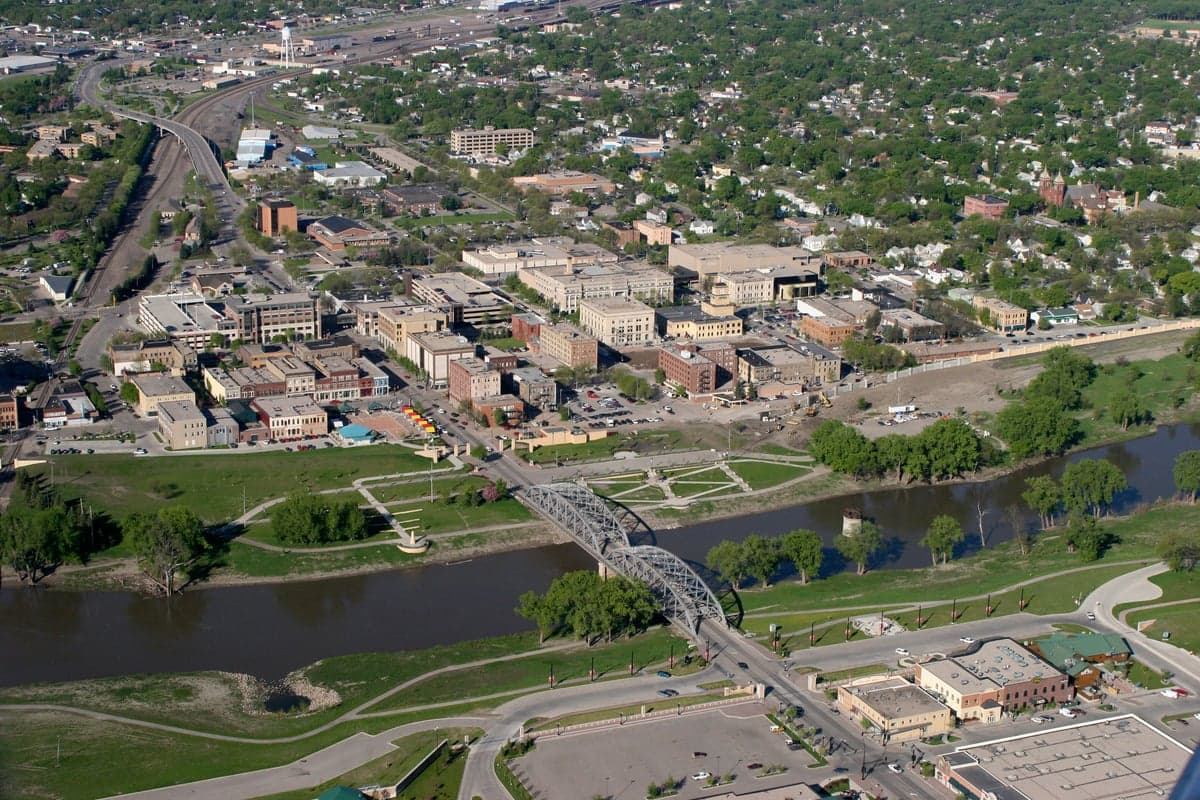
Daily life in Grand Forks revolves around a compact, walkable core anchored by the University of North Dakota and the downtown area along the Red River. The Grand Forks Public School district serves roughly 7,000 students and includes Red River High School and Central High School, both of which offer Advanced Placement and dual-credit courses through UND. For recreation, the city maintains over 30 parks, the 2,200-acre Turtle River State Park just 20 minutes west, and the Greater Grand Forks Greenway, a 20-mile paved trail system popular for biking and cross-country skiing. The Alerus Center hosts concerts and UND Fighting Hawks hockey games—a major cultural touchstone in a state where hockey is nearly a religion. Grocery and retail options are concentrated along South Washington Street and Columbia Road, with national chains like Target and Walmart supplemented by local staples such as Hugo’s Family Marketplace. The rhythm here is slower than in larger metros; restaurants and shops often close by 9 p.m., and the winter months (November through March) bring heavy snow and average highs around 20°F, which shapes a more indoor-focused social life centered on home, gyms, and community centers.
Grand Forks is best suited for people who value financial stability over urban excitement and don’t mind cold winters. Young families benefit from the low housing costs and short commutes, while UND students and faculty enjoy a tight-knit academic community. Retirees on fixed incomes will find the affordability especially appealing, though those seeking abundant cultural amenities or warm-weather outdoor activities may feel limited. The city’s economy, anchored by healthcare, education, and agriculture, offers steady but modest job growth, making it a solid choice for those prioritizing a low-stress, cost-effective lifestyle in the northern Plains.

Crime in Grand Forks, ND
Generally safer than 72% of comparable U.S. locations.
Violent CrimeViolent Crime Analysis
Property CrimeProperty Crime Analysis
Crime Analysis
Grand Forks, North Dakota, presents a mixed safety profile for potential residents. While the city’s violent crime rate of 239.9 incidents per 100,000 people is notably lower than the national average, its property crime rate of 1,741 per 100,000 is significantly higher, placing it above many peer communities in the Upper Midwest. This combination means that while the risk of violent confrontation is relatively low, residents face a tangible threat to their personal property and sense of security.
Crime in context
To understand Grand Forks’ safety, it is essential to compare its numbers to broader benchmarks. The city’s violent crime rate of 239.9 per 100,000 is roughly 35% lower than the national average of approximately 370 per 100,000, and it aligns closely with the statewide North Dakota average. However, the property crime rate of 1,741 per 100,000 is nearly 50% higher than the national average of roughly 1,200 per 100,000. This disparity is driven primarily by thefts and vehicle break-ins, which are concentrated in commercial districts and near the University of North Dakota campus. It is also worth noting that Grand Forks is not a large metropolitan area; it is a mid-sized city in a rural state. As such, it does not face the systemic challenges associated with large metro areas that have liberal and progressive judges and district attorneys, where policies prioritizing offender rehabilitation over public safety can lead to more criminals on the street. Grand Forks’ justice system generally maintains a more traditional, victim-centered approach.
What residents experience
For daily life, the practical impact of these statistics is that Grand Forks feels safe in most residential neighborhoods, but property crime is a persistent annoyance. Residents commonly report thefts from unlocked vehicles, package thefts from porches, and occasional bicycle thefts. Violent crime, such as assault or robbery, is rare and typically occurs between individuals who know each other, rather than random attacks on strangers. The city’s police department maintains a visible presence and has a strong community policing program, which helps foster trust. However, the high property crime rate means that basic precautions—like locking doors, securing garages, and using outdoor lighting—are not optional; they are a necessary part of daily life.
Neighborhood-level variation
Safety is not uniform across Grand Forks. The downtown core and areas immediately surrounding the university experience the highest rates of property crime, particularly theft from vehicles and vandalism. In contrast, the newer subdivisions on the city’s south side and the established neighborhoods near the Grand Forks Air Force Base tend to have significantly lower crime rates. The city’s overall crime map shows a clear gradient: crime density decreases as you move away from the central commercial corridors. For families and retirees, the south side neighborhoods offer a notably safer environment, while students and renters near campus should budget for renters insurance and remain vigilant about securing their belongings.
* Values derived from national, state, county, city and local statistics and may differ in a specific area. Last updated: 2026-04-19T05:25:15.000Z
Narrative content on this page is AI-generated and may contain mistakes. Verify any details that matter before acting on them.
ReloMaps may earn a commission from affiliate links at no extra cost to you.

