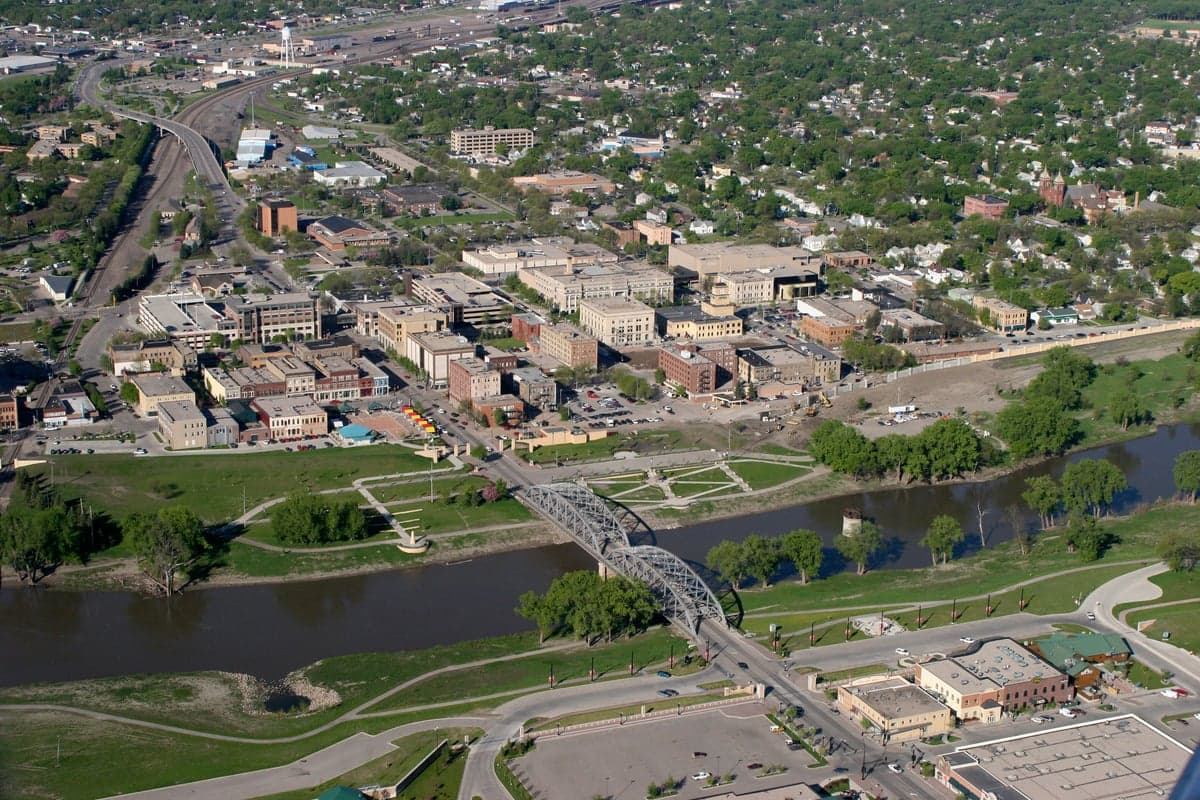
Photo: Wikipedia
Political ClimatePolitical Climate in Grand Forks, ND
District shown is the primary district for this city’s centroid. Cities may span multiple districts.
Inherited from parent state — no local data available.
Local Political AnalysisPolitical Analysis of Grand Forks, ND
Grand Forks has long been a solid conservative stronghold, and honestly, it still is at its core, but you can feel the winds shifting in ways that make a lot of us long-time residents uneasy. The area carries a Cook PVI of R+18, which means it votes about 18 points more Republican than the national average, and that’s not just a number—it’s a reflection of the values most folks here hold dear: personal responsibility, limited government, and the freedom to live your life without a bureaucrat breathing down your neck. But over the last five to ten years, there’s been a creeping push from certain corners—mostly tied to the university and some newer transplants—to nudge things toward a more progressive agenda, and it’s something we’re keeping a close eye on.
How it compares
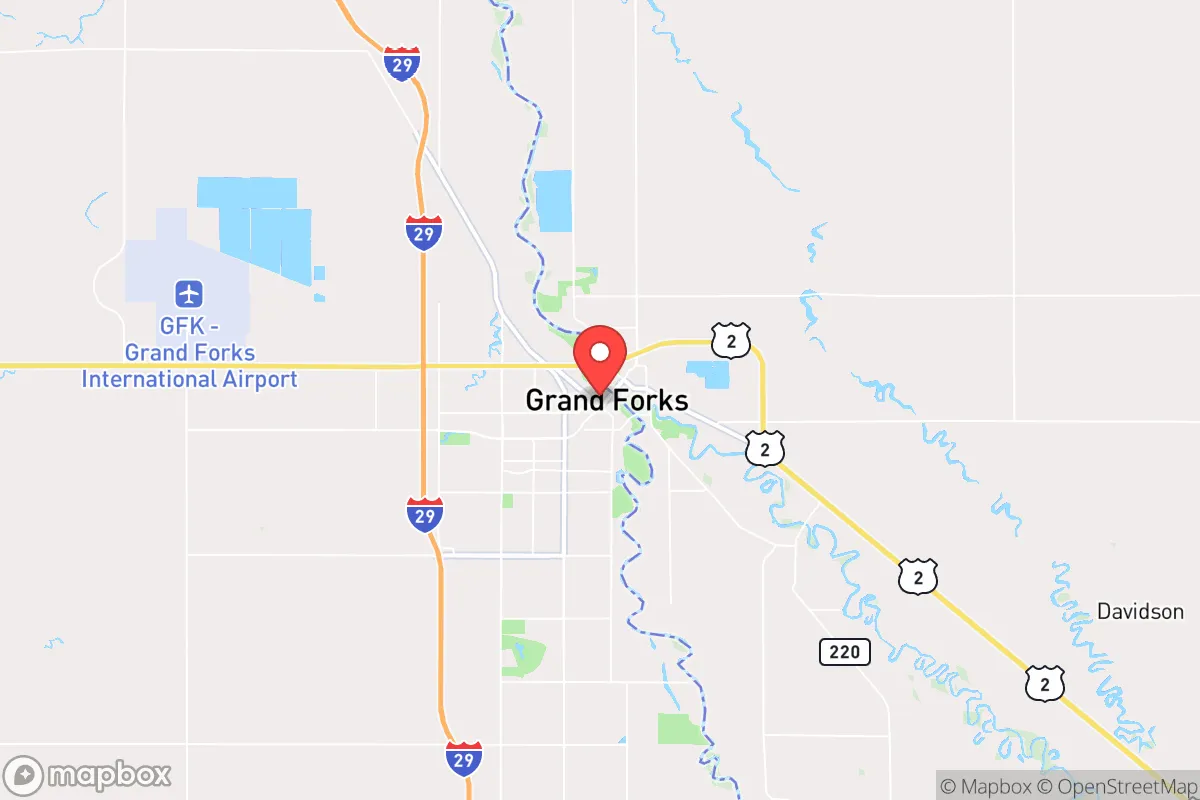
If you look at the map, Grand Forks is a bit of an island compared to the surrounding areas. Head just a few miles south to East Grand Forks, Minnesota, and you’re in a state that’s been trending blue for years, with policies that feel like they’re written by people who’ve never run a small business or paid a property tax bill. Drive west toward Larimore or north to the Canadian border, and you’re back in deep-red territory where folks still wave the Gadsden flag and mean it. The contrast is stark: in Grand Forks proper, you’ll see the occasional “In This House We Believe” yard sign near the university, but out in the county, it’s all about the Second Amendment and lower taxes. That tension is real, and it’s growing. The city council has seen some close votes on issues like mask mandates and diversity initiatives that would have been laughed out of the room twenty years ago, and that’s a red flag for anyone who values local control over their own lives.
What this means for residents
For the average person living here, the political climate directly affects your wallet and your freedoms. Property taxes have crept up as the city pushes for more “community programs” and DEI training for city employees—stuff that sounds nice on paper but means less money in your pocket and more government telling you how to think. The school board has also become a battleground, with some members pushing for curriculum changes that prioritize social justice over reading, writing, and arithmetic. If you’re a parent who wants your kid to learn how to think, not what to think, that’s a real concern. On the flip side, the state legislature in Bismarck has been a bulwark against the worst of it, passing laws to protect gun rights and push back on federal overreach, so Grand Forks isn’t turning into Portland overnight. But you have to stay engaged—if you don’t show up to those city council meetings and school board hearings, the progressive activists will fill the void.
One thing that sets Grand Forks apart from, say, Fargo or Bismarck is the cultural split between the university crowd and the rest of the community. UND brings in a lot of out-of-state students and faculty who don’t always share the local values, and that’s created a sort of two-tiered political landscape. You’ll see the city government lean a little more moderate, while the county remains rock-ribbed conservative. For now, the conservative majority holds, but the trajectory is concerning. If you’re thinking of moving here, just know that the fight over personal freedoms is alive and well—and it’s one worth having.

State Political ClimatePolitical Climate in North Dakota
State Political AnalysisPolitical Environment in the State
North Dakota has long been one of the most reliably Republican states in the nation, but don’t let the simple red-state label fool you — the political landscape here is more layered than a lot of folks realize. The state hasn’t voted for a Democrat for president since Lyndon Johnson in 1964, and every statewide elected office is held by a Republican. But the real story is the 10-20 year arc: a quiet but steady shift rightward, driven by an influx of conservative-leaning workers into the oil patch and a rural exodus that’s hollowed out the few remaining Democratic strongholds. The dominant coalition is a mix of old-school agrarian conservatives, energy-sector libertarians, and a growing number of families fleeing blue states for lower taxes and more freedom. That said, the state’s small size means a few thousand votes in the right places can still shake things up — and the political culture is far more pragmatic and neighborly than the national GOP brand.
Urban vs. rural divide
The political map of North Dakota is a study in contrasts between a handful of small cities and vast, deeply conservative rural expanses. Fargo and Grand Forks are the state’s most competitive areas — Cass County (Fargo) has trended rightward but still has a visible Democratic presence, thanks to university faculty, healthcare workers, and a growing Somali and refugee population. In 2020, Cass County went for Trump by about 10 points, down from 18 in 2016, signaling some suburban drift. Grand Forks, home to the University of North Dakota, is similar but slightly more conservative. Bismarck and Mandan are reliably red, with Burleigh County routinely voting 65-70% Republican. The real action is in the western oil counties — Williston, Watford City, and Dickinson — which have become some of the most conservative areas in the nation, often voting 80%+ Republican. These are boomtowns where the energy industry draws workers from Texas, Oklahoma, and other red states, reinforcing the conservative tilt. The rural counties in between — places like Hettinger or Cavalier — are deeply red but also depopulating, meaning their electoral weight is shrinking. The only reliably blue pocket is the Turtle Mountain and Fort Berthold reservations, where Native American voters lean heavily Democratic, but their numbers are small and turnout is inconsistent.
Policy environment
North Dakota’s policy environment is a conservative’s dream on paper, but with some practical wrinkles. There is no state income tax — a huge draw for high-earners and business owners. Property taxes are moderate but have been a perennial complaint, leading to repeated legislative efforts to cap them (most recently HB 1172 in 2023, which limited annual increases to 3% for owner-occupied homes). The regulatory posture is light-touch, especially for energy and agriculture — the state has its own EPA-approved primacy for oil and gas permitting, and the Industrial Commission is famously pro-development. Education policy is solid: school choice is limited (no vouchers or charter schools outside of a few pilot programs), but homeschooling is lightly regulated and widely practiced. Healthcare is a mixed bag — the state expanded Medicaid under the Affordable Care Act in 2013, a decision that still rankles some conservatives, but the system is efficient and rural hospitals have stayed open. Election laws are among the most secure in the nation: voter ID is required, same-day registration is not allowed, and absentee voting requires an excuse. There is no early voting in the traditional sense, though mail ballots are available for those who request them. The state legislature meets only every two years, which keeps the pace of new laws slow and deliberate — a feature, not a bug, for those wary of government overreach.
Trajectory & freedom
On the freedom front, North Dakota is moving in a mostly positive direction, but there have been some concerning bumps. The biggest win for personal liberty in recent years was the 2023 repeal of the state’s concealed carry permit requirement — now any law-abiding adult can carry a firearm without a license, a major step for Second Amendment rights. The same year, the legislature passed SB 2151, which prohibits any government entity from enforcing federal gun laws that don’t exist in state statute — a clear nullification-style move. Parental rights got a boost with HB 1205 (2023), which requires school districts to notify parents of any curriculum changes involving sexuality or gender identity and allows them to opt their kids out. On the downside, the state has been slow to roll back occupational licensing — you still need a license for everything from barbering to interior design, though SB 2016 (2021) did create a universal recognition law for out-of-state licenses. Medical freedom took a hit with the 2021 COVID-19 vaccine mandate for healthcare workers (later repealed in 2023), and the state’s response to the pandemic was mixed — Governor Doug Burgum declared a state of emergency early and kept it in place for over a year, which frustrated many. Property rights are strong, with no statewide zoning and a robust right-to-farm law that protects agricultural operations from nuisance lawsuits. Overall, the trajectory is toward more freedom, but the state’s small-government instincts are sometimes tempered by a pragmatic, “we know what’s best” attitude from the capitol.
Civil unrest & political movements
North Dakota is not a hotbed of civil unrest, but it has had its flashpoints. The most famous is the Dakota Access Pipeline protests at the Standing Rock Reservation (2016-2017), which drew thousands of activists from across the country and resulted in hundreds of arrests. That event left a lasting scar — many rural residents felt the state caved to outside agitators, while Native communities felt their sovereignty was trampled. Since then, the state has seen a rise in constitutional sheriff movements, with several counties passing resolutions affirming their sheriffs as the highest law enforcement authority. There is also a small but vocal “North Dakota Independence” movement, though it’s more of a symbolic protest against federal overreach than a serious secession effort. Immigration politics are relatively quiet — the state has a small but growing refugee population in Fargo, which has caused some tension but nothing like the battles in larger states. Election integrity has been a hot topic since 2020, with the legislature passing SB 2300 (2021) to ban ballot drop boxes and tighten absentee ballot rules. There have been no major election fraud scandals, but the issue remains a rallying point for grassroots conservatives. The most visible political flashpoint for a new resident would likely be the annual legislative session in Bismarck, where debates over property taxes, school funding, and energy policy draw passionate crowds.
Projection
Looking ahead 5-10 years, North Dakota is likely to become more conservative, not less, but with some important caveats. The demographic trends are clear: the rural counties are shrinking, the oil patch is stabilizing, and Fargo is growing — but Fargo’s growth is coming from conservative-leaning migrants from Minnesota and other states, not from coastal liberals. The state’s population is aging, and younger residents often leave for college and don’t return, which could eventually moderate the politics if those who stay are more progressive. But for now, the in-migration is overwhelmingly from red states and red-leaning areas of the Midwest. The energy transition is the wild card — if the Biden administration’s policies succeed in reducing oil and gas production, the western counties could see a downturn, which might shift some voters toward populist or even third-party options. The state’s political leadership is stable — Senator John Hoeven and Senator Kevin Cramer are both solid conservatives, and the governorship is likely to remain Republican after Burgum’s departure. The biggest risk to freedom in the next decade is not a Democratic takeover, but rather a complacent GOP majority that gets too cozy with special interests — the property tax debate is a perfect example, where the legislature has talked about reform for years without delivering. A new resident moving in now should expect a state that is politically safe, culturally traditional, and increasingly aligned with the national conservative movement, but with a distinct local flavor that prizes independence and neighborly pragmatism over ideological purity.
Bottom line for someone considering a move: North Dakota offers a political environment that is deeply conservative, stable, and respectful of personal freedom, especially on guns, taxes, and property rights. You won’t find the culture wars of a purple state — the fights here are over property tax caps and school funding, not drag shows or critical race theory. The trade-off is that the state is small, remote, and winters are brutal. If you value low taxes, minimal government, and a community where your neighbors will help you dig out of a snow drift, this is one of the best places in the country. Just don’t expect much political drama — the biggest controversy in Bismarck this year was whether to allow Sunday liquor sales.
* Values derived from national, state, county, city and local statistics and may differ in a specific area. Last updated: 2026-04-19T05:25:15.000Z
Narrative content on this page is AI-generated and may contain mistakes. Verify any details that matter before acting on them.
ReloMaps may earn a commission from affiliate links at no extra cost to you.

