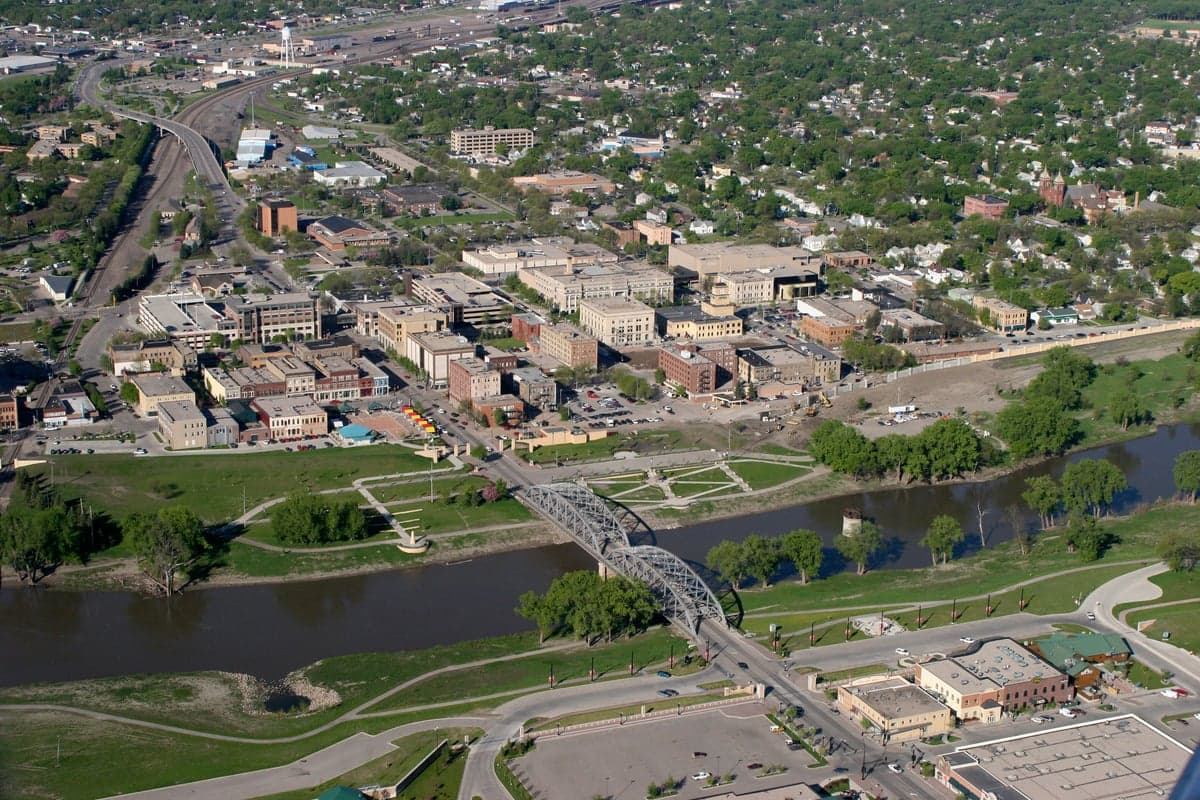
Photo: Wikipedia
Strategic Assessment of Grand Forks, ND
Workable tactical position. Some exposure to population density or targets, but generally defensible in a crisis.
What does the Strategic Assessment tell us?
Our Strategic Assessment grades tactical survivability of an area. Major population centers, military targets, fallout zones, natural disasters, and border exposure all drive risk — lower exposure means a more defensible position in a crisis.
This is heavily inspired by Joel Skousen's Strategic Relocation book. Highly recommended you checkout the book ($)What does this tell us?
Our Strategic Assessment grades tactical survivability of an area. Major population centers, military targets, fallout zones, natural disasters, and border exposure all drive risk — lower exposure means a more defensible position in a crisis.
This is heavily inspired by Joel Skousen's Strategic Relocation book. Highly recommended you checkout the book ($)Strategic Pillars

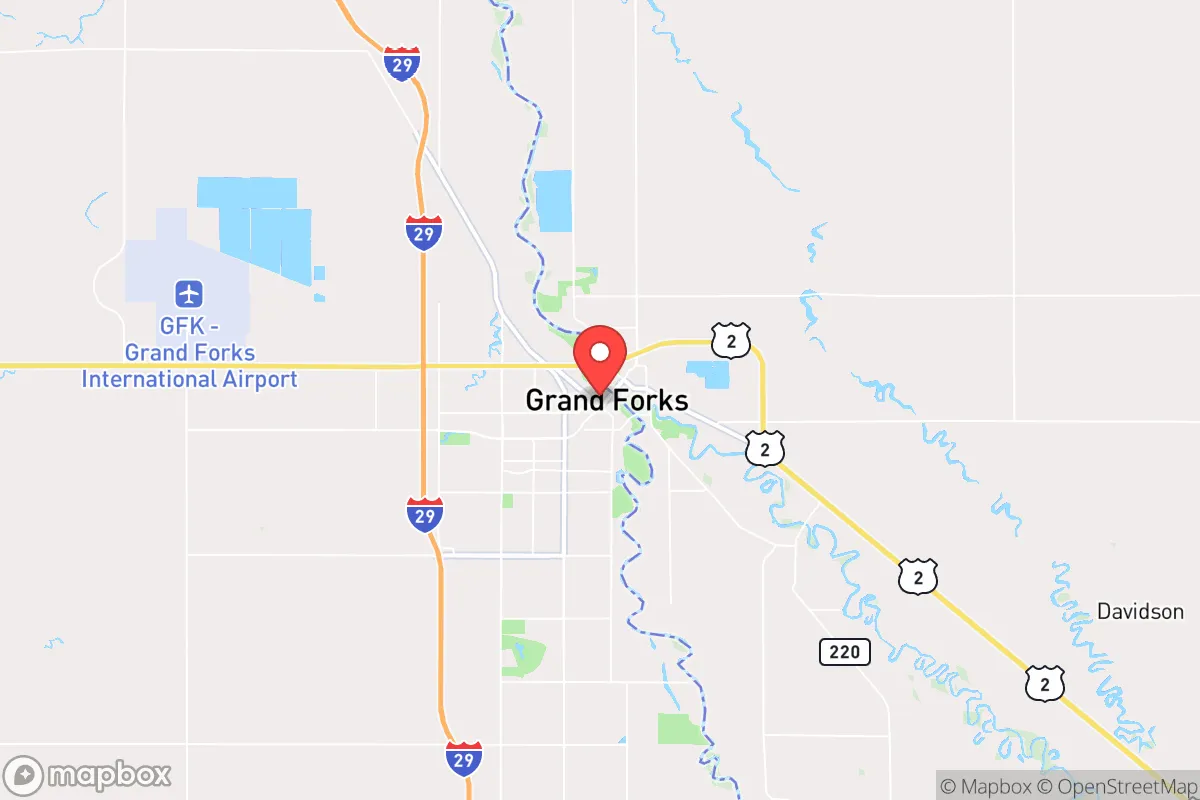
Key Distances
Regional Safe Places
Below is our recommended "safe zones" in North Dakota and the surrounding area based on our strategic heuristics. For most people, it's unrealistic to live in a “safe zone” full-time due to work, family or other personal reasons. They tend to be more rural. However, many of these areas are perfect for second homes and retreat properties that double as a vacation home or even a short-term rental.
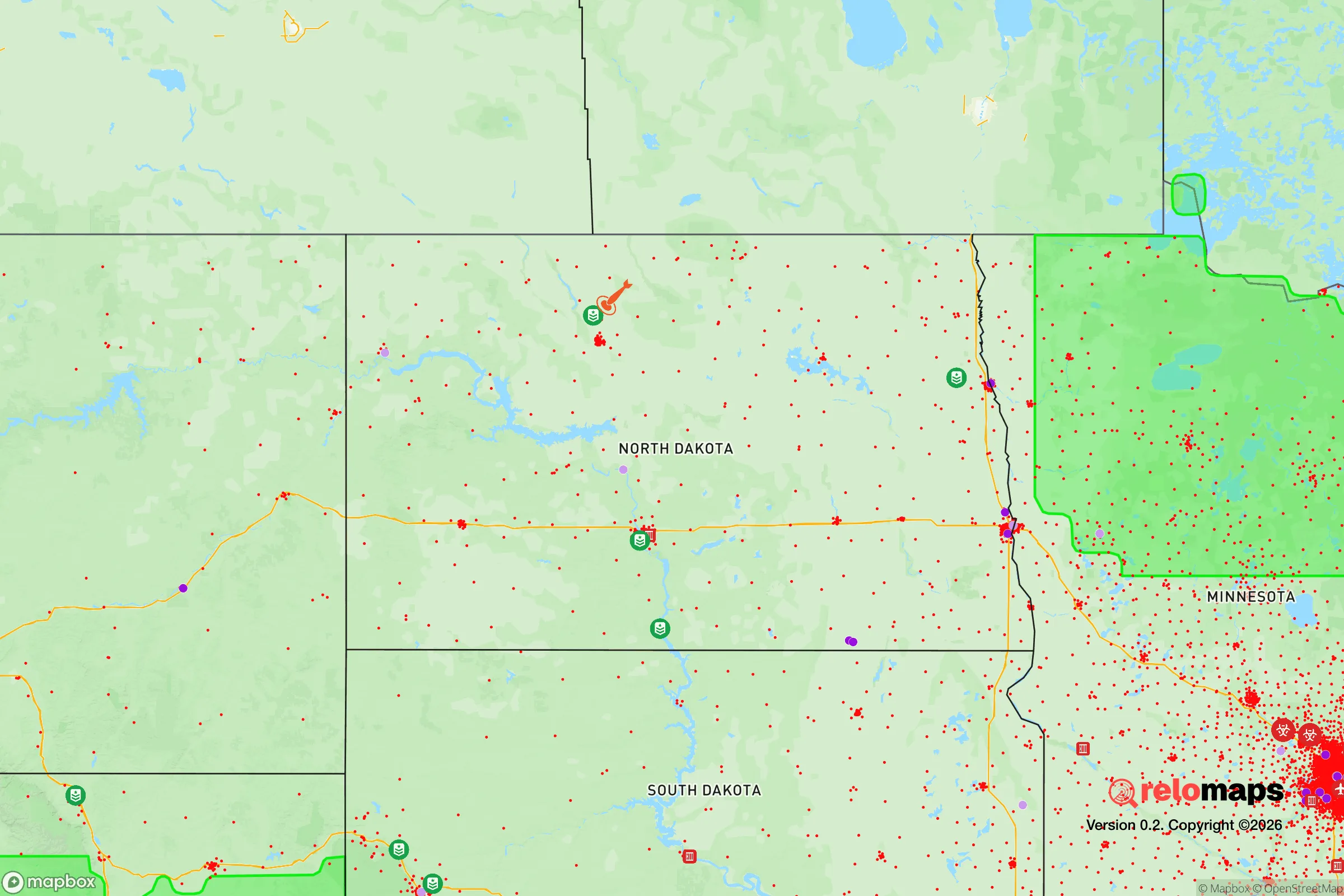
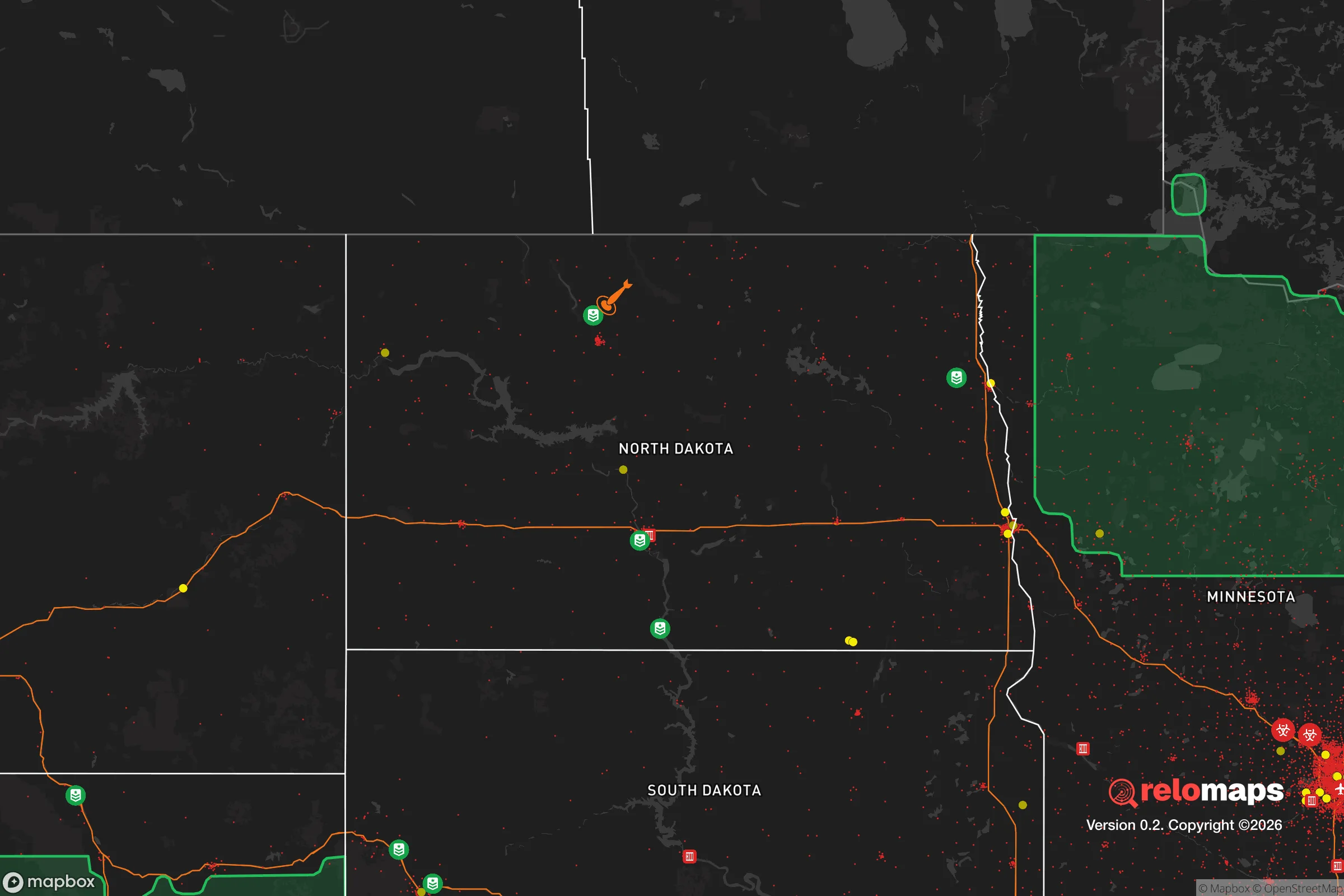


Important Note: For informational purposes only. This does not mean nothing bad ever happens in the green zones. Please use common sense. This is based on public data and modeled with AI. We tried to take a conservative approach but mistakes happen. We update this regularly as new information becomes available.
Solar Generator Recommendations
Backup power matters more here than in safer locations. We've picked three solar generators across budgets and capacity tiers — start with the budget unit if you only need a few essentials, or step up if you want to run a fridge and HVAC for days at a time.

Jackery Portable Power Station Explorer 300
Budget OptionPower on the Go: Weighing only 11 lbs, it's convenient to set up and store with book-sized foldable solar panels

BLUETTI Portable Power Station AC180
Designed for both indoor and outdoor scenarios, AC180 is highly capable as it has a robost capacity and continuous output power.

EF ECOFLOW DELTA Pro Ultra Power Station
Upgraded PickEcoFlow DELTA Pro Ultra is a whole-home energy system designed to grow with your family. Integrated with the Smart Home Panel 2, it scales to meet your evolving energy needs — keeping your home powered, intelligent, and secure through every stage of life.
We earn a commission, at no additional cost to you.
Strategic Assessment Analysis
Grand Forks, North Dakota, sits as a quiet outlier in the upper Midwest—a place where the typical vulnerabilities of modern America feel distant, not because of isolation alone, but because of deliberate geographic and infrastructural positioning. For a relocator thinking in terms of long-term resilience, this city offers a rare combination: a stable, low-crime population base, a diversified local economy anchored by the University of North Dakota and the Grand Forks Air Force Base, and a location that puts it outside the blast radius of any major strategic target while still being connected to the rest of the country via Interstate 29 and the Red River Valley’s agricultural backbone. The area’s resilience isn’t just theoretical—it’s been tested by the 1997 Red River flood, which the community rebuilt from with a stronger levee system and a more self-reliant mindset. For someone who sees the current national trajectory as unstable, Grand Forks represents a place where you can actually prepare without being surrounded by people who think you’re paranoid.
Geographic position and natural advantages for long-term stability
Grand Forks sits in the Red River Valley, a flat, fertile plain that’s one of the most productive agricultural regions in the world. That’s not just a nice fact—it means local food production is a given, not a luxury. Within a 50-mile radius, you’ve got wheat, soybeans, sugar beets, and potatoes, plus cattle operations. The city itself is at the confluence of the Red Lake River and the Red River of the North, which provides a reliable surface water source. The aquifer underneath the valley is shallow and accessible, so well water is a realistic option for those who want to drill. The climate is harsh—winters average 15°F with wind chills dropping below -30°F—but that harshness is a feature, not a bug. It naturally filters out people who aren’t serious about staying. The population density is low: Grand Forks County has about 70,000 people, with the city itself around 55,000. That means less competition for resources in a crisis, fewer people to panic, and more room to maneuver. The nearest major city is Fargo, 75 miles south, which is small enough to not be a primary target but large enough to be a concern if things go sideways. The Canadian border is 90 miles north, which could be an asset or a liability depending on the scenario, but it’s not a high-traffic crossing point like Detroit or Buffalo.
Risks, exposures, and proximity to fallout-relevant landmarks
The biggest strategic risk for Grand Forks is its proximity to Grand Forks Air Force Base, which is home to the 319th Reconnaissance Wing and operates RQ-4 Global Hawk drones. That’s a military installation, and in a major conflict—especially one involving peer adversaries like China or Russia—it could be a target. However, it’s not a nuclear missile silo or a bomber base with strategic nukes. The base’s primary mission is surveillance, not first-strike capability, which lowers its priority for a first-wave attack. The nearest intercontinental ballistic missile fields are in western North Dakota and Montana, about 200 miles away, so you’re not in the immediate fallout zone of a silo strike. The city itself has no major industrial chemical plants, no nuclear power plants (the nearest is Prairie Island in Minnesota, 250 miles away), and no major ports or rail hubs that would attract sabotage. The Red River floods periodically—major ones in 1997, 2009, and 2011—but the levee system built after 1997 is rated for a 100-year flood and has held. The real risk is a prolonged power outage in winter, which could be deadly if you’re not prepared. But that’s a manageable risk with proper planning: backup heat, stored fuel, and a generator. For a relocator, the key takeaway is that Grand Forks is far enough from the coasts and major population centers (Minneapolis is 330 miles away) that a cascading collapse would take days to reach you, giving you time to react.
Practical resilience for a relocator: food, water, energy, and defensibility
Food security in Grand Forks is excellent by modern American standards. The Red River Valley is the breadbasket of the region, and local farmers’ markets, co-ops, and bulk food stores like Cash Wise and Hugo’s are common. You can buy 50-pound bags of wheat berries and oats year-round. The growing season is short—about 120 days—but with a greenhouse and cold frames, you can extend it significantly. Water is abundant: the Red River is not pristine (agricultural runoff is a concern), but it’s treatable with basic filtration and boiling. The shallow aquifer means private wells are feasible, and the city’s municipal water comes from the Red River, treated at the Grand Forks Water Treatment Plant, which has backup generators. Energy is where things get interesting. The region is part of the Midcontinent Independent System Operator (MISO) grid, which is relatively stable compared to the coasts. Coal and natural gas are the primary sources, with some wind. The Grand Forks Air Force Base has its own backup power, and the city’s hospital (Altru Health System) has generators. For a prepper, solar is viable but limited in winter—you’d need a battery bank and a backup generator. Defensibility is a mixed bag. The city is flat and open, which makes it hard to defend against a determined group, but the low population density means you can choose a rural property outside town with good sightlines. The surrounding farmland is mostly private, with few choke points, but the interstate and highways provide escape routes if needed. The local gun culture is strong—North Dakota is a constitutional carry state, and Grand Forks has several gun shops and ranges. The sheriff’s office and local police are professional and well-funded, but in a collapse scenario, you’d be relying on yourself and your neighbors.
The overall strategic picture for Grand Forks is one of quiet competence. It’s not a flashy survivalist destination like Montana or Idaho, but it offers something those places often lack: a functioning local economy, a university that provides skilled labor and medical services, and a community that has already proven it can rebuild after a disaster. The downsides are real—the cold, the flat terrain, the proximity to a military base—but they’re calculable and mitigable. For a conservative-leaning relocator who wants to be prepared for civic unrest, mass casualty events, or a slow-motion national decline, Grand Forks is a solid B+ option. It won’t make you feel like you’re in a fortress, but it will give you the time, space, and resources to build one if you need to. The key is to move before the rest of the country figures out that the upper Midwest is one of the last places where you can still buy a house for under $250,000, grow your own food, and not have to worry about your neighbors looting your supplies on day three of a blackout.

* Values derived from national, state, county, city and local statistics and may differ in a specific area. Last updated: 2026-04-19T05:25:15.000Z
Narrative content on this page is AI-generated and may contain mistakes. Verify any details that matter before acting on them.
ReloMaps may earn a commission from affiliate links at no extra cost to you.

