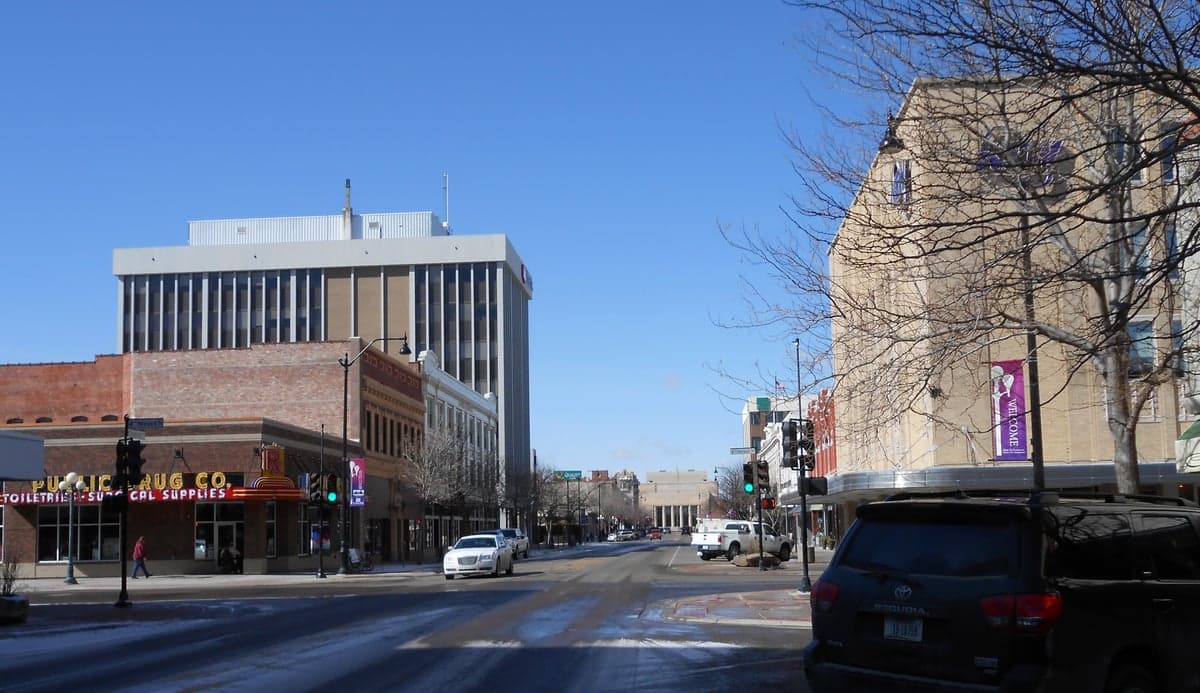
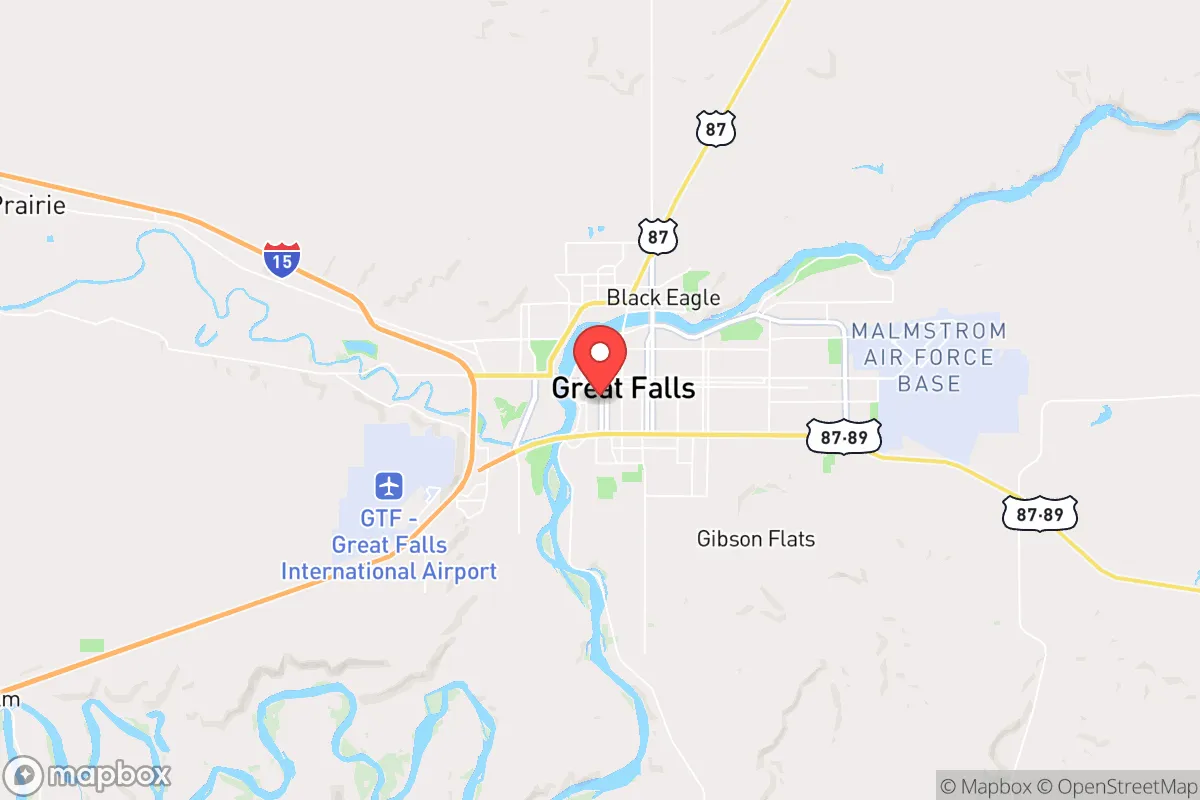
Photo: Wikipedia
Quality of Life in Great Falls, MT
A high quality of life with strong walkability, manageable living costs, healthy neighborhood signals, and solid amenity access.
What does Quality of Life tell us?
Quality of Life blends cost of living, nearby amenities, socioeconomic signals, and neighborhood character. City-level scores represent the whole municipality; individual neighborhoods can differ.
What does this tell us?
Quality of Life blends cost of living, nearby amenities, socioeconomic signals, and neighborhood character. City-level scores represent the whole municipality; individual neighborhoods can differ.
Cost of Living
22% below national average
The Real Cost of Living in Great Falls, MT for 2026
| Tier | Individual | Family (4) |
|---|---|---|
| Survival | $14k | $26k |
| Comfortable | $46k | $68k |
| Luxury | $106k+ | $164k+ |
| Elite (Top 5%) | $125k+ | $193k+ |
94%
The Area Signal
A metric tracking the socioeconomic signals of the area.
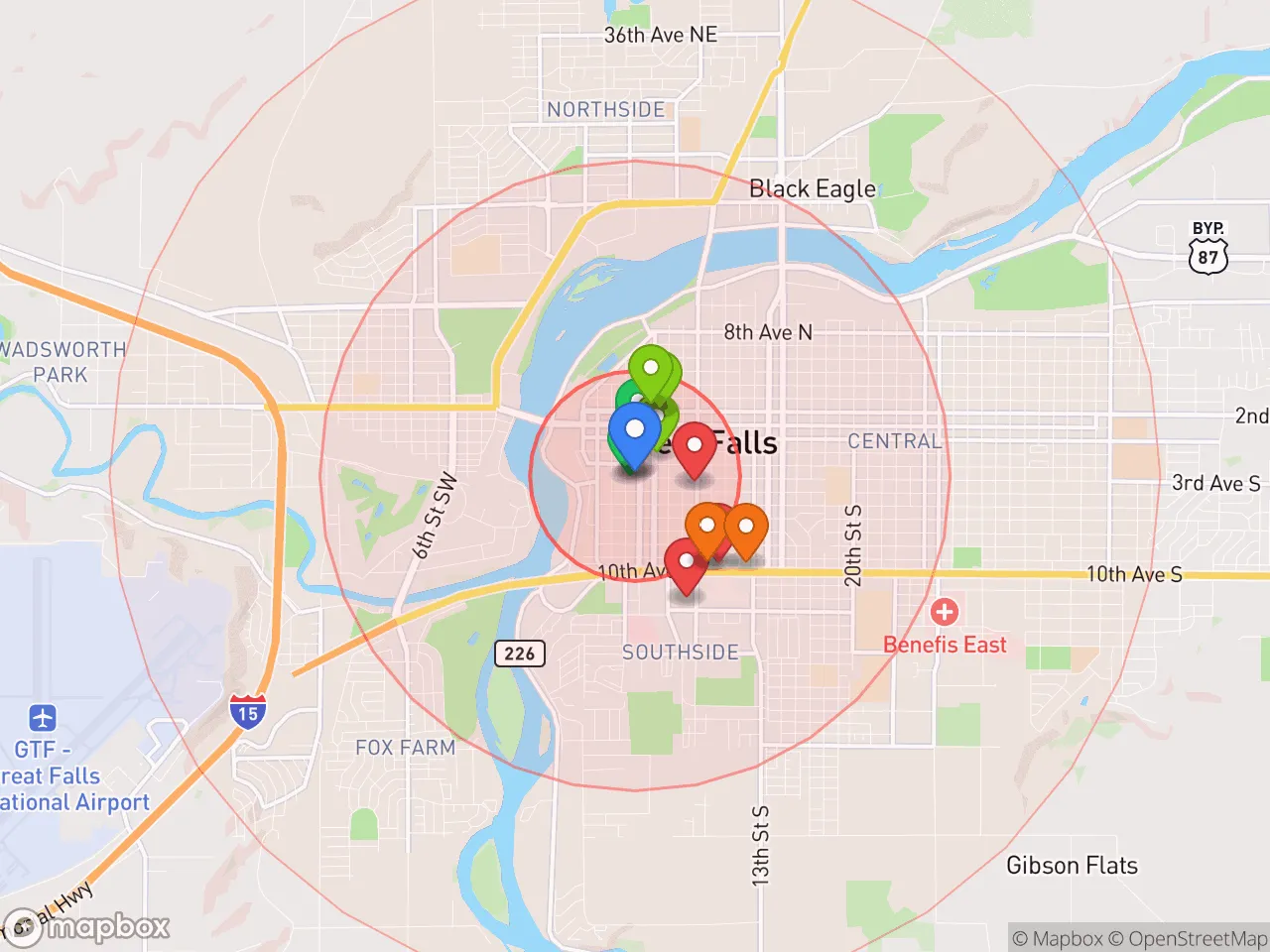
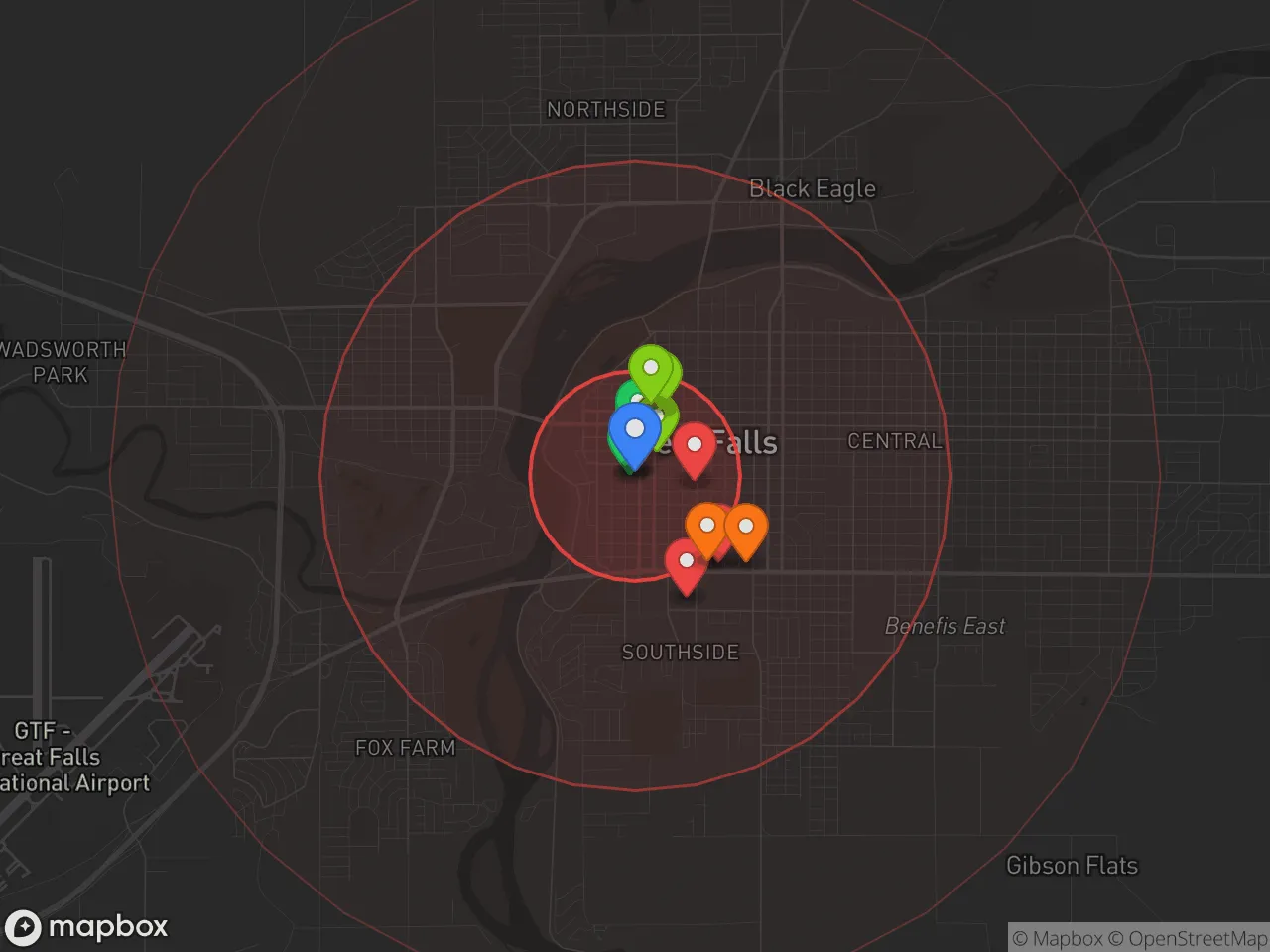
Hobbies
Explore the areaGroceries
5 within 10 miles
Gas
20 within 10 miles
Hospital
4 within 20 miles
Airport
SLC — Salt Lake City International
Post Office
USPS — Great Falls, MT
Critical Amenities
Quality-of-Life Analysis
Great Falls, Montana, offers a quality of life defined by modest affluence and a strong blue-collar work ethic, with a cost of living that sits well below the national average. The city’s population of roughly 60,000 is a mix of military families stationed at Malmstrom Air Force Base, healthcare professionals, and longtime residents employed in agriculture, manufacturing, and energy. Median household income hovers around $50,000, reflecting a community where financial comfort is achievable without the high-pressure wealth seen in Montana’s resort towns like Bozeman or Whitefish.
How housing costs and everyday expenses compare to nearby cities
Great Falls stands out as one of Montana’s most affordable cities, with a composite cost-of-living index of 78 (22% below the U.S. average). The median home value of $237,400 is roughly half that of Bozeman ($500,000+) and significantly undercutting Missoula’s median of $420,000. Renters also benefit: the median monthly rent of $866 is about $300 less than the state average. Utilities and groceries track similarly low, while the average commute of just 14.7 minutes keeps transportation costs minimal. For comparison, a similar home in Helena (50 miles south) would cost roughly 15% more, and in Billings about 10% more. This affordability gap makes Great Falls a practical choice for first-time homebuyers and retirees on fixed incomes, though property taxes (around 0.85% of assessed value) are slightly above the national median.
What daily life is like for families: schools, parks, and local amenities
Daily life in Great Falls centers on outdoor recreation and a slower, family-oriented pace. The city’s school system, Great Falls Public Schools, serves about 10,000 students across 14 elementary schools, three middle schools, and two high schools—C.M. Russell High and Great Falls High—both of which offer strong athletics and vocational programs. For higher education, Montana State University–Great Falls College of Technology provides two-year degrees and workforce training. The Missouri River runs through town, offering fishing, kayaking, and the popular River’s Edge Trail, a 60-mile paved path system. Giant Springs State Park, one of the largest freshwater springs in the country, is a 15-minute drive from downtown. Retail and dining cluster along 10th Avenue South, with national chains like Target and Costco alongside local staples like the Sip ‘n Dip Lounge. Healthcare is anchored by Benefis Health System, the region’s largest employer, which includes a Level II trauma center and a dedicated children’s hospital. The city’s cultural scene is modest but active: the Paris Gibson Square Museum of Art hosts rotating exhibits, and the annual Montana State Fair draws crowds each July. Winters are cold (average January high of 33°F) and windy, but summer days are dry and sunny, ideal for hiking in the nearby Lewis and Clark National Forest.
Great Falls is best suited for those who prioritize affordability, outdoor access, and a low-stress commute over urban nightlife or high-end shopping. Military families, remote workers, and retirees will find the cost of living freeing, while young professionals may need to accept a smaller job market—the largest private employers are Benefis Health System, the school district, and Malmstrom Air Force Base. The city’s political leanings are moderately conservative, and the social atmosphere is neighborly but not bustling. For anyone seeking a quiet, budget-friendly base in central Montana with solid schools and immediate access to the Missouri River, Great Falls delivers a practical, grounded quality of life.

Crime in Great Falls, MT
Higher crime rates than 60% of comparable U.S. locations.
Violent CrimeViolent Crime Analysis
Property CrimeProperty Crime Analysis
Crime Analysis
Great Falls, Montana, reports a violent crime rate of 609.3 per 100,000 residents and a property crime rate of 3,647.5 per 100,000, placing it significantly above both state and national averages. These figures indicate that safety is a primary concern for anyone considering relocation to the Electric City, with crime rates roughly double the national benchmarks. The data suggests that residents face a notably higher risk of both violent and property offenses compared to the typical American city.
Crime in context
To understand the severity, consider that the national violent crime rate in 2023 was approximately 380 per 100,000, while Montana's statewide rate hovered around 480 per 100,000. Great Falls' violent crime rate of 609.3 per 100,000 is roughly 60% higher than the national average and about 27% higher than the state average. The property crime picture is even starker: the national rate is roughly 2,500 per 100,000, but Great Falls' rate of 3,647.5 per 100,000 is nearly 46% above the national figure. These numbers place Great Falls among the higher-crime cities in Montana, a state that itself struggles with elevated crime rates relative to the rest of the country.
What residents experience
For those living in Great Falls, the elevated crime statistics translate into tangible daily concerns. Property crime, particularly theft from vehicles and burglary, is the most common issue reported by residents. Neighborhood social media groups and local news frequently document vehicle break-ins and package thefts. Violent crime, while less frequent than property crime, includes aggravated assault as the most common category, with robbery and rape occurring at rates above the national norm. Residents often cite the need for vigilance, such as locking cars and homes at all times and avoiding certain areas after dark. The city's police department has implemented community policing initiatives, but the sheer volume of calls often stretches resources thin.
It is important to note that the broader legal and prosecutorial environment in Montana, while not as progressive as in some large coastal metro areas, still influences local safety. Cascade County, where Great Falls is located, has not seen the same level of progressive prosecutorial reforms as cities like Portland or Seattle, but the state's overall approach to criminal justice—including recent discussions around sentencing reform and bail policies—can affect how quickly offenders cycle back onto the streets. For readers concerned about public safety, Great Falls' combination of high crime rates and a justice system that is not aggressively punitive should be a significant consideration.
Neighborhood-level variation
Safety in Great Falls is not uniform across the city. The downtown core and areas immediately surrounding the historic district, particularly along Central Avenue and near the Missouri River, experience higher concentrations of property crime and public intoxication incidents. In contrast, neighborhoods in the southwestern part of the city, such as the area around West Bank Park and the more recently developed subdivisions near the Great Falls International Airport, tend to report lower crime rates. The Riverview and Skyline neighborhoods are generally considered safer, with fewer incidents per capita. Prospective residents are advised to consult the Great Falls Police Department's crime mapping tool and speak with local real estate agents to identify specific blocks and streets with better safety records.
* Values derived from national, state, county, city and local statistics and may differ in a specific area. Last updated: 2026-04-29T20:14:40.000Z
Narrative content on this page is AI-generated and may contain mistakes. Verify any details that matter before acting on them.
ReloMaps may earn a commission from affiliate links at no extra cost to you.

