Demographics of Great Falls, VA
Affluence Level in Great Falls, VA
A wealthy area with high-earning, well-educated households. Incomes, home values, and educational attainment meaningfully outpace national averages.
Census doesn't track above $250K
People of Great Falls, VA
The people of Great Falls, Virginia, today form one of the most highly educated and affluent communities in the Washington, D.C. region, with a population of 14,854 that is predominantly white (64.6%) but marked by a significant and growing East/Southeast Asian (14.3%) and Indian-subcontinent (9.8%) presence. The town’s character is defined by its low density, large-lot estates, and a fiercely protected rural-residential zoning that has historically limited commercial development and multifamily housing. This is a place where the population is shaped less by historical waves of immigration and more by a targeted, high-income in-migration of professionals drawn to top-ranked schools and proximity to the capital.
How the city was settled and grew
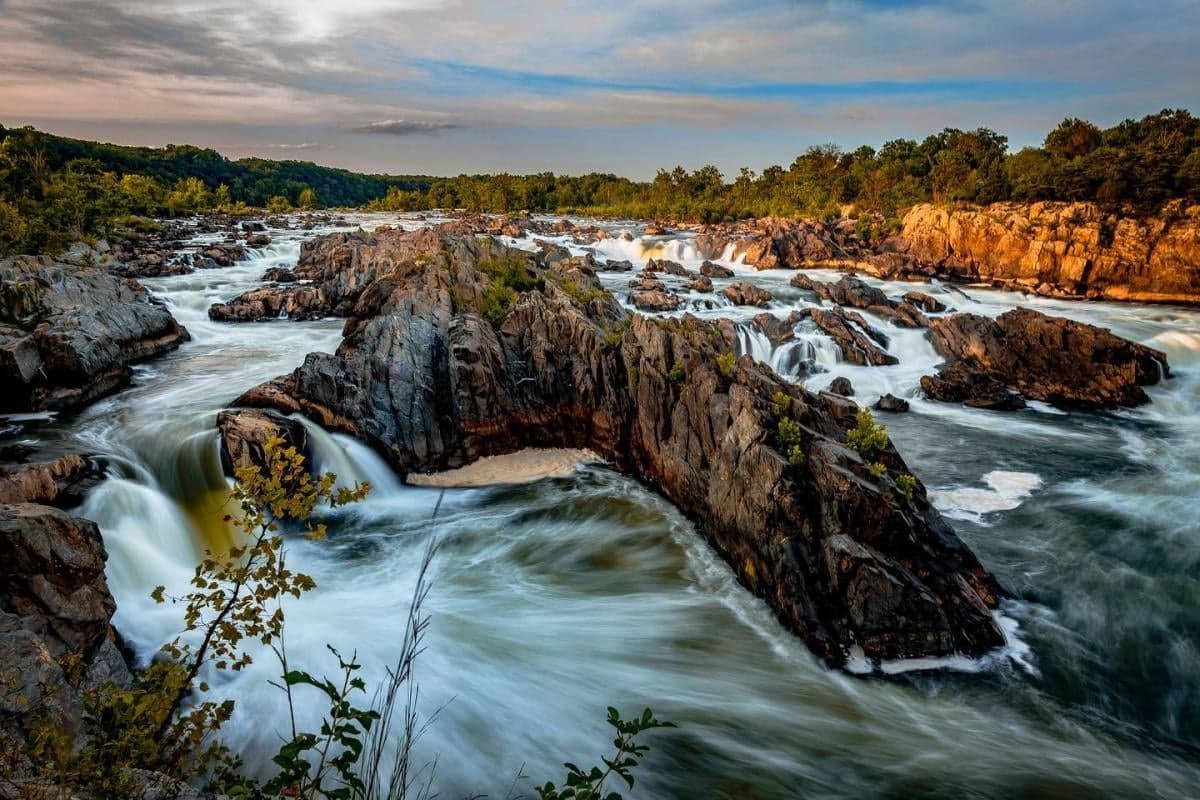
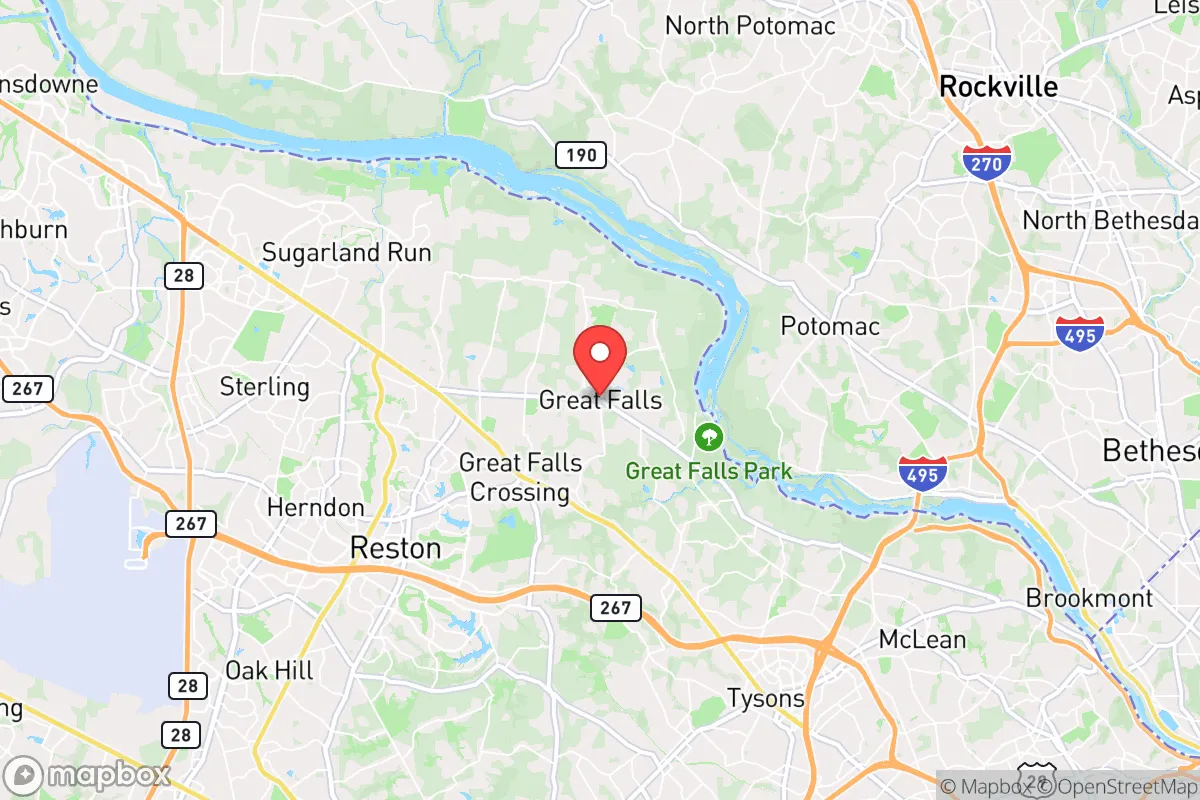
Great Falls was never a city in the traditional sense; it was a sparsely populated farming and milling area along the Potomac River through the 19th century. The original European settlers were English and Scottish farmers who took up land grants in the 1700s, with the earliest clusters forming around Forestville (the historic crossroads near present-day Georgetown Pike and Walker Road) and the mill community at Seneca. The Chesapeake and Ohio Canal, completed in the 1830s, brought a small wave of Irish laborers who settled in temporary camps along the river, but few stayed permanently. By 1900, the area remained rural, with fewer than 500 residents, mostly engaged in dairy farming and quarrying. The first real growth came after World War II, when returning veterans and federal workers began buying farm parcels for suburban homes, but development was slow due to the lack of public water and sewer infrastructure. The neighborhoods of Langley Farms and Great Falls Estates were among the first subdivisions, built in the 1950s and 1960s on former dairy land, attracting white-collar government employees and military officers.
Modern era (post-1965)
The Immigration and Nationality Act of 1965 had little direct effect on Great Falls itself, as the town had virtually no immigrant gateway infrastructure. Instead, the modern demographic transformation began in the 1980s and accelerated through the 2000s, driven by domestic in-migration of high-earning professionals from other parts of the United States and by a secondary wave of foreign-born families who had first settled in closer-in suburbs like Arlington and McLean. The key draw was the Langley High School attendance zone, which became a magnet for families seeking one of the top-ranked public high schools in Virginia. The Lowes Island and Potomac Hills neighborhoods, developed in the 1980s and 1990s, absorbed much of this influx, with large custom homes on two-to-five-acre lots. The East/Southeast Asian population—predominantly Chinese and Korean—grew steadily through corporate transfers and tech-sector employment, while the Indian-subcontinent population (largely from India and Pakistan) expanded through the same professional channels, particularly in medicine and information technology. By 2020, the foreign-born share stood at just 5.0%, a low figure that reflects the fact that most of these Asian and Indian families are naturalized citizens or second-generation residents, not recent arrivals. The Black (0.9%) and Hispanic (3.7%) populations remain very small, concentrated in service-sector households in the older, smaller-lot homes near Georgetown Pike and Walker Road.
The future
The population of Great Falls is likely to continue its slow, selective growth, constrained by zoning that limits new housing supply. The white share will gradually decline as the Asian and Indian populations grow through natural increase and continued in-migration of high-income professionals, but the town will not become a majority-minority community in the next 20 years. The East/Southeast Asian and Indian communities are not forming distinct ethnic enclaves; they are highly assimilated, living in the same neighborhoods—Lowes Island, Great Falls Forest, and Riverbend—and attending the same schools as their white neighbors. The Hispanic and Black populations are expected to remain small, as the high cost of housing (median home value above $1.2 million) and lack of rental apartments effectively screen out lower-income households. The biggest demographic shift may be generational: as the original post-war homeowners age out, their estates are being purchased by younger families, often dual-income couples in their 30s and 40s who work in technology, finance, or federal contracting. This will reinforce the town’s character as a wealthy, highly educated, and politically moderate-to-conservative bedroom community.
For someone moving in now, Great Falls offers a stable, low-turnover population where the primary social divides are not ethnic but economic and lifestyle-based—between long-time residents who value rural quiet and newcomers who want top-tier schools and proximity to D.C. The town is not diversifying in the way that nearby Reston or Falls Church are; it is homogenizing upward, with each wave of in-migration being more affluent and more credentialed than the last. The bottom line: Great Falls is becoming a preserve for the professional-managerial elite, where demographic change is measured not by ethnic succession but by the steady replacement of older, less wealthy households with younger, wealthier ones.

* Values derived from national, state, county, city and local statistics and may differ in a specific area. Last updated: 2026-04-16T00:22:01.000Z
Narrative content on this page is AI-generated and may contain mistakes. Verify any details that matter before acting on them.
ReloMaps may earn a commission from affiliate links at no extra cost to you.

