Photo: Wikipedia
Demographics of Greensburg, PA
Affluence Level in Greensburg, PA
A middle-class area roughly in line with national averages across income, home values, education, and employment.
People of Greensburg, PA
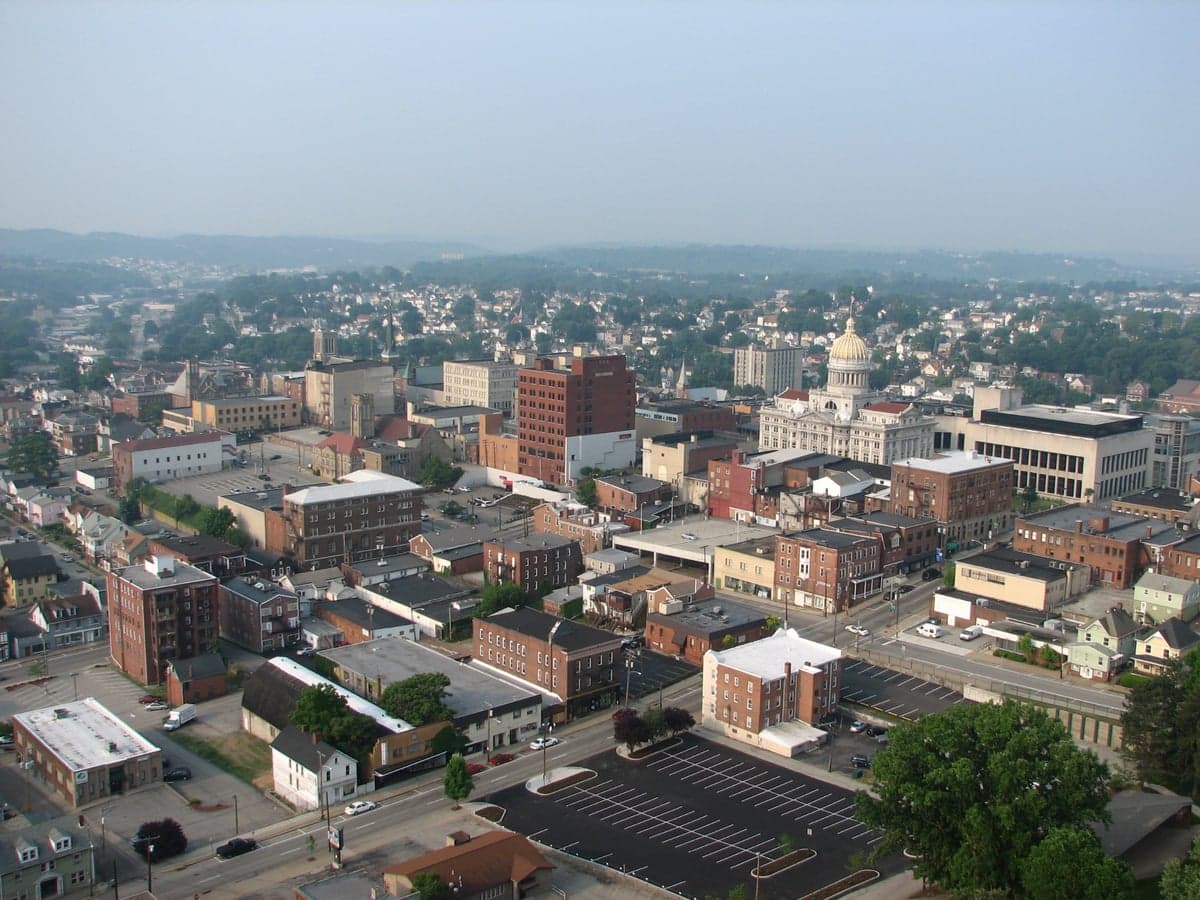
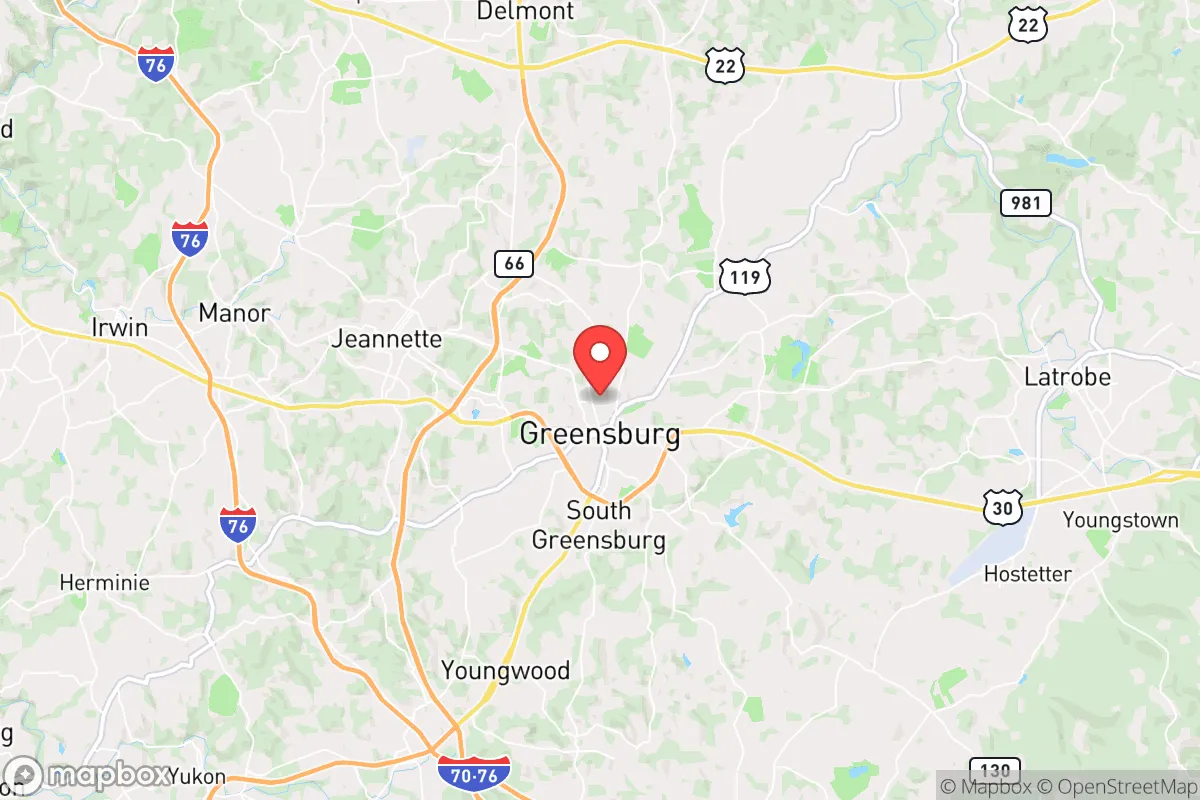
Greensburg, Pennsylvania, is a small city of 14,777 residents characterized by a predominantly white, native-born population with a notably high college attainment rate of 39.8%. The city’s identity is rooted in its history as a county seat and commercial hub for Westmoreland County, with a population that has remained remarkably stable in its ethnic composition over recent decades. While the city has experienced modest diversification, it remains far less diverse than the national average, with a foreign-born population of just 1.4% and a Black population of 3.1%.
How the city was settled and grew
Greensburg was founded in 1785 as the county seat of Westmoreland County, replacing the older settlement of Hannastown after it was burned during the American Revolution. The original population was overwhelmingly of Scots-Irish and German descent, drawn by land grants offered to veterans of the Revolutionary War and the promise of fertile farmland in the Laurel Highlands. The arrival of the Pennsylvania Railroad in the 1850s transformed Greensburg from a quiet agricultural center into a transportation and manufacturing hub. The historic Academy Hill neighborhood, centered around the campus of what is now Seton Hill University, became the home of the city’s professional and merchant class—doctors, lawyers, and railroad executives—who built the grand Victorian homes that still line its streets. Meanwhile, working-class families, many of them German and Irish immigrants, settled in the West Overton and South Greensburg areas, where they found employment in the city’s foundries, glassworks, and railroad yards. A smaller wave of Italian and Eastern European immigrants arrived in the early 1900s, clustering in the North Greensburg neighborhood near the rail lines and the industrial plants that once dominated the city’s economy.
Modern era (post-1965)
The post-1965 era brought only modest demographic change to Greensburg. The city’s population peaked at roughly 17,000 in the 1960s and has since declined by about 13%, a pattern common to small Rust Belt cities as manufacturing jobs moved elsewhere. The 1965 Hart-Cellar Act, which dramatically increased immigration from Asia and Latin America, had a minimal effect here: the foreign-born share remains under 2%. The small Black population (3.1%) is largely concentrated in the Ludwick neighborhood, a historically working-class area near the city’s eastern edge, and in a few scattered blocks in South Greensburg. The East/Southeast Asian community (1.0%) is almost entirely tied to the presence of the University of Pittsburgh at Greensburg and Seton Hill University, with faculty and graduate students living in rental housing near the campuses on Academy Hill. The Indian-subcontinent population (0.3%) is similarly small and university-linked. The Hispanic population (1.5%) is the fastest-growing segment, though still tiny, with families settling in the Westmoreland Mall corridor and the Hempfield Township border area just outside the city limits, drawn by service-sector jobs in retail and hospitality. Suburbanization has been the dominant trend: middle-class families, including many of the city’s historic German and Italian families, have moved to surrounding townships like Hempfield and Unity, leaving Greensburg’s core neighborhoods older and less affluent.
The future
Greensburg’s population is likely to continue its slow decline, with the city’s demographic profile becoming slightly more Hispanic and slightly less white over the next 10–20 years. The Hispanic share, while low, is the only group showing sustained growth, driven by families moving into the region for work in warehousing, logistics, and healthcare. The Black and Asian populations are expected to remain stable or grow only marginally, as the city lacks the large employers or ethnic networks that drive chain migration. The city is not tribalizing into distinct ethnic enclaves; rather, it is slowly homogenizing as the white population ages and younger, more diverse families move into a few specific blocks. The Academy Hill neighborhood will likely retain its character as a college-adjacent, professional area, while North Greensburg and Ludwick may see modest infill of Hispanic and mixed-race households. The overall trend is toward a smaller, older, and slightly more diverse city—but one that remains overwhelmingly white and native-born for the foreseeable future.
For someone moving to Greensburg now, the city offers a stable, low-diversity environment with a strong sense of local history and a highly educated core. The population is not experiencing rapid change, so newcomers can expect a community that looks and feels much the same in 2035 as it does today. The trade-off is limited ethnic and cultural variety, but for those seeking a quiet, safe, and historically rooted small city, Greensburg delivers exactly that.

* Values derived from national, state, county, city and local statistics and may differ in a specific area. Last updated: 2026-05-01T08:51:20.000Z
Narrative content on this page is AI-generated and may contain mistakes. Verify any details that matter before acting on them.
ReloMaps may earn a commission from affiliate links at no extra cost to you.

