
Photo: Wikipedia
Personal Sovereignty in Greensburg, PA
Strong independent fundamentals that actively favor personal liberty and low regulation.
What does Personal Sovereignty tell us?
Personal Sovereignty measures your capacity for self-reliance and independence with minimal government friction. Higher scores mean fewer barriers between you and the way you want to live... but it assumes you have the space you need and good neighbors.
What does this tell us?
Personal Sovereignty measures your capacity for self-reliance and independence with minimal government friction. Higher scores mean fewer barriers between you and the way you want to live... but it assumes you have the space you need and good neighbors.
State Policy
Energy independence: Net exporter (150% of energy produced in-state)
Personal Liberty
Homesteading

Personal Liberty Analysis
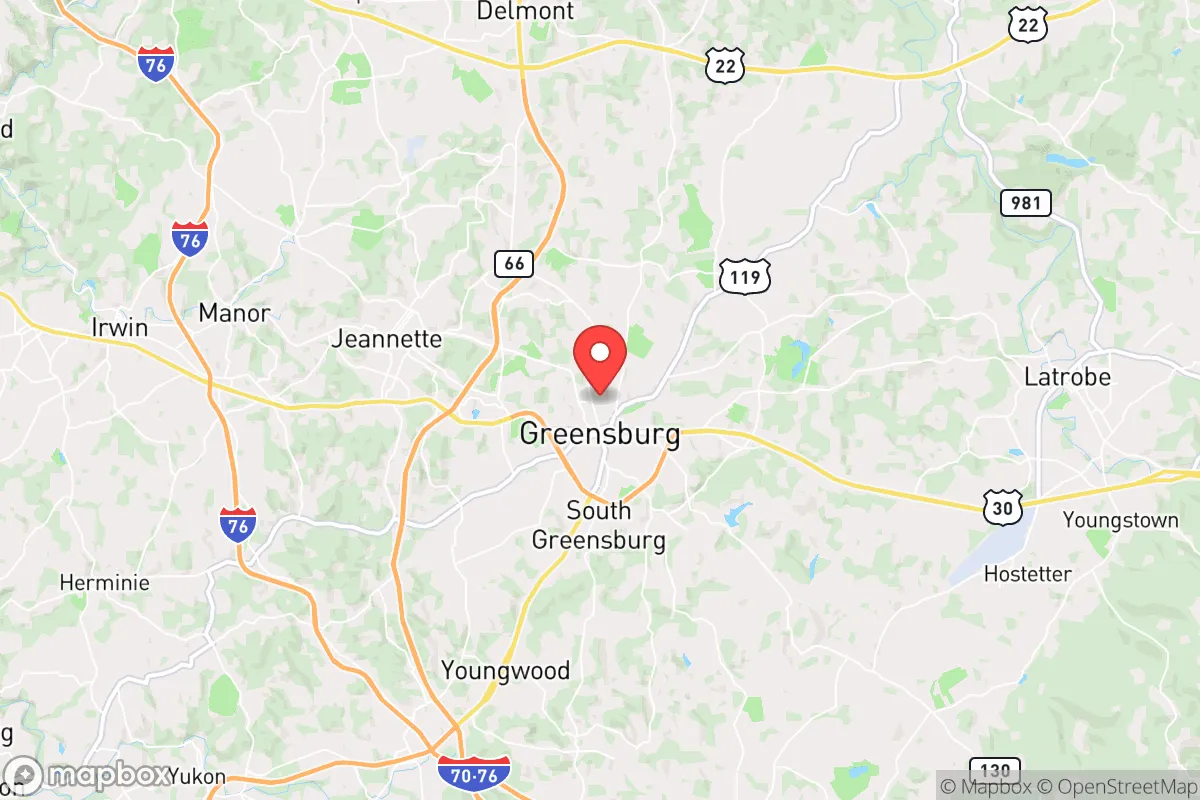
For the individualist or prepper evaluating Greensburg, Pennsylvania, personal sovereignty here is a mixed bag — strong constitutional protections at the state level are increasingly undercut by county and municipal overreach, particularly in health mandates and land use. Westmoreland County, where Greensburg sits, is a politically red island in a purple-to-blue state, which means local enforcement of state preemption laws is generally favorable, but you cannot ignore the creeping influence of Pittsburgh’s regulatory gravity 30 miles to the west. The bottom line: Greensburg offers a solid foundation for self-reliant living if you pick your neighborhood carefully and stay vigilant about local ordinance changes, but it is not the libertarian freehold some might hope for.
Tax burden and regulatory posture for self-reliant households
Pennsylvania’s flat income tax rate of 3.07% is a genuine advantage for anyone maximizing earned income, and the state’s lack of a tax on military pensions or Social Security benefits directly benefits retirees and veterans seeking autonomy from the federal system. However, Westmoreland County’s property tax millage rate of approximately 22 mills on assessed value (roughly 80% of market) means a $250,000 home carries an annual bill around $4,400 — not crushing, but a real bite for a prepper trying to keep cash for land and supplies. Sales tax is a low 6% (no local add-ons), which keeps everyday purchases affordable. The regulatory posture is where the rubber meets the road: Pennsylvania has strong state preemption laws that prevent municipalities from banning firearms or imposing rent control, but Greensburg’s own zoning code is surprisingly restrictive for a small city. The city requires minimum lot sizes of 6,000 square feet in residential zones, and any home-based business — including small-scale food production or firearms repair — triggers a conditional use hearing. This is a red flag for anyone wanting to run a self-sufficient homestead or side hustle without government permission. Outside city limits, Westmoreland County’s rural zoning is looser, but you still face state-level environmental regulations on well water and septic that can delay projects by months.
Self-defense rights and gun law specifics in Pennsylvania
Pennsylvania is a “shall issue” state for concealed carry, meaning Greensburg residents can obtain a License to Carry Firearms (LTCF) with a clean background check and no subjective “good cause” requirement — a critical protection for personal sovereignty. The state also has a strong preemption law (18 Pa.C.S. § 6120) that explicitly prohibits any municipality from regulating the ownership, possession, or transfer of firearms, so Greensburg cannot enact its own AWB or magazine bans. Open carry is legal without a permit, though it becomes concealed carry once you enter a vehicle, so an LTCF is still practical. Castle Doctrine is codified in statute (18 Pa.C.S. § 505), with no duty to retreat in your home or vehicle, and the “stand your ground” provision applies anywhere you are legally present. Magazine capacity is unrestricted, and NFA items (suppressors, SBRs) are legal with federal compliance. The practical downside: Pennsylvania’s universal background check law for handguns (Act 192 of 2021, currently tied up in court) and the state’s firearm reporting system for mental health commitments create bureaucratic friction. For the prepper, the key takeaway is that you can legally stockpile arms and ammunition without local interference, but you must stay current on state-level legislative battles — Pittsburgh and Philadelphia constantly push for home rule exceptions that could set a precedent.
Self-reliance and homesteading viability: lot sizes, zoning, and off-grid feasibility
Within Greensburg city limits, homesteading is effectively impossible — the average residential lot is a quarter-acre or less, and city code prohibits keeping livestock (chickens are allowed only with a special permit, and no roosters). The city also requires connection to municipal water and sewer, so off-grid water or composting toilets are non-starters. The real opportunity lies in the surrounding townships: Hempfield Township, just east of Greensburg, has 1- to 5-acre parcels available for $15,000–$30,000 per acre, with zoning that allows horses, chickens, and small-scale agriculture as of right. Off-grid solar is legal statewide (net metering is available, but you must interconnect with the grid if you want to sell back), and rainwater collection is unrestricted for outdoor use. Well water is common in rural Westmoreland County, with typical drilling costs of $5,000–$8,000 for a 200-foot well. Septic systems require a permit and percolation test, which can be a hurdle on heavy clay soils common in the area. For the serious prepper, the ideal play is to buy 5+ acres in a township like Salem or Unity, where you can build a pole barn, install solar panels, and keep a garden without ever talking to a zoning officer. Just be aware that the county’s building code enforcement has tightened since 2020 — any structure over 200 square feet requires a permit and inspection.
Personal liberties: parental rights, medical autonomy, speech, and property
Pennsylvania’s parental rights are codified in statute (23 Pa.C.S. § 5301), giving parents the presumption of decision-making authority over their children’s education, medical care, and religious upbringing. This is a strong bulwark against school district overreach, though the state’s compulsory vaccination laws for school attendance (no philosophical exemption) are a notable limitation for medical autonomy advocates. Homeschooling is legal with a simple affidavit and annual portfolio review — no standardized testing requirement, which is a plus for those wanting to control curriculum. Medical freedom is a mixed picture: the state has no general “right to try” law for terminally ill patients (though federal law applies), and COVID-era mandates from the Pennsylvania Department of Health were aggressively enforced in Westmoreland County, with the county health department issuing mask mandates in 2020 that were later struck down by the courts. Free speech is protected under the state constitution, which has its own free expression clause (Article I, Section 7) that courts have interpreted more broadly than the First Amendment in some cases — notably, there is no state-level “hate speech” law that criminalizes protected expression. Property rights are generally strong, with Pennsylvania’s “private property rights” law (Act 172 of 2014) requiring government agencies to consider less restrictive alternatives before using eminent domain. However, Greensburg’s zoning board has a reputation for aggressive enforcement of nuisance ordinances — things like unregistered vehicles, tall grass, or “unsightly” structures can bring a citation within days. For the prepper, this means keeping a low profile: no visible stockpiles of scrap metal, no unregistered trailers, and no political signs that violate the city’s 30-day display limit.
Compared to deep-blue states like New York or California, Greensburg offers a noticeably higher degree of personal sovereignty — you can own guns, homeschool your kids, and build a self-sufficient homestead without constant government interference. But compared to true libertarian strongholds like New Hampshire or Idaho, the regulatory overhead is real: property taxes are higher, zoning is more restrictive, and the state’s health bureaucracy has shown a willingness to impose mandates. For the strategic relocator who values autonomy and is willing to live on the rural fringe of a small city, Greensburg is a viable base of operations — just don’t expect to fly completely under the radar. The key is to buy land outside city limits, stay informed on state legislation, and keep your operation quiet enough that the county inspector never has a reason to knock.

* Values derived from national, state, county, city and local statistics and may differ in a specific area. Last updated: 2026-05-01T08:51:20.000Z
Narrative content on this page is AI-generated and may contain mistakes. Verify any details that matter before acting on them.
ReloMaps may earn a commission from affiliate links at no extra cost to you.

