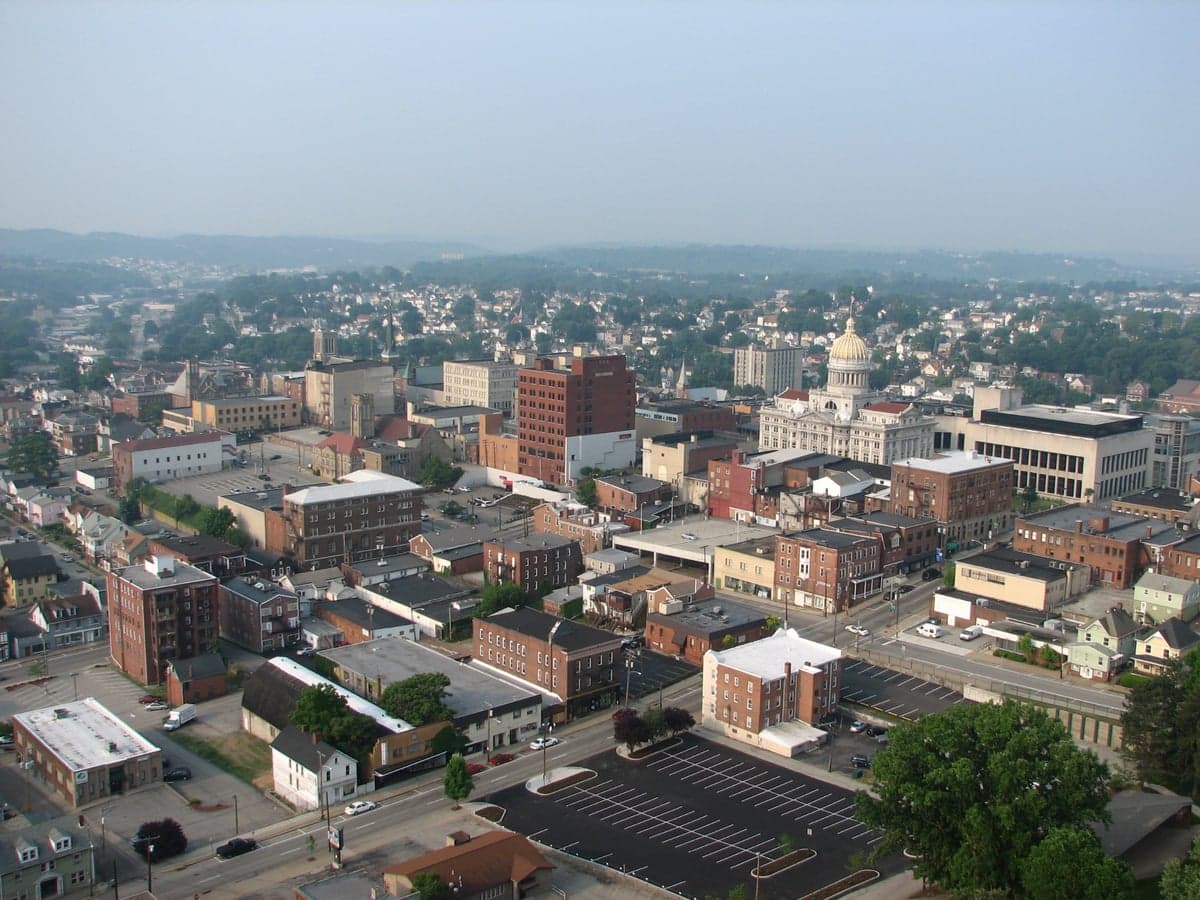
Photo: Wikipedia
Political ClimatePolitical Climate in Greensburg, PA
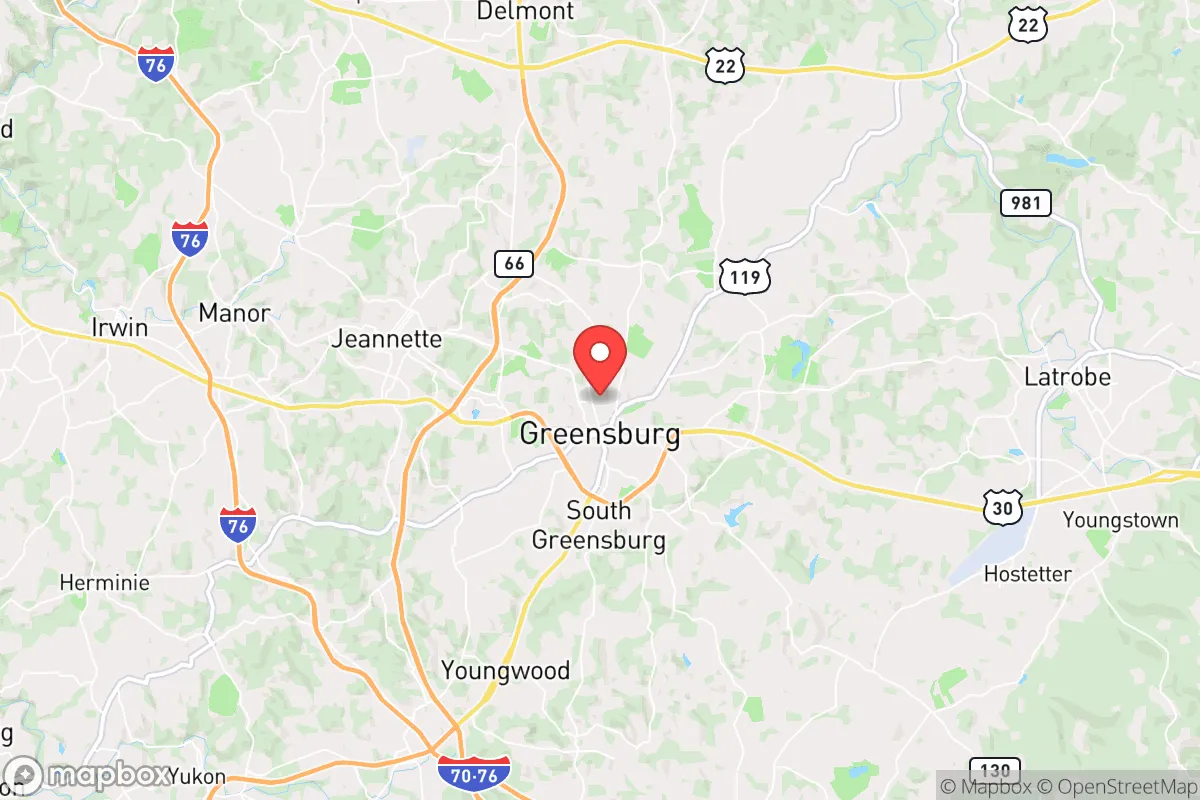
District shown is the primary district for this city’s centroid. Cities may span multiple districts.
Local Political AnalysisPolitical Analysis of Greensburg, PA
Greensburg, Pennsylvania, is about as solidly conservative as it gets in Western PA, and that’s not changing anytime soon. The Cook PVI clocks the area at R+17, which means Republicans hold a 17-point advantage over the national average in federal elections. That’s a deep red seat, and it’s been that way for decades. If you’re looking at a map of the region, Greensburg sits in the middle of Westmoreland County, which has voted Republican in every presidential election since 2008, and by wider margins each time. The local vibe is old-school, blue-collar, and skeptical of big government—people here remember when the coal mines and steel mills were running, and they don’t trust outsiders telling them how to live.
How it compares
Drive 30 miles west to Pittsburgh, and you’re in a completely different world—Allegheny County went for Biden by 20 points in 2020. That’s a 37-point swing from Greensburg’s R+17. Even closer, the borough of Jeannette, just 5 miles away, leans conservative but has a higher share of working-class Democrats who sometimes split tickets. But Greensburg itself is the anchor of the county’s conservative base. The surrounding towns like Latrobe and Ligonier are even more reliably red, with Latrobe being the hometown of Arnold Palmer and a place where gun rights and low taxes are practically religion. The contrast with Pittsburgh isn’t just political—it’s cultural. In Greensburg, you don’t see the same push for bike lanes, density zoning, or progressive school board policies. It’s a place where people still wave at each other on the street and expect the government to stay out of their business.
What this means for residents
For anyone moving here, the political climate means a few concrete things. First, taxes are lower than in Allegheny County—Westmoreland’s property tax rate is about 1.2% of assessed value, compared to Pittsburgh’s 2.3% or higher. Second, gun laws are respected—you won’t find the same push for red flag laws or magazine bans that you see in Philadelphia or Pittsburgh. Third, school boards and local councils tend to be conservative, so you’re less likely to see controversial curriculum changes or mask mandates pushed through without community input. That said, there’s been a slow creep of progressive influence in the county seat itself—Greensburg City Council has occasionally flirted with diversity initiatives and bike lane studies, but they usually get voted down or watered down after public pushback. The long-term trend is concerning: as younger people move to Pittsburgh for jobs, the remaining population is aging and more conservative, but the city itself is seeing a small influx of remote workers from blue states who bring different voting habits. If that trend accelerates, you could see the county’s R+17 edge shrink over the next decade.
Culturally, Greensburg still holds onto distinctions that matter to conservatives. The Westmoreland County Fair is a big deal, and the local 4-H and FFA programs are strong. The annual Greensburg Holiday Parade is a traditional affair, not a woke spectacle. There’s a strong sense of personal responsibility here—people don’t expect the government to solve their problems. The biggest policy distinction is probably the county’s stance on Second Amendment rights: Westmoreland County is a “Second Amendment Sanctuary” county, meaning local officials have pledged not to enforce state or federal gun laws they deem unconstitutional. That’s a direct signal that the area values individual liberty over government overreach. If you’re looking for a place where you can live your life without a bureaucrat in Harrisburg or Washington telling you how to do it, Greensburg is still that kind of town. But keep an eye on the city council elections—if the progressive wave that’s hit Pittsburgh starts washing over the suburbs, this place could look different in 10 years.

State Political ClimatePolitical Climate in Pennsylvania
State Political AnalysisPolitical Environment in the State
Pennsylvania is a classic swing state that has drifted leftward over the past 20 years, but it remains a true battleground where the outcome hinges on a razor-thin margin. The state’s 19 electoral votes have gone Democratic in four of the last six presidential elections, yet Republicans still hold a majority in the state House and a near-even split in the Senate. The real story is the slow, steady erosion of the GOP’s rural firewall, as Philadelphia’s suburbs and the growing Pittsburgh metro have become reliably blue, while the vast middle of the state—places like Lancaster, York, and Erie—have become the decisive swing territory. For a conservative considering relocation, the trajectory is concerning: the state’s political center of gravity is shifting away from the values that once defined it.
Urban vs. rural divide
The political map of Pennsylvania is a tale of two states. Philadelphia and its collar counties—Bucks, Montgomery, Delaware, and Chester—are now solidly Democratic, delivering margins of 60-70% in recent elections. Pittsburgh and Allegheny County are similarly blue, though with a slightly more moderate flavor. The rural north and west, stretching from the Poconos to the Ohio border, are deeply Republican, with counties like Tioga, Potter, and Bedford routinely voting 70-80% for GOP candidates. The real battleground is the “T” shaped region: the southeastern suburbs outside Philly, the Lehigh Valley (Allentown, Bethlehem, Easton), and the southwestern exurbs around Pittsburgh. Lancaster County, once a Republican stronghold, has become a bellwether—it voted for Trump in 2020 by just 4 points, down from 18 points in 2016. Erie County, which went for Obama twice and then flipped to Trump in 2016, flipped back to Biden in 2020. These are the places where the state’s political future is being decided, and the trend is not favorable for conservatives.
Policy environment
Pennsylvania’s policy environment is a mixed bag that leans increasingly progressive. The state has a flat income tax of 3.07%, which is relatively low, but property taxes are among the highest in the nation—averaging over $4,000 annually on a median home. There is no state sales tax on groceries or clothing, but the base rate is 6%. The regulatory posture is moderate, though the state’s Department of Environmental Protection has become more aggressive under Governor Josh Shapiro, particularly on natural gas drilling—a major industry in the Marcellus Shale region. Education policy is a flashpoint: the state’s school funding system was ruled unconstitutional in 2023, and the legislature is now grappling with a court-ordered overhaul that could shift billions more to Philadelphia and other urban districts. Election laws are relatively stable, with no-excuse mail-in voting still in place after a 2020 expansion, though Republicans have pushed for voter ID requirements that have so far stalled. On the whole, the policy environment is drifting left, with the governor’s office and the courts leading the charge.
Trajectory & freedom
Pennsylvania is becoming less free, and the trend is accelerating. On gun rights, the state has a preemption law that prevents local municipalities from enacting their own restrictions, but Philadelphia has repeatedly challenged this, and in 2024, the city passed a ban on “ghost guns” that the state is now fighting in court. On parental rights, the state’s Department of Education has pushed for “LGBTQ-inclusive” curriculum standards that have sparked fierce backlash in conservative counties. Medical autonomy took a hit in 2022 when the state Supreme Court ruled that the governor could impose mask mandates in schools without legislative approval—a decision that alarmed many. Property rights are relatively strong, but the state’s growing use of eminent domain for “blight remediation” in cities like Harrisburg and Scranton has raised concerns. The most significant recent contraction of freedom came in 2023, when the legislature passed a bill banning “conversion therapy” for minors, which was signed by Shapiro. The overall trajectory is clear: the state is moving toward more government intervention in personal decisions, and the pace is picking up.
Civil unrest & political movements
Pennsylvania has seen its share of political turbulence. The 2020 election aftermath was particularly intense, with the state becoming a focal point for election integrity debates. The Pennsylvania Supreme Court’s decision to extend the mail-in ballot deadline by three days in 2020 sparked a firestorm, and the state’s Republican-led legislature has since launched multiple investigations into the 2020 election, though no widespread fraud was ever found. In 2021, the “Stop the Steal” movement held large rallies at the state capitol in Harrisburg, and the city’s downtown was briefly occupied by protesters. On the left, the Black Lives Matter protests in Philadelphia in 2020 were among the largest in the country, with significant property damage and looting. Immigration politics are less heated than in border states, but Philadelphia’s sanctuary city status has been a persistent issue, with the state legislature passing a bill in 2023 to withhold state funding from sanctuary cities—only to have it vetoed by Shapiro. The most visible flashpoint for a new resident would be the constant tension between the state’s urban centers and its rural counties, which often feels like two different countries sharing a border.
Projection
Over the next 5-10 years, Pennsylvania is likely to continue its slow drift leftward, driven by demographic shifts. The Philadelphia suburbs are growing faster than the rest of the state, and they are becoming more diverse and more Democratic. The rural counties are losing population, which means their political weight is shrinking. In-migration is modest, but the people moving in tend to be younger and more liberal, particularly to the Lehigh Valley and the Pittsburgh tech corridor. The state’s electoral votes will likely remain competitive, but the GOP’s path to victory is narrowing. A new resident moving in now should expect to see more progressive policies on education, healthcare, and environmental regulation, with the state government increasingly at odds with the values of its rural and exurban residents. The best-case scenario for a conservative is that the state remains a swing state, but the trend lines are not encouraging.
For a conservative considering a move to Pennsylvania, the bottom line is this: you will find strong communities of like-minded people in the rural and exurban areas, but you will also be living in a state where the political winds are blowing against you. The state’s tax burden is manageable, but property taxes are high. The regulatory environment is becoming more restrictive, particularly on energy and education. If you value personal freedom and limited government, you will need to be politically engaged to protect those values. Pennsylvania is not a lost cause, but it is a state that requires constant vigilance—and a willingness to fight for what you believe in.
* Values derived from national, state, county, city and local statistics and may differ in a specific area. Last updated: 2026-05-01T08:51:20.000Z
Narrative content on this page is AI-generated and may contain mistakes. Verify any details that matter before acting on them.
ReloMaps may earn a commission from affiliate links at no extra cost to you.

