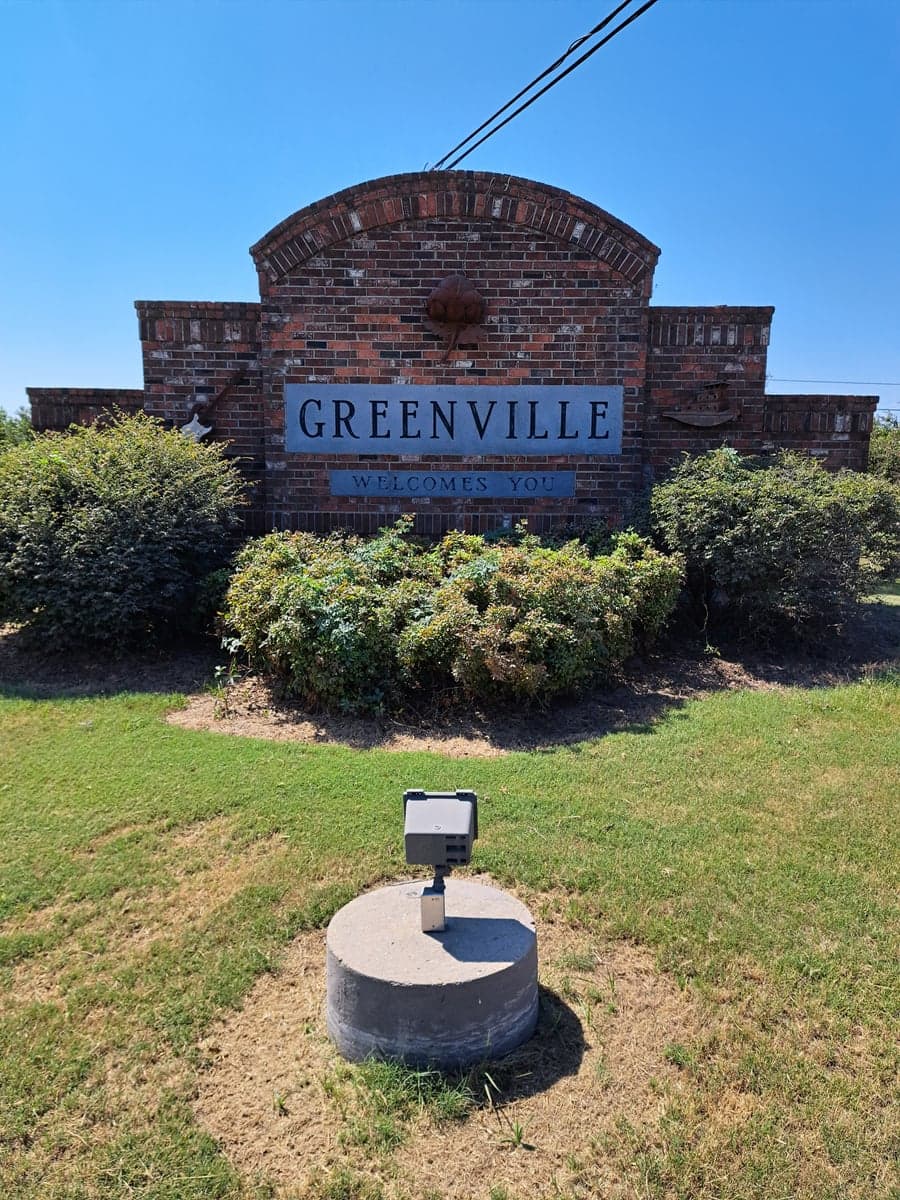
Photo: Wikipedia
Strategic Assessment of Greenville, MS
Workable tactical position. Some exposure to population density or targets, but generally defensible in a crisis.
What does the Strategic Assessment tell us?
Our Strategic Assessment grades tactical survivability of an area. Major population centers, military targets, fallout zones, natural disasters, and border exposure all drive risk — lower exposure means a more defensible position in a crisis.
This is heavily inspired by Joel Skousen's Strategic Relocation book. Highly recommended you checkout the book ($)What does this tell us?
Our Strategic Assessment grades tactical survivability of an area. Major population centers, military targets, fallout zones, natural disasters, and border exposure all drive risk — lower exposure means a more defensible position in a crisis.
This is heavily inspired by Joel Skousen's Strategic Relocation book. Highly recommended you checkout the book ($)Strategic Pillars

Key Distances
Regional Safe Places
Below is our recommended "safe zones" in Mississippi and the surrounding area based on our strategic heuristics. For most people, it's unrealistic to live in a “safe zone” full-time due to work, family or other personal reasons. They tend to be more rural. However, many of these areas are perfect for second homes and retreat properties that double as a vacation home or even a short-term rental.
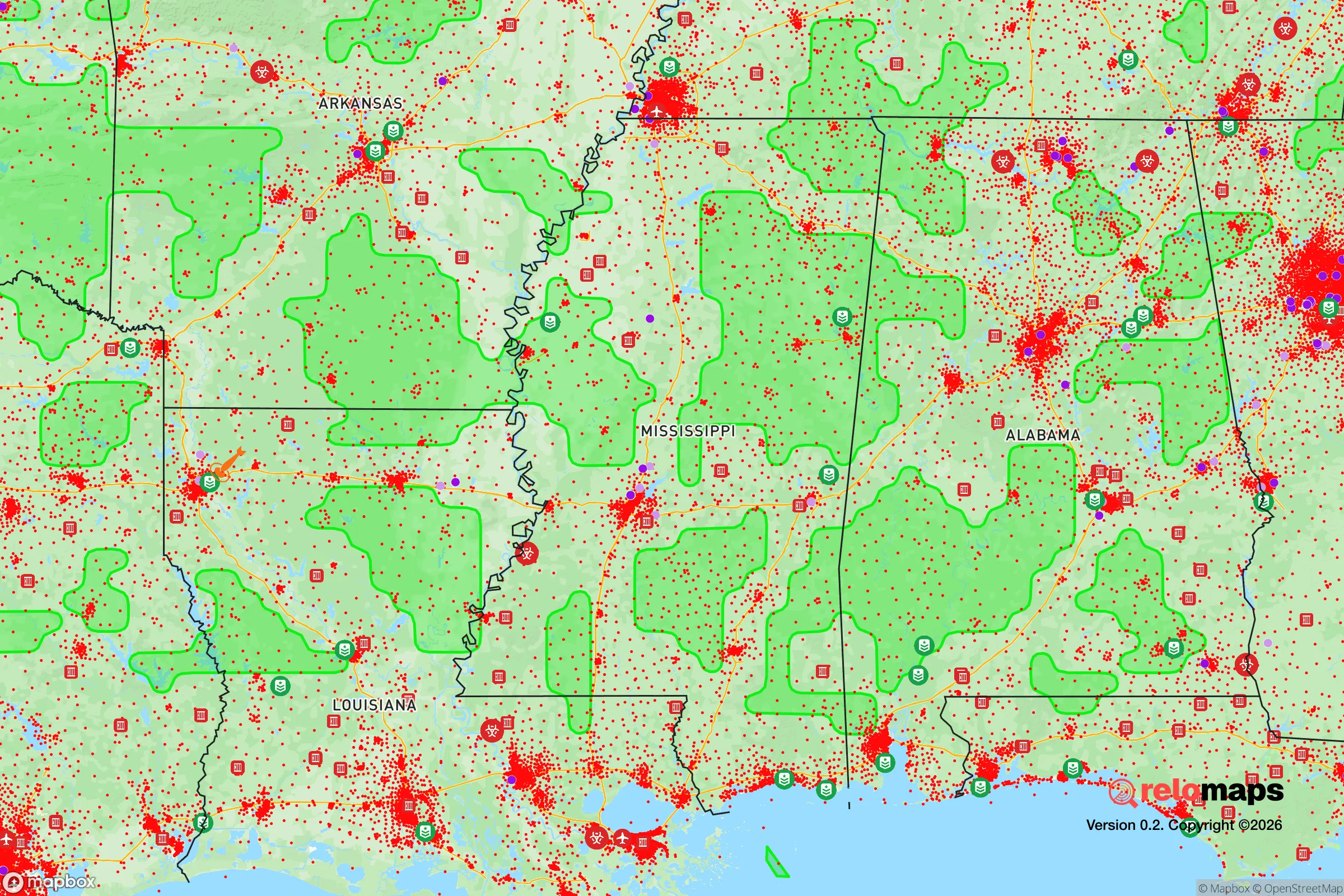
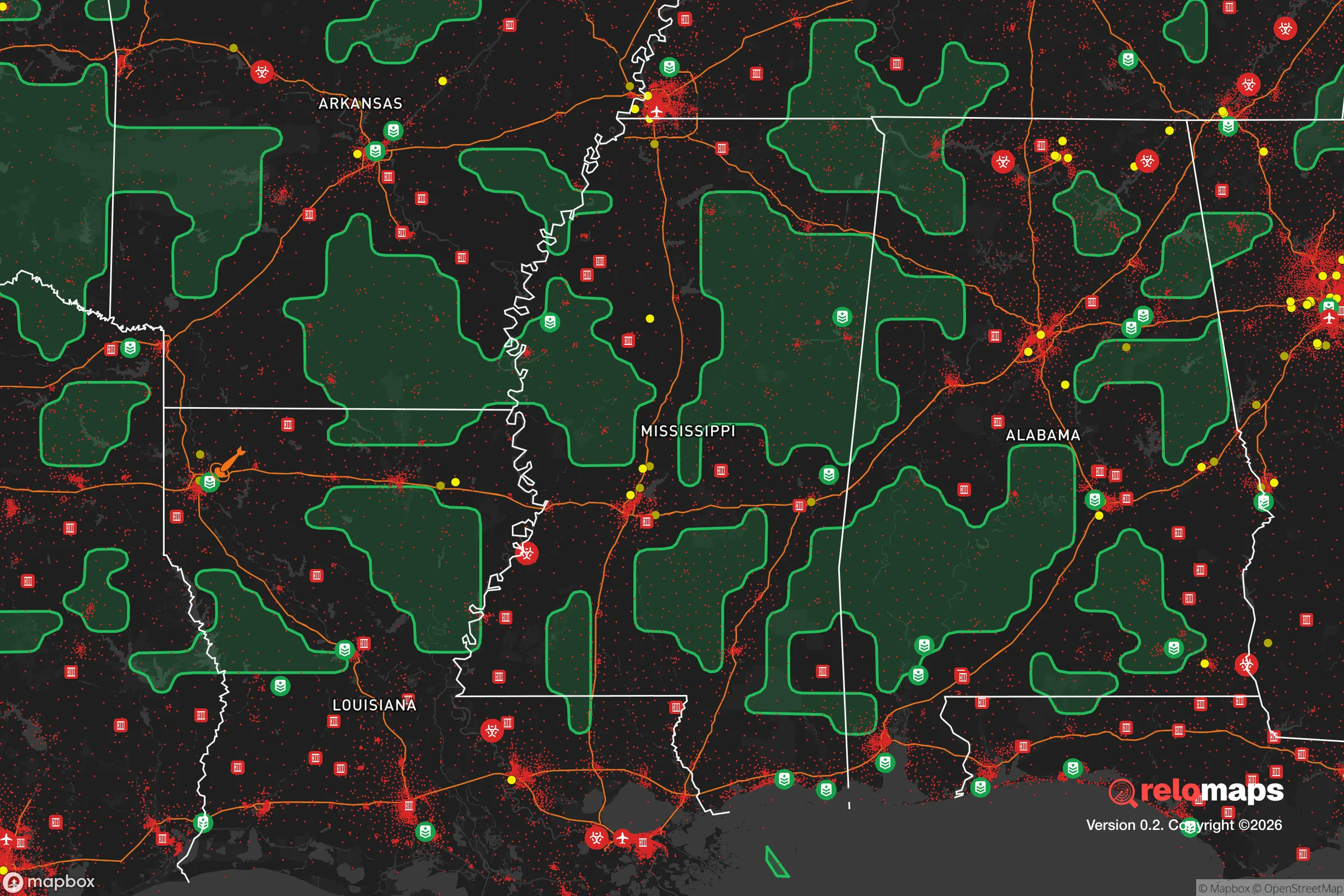


Important Note: For informational purposes only. This does not mean nothing bad ever happens in the green zones. Please use common sense. This is based on public data and modeled with AI. We tried to take a conservative approach but mistakes happen. We update this regularly as new information becomes available.
Solar Generator Recommendations
Backup power matters more here than in safer locations. We've picked three solar generators across budgets and capacity tiers — start with the budget unit if you only need a few essentials, or step up if you want to run a fridge and HVAC for days at a time.

Jackery Portable Power Station Explorer 300
Budget OptionPower on the Go: Weighing only 11 lbs, it's convenient to set up and store with book-sized foldable solar panels

BLUETTI Portable Power Station AC180
Designed for both indoor and outdoor scenarios, AC180 is highly capable as it has a robost capacity and continuous output power.

EF ECOFLOW DELTA Pro Ultra Power Station
Upgraded PickEcoFlow DELTA Pro Ultra is a whole-home energy system designed to grow with your family. Integrated with the Smart Home Panel 2, it scales to meet your evolving energy needs — keeping your home powered, intelligent, and secure through every stage of life.
We earn a commission, at no additional cost to you.
Strategic Assessment Analysis
Greenville, Mississippi, sits as a strategic outlier in the Delta—a town that has already weathered economic collapse, population decline, and natural disaster, making it a hardened location for those seeking to avoid the chaos of major metropolitan areas. Its position on the Mississippi River offers both a critical water resource and a natural barrier, while its distance from primary nuclear targets and major population centers provides a baseline of security that few other locations in the region can match. For the conservative prepper or survivalist, Greenville represents a low-profile, high-resilience option that trades convenience for survivability.
Geographic position and natural advantages for long-term survival
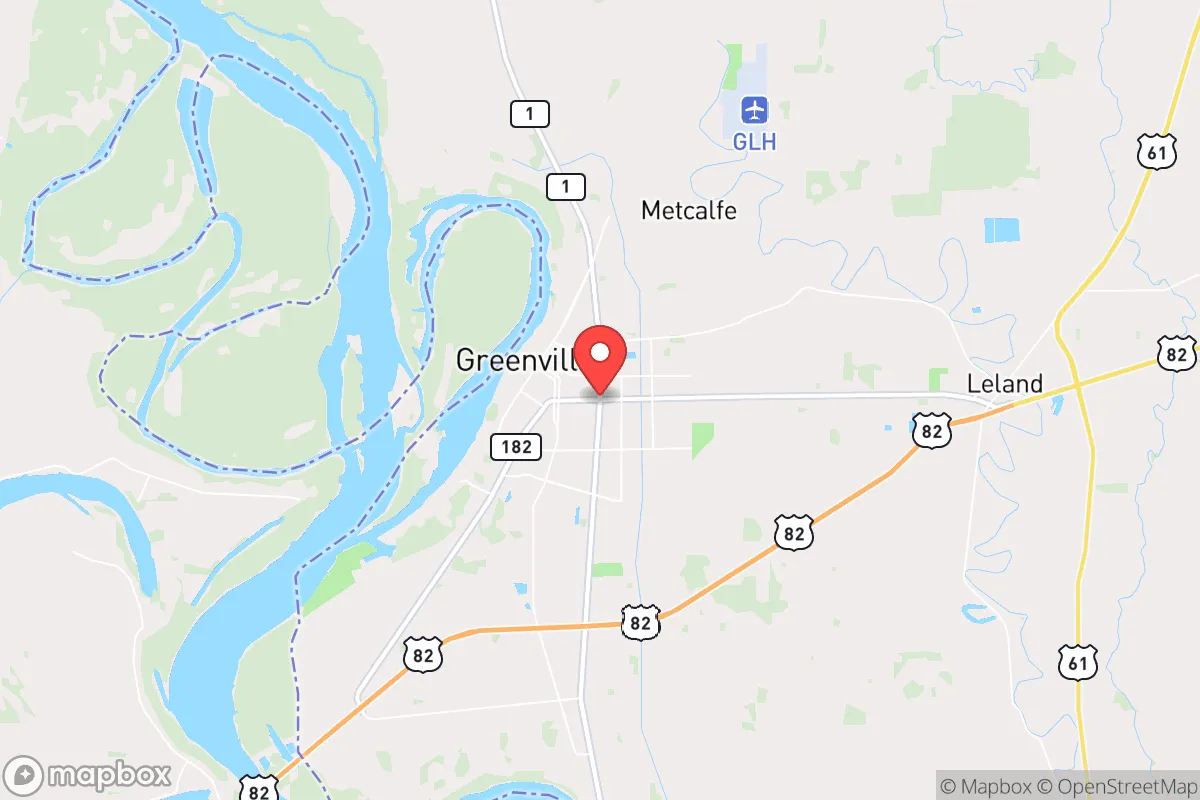
Greenville’s location in Washington County places it roughly 90 miles from Memphis, 120 miles from Jackson, and 140 miles from Little Rock—far enough to avoid the immediate fallout zones of a major strike or the cascading chaos of a city collapse, but close enough to access regional resources if needed. The Mississippi River forms the western boundary, providing a massive, renewable water source that can be filtered and used for drinking, irrigation, and sanitation. The surrounding Delta flatlands are some of the most fertile agricultural soils in the world, meaning that with basic knowledge and tools, a family could produce significant food on a small plot. The area’s low population density—Washington County has roughly 40,000 people spread over 760 square miles—means fewer neighbors to compete with for resources during a crisis. The river also acts as a natural defensive barrier to the west, slowing any movement from Arkansas into the area and creating a chokepoint at the few bridges and ferries.
Risks, exposures, and proximity to fallout-relevant landmarks
Greenville is not without its vulnerabilities. The most immediate threat is flooding—the Mississippi River has breached levees multiple times in the past century, with the 1927 and 2011 floods being catastrophic. Any long-term setup must account for flood-proofing or elevation of structures, especially within the levee system. The area is also in a seismically active zone—the New Madrid Seismic Zone, roughly 150 miles north, could produce a major earthquake that would liquefy the Delta soil, destroy infrastructure, and potentially breach the levees. In terms of man-made threats, Greenville is far from the obvious nuclear targets: no major military bases, no strategic command centers, no large-scale industrial complexes that would draw a first strike. The nearest significant target is Memphis (FedEx hub, major bridges, and a nuclear research facility at Oak Ridge is about 250 miles east). The risk of fallout from a Memphis strike would be moderate, depending on wind patterns, but the distance and the river’s flow direction (south) mean that ground contamination would likely be manageable with basic decontamination protocols. The biggest risk is not a direct hit but the secondary effects: refugees fleeing Memphis or Jackson, supply chain collapse, and the breakdown of local law enforcement. Greenville already has a high crime rate and a struggling local economy, which means that during a crisis, the existing social fabric could fray quickly.
Practical resilience for a relocator: food, water, energy, and defensibility
For a relocator serious about self-sufficiency, Greenville offers a mixed bag. Water is abundant—the Mississippi River is right there, and the shallow alluvial aquifer means wells are cheap and productive. A hand pump or solar-powered pump on a shallow well can provide all the water a family needs without relying on municipal systems. Food production is the area’s strongest suit. The growing season is long (March to November), and the soil is rich. A half-acre garden can produce enough vegetables for a family of four, and the local hunting (deer, turkey, waterfowl) is excellent. The Delta is also a major catfish farming region, providing a protein source that can be raised in ponds. Energy independence is harder. The grid is aging and prone to outages during storms. Solar is viable—the area gets about 215 sunny days per year—but the flat terrain means no micro-hydro potential. Wind is marginal. A propane generator with a large tank is the most practical backup, and wood stoves are common for heating. Defensibility is the weak point. The terrain is flat and open, with no natural chokepoints or high ground. A rural property with a good perimeter fence, clear sightlines, and a defensible structure (brick or concrete) is essential. The nearest law enforcement is the Washington County Sheriff’s Office, which is understaffed and underfunded. In a prolonged crisis, you are on your own. The local population is predominantly poor and dependent on government assistance, which could create a resource competition scenario if supply chains fail. Building a network of like-minded neighbors is critical—isolated homesteads are vulnerable to roaming groups.
The overall strategic picture for a conservative relocation
Greenville is not a comfortable place to live in normal times—it has high poverty, limited healthcare access, and a depressed economy. But for the prepper who values low visibility, abundant natural resources, and distance from major targets, it offers a foundation that few other locations in the lower 48 can match. The key is to arrive with a plan: secure a well, build a flood-proof structure, establish a garden and food storage system, and connect with the small but existing network of rural conservatives and homesteaders in the Delta. The area’s history of resilience—surviving floods, economic collapse, and population loss—means that the people who remain are tough and self-reliant. If you can handle the isolation, the humidity, and the mosquitoes, Greenville provides a strategic base that is off the radar of most preppers and far from the blast zones of a major conflict. It is not a bug-out location for a weekend; it is a long-term settlement for those willing to work the land and accept the trade-offs. In a world where the coasts and major cities are increasingly unstable, the Mississippi Delta offers a forgotten corner of America that still has the raw ingredients for survival.

* Values derived from national, state, county, city and local statistics and may differ in a specific area. Last updated: 2026-04-19T14:58:41.000Z
Narrative content on this page is AI-generated and may contain mistakes. Verify any details that matter before acting on them.
ReloMaps may earn a commission from affiliate links at no extra cost to you.

