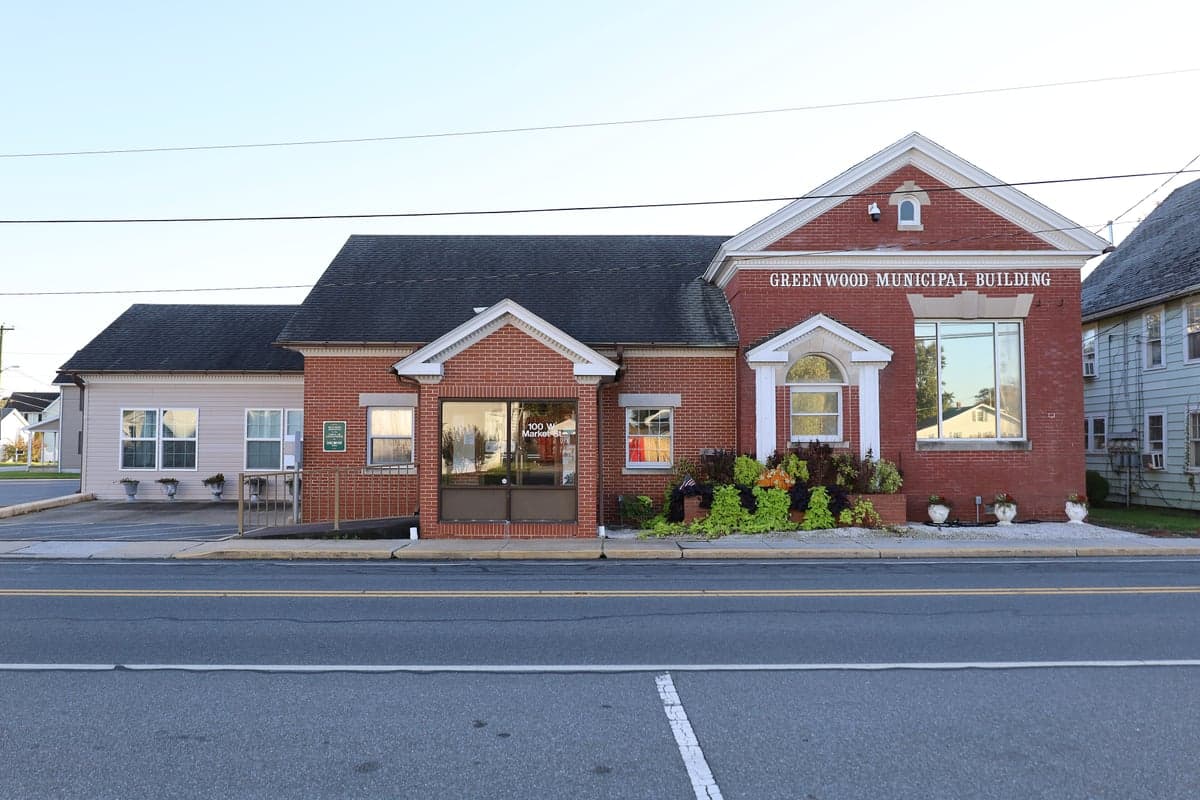
Photo: Wikipedia
Strategic Assessment of Greenwood, DE
Multiple tactical vulnerabilities. Population density, target proximity, or disaster risk are likely compounding. A retreat property and exit planning is required.
What does the Strategic Assessment tell us?
Our Strategic Assessment grades tactical survivability of an area. Major population centers, military targets, fallout zones, natural disasters, and border exposure all drive risk — lower exposure means a more defensible position in a crisis.
This is heavily inspired by Joel Skousen's Strategic Relocation book. Highly recommended you checkout the book ($)What does this tell us?
Our Strategic Assessment grades tactical survivability of an area. Major population centers, military targets, fallout zones, natural disasters, and border exposure all drive risk — lower exposure means a more defensible position in a crisis.
This is heavily inspired by Joel Skousen's Strategic Relocation book. Highly recommended you checkout the book ($)Strategic Pillars

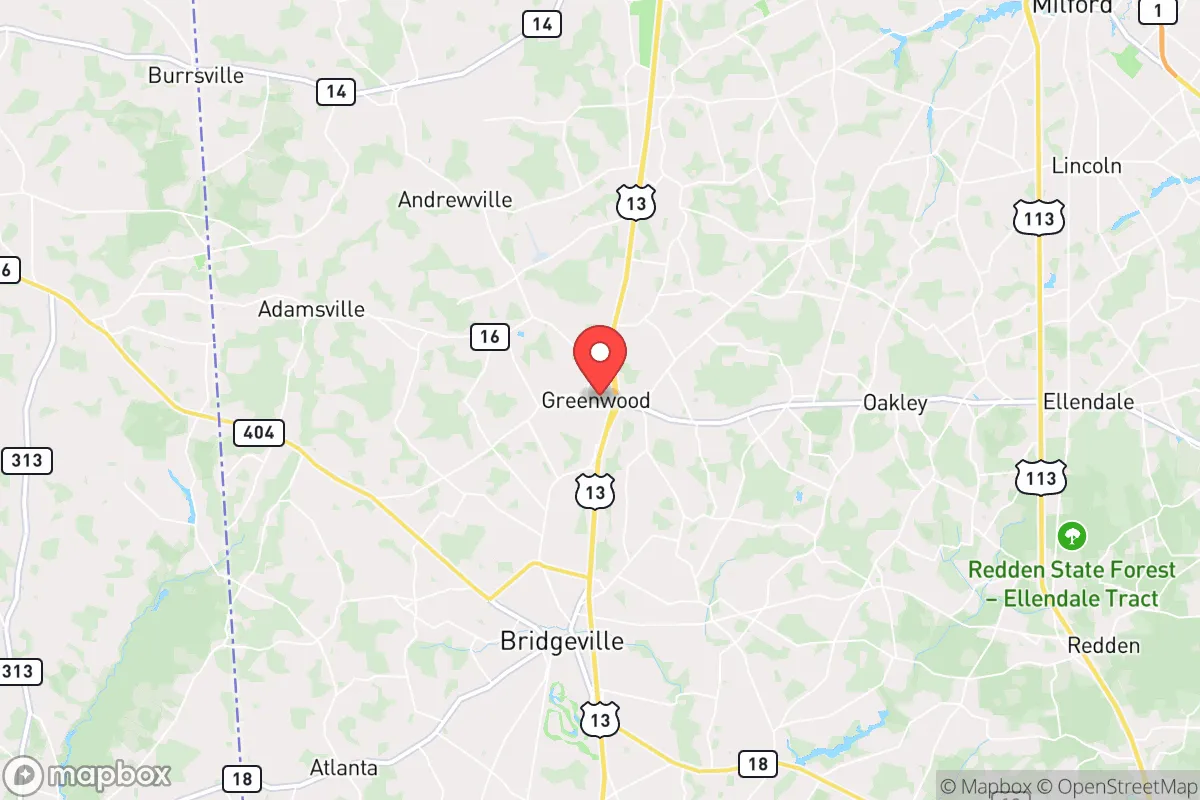
Key Distances
Regional Safe Places
Below is our recommended "safe zones" in Delaware and the surrounding area based on our strategic heuristics. For most people, it's unrealistic to live in a “safe zone” full-time due to work, family or other personal reasons. They tend to be more rural. However, many of these areas are perfect for second homes and retreat properties that double as a vacation home or even a short-term rental.
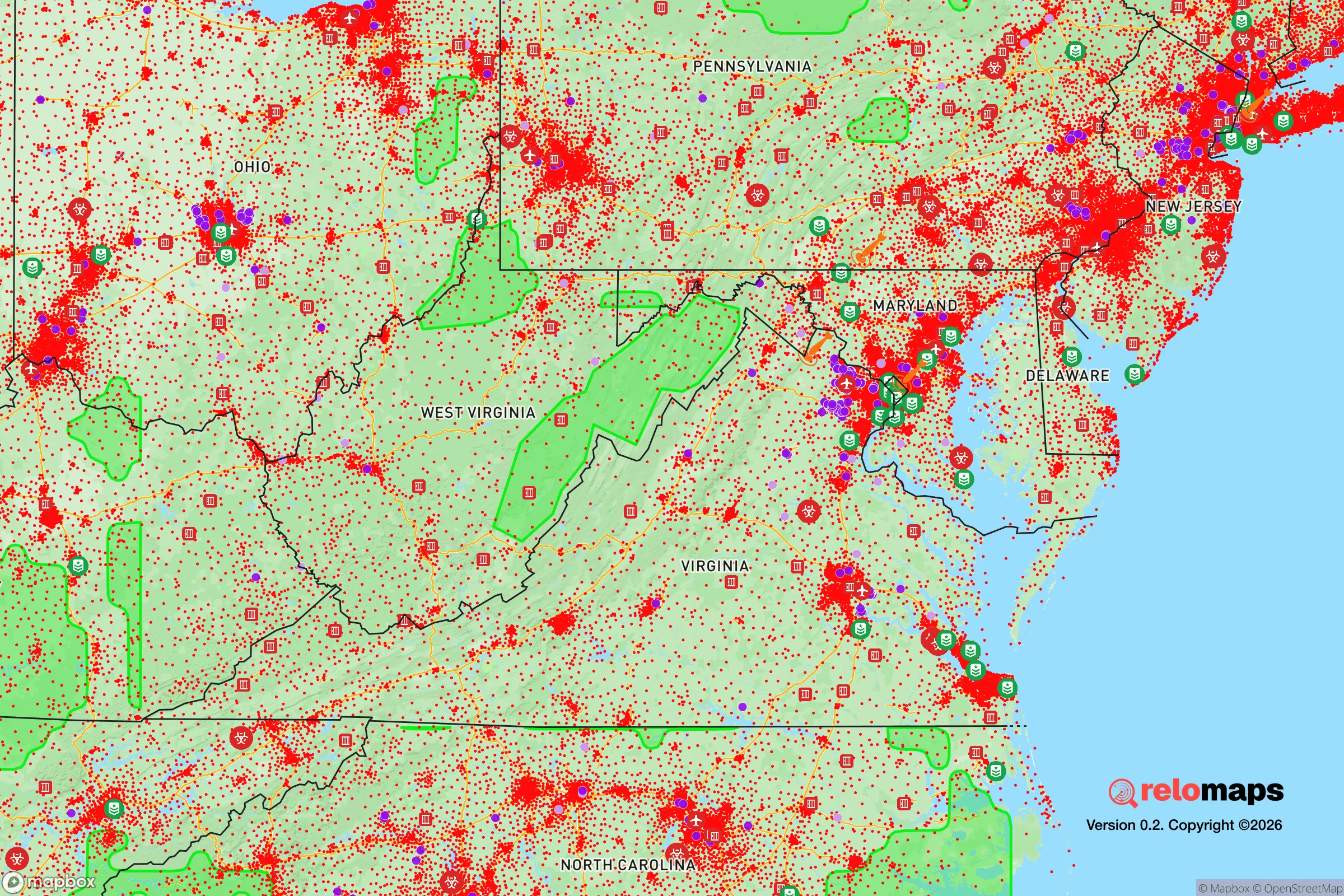
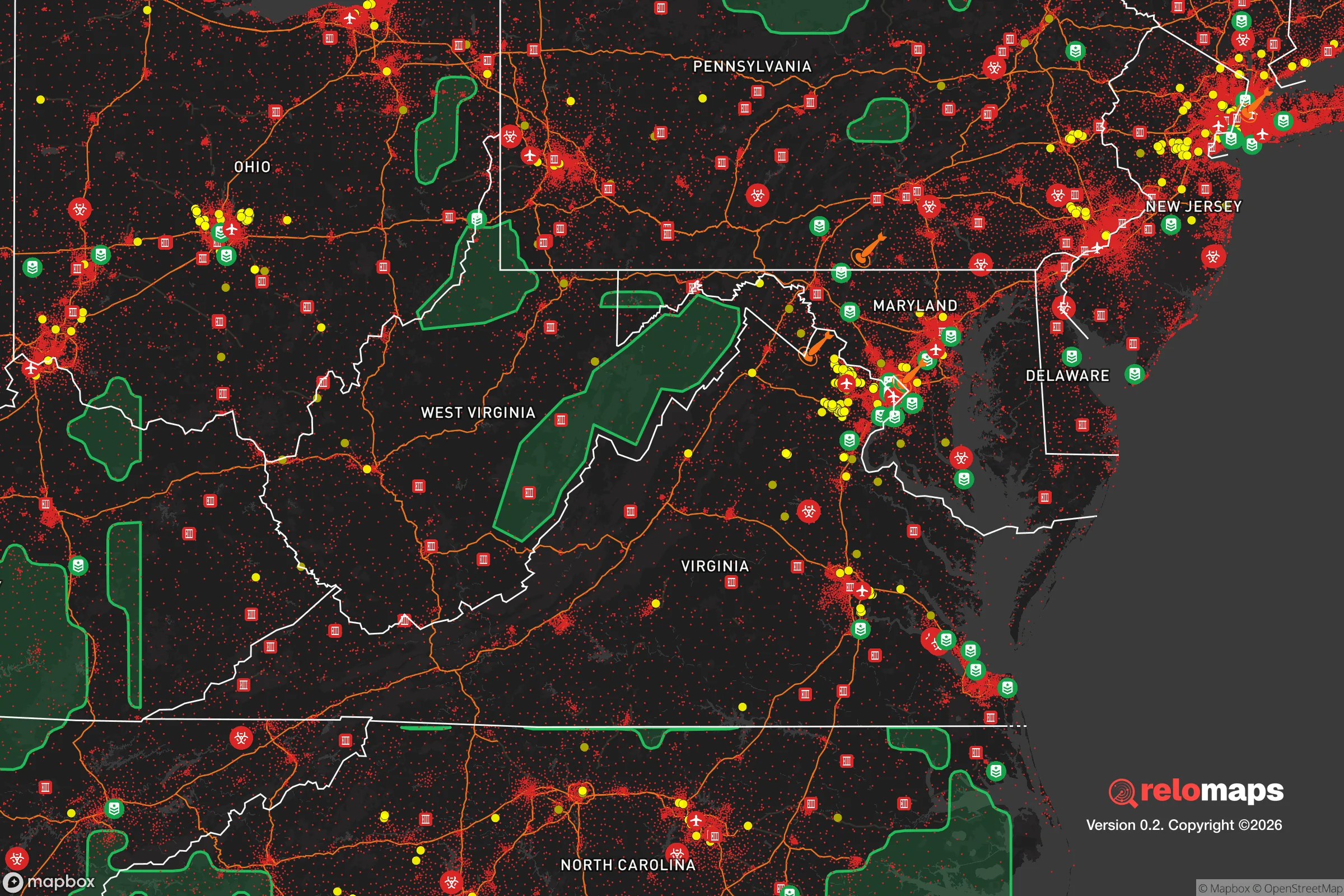


Important Note: For informational purposes only. This does not mean nothing bad ever happens in the green zones. Please use common sense. This is based on public data and modeled with AI. We tried to take a conservative approach but mistakes happen. We update this regularly as new information becomes available.
Solar Generator Recommendations
Backup power matters more here than in safer locations. We've picked three solar generators across budgets and capacity tiers — start with the budget unit if you only need a few essentials, or step up if you want to run a fridge and HVAC for days at a time.

Jackery Portable Power Station Explorer 300
Budget OptionPower on the Go: Weighing only 11 lbs, it's convenient to set up and store with book-sized foldable solar panels

BLUETTI Portable Power Station AC180
Designed for both indoor and outdoor scenarios, AC180 is highly capable as it has a robost capacity and continuous output power.

EF ECOFLOW DELTA Pro Ultra Power Station
Upgraded PickEcoFlow DELTA Pro Ultra is a whole-home energy system designed to grow with your family. Integrated with the Smart Home Panel 2, it scales to meet your evolving energy needs — keeping your home powered, intelligent, and secure through every stage of life.
We earn a commission, at no additional cost to you.
Strategic Assessment Analysis
Greenwood, Delaware, offers a compelling strategic position for those prioritizing resilience and self-sufficiency in an era of increasing uncertainty. Located in Sussex County, this small town of roughly 1,100 residents sits at a deliberate distance from major metropolitan corridors—about 30 miles from the Salisbury, MD regional hub and over 90 miles from the Philadelphia and Baltimore metro areas—which significantly reduces exposure to the cascading failures that often accompany urban unrest or mass casualty events. The area’s low population density, agricultural character, and relative isolation from interstate choke points make it a viable base for a prepared individual or family seeking a buffer from the volatility of coastal population centers. For a conservative-leaning audience concerned with civic stability and national resilience, Greenwood’s combination of rural seclusion, access to productive farmland, and proximity to the Delmarva Peninsula’s natural resources warrants a serious look as a potential relocation target.
Geographic position and natural advantages for long-term security
Greenwood’s geographic advantages are rooted in its position on the Delmarva Peninsula, a region that offers a natural defensive buffer. The town sits roughly 25 miles inland from the Atlantic coast, placing it outside the immediate blast and fallout zones of coastal military or industrial targets, while still providing access to maritime resources. The surrounding Sussex County landscape is dominated by flat, fertile agricultural land—corn, soybeans, and poultry operations—which means local food production capacity is high. The Nanticoke River and its tributaries run within a few miles, offering reliable freshwater sources for those who plan for off-grid water collection or well drilling. The area’s temperate climate supports year-round gardening and livestock raising, with a growing season of about 180 days. For a prepper mindset, this means the land itself can sustain a household with proper planning, unlike arid or overbuilt regions where food and water security are fragile. The absence of major military bases, nuclear power plants (the nearest is Salem/Hope Creek in NJ, about 60 miles north), or high-value infrastructure targets within a 50-mile radius further reduces the risk of being caught in a primary strike or secondary fallout plume during a mass casualty event.
Risks, exposures, and proximity to fallout-relevant landmarks
No location is without vulnerabilities, and Greenwood’s strategic assessment requires a clear-eyed look at its exposures. The most significant risk is its proximity to the Delmarva Power & Light electrical substations and the regional grid that feeds into the PJM Interconnection—a centralized energy system that could become a target during civil unrest or cyberattacks. While Greenwood itself is not a primary target, a prolonged grid-down scenario would affect the entire peninsula, and the town’s reliance on well water (most rural homes use private wells) means power loss directly impacts water access unless backup systems are in place. The nearest major fallout-relevant landmark is the Salem Nuclear Generating Station in New Jersey, approximately 60 miles northeast. Under prevailing wind patterns (typically west-to-east), a plume from Salem would likely track eastward over the Atlantic, but a shift in wind direction could carry fallout across Delaware Bay toward the peninsula. Greenwood sits far enough away to avoid acute radiation exposure in most scenarios, but preppers should plan for at least two weeks of shelter-in-place supplies and air filtration. Additionally, the town is about 35 miles from Dover Air Force Base, a major military airlift hub that could become a staging area during national emergencies, potentially drawing secondary unrest or military traffic through the region. The flat, open terrain also offers limited natural concealment—defensible positions are more about rural distance than topography.
Practical resilience for a relocator: food, water, energy, and defensibility
For a relocator serious about self-sufficiency, Greenwood’s practical resilience hinges on three pillars: local food systems, water access, and community dynamics. The surrounding agricultural economy means that bulk food purchasing from local farms (e.g., poultry from Perdue or Allen Harim operations, grain from Sussex County cooperatives) is feasible, and the presence of Amish and Mennonite communities within a 20-mile radius offers a network of skilled tradespeople and alternative energy expertise. Water security is strong for those who drill a private well (typical depth 100-200 feet, with good aquifer yields) and install a hand pump or solar-powered pump as a backup. The shallow water table in the region also makes rainwater catchment viable, with average annual rainfall of about 45 inches. Energy resilience requires deliberate investment: the grid is reliable in normal times but vulnerable to storms and cascading failures. Solar panels with battery storage are a common sight in rural Sussex County, and propane generators are widely used. Defensibility is moderate—the town’s layout is a traditional small grid with a central square, making it easy to monitor approaches, but the surrounding farmland offers little cover for a retreat. A better strategy is to secure a property on the outskirts with a long driveway, clear sightlines, and a well-stocked root cellar or storm shelter. The local population skews older and more conservative, which can be an asset for community cohesion during crises, but newcomers should invest time in building relationships with neighbors before relying on mutual aid.
The overall strategic picture for Greenwood, Delaware, is one of calculated trade-offs. It offers a genuine buffer from the chaos of urban collapse, with strong natural resources for food and water, a low target profile, and a community that values self-reliance. The downsides—grid dependency, flat terrain, and moderate proximity to military and nuclear infrastructure—are manageable with proper planning and investment in off-grid systems. For a conservative individual or family looking to establish a resilient foothold away from the fray, Greenwood represents a solid, unglamorous option that prioritizes substance over flash. It is not a bug-out location for a weekend; it is a place to build a life that can withstand the shocks ahead, provided you arrive prepared to dig a well, plant a garden, and know your neighbors.

* Values derived from national, state, county, city and local statistics and may differ in a specific area. Last updated: 2026-04-29T23:15:31.000Z
Narrative content on this page is AI-generated and may contain mistakes. Verify any details that matter before acting on them.
ReloMaps may earn a commission from affiliate links at no extra cost to you.

