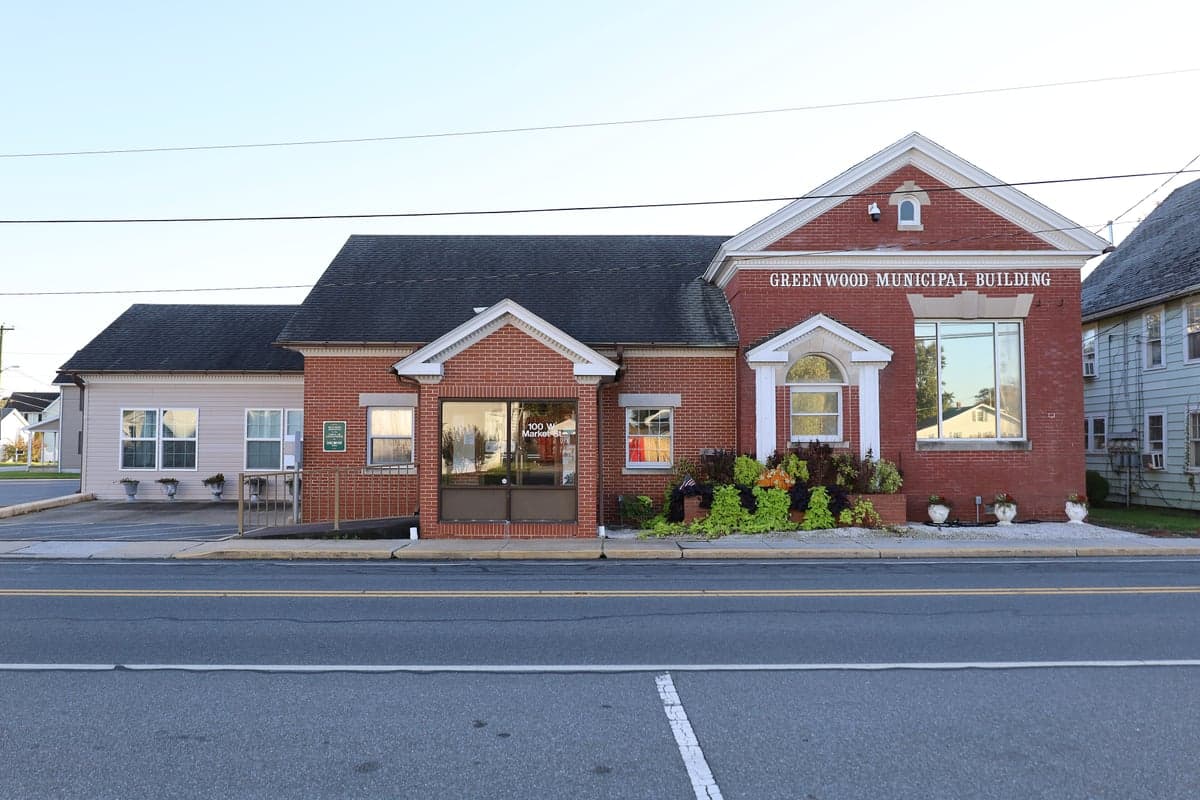
Photo: Wikipedia
Political ClimatePolitical Climate in Greenwood, DE
District shown is the primary district for this city’s centroid. Cities may span multiple districts.
Inherited from parent state — no local data available.
Local Political AnalysisPolitical Analysis of Greenwood, DE
Greenwood, Delaware, sits in a county that leans solidly Democratic, with a Cook PVI of D+8, but if you’ve lived here as long as I have, you know that number doesn’t tell the whole story. The political climate has shifted noticeably over the past decade, moving from a quiet, live-and-let-live rural town to a place where progressive policies are increasingly the norm. It’s not the same Greenwood I remember from the 1990s, when folks mostly agreed that government should stay out of your business and your backyard.
How it compares
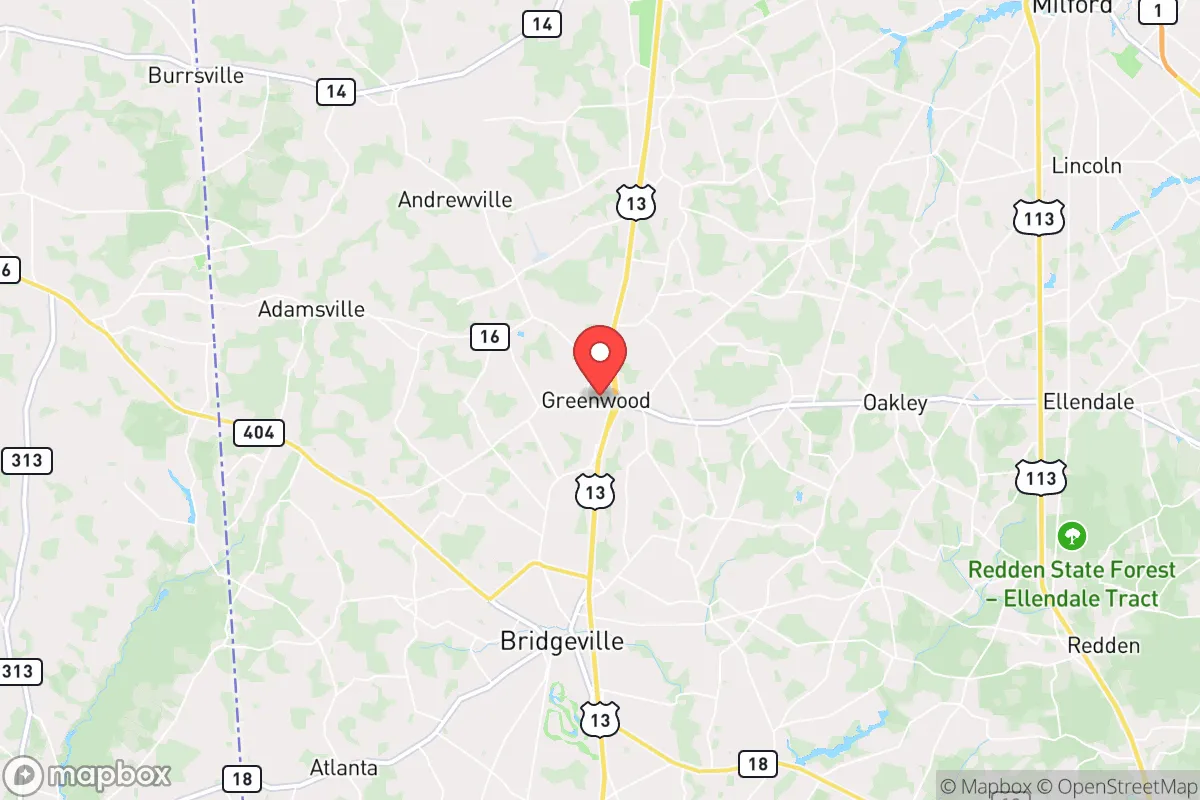
Drive just 15 miles west to Bridgeville, and you’ll find a community that still votes reliably red, with a more traditional, small-government mindset. Head north toward Dover, and the contrast sharpens—Dover’s politics are heavily influenced by state government and a more diverse population, making it a Democratic stronghold. Greenwood, by contrast, is caught in the middle: we’re not as conservative as Bridgeville, but we’re not as liberal as the capital. The D+8 rating reflects Sussex County’s overall lean, but in Greenwood proper, you’ll hear more grumbling about property taxes and school mandates than you will about expanding social programs. The surrounding rural areas—like tiny Ellendale to the east—still vote Republican, but the town itself has been trending left, especially among newer residents who commute to jobs in Dover or even Wilmington.
What this means for residents
For those of us who value personal freedoms, the shift is concerning. Local government has become more willing to impose regulations on everything from short-term rentals to lawn maintenance, and there’s a growing push for zoning changes that could limit what you can do with your own land. The school board, once a sleepy affair, now sees heated debates over curriculum and library books, with progressive members advocating for policies that many of us see as overreach. Property taxes have crept up to fund new initiatives—like expanded public transit and affordable housing programs—that sound good on paper but hit your wallet hard. If you’re a longtime resident, you feel the squeeze: your rights to hunt on your own property, run a small business from home, or even park your boat in the driveway are getting nibbled away by new ordinances.
Looking ahead, I expect the trend to continue. Greenwood’s proximity to the beaches—Rehoboth and Lewes are only 25 minutes away—means we’re attracting retirees and remote workers from blue states who bring their politics with them. They want bike lanes, farmers markets, and “sustainability” initiatives, which sound nice, but they don’t always understand the rural culture that’s been here for generations. The town council elections in 2025 saw two progressive candidates win seats, and I wouldn’t be surprised if the next few years bring stricter environmental rules or even a push for rent control. For now, the best advice I can give is to get involved in local meetings—because if you don’t speak up, the folks who think government knows best will keep chipping away at the freedoms that made this town worth living in.

State Political ClimatePolitical Climate in Delaware
State Political AnalysisPolitical Environment in the State
Delaware has long been a blue state in presidential elections, voting Democratic by double digits in every cycle since 2008, but its political landscape is far more nuanced than the statewide totals suggest. The northernmost county, New Castle, home to Wilmington and the corporate suburbs, drives the state’s leftward lean with overwhelming Democratic margins, while Kent and Sussex counties in the south have been steadily trending red. Over the past two decades, the state has shifted from a moderate, business-friendly Democratic stronghold to a more progressive policy environment, particularly on taxes, education, and social issues, though a growing conservative foothold in the southern half is creating a genuine cultural and political divide.
Urban vs. rural divide
The political map of Delaware is essentially a tale of three counties. New Castle County, anchored by Wilmington and its sprawling suburbs like Newark and Bear, delivers roughly 60-65% of the state’s Democratic vote. This is the engine of the party’s power, fueled by government employees, university faculty at the University of Delaware, and corporate professionals in the financial and pharmaceutical sectors. In contrast, Kent County, centered on Dover, is a true swing area—Dover itself leans Democratic due to state government workers, but the surrounding rural towns like Felton and Harrington vote heavily Republican. Sussex County, the state’s fastest-growing region, is the conservative heartland. Towns like Georgetown, Millsboro, and Seaford are reliably red, driven by agriculture, poultry processing, and a rapidly growing retiree population from the Mid-Atlantic. The 2024 election saw Sussex County vote for Trump by a margin of roughly 58-40, while New Castle went for Harris by nearly 65-33. This urban-rural split is widening as more conservatives flee high-tax northern states for Sussex’s lower cost of living and more traditional values.
Policy environment
Delaware’s policy environment is a mixed bag that should give any freedom-minded newcomer pause. The state has no sales tax, which is a plus, but it compensates with high personal income taxes—the top marginal rate is 6.6%, and property taxes are moderate but rising. The corporate tax structure is business-friendly on paper, but the regulatory climate has become noticeably more burdensome under Governor John Carney and the Democratic-controlled legislature. Education policy is a flashpoint: the state has embraced Common Core and progressive curriculum mandates, and parental rights in education have been eroded by laws like the 2021 “Healthy Youth Act,” which mandates comprehensive sex education without an opt-out provision for parents. Election laws are a concern for conservatives—Delaware has no voter ID requirement, automatic voter registration, and same-day registration, which critics argue undermines election integrity. Healthcare policy is heavily regulated, with a state-run insurance exchange and Medicaid expansion, but the state has resisted some of the more extreme progressive pushes, like a single-payer system. Gun rights are relatively protected compared to neighboring Maryland or New Jersey, but the 2022 passage of a permit-to-purchase law and a ban on “assault weapons” (defined broadly) has alarmed Second Amendment advocates.
Trajectory & freedom
Delaware is becoming less free by any objective measure, particularly for conservatives. The 2022 gun control package, which included a permit requirement, a ban on magazines over 17 rounds, and a “red flag” law, was a major expansion of government overreach. On medical autonomy, the state legalized recreational marijuana in 2023, but the regulatory framework is so restrictive that many small businesses are priced out. Property rights have taken a hit with the passage of statewide rent control preemption and a “just cause” eviction law in 2024, which limits a landlord’s ability to non-renew a lease. Parental rights suffered a blow with the 2023 “Youth Mental Health Protection Act,” which allows minors to consent to mental health treatment without parental notification. On the positive side, Delaware has no state income tax on Social Security benefits, which is a draw for retirees, and it has resisted some of the more extreme COVID-era mandates that plagued other blue states. However, the overall trajectory is toward more regulation, higher taxes, and less individual autonomy.
Civil unrest & political movements
Delaware is not a hotbed of civil unrest, but there have been notable flashpoints. In 2020, Wilmington saw several nights of protests and property damage following the George Floyd incident, with the city’s left-leaning mayor and police chief taking a soft approach that frustrated many residents. The state has a strong, organized progressive activist network centered in Newark and Wilmington, pushing for environmental justice, racial equity, and LGBTQ+ rights. On the right, the conservative movement is growing in Sussex County, with groups like the Sussex County Republican Committee and the Delaware Family Policy Council gaining influence. Immigration politics are relatively quiet—Delaware is not a sanctuary state, but Wilmington has a “welcoming city” ordinance that limits cooperation with ICE. Election integrity remains a concern for conservatives: the 2020 election saw widespread use of mail-in ballots without a signature verification requirement, and a 2022 law made permanent no-excuse absentee voting. There have been no major secession or nullification movements, but the cultural divide between north and south is palpable—a newcomer in Georgetown will feel like they’re in a different country than someone in Newark.
Projection
Over the next 5-10 years, Delaware will likely become more polarized. The northern suburbs of New Castle County are becoming denser and more progressive, driven by an influx of young professionals from Philadelphia and Washington, D.C. Meanwhile, Sussex County is booming with conservative retirees and families fleeing high-tax states like New York and New Jersey. This demographic shift could flip the state’s congressional delegation—currently all Democrats—if the southern counties continue to grow faster than the north. However, the state legislature is gerrymandered to protect Democratic incumbents, so policy will likely continue its leftward drift. A newcomer moving in now should expect higher taxes, more regulation on housing and business, and a growing cultural war between the progressive north and the conservative south. The state’s fiscal health is a concern—Delaware has a large unfunded pension liability, and the recent expansion of social programs will likely require tax increases down the road.
For a conservative relocating to Delaware, the bottom line is this: choose your county carefully. If you value low taxes, traditional values, and a slower pace of life, Sussex County is your best bet. If you’re looking for a more moderate environment with decent schools and proximity to major cities, Kent County offers a balance. Avoid New Castle County unless you’re comfortable with high taxes, progressive policies, and a government that increasingly sees itself as your caretaker. The state’s political trajectory is concerning, but there are still pockets of freedom—you just have to know where to look.
* Values derived from national, state, county, city and local statistics and may differ in a specific area. Last updated: 2026-04-29T23:15:31.000Z
Narrative content on this page is AI-generated and may contain mistakes. Verify any details that matter before acting on them.
ReloMaps may earn a commission from affiliate links at no extra cost to you.

