 Popular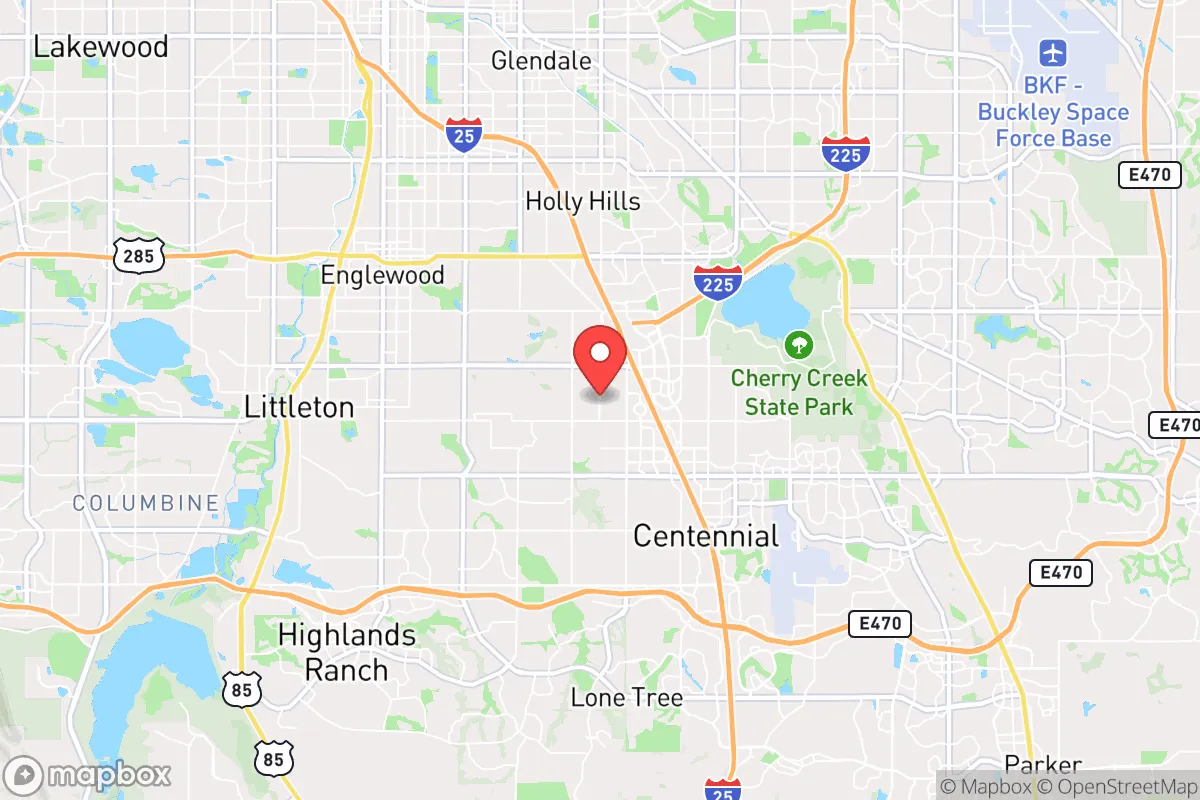
Photo: Wikipedia
Demographics of Greenwood Village, CO
Affluence Level in Greenwood Village, CO
A wealthy area with high-earning, well-educated households. Incomes, home values, and educational attainment meaningfully outpace national averages.
People of Greenwood Village, CO
Greenwood Village, Colorado, is home to 15,485 residents who form one of the Denver metro area's most affluent and highly educated enclaves, with nearly 79% holding a college degree. The city is predominantly white (77.6%) but has seen measurable growth in East/Southeast Asian (6.8%) and Indian-subcontinent (4.6%) communities, alongside a Hispanic population of 7.1% and a very small Black population of 0.5%. Foreign-born residents make up 9.1% of the population, reflecting a selective, professional-class immigration pattern rather than a broad ethnic mix. The city's character is defined by low-density, master-planned subdivisions, top-tier public schools, and a tax-conscious, family-oriented civic culture that appeals to conservative-leaning professionals and entrepreneurs.
How the city was settled and grew
Greenwood Village was not a pioneer settlement or railroad town. The area was originally part of the vast Arapaho hunting grounds before being claimed by white homesteaders in the 1860s. The land remained sparsely populated ranchland through the early 20th century, with the first significant development occurring after World War II. The city was formally incorporated in 1950 as a way for residents to control zoning and avoid annexation by the expanding City of Denver. The original settlers were predominantly white, middle-class families moving out of Denver proper, drawn by large lots and lower taxes. The earliest subdivisions—Homestead in the Village and Greenwood Hills—were built in the 1950s and 1960s, attracting engineers, small business owners, and professionals working at the nearby Denver Tech Center, which opened in the 1960s. These neighborhoods remain the core of the city's older housing stock and are still predominantly white and established.
Modern era (post-1965)
The 1965 Immigration and Nationality Act opened the door for professional-class immigration from Asia and the Indian subcontinent, and Greenwood Village's proximity to the Denver Tech Center made it a natural landing spot for highly skilled workers in technology, finance, and healthcare. The 1980s and 1990s saw the construction of newer, larger homes in neighborhoods like Cherry Hills Vista and University Hills (the portion within Greenwood Village), which attracted Indian-subcontinent and East/Southeast Asian families seeking top-ranked Cherry Creek School District schools. Today, the Indian-subcontinent community (4.6%) is concentrated in these newer subdivisions, while the East/Southeast Asian population (6.8%) is more evenly spread across the city. The Hispanic population (7.1%) is smaller and more dispersed, with no single ethnic enclave, reflecting a pattern of professional-class Hispanic families rather than a labor-migrant community. The Black population remains minimal at 0.5%, with no historic neighborhood concentration. The city's overall racial composition has shifted only modestly since 2000: the white share has declined from the mid-80% range to 77.6%, while Asian and Indian shares have each grown by 2-3 percentage points.
The future
Greenwood Village is likely to continue its gradual diversification at the top of the income scale. The city's zoning is heavily restrictive—minimum lot sizes of one acre in many areas—which limits new construction and keeps housing prices high, filtering for buyers with significant financial resources. The Indian-subcontinent and East/Southeast Asian populations are expected to grow slowly as second-generation professionals remain in the area or return after college, but the city is not experiencing rapid ethnic turnover. The Hispanic population is projected to hold steady or rise slightly, driven by professional-class families rather than immigration. The white population will likely continue a slow decline but will remain the overwhelming majority for the foreseeable future. The city is not tribalizing into distinct ethnic enclaves; rather, it is homogenizing by income and education level, with all groups sharing the same neighborhoods, schools, and civic spaces. The biggest demographic pressure point is aging: the median age is 47.3, well above the national average, and younger families are being priced out by the lack of affordable entry-level homes.
For a conservative-leaning mover today, Greenwood Village offers a stable, low-crime, high-amenity environment where demographic change has been gradual and income-driven rather than disruptive. The city is becoming slightly more diverse at the professional level, but its core identity—affluent, educated, family-oriented, and politically center-right—remains intact. The key trade-off is that this stability comes at a high entry cost, both in home prices and in the limited housing inventory for younger buyers.

* Values derived from national, state, county, city and local statistics and may differ in a specific area. Last updated: 2026-04-27T14:33:51.000Z
Narrative content on this page is AI-generated and may contain mistakes. Verify any details that matter before acting on them.
ReloMaps may earn a commission from affiliate links at no extra cost to you.

