 Popular
Photo: Wikipedia
Quality of Life in Greenwood Village, CO
Above-average quality of iife. The area offers a reasonable cost of living, decent mobility, and a mix of neighborhood amenities.
What does Quality of Life tell us?
Quality of Life blends cost of living, nearby amenities, socioeconomic signals, and neighborhood character. City-level scores represent the whole municipality; individual neighborhoods can differ.
What does this tell us?
Quality of Life blends cost of living, nearby amenities, socioeconomic signals, and neighborhood character. City-level scores represent the whole municipality; individual neighborhoods can differ.
Cost of Living
181% above national average
The Real Cost of Living in Greenwood Village, CO for 2026
| Tier | Individual | Family (4) |
|---|---|---|
| Survival | $34k | $64k |
| Comfortable | $236k | $347k |
| Luxury | $263k+ | $408k+ |
| Elite (Top 5%) | $482k+ | $748k+ |
42%
The Area Signal
A metric tracking the socioeconomic signals of the area.
Hobbies
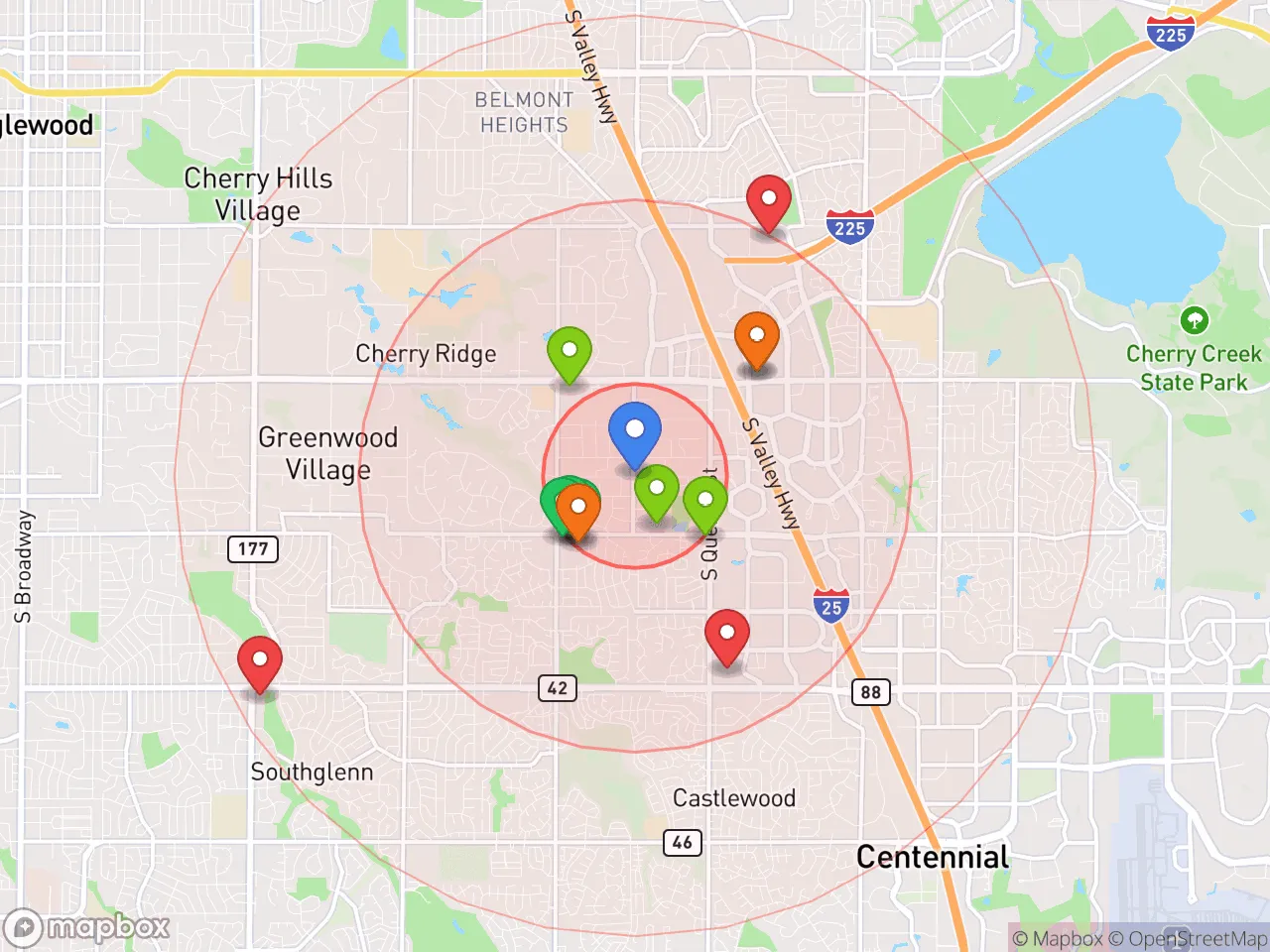
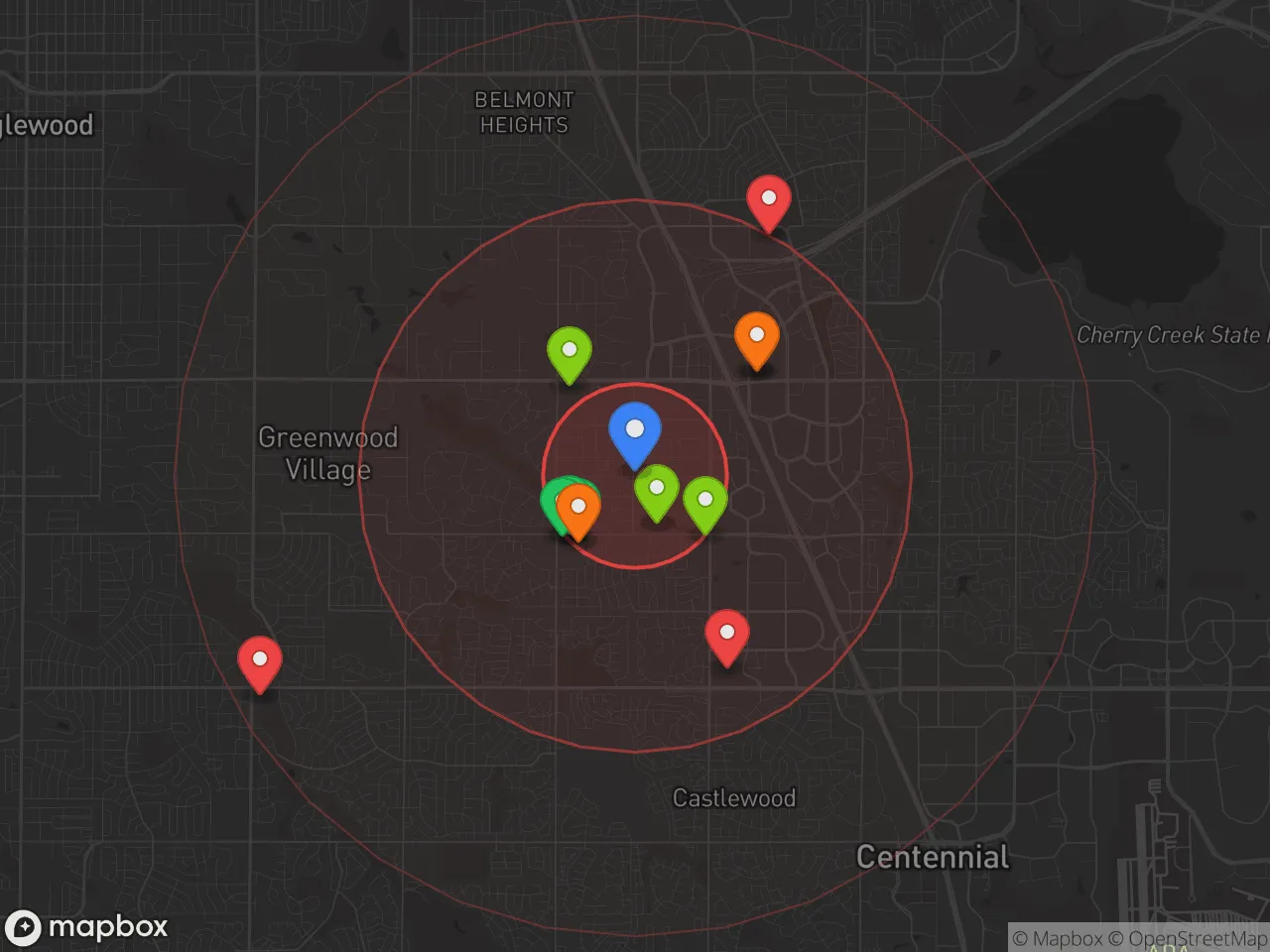
Explore the areaGroceries
7 within 10 miles
Gas
20 within 10 miles
Hospital
20 within 20 miles
Airport
DEN — Denver International
Post Office
USPS — Greenwood Village, CO
Critical Amenities
Quality-of-Life Analysis
Greenwood Village, Colorado, is one of the Denver metro area’s most affluent suburbs, defined by a population of high-income professionals, executives, and families drawn to its exceptional schools, low crime rates, and proximity to the Denver Tech Center (DTC). With a cost of living index of 281—nearly three times the national average—the city is a deliberate choice for those who prioritize top-tier public education, manicured neighborhoods, and a quiet, secure environment over affordability. The median household income exceeds $150,000, and the community skews heavily toward married couples with children, creating a stable, family-oriented social fabric.
Cost of living, housing, and affordability compared to nearby areas
Greenwood Village’s cost of living is the highest in the south Denver suburbs, driven almost entirely by housing. The median home value sits at $1,213,300, roughly double the Denver metro median of around $600,000 and more than triple the national figure. For renters, the median rent of $2,119 is significantly higher than in neighboring Centennial ($1,800) or Aurora ($1,550), though it is comparable to Cherry Hills Village and parts of Highlands Ranch. The average commute of 21.3 minutes is notably shorter than the Denver metro average of 27 minutes, a direct benefit of the city’s location adjacent to the I-25 and I-225 interchange and the DTC employment hub. Property taxes are moderate for Colorado (approximately 0.5% of assessed value), but the high home prices mean a typical annual tax bill of $6,000–$7,000. For buyers, the market is competitive; homes under $1 million are rare and often require bidding wars. Renters face a vacancy rate below 3%, making it difficult to find units without a broker fee or a 12-month lease commitment.
What daily life is like for families: schools, parks, and local amenities
Daily life in Greenwood Village revolves around the Cherry Creek School District, one of Colorado’s highest-rated public systems. The district’s three elementary schools within the city—Greenwood, Belleview, and Heritage—all earn GreatSchools ratings of 9 or 10, and the zoned high school, Cherry Creek High School, is a nationally recognized Blue Ribbon school with a 96% graduation rate and extensive Advanced Placement offerings. The city itself maintains over 400 acres of parkland, including the 80-acre Greenwood Village Park with sports fields, a dog park, and a 1.5-mile paved trail loop. The Village Center shopping district at Orchard Road and University Boulevard provides upscale grocery (Whole Foods, King Soopers), boutique fitness studios, and casual dining like The Original Brooklyn’s and Sushi Den. For entertainment, residents walk or bike to the Fiddler’s Green Amphitheatre (a 17,000-seat outdoor venue) and the nearby Streets at SouthGlenn mall in Centennial. The rhythm is distinctly suburban: morning school drop-offs, midday errands at the DTC-adjacent shops, and evenings spent at youth soccer games or neighborhood block parties. Traffic on Arapahoe Road and Orchard Road peaks at 8–9 AM and 5–6 PM, but the city’s grid of collector streets keeps most residential areas quiet.
Greenwood Village is best suited for established professionals and families who can absorb the high housing costs in exchange for a safe, low-commute lifestyle with elite public schools. Empty-nesters downsizing from larger homes in Cherry Hills Village also find appeal in the city’s newer patio-home developments and walkable retail nodes. Singles and young renters on a typical metro-area salary will likely find the rent-to-income ratio prohibitive, and the lack of nightlife or a downtown core may feel isolating. For those who fit the demographic—dual-income households earning $200,000 or more, with school-age children—Greenwood Village delivers a consistently high quality of life with minimal trade-offs.

Crime in Greenwood Village, CO
Higher crime rates than 63% of comparable U.S. locations.
Violent CrimeViolent Crime Analysis
Property CrimeProperty Crime Analysis
Crime Analysis
Greenwood Village, Colorado, presents a complex safety profile that diverges sharply from its affluent suburban reputation. While the city is statistically safer than many nearby Denver metro communities, its property crime rate of 5,052.3 incidents per 100,000 residents is significantly higher than both the Colorado state average and the national median, a reality that demands careful consideration from potential residents. Violent crime, at 335.5 per 100,000, sits closer to the national average but remains a concern, particularly given the broader context of progressive criminal justice policies in the Denver metro area that critics argue have reduced accountability for repeat offenders.
Crime in context
To understand Greenwood Village's safety, one must compare it to surrounding jurisdictions. The city's violent crime rate is roughly on par with the U.S. average of 380 per 100,000, but its property crime rate is nearly double the national figure of 2,500 per 100,000. This disparity is especially stark when compared to smaller, more conservative Colorado suburbs like Castle Rock (property crime rate of approximately 1,800 per 100,000) or Lone Tree. The elevated property crime numbers are driven largely by theft from vehicles and package theft, offenses often linked to property crime rings that operate across the metro area. The presence of progressive district attorneys in Denver and Arapahoe County, who have implemented policies such as reduced cash bail and diversion programs for non-violent offenders, is widely cited by local law enforcement as a factor that has emboldened repeat property criminals who cycle through the system with minimal consequences.
What residents experience
Daily life in Greenwood Village for most residents is marked by a sense of security, particularly in its gated communities and well-patrolled commercial corridors. The Greenwood Village Police Department maintains a strong presence, with response times averaging under five minutes. However, the reality of property crime is unavoidable. Vehicle break-ins are the most common crime, often occurring in apartment complexes, office parking lots, and at the Denver Tech Center. Residents report that leaving a vehicle unlocked or visible valuables inside is an open invitation. While violent crime like assault or robbery is rare in residential neighborhoods, the city has seen isolated incidents of carjacking and armed robbery near transit hubs and shopping centers. The broader metro area's progressive justice philosophy—which emphasizes rehabilitation over incarceration—means that even when suspects are arrested, they are frequently released on personal recognizance bonds, creating a revolving door for property criminals that directly impacts Greenwood Village's quality of life.
Neighborhood-level variation
Safety in Greenwood Village is not uniform. The most secure areas are the single-family home neighborhoods east of Colorado Boulevard and north of Orchard Road, where private security patrols and neighborhood watch programs are common. In contrast, the apartment complexes and condominium communities near the Denver Tech Center and along the I-25 corridor experience the highest rates of property crime, particularly theft from vehicles and package theft. The area around the Arapahoe at Village Center light rail station is a known hotspot for transient-related issues and occasional theft. For families and professionals considering a move, the safest choice is a low-density residential enclave with a homeowners' association that funds private security, rather than a multi-unit building near transit or major retail. The city's overall safety is good, but the property crime numbers and the regional criminal justice environment demand proactive personal security measures.
* Values derived from national, state, county, city and local statistics and may differ in a specific area. Last updated: 2026-04-27T14:33:51.000Z
Narrative content on this page is AI-generated and may contain mistakes. Verify any details that matter before acting on them.
ReloMaps may earn a commission from affiliate links at no extra cost to you.

