 Popular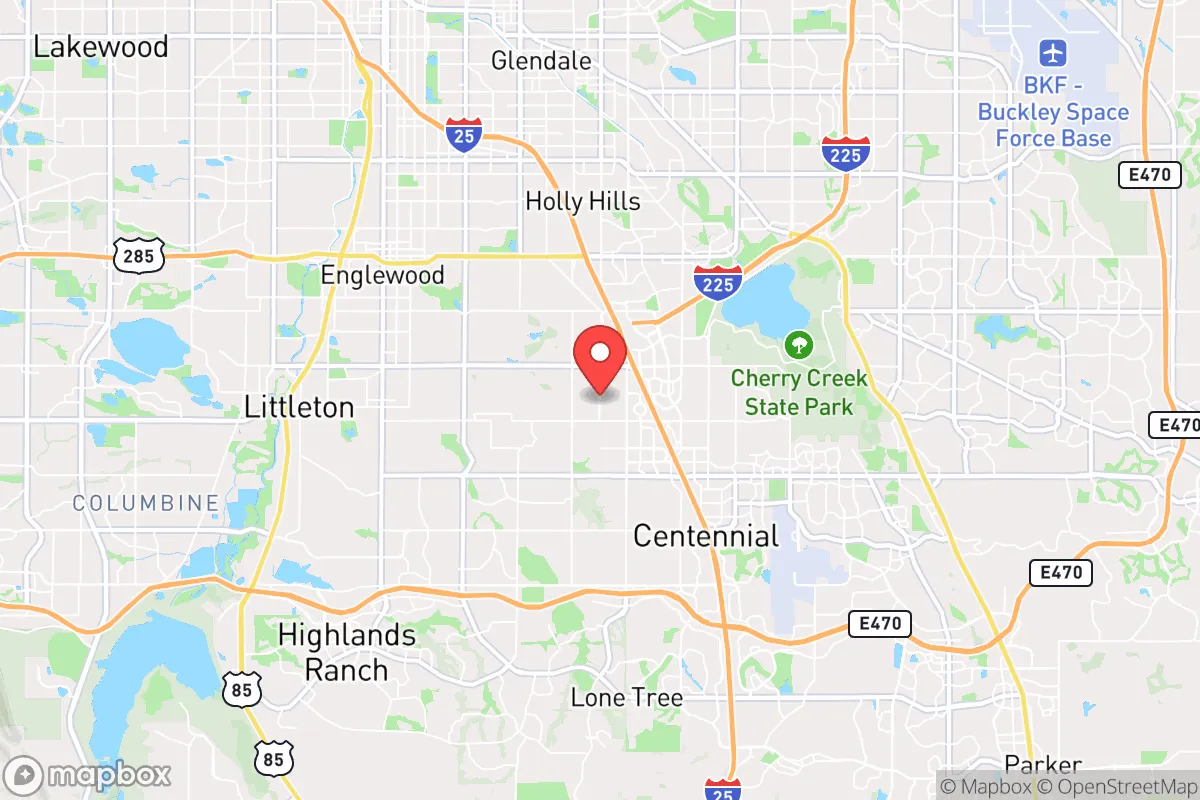
Photo: Wikipedia
Political ClimatePolitical Climate in Greenwood Village, CO
District shown is the primary district for this city’s centroid. Cities may span multiple districts.
Local Political AnalysisPolitical Analysis of Greenwood Village, CO
Greenwood Village has always been a bit of a political island in the Denver metro area, but the tides are shifting in a way that gives a lot of us longtime residents pause. While the city itself has historically leaned more moderate-to-conservative, it's now firmly wrapped in the blue wave of Arapahoe County, with a Cook PVI of D+11. That means the local elections and policy direction are increasingly influenced by the progressive machinery coming out of Denver and the surrounding suburbs, even if the neighborhoods here still feel more grounded in traditional values than what you'd find in Boulder or downtown Denver.
How it compares
If you drive just a few miles north into Denver proper, you're in a completely different political universe—one where rent control, defunding police debates, and sanctuary city policies are the norm. Head east to Aurora, and you get a chaotic mix of rapid growth and bureaucratic overreach. But Greenwood Village has historically been the quiet, well-managed outlier. We've had lower taxes, better police funding, and a city council that actually listened to residents about property rights and zoning. That's changing. The D+11 rating means the county commissioners and state representatives who serve us are now overwhelmingly from the progressive wing. You can feel it in the new land-use mandates coming from the state level, which are chipping away at local control over our own neighborhoods. It's not Boulder yet, but the trajectory is concerning for anyone who values limited government and personal freedom.
What this means for residents
For the average person living here, the most immediate impact is on your wallet and your rights. Property taxes are climbing faster than they used to, driven by state-level spending mandates that we didn't vote for locally. There's also a growing push for "equity" policies in the school district (Cherry Creek) that prioritize ideological training over academic excellence—something that's driving more families to consider private or charter options. On the plus side, the city itself still fights hard to keep its police force well-funded and its streets safe, which is a stark contrast to the defund-the-police rhetoric you hear in Denver city council meetings. But the long-term worry is that as the county and state continue to shift left, Greenwood Village will be forced to adopt policies that erode the very things that made us move here: low crime, local control, and a government that stays out of your business.
Culturally, you still see a lot of "Keep Greenwood Village Green" signs and a strong sense of community pride in the local parks and schools. But there's an undercurrent of frustration. The state legislature has passed laws that override our local zoning decisions, making it easier for high-density apartment complexes to be built in areas that were zoned for single-family homes. That's a direct hit on property rights and neighborhood character. The city council is still more conservative than the county, but they're fighting an uphill battle against a state government that sees local autonomy as an obstacle. If you're looking for a place where your vote still counts and your voice matters on issues like taxes, schools, and public safety, Greenwood Village is still one of the better bets in the metro area—but you need to keep a close eye on the ballot box, because the political winds are blowing in a direction that doesn't favor the kind of freedom we used to take for granted.

State Political ClimatePolitical Climate in Colorado
State Political AnalysisPolitical Environment in the State
Colorado has shifted from a classic purple swing state to a solidly blue-leaning state over the past two decades, with Democrats now controlling the governorship, both U.S. Senate seats, and both chambers of the state legislature. The state voted for Hillary Clinton by 5 points in 2016, Joe Biden by 13 points in 2020, and Kamala Harris by roughly 11 points in 2024, reflecting a durable leftward tilt driven by explosive growth in the Denver-Boulder corridor and the I-25 Front Range. For a conservative considering relocation, the state’s political trajectory is a cautionary tale of how rapid in-migration from blue states and aggressive progressive governance have transformed a once-independent Western state into a laboratory for left-wing policy.
Urban vs. rural divide
The political map of Colorado is a stark story of two states. The urban core—Denver, Boulder, and the surrounding suburbs of Aurora, Lakewood, and Westminster—votes overwhelmingly Democratic, often by margins of 30 to 50 points. Boulder County, home to the University of Colorado, is one of the most liberal counties in the nation, routinely delivering 75-80% of its vote to Democrats. The Denver metro area alone accounts for over half the state’s population, making it the engine of Democratic dominance. In contrast, the Eastern Plains, the Western Slope, and the San Luis Valley remain deeply conservative. Counties like Elbert, Lincoln, and Kit Carson routinely vote Republican by 60-70% margins. The I-25 corridor from Colorado Springs north to Fort Collins is a political battleground: Colorado Springs (El Paso County) remains a conservative stronghold thanks to military and evangelical influence, while Fort Collins (Larimer County) has trended blue as it fills with tech workers and transplants. The 2022 governor’s race saw Democrat Jared Polis win by 20 points statewide, but he lost most rural counties by 30-40 points, underscoring the urban-rural chasm.
Policy environment
Colorado’s policy environment has become aggressively progressive under unified Democratic control. The state income tax is a flat 4.4%, but voters approved Proposition HH in 2023, which temporarily reduced property tax rates while expanding state spending—a classic bait-and-switch that conservatives view as a prelude to higher taxes. The state has a strict regulatory posture on energy: the 2019 Climate Action Plan mandates a 90% reduction in greenhouse gas emissions by 2050, effectively phasing out new oil and gas permits in the Denver-Julesburg Basin, which has cost thousands of energy jobs in Weld County. Education policy is dominated by the Colorado Department of Education, which has pushed critical race theory and gender ideology into K-12 curricula via the 2020 Culturally Responsive Teaching standards. School choice remains strong thanks to charter schools and open enrollment, but parental rights have eroded: the 2023 “Protect Our Kids” law (SB23-189) allows schools to withhold information about a child’s gender identity from parents if the child requests it. Healthcare is heavily regulated, with a state-run reinsurance program that has stabilized premiums but also expanded Medicaid under the Affordable Care Act. Election laws are among the most liberal in the nation: Colorado has universal mail-in voting, same-day voter registration, and automatic voter registration, which critics argue undermines election integrity. The state also has a “blue book” ballot initiative process that allows voters to bypass the legislature, but the system is dominated by well-funded progressive groups.
Trajectory & freedom
Colorado is becoming less free by almost any conservative measure. The most glaring example is gun rights: in 2023, Governor Polis signed a package of gun control bills including a ban on “assault weapons” (SB23-169), a 10-day waiting period for all firearm purchases, and a raising of the minimum purchase age to 21. This came after the 2022 passage of a “red flag” law (HB22-1171) that allows courts to temporarily confiscate firearms based on vague threats. Parental rights have been curtailed by the aforementioned SB23-189, which effectively creates a “don’t tell parents” policy for schools. Medical freedom has been constrained by the state’s strict vaccine mandates for healthcare workers and schoolchildren, though COVID-era mandates have been relaxed. Property rights are under pressure from the 2023 “Right to Remain” law (HB23-1171), which requires landlords to accept Section 8 vouchers and limits eviction grounds, effectively reducing property owner autonomy. On the positive side, Colorado has no state-level rent control (preempted by state law), and the TABOR (Taxpayer Bill of Rights) amendment still requires voter approval for tax increases, though Democrats have found workarounds like “fee” increases and time-limited tax hikes. The 2024 election saw a ballot measure (Proposition 131) to create a ranked-choice voting system, which narrowly failed, but similar measures are likely to return.
Civil unrest & political movements
Colorado has a history of political flashpoints. The 2020 George Floyd protests in Denver turned violent, with looting and arson in the downtown area, and the city’s progressive DA, Beth McCann, declined to prosecute many rioters. The state has a robust sanctuary policy: the 2019 “Colorado Immigrant Rights Act” (SB19-211) limits local law enforcement cooperation with ICE, and Denver is a designated “sanctuary city.” This has created tension with conservative rural counties, with some sheriffs in Elbert and Weld counties publicly refusing to comply. The 2022 election saw a wave of “election integrity” activism, with Republican candidates for secretary of state and county clerk positions pushing for hand-count audits, though they were largely defeated. The “Colorado Project”—a network of left-wing activist groups funded by out-of-state donors—has been instrumental in passing progressive ballot measures and influencing local school board elections. On the right, the “Colorado Rising” movement has mobilized against energy regulations and property tax increases, while the “Moms for Liberty” chapter in Douglas County has fought school board battles over curriculum transparency. The 2023 special session on property taxes saw conservative activists pack the state capitol, but the resulting compromise still favored state spending growth.
Projection
Over the next 5-10 years, Colorado will likely continue its leftward drift, driven by demographic trends. The Denver metro area is growing by roughly 1.5% annually, with most new arrivals coming from California, New York, and Illinois—states with even more progressive politics. The rural population is stagnant or declining, meaning the urban-rural divide will only widen. Expect more gun control, including a possible magazine capacity ban and universal background checks on private sales. Parental rights will face further erosion, with potential legislation requiring schools to affirm gender transitions without parental consent. The TABOR amendment is under constant assault; a 2024 ballot measure to weaken it (Proposition HH) failed, but Democrats will try again with a more cleverly worded proposal. Property taxes will rise as the state seeks to fund expanded Medicaid and green energy subsidies. The energy sector will continue to shrink, with Weld County—the state’s oil and gas hub—facing economic hardship. On the positive side, the state’s strong economy and natural beauty will continue to attract conservative-leaning migrants from blue states, but they will likely settle in Colorado Springs or Douglas County, which may slow but not reverse the statewide trend. A conservative moving to Colorado today should expect to live in a state where their vote is increasingly irrelevant at the state level, but where local control in conservative counties can still provide a buffer.
Bottom line for a new resident: Colorado offers stunning landscapes and a strong economy, but the political climate is hostile to conservative values. If you move here, choose your county carefully—Colorado Springs (El Paso County) or Douglas County offer the best chance of living in a community that shares your values. Be prepared for rising taxes, eroding gun rights, and a state government that prioritizes progressive ideology over personal freedom. The state is not lost, but it is on a trajectory that requires vigilance and local activism to preserve what remains of Colorado’s independent spirit.
* Values derived from national, state, county, city and local statistics and may differ in a specific area. Last updated: 2026-04-27T14:33:51.000Z
Narrative content on this page is AI-generated and may contain mistakes. Verify any details that matter before acting on them.
ReloMaps may earn a commission from affiliate links at no extra cost to you.

